How to Choose a Hand Saw for Cleaner, Faster Cuts
The Irwin 2011201 Universal Hand Saw handles most jobs, cutting fast in both directions of the grain. The Suizan Ryoba pull saw suits joinery and clean shoulders. The Craftsman CMHT20880 covers occasional DIY jobs without fuss, and the Bahco 244 leads on fast framing rip cuts.
One saw that copes with most jobs? The Irwin 2011201 Universal is the sensible answer. The Suizan Ryoba handles fine joinery, and the Craftsman CMHT20880 suits light household use.
Hand saw shopping gets confusing fast, since the important differences sit in tooth geometry rather than anything visible on the packaging. We compared teeth per inch, tooth set, whether teeth are induction hardened or resharpenable, and push versus pull cutting action. Those specifications were then weighed against what owners report about tracking, binding and blade flex.
The top picks, ranked

Irwin Tools 2011201 Universal Hand Saw 15-Inch
Irwin grinds a triple ground tooth that cuts on both the push and the pull stroke. Wood clears quickly without demanding perfect technique. At 15 inches it stays short enough to control in tight spots yet long enough for framing lumber. Owners report it tracks a line well once started.
Pros
- Cuts fast across and along the grain
- Short blade is easy to control
- Comfortable moulded handle
Cons
- Hardened teeth cannot be resharpened
- Leaves a coarser finish than a fine trim saw

Suizan Japanese Ryoba Pull Saw 9.5 Inch
A ryoba carries rip teeth on one edge and crosscut teeth on the other, so a single blade covers both directions of the grain. Cutting on the pull stroke keeps the blade in tension, which allows a much thinner plate. That means a narrow kerf and very little tearout. Switching from a Western saw takes most owners only a short adjustment.
Pros
- Very clean cut with minimal tearout
- Two tooth patterns on one blade
- Replaceable blade on the standard handle
Cons
- Thin blade kinks if you force it
- Not suited to rough framing lumber

Bahco 244-22-U7/8-HP Hand Saw
Tradespeople have relied on the Bahco 244 for chewing through construction timber quickly for decades. Hardpoint teeth stay sharp far longer than traditional soft steel, and the 22 inch blade lets each stroke do more work. Based on specifications, this is the most aggressive cutter here, ideal in framing stock and less useful in delicate trim.
Pros
- Removes wood very quickly
- Long blade suits wide boards
- Holds an edge through heavy use
Cons
- Too coarse for finish carpentry
- Long blade is awkward in confined spaces

Stanley 15-334 FatMax Hand Saw
Stanley builds the FatMax with an induction hardened tooth line and a thickened blade back that resists the flexing that causes a saw to wander. The 20 inch length balances stroke length against control. Many tradespeople already own one and rarely regret keeping it in the truck.
Pros
- Stiff blade tracks a line well
- Handle doubles as an angle guide
- Widely available replacement
Cons
- Handle rivets loosen over years of hard use
- Teeth are not resharpenable

Shark Corp 10-2312 Carpentry Saw
This Japanese style pull saw targets carpenters who need clean cuts in moulding, casing and dowels. Fine tooth pitch leaves an edge that often needs no sanding before assembly. Owners report reaching for it whenever a cut will show in the finished job.
Pros
- Leaves a very clean cut face
- Narrow kerf wastes little material
- Replaceable blade extends the handle life
Cons
- Slow going in thick stock
- Fine teeth clog in wet or resinous wood
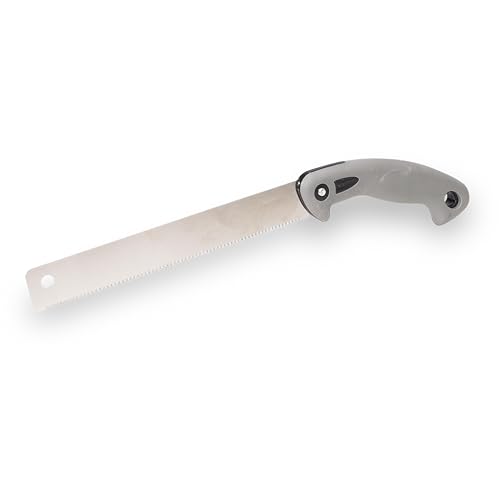
Vaughan Bear Saw BS240D Pull Stroke Saw
The Bear Saw pairs the pull stroke action with a coarser tooth pitch, so it clears damp fibrous wood that would clog a finish saw. Garden work, rough framing and cutting in awkward positions all suit it well. Dry hardwood is where it feels far less refined than the finer Japanese saws here.
Pros
- Clears damp and green wood without clogging
- Light and easy to use overhead
- Cuts quickly for its size
Cons
- Rough finish on visible cuts
- Short blade limits cut depth
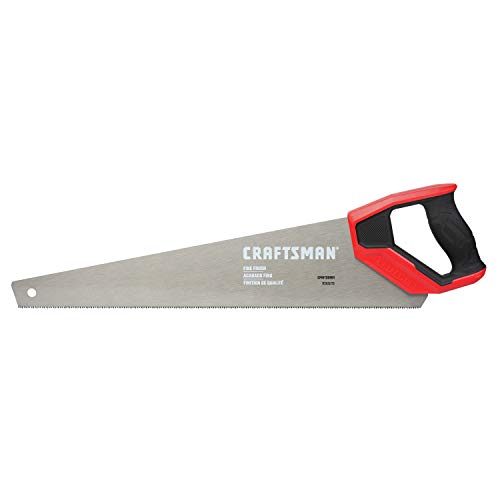
Craftsman CMHT20880 15-Inch Hand Saw
For the drawer that gets opened a few times a year, this Craftsman covers plywood, softwood and the occasional trimmed shelf without asking much. A 15 inch blade and moulded handle keep it manageable for people who saw by hand rarely. Owners report it handles light DIY fine, though the trade saws above pull ahead on long cuts.
Pros
- Easy to handle for occasional users
- Compact enough for a small toolbox
- Hardened teeth stay usable for years of light work
Cons
- Blade flexes in long cuts
- Slower than a dedicated framing saw
Before you buy
What tooth count should you look for? A low tooth count around 7 or 8 per inch removes wood fast and leaves a rough edge, which suits framing and rough carpentry. Twelve to fifteen teeth per inch cuts slowly but leaves a face clean enough for visible joinery. For one all purpose saw, 8 or 9 per inch handles most household jobs acceptably.
Push saw or pull saw: what is the real difference? Western saws cut on the push stroke, which puts the blade in compression and requires a thicker plate to stop it buckling. Japanese style saws cut on the pull stroke, keeping the blade in tension so it stays much thinner. That thin plate gives a narrower kerf and a cleaner cut, but it also kinks if pushed hard or twisted mid cut, so the technique differs genuinely from a Western saw.
Hardened teeth versus resharpenable teeth Nearly every saw sold today has induction or impulse hardened teeth, visible as a darker band along the cutting edge. They stay sharp several times longer than traditional soft steel but cannot be filed, so the saw or blade gets replaced rather than serviced. Traditional resharpenable saws still suit woodworkers who file their own teeth for a specific rake and set.
How do you start a hand saw cut straight? Most wandering cuts go wrong in the first inch. Start with the blade at a shallow angle, use a thumb knuckle as a fence, and draw the saw backwards a few times to score a kerf before applying pressure. Once the kerf is established, let the saw weight do the cutting and keep strokes long, since short choppy strokes heat the blade and cause binding.
How they stack up
| # | Model | Blade length | Best for | Score | Price |
|---|---|---|---|---|---|
| 1 | Irwin Tools 2011201 Universal Hand Saw 15-Inch | 15 inches | Best overall | 9.4 | Check price |
| 2 | Suizan Japanese Ryoba Pull Saw 9.5 Inch | 9.5 inches | Best for fine joinery | 9.2 | Check price |
| 3 | Bahco 244-22-U7/8-HP Hand Saw | 22 inches | Best for fast rip cuts | 9.0 | Check price |
| 4 | Stanley 15-334 FatMax Hand Saw | 20 inches | Best value | 8.8 | Check price |
| 5 | Shark Corp 10-2312 Carpentry Saw | 12 inches | Best for trim and finish work | 8.6 | Check price |
| 6 | Vaughan Bear Saw BS240D Pull Stroke Saw | 9.5 inches | Best for green wood and pruning | 8.3 | Check price |
| 7 | Craftsman CMHT20880 15-Inch Hand Saw | 15 inches | Best budget | 8.0 | Check price |
Questions worth asking
What is the difference between a rip saw and a crosscut saw?
Rip teeth are filed like tiny chisels and cut along the grain, clearing long fibres efficiently. Crosscut teeth are filed to knife points that sever fibres across the grain. A ryoba style saw carries both patterns on opposite edges, which is why it works as a single useful purchase.
Do you still need a hand saw if you own a circular saw?
Most people find they do. A hand saw needs no power, makes no dust cloud, reaches spaces a circular saw cannot, and is safer for quick one off cuts. It is also the tool of choice for trimming dowels, cutting flush, or any cut where setting up a power tool takes longer than the cut itself.
Why does a hand saw keep binding in the cut?
Binding usually means the kerf is closing behind the blade. Support the offcut so it does not pinch, keep the saw vertical rather than twisting it, and check that the tooth set has not worn flat. A small wedge in the back of a long cut solves the problem on wide boards.
Can hardpoint saw teeth be sharpened?
Not practically. The hardened band is far harder than a saw file, so filing ruins the file without restoring the edge. These saws are designed to be replaced, which is why replaceable blade designs like the Japanese pull saws here make a good long term choice.
Which hand saw is best for cutting plywood?
A finer tooth count of twelve or more per inch reduces splintering on the face veneer. Scoring the cut line with a knife first, then cutting with the good face upward on a push saw or downward on a pull saw, matters more than which saw you buy.
How long should a hand saw blade be?
Longer blades cut faster since each stroke removes more material, but they get harder to control and useless in confined spaces. Twenty to twenty two inches suits framing and wide boards, while fifteen inches or less works better for household jobs and awkward angles.
Are pull saws harder to learn than push saws?
Owners report it takes an hour or two to stop pushing out of habit. The main rule is letting the saw glide back on the return stroke without pressure, since forcing a thin blade forward bends it. Most people find pull saws easier to start accurately after that adjustment.
How should a hand saw be stored?
Keep the teeth off other tools with a plastic tooth guard or a slot in the toolbox, and wipe the plate with a light oil or paste wax in a damp workshop. Rust on the plate causes drag long before it damages the teeth.
What is the best hand saw for a beginner?
The Irwin 2011201 Universal suits beginners well, since triple ground teeth cut on both strokes and forgive imperfect technique. A ryoba pull saw asks for more practice before cuts track straight.
Our pick
For one saw that covers most work, the Irwin 2011201 Universal Hand Saw cuts fast in both grain directions and stays easy to control. Add the Suizan Ryoba if your work includes joinery or visible cuts, and consider the Bahco 244 if you spend most of your time in framing lumber.
Jake Monroe
Jake worked as a residential contractor for over a decade before shifting to full-time writing. He evaluates power tools, hand tools and workshop gear through the lens of someone who has actually used them on job sites, not just read the box.


