How to Choose a Hamster Cage With Room to Roam
Niteangel Vista Large Hamster Cage ranks first for floor space and airflow among current Amazon listings. Prevue Hendryx Universal Small Animal Home delivers the most floor area per cost. Ferplast Duna Fun Hamster Cage suits owners who want built-in accessories and a compact multi-level layout.
Niteangel Vista Large Hamster Cage, Prevue Hendryx Universal Small Animal Home, and Ferplast Duna Fun Hamster Cage top this comparison. Vista wins on raw floor area and side ventilation. Prevue Hendryx delivers the largest wire footprint without the acrylic price premium.
Syrian hamsters need far more room than starter kits provide, yet many listings advertise total cage volume instead of usable floor space. We compared listed floor dimensions, bar spacing, ventilation design, and owner feedback on odor control across seven current cages.
The shortlist, ranked

Niteangel Vista Large Hamster Cage
An acrylic base holds 35.4 by 19.7 inches of floor area, more than any other cage here. Wire ventilation slats run down both long sides for continuous airflow. The wire top lifts free in one piece, so full bedding changes take minutes rather than dismantling the frame.
Pros
- 35.4 x 19.7 inch base supports deep burrowing bedding
- Dual-side ventilation slats reduce ammonia buildup
- One-piece lid speeds up full cage cleanings
Cons
- Full acrylic-and-wire assembly is heavy to relocate
- Acrylic panels can scratch after repeated bedding changes
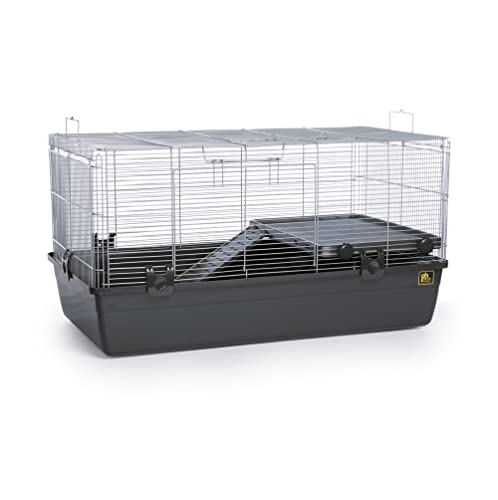
Prevue Hendryx Universal Small Animal Home
Powder-coated wire covers a 31 by 20.5 inch footprint, close to Vista’s size at a lower material cost. A slide-out plastic tray sits under the frame, so bedding changes skip full disassembly. Two front doors open directly onto both levels for daily handling.
Pros
- Slide-out tray cuts cleaning time versus lift-off lids
- Two front doors reach both levels without removing the top
- Wire construction costs less than acrylic-base cages
Cons
- 0.5 inch bar spacing suits adult Syrians but not young pups
- Loose bedding can work through the wider bars
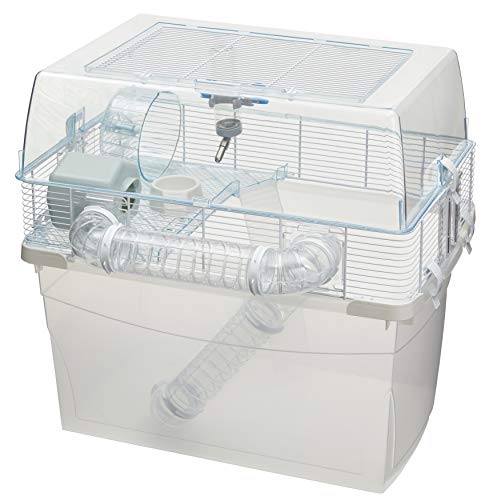
Ferplast Duna Fun Hamster Cage
Duna Fun ships with an exercise wheel, water bottle, and ramps already mounted, cutting setup to one trip. A deep plastic base pan holds burrowing bedding without the acrylic price tag. Enclosed tubes connect the upper levels instead of open ramps.
Pros
- Wheel, bottle, and ramps included at setup
- Deep plastic pan retains bedding for digging
- Connected tube levels add vertical space beyond the base
Cons
- 24.4 x 15.4 inch floor trails dedicated large-breed cages
- Tube sections need regular scrubbing to prevent buildup

Yaheetech Hamster Cage
Three wire levels stack to 22.6 inches tall, connected by ramps and platforms for climbing. A deep plastic tray forms the ground floor. A built-in hook near the top holds a hammock without extra hardware.
Pros
- Three-level layout multiplies usable space vertically
- Multiple ramps encourage climbing and exploration
- Removable base tray simplifies bedding swaps
Cons
- Ground-floor footprint trails single-level large cages
- Ramps and platforms collect debris between cleanings

Homey Pet Large Animal Cage
Designed originally for rabbits and guinea pigs, this frame covers 47.2 by 23.6 inches, the largest footprint in this comparison. A center divider lets owners house two hamsters separately within one frame. Two oversized front doors allow full hand access for cleaning or handling.
Pros
- 47.2 x 23.6 inch base is the largest listed here
- Divider option supports separated multi-hamster housing
- Wide front doors allow full hand access
Cons
- 0.6 inch bar spacing is too wide for young or small hamsters
- Extra-large frame demands significant floor space at home

Niteangel Denku Hamster Cage
Clear acrylic walls on all sides let owners watch burrowing activity from any angle, not just the front. A 0.35 inch bar spacing matches Vista’s narrow gap for smaller-bodied hamsters. The wire top lifts off as one piece, similar to the larger Vista model.
Pros
- Full acrylic visibility from every side
- 0.35 inch bar spacing suits smaller adult hamsters
- One-piece lid matches Vista’s easy-access design
Cons
- 22.8 x 14.6 inch floor is smaller than the Vista model
- Acrylic panels show scratches and smudges over time

Kaytee My First Home Multi-Level Habitat
A two-level plastic and wire design keeps the entry cost below every other cage on this list. A built-in ramp connects the levels without extra parts. At 17.5 by 11.5 inches, the floor area works better as a starter or secondary enclosure than a sole Syrian habitat.
Pros
- Lowest cost among the seven cages compared
- Built-in ramp needs no separate assembly
- Lightweight frame is easy to move or store
Cons
- 17.5 x 11.5 inch floor is the smallest listed here
- Undersized as the only enclosure for an adult Syrian hamster
How to choose
What Size Cage Does a Large Hamster Need? Syrian hamsters need more unbroken floor space than dwarf breeds, generally at least 24 by 12 inches at ground level. Bar spacing under 0.4 inches keeps adults from squeezing through gaps. Ventilation matters just as much as square footage, since enclosed plastic bins trap ammonia faster than wire-top designs.
Wire-Top vs Acrylic-Base: Which Hamster Cage Material Is Better? Wire-top cages like the Prevue Hendryx model move air freely but let loose bedding scatter through the bars. Acrylic-base cages such as the Niteangel Vista contain bedding and support deeper digging layers. Humid climates often favor wire tops, since acrylic can trap moisture against the base.
Are Multi-Level Cages Good for Hamster Enrichment? Vertical designs from Yaheetech and Ferplast add climbing routes through ramps and connected platforms. Multi-level layouts help when room space limits the footprint on the floor. Ramps and connector tubes need more frequent wipe-downs than a flat, single-level base.
Can Multiple Hamsters Share a Large Cage? Hamsters live alone as adults and fight if housed together without separation. Breeders sometimes use divided oversized frames, like the Homey Pet cage, to keep two hamsters in one enclosure with a center divider. Bar spacing on extra-large cages tends to run wider, so check it against pup size before use.
Side by side
| # | Model | Floor dimensions | Best for | Score | Price |
|---|---|---|---|---|---|
| 1 | Niteangel Vista Large Hamster Cage | 35.4 x 19.7 inches | Best overall | 9.4 | Check price |
| 2 | Prevue Hendryx Universal Small Animal Home | 31 x 20.5 inches | Best value | 9.1 | Check price |
| 3 | Ferplast Duna Fun Hamster Cage | 24.4 x 15.4 inches | Best for multi-level setups | 8.8 | Check price |
| 4 | Yaheetech Hamster Cage | 23.4 x 14.4 inches | Best for climbing enrichment | 8.6 | Check price |
| 5 | Homey Pet Large Animal Cage | 47.2 x 23.6 inches | Best for multi-pet or breeding setups | 8.4 | Check price |
| 6 | Niteangel Denku Hamster Cage | 22.8 x 14.6 inches | Best for visibility and observation | 8.2 | Check price |
| 7 | Kaytee My First Home Multi-Level Habitat | 17.5 x 11.5 inches | Best budget option | 8.0 | Check price |
Questions worth asking
What size cage does a Syrian hamster need?
Most care guides recommend at least 24 by 12 inches of floor space for Syrian hamsters. Larger footprints, like the Niteangel Vista or Homey Pet cage, add room for digging and enrichment.
Can dwarf hamsters live in large hamster cages?
Yes. Dwarf hamsters can use larger cages as long as bar spacing stays under 0.4 inches to prevent escapes.
Is wire or acrylic better for a hamster cage?
Wire tops move air more freely, while acrylic bases hold bedding and support deeper burrows. Hybrid designs, such as the Niteangel Vista, combine an acrylic base with a wire top.
How often should a large hamster cage be cleaned?
Spot cleaning weekly and a full bedding change every two to three weeks is typical. Cages with slide-out trays, like the Prevue Hendryx, cut down on cleaning time.
What bar spacing keeps a hamster from escaping?
Spacing under 0.4 inches works for most adult Syrian hamsters. Smaller or younger hamsters may need spacing closer to 0.3 inches, like the Denku model’s 0.35 inches.
Can two hamsters share one large cage?
No, adult hamsters are solitary and typically fight if housed together, even in oversized cages. A divided setup with separate zones is the safer option.
Multi-level vs single-level, which cage is better for hamsters?
Single-level cages lower fall risk and suit older or less active hamsters. Multi-level cages, like the Yaheetech model, add enrichment for younger hamsters that climb readily.
Are acrylic bin-style cages safe for hamsters?
Yes, as long as ventilation holes provide enough airflow to prevent ammonia buildup. The Niteangel Denku’s acrylic sides pair with a vented wire top for this reason.
How much floor space does a Syrian hamster need compared to a dwarf hamster?
Syrian hamsters generally need more floor space than dwarf breeds, often 24 by 12 inches or more. Dwarf hamsters can manage in smaller footprints, though extra room still benefits activity levels.
Does cage height matter for hamsters?
Height matters less than floor space for ground-dwelling burrowers, but tall multi-level cages, such as the 22.6 inch Yaheetech model, add climbing routes through ramps. Falls from upper platforms are a real risk on tall designs, so ramps should sit close together.
The bottom line
Niteangel Vista Large Hamster Cage combines the most floor space with strong ventilation, making it the top pick for Syrian hamsters. Budget-conscious owners get the best space-to-cost ratio from the Prevue Hendryx model. Owners housing multiple hamsters separately should look at the Homey Pet cage’s divided, extra-large frame.
Olivia Hartley
Olivia spent several years working at an animal shelter and a pet-supply retailer before joining the editorial team. She researches pet gear with an emphasis on safety, comfort and the fine print that owners often miss.


