Grip Strengtheners Compared for Climbers and Lifters
IronMind’s Captains of Crush grippers set the standard for crushing strength, with a resistance ladder running from beginner to elite. FitBeast’s kit offers the most complete starting package for new lifters. Fat Gripz Pro build grip strength through lifts you already do.
IronMind’s Captains of Crush grippers remain the benchmark for crushing strength. FitBeast’s kit gives beginners the most complete starting point in one box. Fat Gripz Pro train grip strength directly through your existing lifts rather than a separate session.
Grip training tools split into crushing grippers, pinch and support tools, finger extensors, and hand therapy putty, and each trains a genuinely different ability. We compared stated resistance ranges, handle knurling and materials, adjustability, and intended use, then weighed what owners report about resistance ratings that do not match the label.
The best picks, ranked
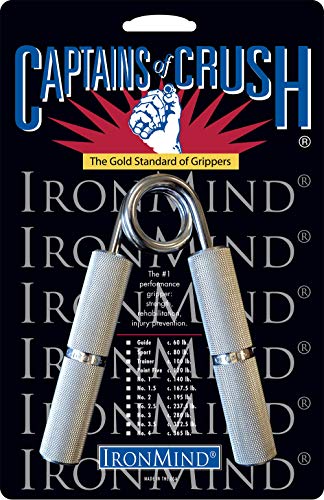
IronMind Captains of Crush Hand Gripper
Grip sport treats these as the reference standard, built with knurled aluminum handles and a resistance ladder that lets you progress in measured steps. Machined construction rather than molded parts keeps the spring rating honest for years. Each strength level ships as a separate purchase, which is the tradeoff for that precision.
Pros
- Delivers consistent, honest resistance ratings
- Machined build holds up for years
- Offers a clear strength progression ladder
Cons
- Each strength level requires a separate purchase
- Aggressive knurling can be harsh on soft hands

FitBeast Hand Grip Strengthener Kit
An adjustable gripper, finger extensor band, finger stretcher, and stress ball cover crushing, opening, and endurance work in a single package. Anyone unsure which type of grip work they need should start here. Resistance ratings run approximate rather than calibrated, unlike IronMind’s.
Pros
- Covers several training types in one kit
- Bundles adjustable resistance into a single gripper
- Works well as an entry point for beginners
Cons
- Resistance markings run approximate, not calibrated
- Falls short for advanced strength levels
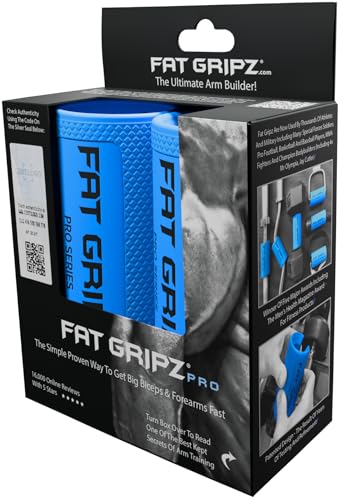
Fat Gripz Pro Barbell and Dumbbell Grips
Clamping these onto a barbell turns every row, press, and deadlift into grip training without adding a separate session. Thick bar work builds support grip, which transfers to real lifting better than crushing grippers do. They fit in a gym bag and take seconds to attach.
Pros
- Trains grip inside workouts you already do
- Holds up to heavy, repeated gym use
- Fits barbells, dumbbells, and most cable handles
Cons
- Reduces the load you can handle on a lift
- Offers no use outside a gym setting

ProHands Gripmaster Hand Exerciser
Independent spring loaded buttons for each finger make this the pick for musicians, climbers, and anyone chasing finger strength rather than whole hand crushing power. Several resistance levels allow steady progression. It will not replace heavy grip work for anyone chasing raw strength.
Pros
- Isolates strength work to individual fingers
- Fits in a pocket for use anywhere
- Comes in multiple resistance levels
Cons
- Tops out at a limited maximum resistance
- Springs wear down under heavy repeated use

IronMind Expand-Your-Hand Bands
Rubber bands here train the opening motion that almost everyone neglects while hammering the closing muscles. Balancing flexors against extensors keeps elbows and forearms comfortable under heavy grip training. Graded strengths cost very little compared to most grip tools.
Pros
- Trains the opening motion most people skip
- Costs very little per unit
- Comes in graded resistance levels
Cons
- Bands eventually wear out and perish
- Will not build strength on their own
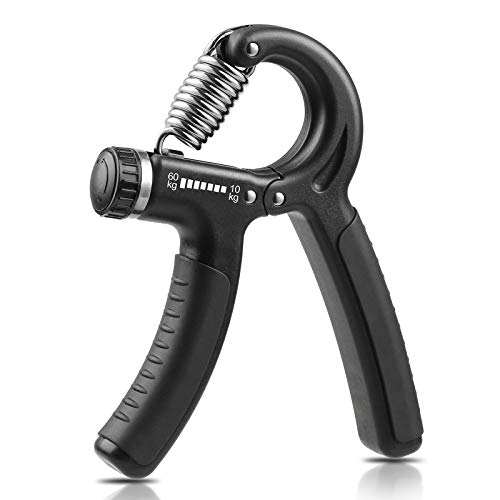
NIYIKOW Grip Strength Trainer
A single adjustable unit spans a broad resistance range, useful for anyone who does not want to buy a ladder of fixed grippers. Anti slip handles feel more forgiving than aggressive knurling across long sets. The rotating dial mechanism is the one part worth treating carefully over time.
Pros
- Covers many strength levels in one unit
- Feels comfortable through high rep sets
- Packs down small enough to travel with
Cons
- Adjustment dial can loosen with heavy use
- Ratings run less precise than calibrated grippers
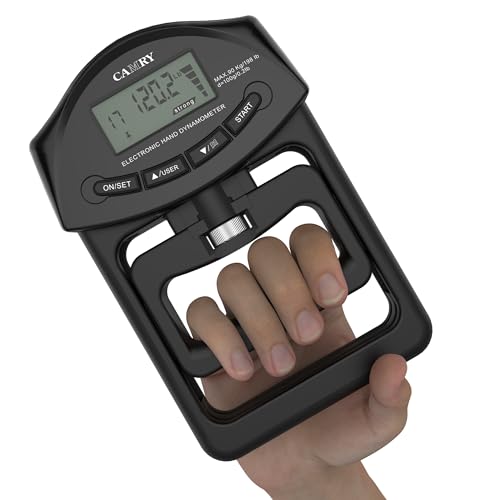
Camry Digital Hand Dynamometer
This tool measures grip force rather than training it, turning guesswork into a number worth tracking month to month. An adjustable handle fits different hand sizes, and the display stores multiple readings for comparison. Treat the absolute numbers as a personal reference rather than a clinical measurement.
Pros
- Converts progress into a trackable number
- Adjusts to fit different hand sizes
- Stores multiple readings for comparison
Cons
- Measures grip rather than training it
- Readings shift with hand position
What to look for
Grip strength breaks down into several distinct abilities Crushing grip closes the hand against resistance, which is what a gripper trains directly. Support grip holds onto something heavy, the ability that fails first on deadlifts and farmer’s carries. Pinch grip holds an object between thumb and fingers. Extensor strength opens the hand back up. Training only one of these leaves obvious gaps, so a gripper paired with thick bar work and extensor bands covers far more ground than any single tool.
Why resistance ratings differ between brands A gripper labeled 100 pounds from one brand can feel considerably lighter than another brand’s 100. Few manufacturers calibrate consistently, which is why grip sport treats IronMind’s ratings as a reference point. Comparing progress against the same tool over time works better than comparing numbers across different products.
How to train the opening motion, not just closing Almost everyone trains closing and skips opening entirely, and that imbalance shows up as elbow and forearm discomfort over time. Extensor bands take two minutes at the end of a session and cost very little. Owners who add them consistently report far fewer nagging forearm issues than those who only squeeze.
Why grip training calls for slow progression Tendons and connective tissue fill the hands and forearms, and both strengthen more slowly than muscle does. Jumping straight to a heavy gripper because you can barely close it once invites an injury that halts all training. Two or three short weekly sessions at a controlled resistance beat daily maximal attempts.
The lineup, side by side
| # | Model | Handles | Best for | Score | Price |
|---|---|---|---|---|---|
| 1 | IronMind Captains of Crush Hand Gripper | Knurled aircraft grade aluminum | Best overall | 9.4 | Check price |
| 2 | FitBeast Hand Grip Strengthener Kit | Five piece training set | Best value | 9.2 | Check price |
| 3 | Fat Gripz Pro Barbell and Dumbbell Grips | Around 2.75 inches with grips fitted | Best for lifters | 9.0 | Check price |
| 4 | ProHands Gripmaster Hand Exerciser | Four independent finger buttons | Best for individual fingers | 8.7 | Check price |
| 5 | IronMind Expand-Your-Hand Bands | Finger extensor bands | Best for balance | 8.5 | Check price |
| 6 | NIYIKOW Grip Strength Trainer | Adjustable across a wide range | Best adjustable | 8.2 | Check price |
| 7 | Camry Digital Hand Dynamometer | Digital grip dynamometer | Best for tracking | 8.0 | Check price |
Frequently asked questions
How often should you train grip strength?
Two or three sessions a week suits most people. Grip work recovers slower than it feels, and daily maximal squeezing is a common cause of forearm and elbow irritation.
Do hand grip strengtheners actually work?
Yes, for the specific ability each one trains. Crushing grippers build closing strength, thick bar work builds holding strength, and extensor bands build opening strength. Expect improvement in exactly what you train rather than across the board.
Which grip strengthener should a beginner buy first?
A kit like FitBeast’s covers several training types cheaply while you figure out what you actually need. Anyone already set on crushing strength should start with a light Captains of Crush gripper and progress from there.
Will grip training improve my deadlift?
Thick bar training and heavy holds help most, since deadlifting relies on support grip rather than crushing strength. Fat Gripz Pro fitted to rows and carries transfers more directly than a handheld gripper does.
What counts as a good grip strength number?
It varies enormously by age, sex, and hand size, so comparing against your own past readings matters more than chasing a universal target. A dynamometer like the Camry tracks that improvement directly.
Can grip training help with arthritis or hand pain?
Gentle hand exercise often gets recommended, but that decision belongs to a clinician familiar with your specific situation rather than a product roundup. Heavy crushing grippers are the wrong starting point for painful hands.
Should you use lifting straps or train grip instead?
Both have a place. Straps let you load target muscles on heavy pulls when grip becomes the limiting factor, while dedicated grip work raises the point at which grip starts limiting you. Using straps on every set means grip strength never improves.
How long before grip training shows results?
Most people notice heavy objects feeling more secure within four to six weeks of consistent training. Measurable changes on a dynamometer typically take a similar stretch of time.
What is the difference between crushing grip and support grip?
Crushing grip closes the hand against resistance, the motion a hand gripper trains directly. Support grip holds a heavy object without letting go, the ability that limits deadlifts and farmer’s carries and responds best to thick bar training.
Are adjustable grip trainers as good as fixed resistance grippers?
Adjustable trainers like the NIYIKOW cover a wide range in one unit, convenient for casual training. Fixed, calibrated grippers like IronMind’s Captains of Crush give more precise, honest resistance for anyone tracking serious progress.
The verdict
IronMind’s Captains of Crush grippers reward anyone serious about crushing strength, since calibrated resistance makes progress real rather than a labeling artifact. Lifters get more transfer from Fat Gripz Pro fitted to a barbell than from any handheld device. Beginners should start with the FitBeast kit and add IronMind’s extensor bands, since balancing the opening motion prevents the forearm problems that derail most grip programs.
Derek Holt
Derek has a background coaching recreational and amateur athletes and has worked the sales floor at specialty fitness retailers. He focuses on equipment durability, ergonomics and realistic use cases rather than marketing claims.


