Greenhouses Built to Handle Wind, Frost and Heavy Rain
Palram Canopia Mythos leads this lineup with an aluminum frame and twin wall polycarbonate that traps heat overnight. Quictent Portable Greenhouse delivers the most walk-in growing space for the price, and Gardman 4-Tier Mini Greenhouse turns a balcony into a seed-starting station without much cost.
Palram Canopia Mythos holds heat best among these seven, thanks to an aluminum frame and twin wall polycarbonate panels. Quictent Portable Greenhouse suits a single growing season without the price tag of a hard sided structure. Gardman 4-Tier Mini Greenhouse fits a balcony and gets seedlings started weeks early. Row growers get more raised bed coverage from a VEVOR tunnel than any other pick here.
Backyard greenhouses fail in predictable ways. PVC film splits at the seams after two seasons in strong sun, thin frames buckle in the first real gale, and cheap zips give out before the cover does. Frame rigidity, glazing choice and anchoring hardware matter more than the square footage printed on the box. We compared frame material, glazing type and light transmission, ventilation provision, and anchoring hardware, alongside owner reports of wind damage and winter survival.
Our top picks

Palram Canopia Mythos Hobby Greenhouse
An aluminum frame pairs with twin wall polycarbonate panels that diffuse light evenly and insulate far better than single skin covers. A roof vent and lockable hinged door give real airflow control from spring through fall. Assembly runs a full day with many small parts, but the frame stays put through winter wind.
Pros
- Twin wall panels hold heat well after dark
- Aluminum frame resists rust and keeps its shape
- Roof vent controls summer heat buildup
Cons
- Assembly takes a full day with many parts
- Costs considerably more than film covered tunnels

Quictent Portable Greenhouse
A tunnel style walk-in with a reinforced PE cover, mesh windows, and a roll up door goes up in an afternoon. Growing space runs large for the price of a hard sided structure. Anchor every stake and guy rope, since the flat sides catch wind like a sail.
Pros
- Generous growing space for the price
- Mesh windows curb summer overheating
- Assembles in a few hours, no special tools
Cons
- Cover degrades under strong sun after a few seasons
- Needs thorough anchoring in exposed yards
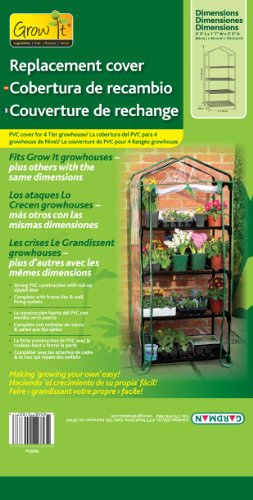
Gardman 4-Tier Mini Greenhouse
Four tubular steel shelves sit inside a zip up PVC cover, sized for a balcony or a sheltered wall. It is the cheapest route to seedlings started weeks ahead of the last frost. Treat the cover as a consumable and tie the frame down, since it weighs very little.
Pros
- Lowest cost way to extend the growing season
- Compact footprint suits balconies and patios
- Assembles in minutes without tools
Cons
- Cover wears out after a couple of sunny seasons
- Tips over easily unless secured to a wall

Palram Canopia Harmony Greenhouse
Clear polycarbonate panels run the full structure for maximum light, in a smaller footprint than the Mythos. Gardens short on space still get a permanent hard sided greenhouse. Light transmission beats twin wall, though insulation drops in a cold winter.
Pros
- High light transmission through clear panels
- Fits smaller gardens than full size models
- Aluminum frame sits on a proper base
Cons
- Insulates less than twin wall polycarbonate
- Assembly still takes most of a day

Outsunny Walk-in Greenhouse
A lean-to design sits flush against a wall, saving space and borrowing warmth from the building behind it. Shelving comes included on most versions, so pots go straight in on day one. Wall mounting points add stability that a freestanding cover of the same weight cannot match.
Pros
- Wall position adds both warmth and stability
- Makes efficient use of narrow patio space
- Shelving included and ready to use
Cons
- Needs a suitable wall to mount against
- Light drops on the side against the wall

VEVOR Walk-in Tunnel Greenhouse
A long hoop tunnel with multiple roll up side vents suits rows of vegetables rather than shelves of pots. Steel hoops go up quickly and cover a lot of ground for the price. Anchoring stakes and end wall tension decide whether it survives a windy month.
Pros
- Covers a large growing area at low cost
- Multiple roll up vents give airflow control
- Erects quickly over existing raised beds
Cons
- Vulnerable to wind without proper anchoring
- Not built for year round use in harsh climates

EAGLE PEAK Portable Walk-in Greenhouse
This pop up structure goes up in minutes and folds flat for storage, suiting gardeners who need cover only in spring and fall. Mesh vents and a roll up door give reasonable airflow. It is the least permanent option here, and it should come down before winter weather sets in.
Pros
- Fastest setup and takedown of any pick here
- Folds compactly for off season storage
- Handy for temporary frost protection
Cons
- Least durable option in sustained wind
- Not meant to stay up through winter
What matters most
What decides how long a greenhouse lasts? Frame and glazing decide most of it. Aluminum frames paired with polycarbonate panels resist rust and hold their shape through wind and snow load. Powder coated steel tube with a PE or PVC cover costs far less, but that cover is a consumable that breaks down under sun within two to four seasons. Twin wall polycarbonate insulates better and diffuses light evenly, while clear single skin panels pass more light but lose heat faster after dark. Glass lasts the longest and looks best, yet it is heavy, costly, and can crack.
Why anchoring cannot be an afterthought Wind is what ends most backyard greenhouses, not age. Hard sided structures need a base secured to paving, decking, or ground anchors. Tunnel and film covered greenhouses need every supplied stake plus guy ropes, and exposed gardens benefit from tying the frame to a fence or wall. Owners report that skipped anchoring causes more write offs than any other single mistake, and it costs almost nothing to do properly.
How much ventilation does a greenhouse need? A closed greenhouse on a sunny spring day climbs well past the outdoor temperature, which cooks seedlings instead of protecting them. Look for a roof vent, mesh side windows, or roll up panels, and open them on warm days without fail. Automatic vent openers that run on a wax piston need no electricity and add a cheap safeguard against a sealed greenhouse left shut on a bright morning.
Which size and style fits what you actually grow? Pick the site first: level ground, maximum winter sun, shelter from prevailing wind, and easy reach to a water source. Size follows from there. Seed starting and hardening off need only a shelved mini greenhouse, growing tomatoes and peppers through a season calls for a walk-in, and year round growing needs a hard sided structure with real insulation. Nearly every owner says afterward that they should have sized up.
Compared at a glance
| # | Model | Frame | Best for | Score | Price |
|---|---|---|---|---|---|
| 1 | Palram Canopia Mythos Hobby Greenhouse | Rust resistant aluminum | Best overall | 9.4 | Check price |
| 2 | Quictent Portable Greenhouse | Powder coated steel tube | Best value walk in | 9.2 | Check price |
| 3 | Gardman 4-Tier Mini Greenhouse | Tubular steel, four shelves | Best budget | 9.0 | Check price |
| 4 | Palram Canopia Harmony Greenhouse | Aluminum | Best compact hard sided | 8.8 | Check price |
| 5 | Outsunny Walk-in Greenhouse | Lean to against a wall | Best for patios and balconies | 8.6 | Check price |
| 6 | VEVOR Walk-in Tunnel Greenhouse | Hoop tunnel | Best for row growing | 8.3 | Check price |
| 7 | EAGLE PEAK Portable Walk-in Greenhouse | Pop up walk in | Best pop up | 8.0 | Check price |
Good to know
What is the best material for a greenhouse cover?
Twin wall polycarbonate is the best all round cover for backyard use. It insulates well, diffuses light evenly, and resists impact better than film. Glass transmits the most light and lasts longest but is heavy and breakable, while PE and PVC film is cheapest and lightest but breaks down in sunlight after a few seasons.
How do I stop a greenhouse from blowing away?
Anchor it properly from day one. Hard sided greenhouses should bolt to a base on paving, decking, or ground anchors. Film greenhouses need every supplied stake plus guy ropes, and exposed spots call for tying the frame to a fence or wall. Keep the door shut in high wind too, since a gust caught inside can lift the whole structure.
Do I need to heat a greenhouse in winter?
Not for extending the season by a few weeks at each end. Growing frost tender plants through winter is different, and that usually means an electric heater with a thermostat plus insulation such as bubble wrap on the inner frame. Heating costs climb fast, so most hobby growers stick to seasonal use instead.
Where is the best place to put a greenhouse?
Choose level ground with maximum sun through the winter months, shelter from the prevailing wind, and a water supply close enough that watering never becomes a chore. Avoid siting under trees, since they drop debris, cast shade, and risk branch damage.
How long do film covered greenhouses last?
Typically two to four seasons, depending on sun exposure and how well the cover is tensioned. Replacement covers are sold for most models and cost far less than a new structure, so check availability before buying a brand that skips them.
Can a greenhouse handle heavy snow?
Aluminum framed hard sided greenhouses are usually built for a modest snow load, though heavy snow should still be cleared from the roof. Film covered tunnels and pop up structures are not designed to carry snow and should be cleared quickly or taken down for winter.
Should I ventilate a greenhouse in winter?
Yes, though less than in summer. Some airflow on milder days prevents the humidity buildup that leads to mould and fungal disease. Open a vent briefly during the warmest part of the day instead of leaving the structure sealed for months.
What size greenhouse should I buy for a small garden?
Base the choice on your growing plans, then size up if you can. A shelved mini greenhouse suits seed starting, a small walk-in suits a family growing tomatoes and salad greens, and anything close to year round growing benefits from the largest structure your space and budget allow.
Is a walk-in tunnel greenhouse worth it?
Yes for a single growing season of vegetables or flowers, since it delivers far more space than a hard sided structure at a fraction of the cost. It falls short as a year round structure, because film covers insulate poorly and wear out within a few seasons.
Polycarbonate vs glass greenhouse: which is better?
Polycarbonate insulates better, weighs less, and resists impact, which makes it the practical choice for most backyards. Glass transmits more light and lasts decades, but it costs more, weighs more, and can shatter under a fallen branch or hailstone.
Our pick
Palram Canopia Mythos is worth the investment for a structure that stays up year round, since the aluminum frame and twin wall polycarbonate handle both heat retention and weather. Quictent Portable Greenhouse delivers far more growing space per dollar for seasonal use, and Gardman 4-Tier Mini Greenhouse is enough to raise seedlings on a patio. Anchor whichever one you choose on day one.
Sierra Daniels
Sierra's background is in landscape design and nursery retail. She focuses on lawn and garden equipment, outdoor furniture and gear durability, weighing published specs against how materials actually hold up outside.