Sharpen Your Swing Indoors With the Right Training Aids
Orange Whip Golf Swing Trainer leads this list because it builds tempo and sequencing in a small footprint. PuttOut Pressure Putt Trainer gives the best value stroke feedback, and SKLZ Gold Flex is the cheapest aid here that genuinely changes a swing.
Winter practice survives on ceiling height more than on budget, and Orange Whip Golf Swing Trainer does the most for tempo in the smallest footprint. PuttOut Pressure Putt Trainer sharpens stroke and pace control, while SKLZ Gold Flex covers similar ground for less.
A training aid that demands a full swing is useless in a room where the club catches a light fitting. We compared the space each aid needs, the skill it targets, the feedback it gives and how fast it sets up, then checked those against what owners report about noise, floor marking and whether the aid stays in use once the novelty wears off.
The shortlist, ranked

Orange Whip Golf Swing Trainer
A weighted ball on a flexible shaft only stays in sync if the sequencing is correct, so bad tempo becomes obvious immediately. Warm up sessions double as stretching, which keeps this aid in rotation rather than gathering dust in a closet. Owners report the swinging motion can be shortened indoors without losing the benefit, though some room is still required.
Pros
- Immediate feedback on tempo without electronics
- Doubles as a warm up and flexibility tool
- Nothing to charge, calibrate or set up
Cons
- Needs more clearance than putting aids
- Records or measures nothing on its own

PuttOut Pressure Putt Trainer
A curved ramp returns a well struck putt and rejects a poor one, giving instant pass or fail feedback with no batteries involved. Carpet works fine, so no separate mat is strictly necessary. Owners report the perfect putt distance marker turns practice into a small competition, which is exactly what keeps a drill on repeat.
Pros
- Instant feedback with no setup or power
- Fits in almost any room or hallway
- Encourages repeatable pressure practice
Cons
- Addresses putting only
- Carpet grain affects the roll

SKLZ Gold Flex Swing Trainer
Weighted and flexible like premium tempo trainers, the Gold Flex costs a fraction of the price while promoting a smoother transition. Ten minutes of swings before a round noticeably loosens shoulders and hips. Owners report the flex feels stiffer than the Orange Whip, a difference some prefer and others find less obvious to feel.
Pros
- Very affordable tempo and strength aid
- Effective as a pre round warm up
- Simple, durable design with nothing to break
Cons
- Feedback is less pronounced than premium rivals
- Still needs meaningful swing clearance
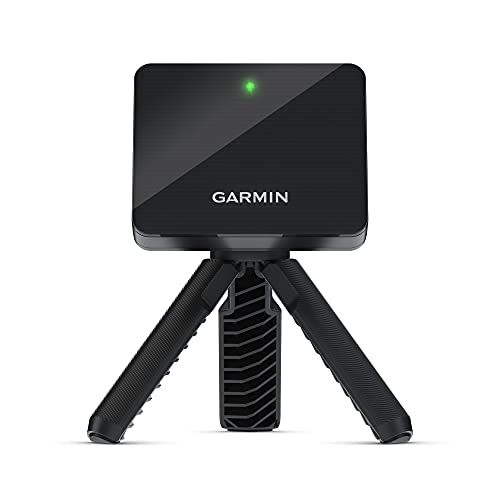
Garmin Approach R10
Radar based launch monitoring becomes affordable with the R10, measuring club head speed, ball speed, launch angle and spin. Paired with a net and a mat, a garage turns into a usable practice bay. Owners report indoor use needs several feet of ball flight before the net, making this a garage or basement tool rather than a living room one.
Pros
- Real numbers replace feel based guesswork
- Works indoors and outdoors
- Simulation modes keep practice engaging
Cons
- Requires a net, mat and generous ceiling height
- Indoor spin readings run less reliable than outdoors

Rapsodo MLM2PRO
Dual cameras join the radar on the MLM2PRO, adding swing video alongside launch numbers to connect a fault with its result. Impact vision replay pinpoints strike location clearly. Owners report a subscription unlocks a substantial part of the software, worth factoring into the purchase decision.
Pros
- Video alongside data speeds up diagnosis
- Detailed metrics support serious practice
- Simulator courses included
Cons
- Subscription needed for full functionality
- Requires more space than anything else here

Perfect Practice Putting Mat
A consistent roll surface with alignment guides makes a regulation cup feel enormous by comparison, thanks to a narrowed practice hole. Setup takes seconds, and it stores flat behind a sofa. Owners report the crystal velvet surface stays flat rather than curling at the edges, where cheaper mats usually fail.
Pros
- Consistent roll unlike household carpet
- Alignment guides build a repeatable setup
- Rolls up for easy storage
Cons
- Needs a genuinely flat floor underneath
- Longer versions demand real floor space

Tour Striker Smart Ball
Inflated between the forearms, the Smart Ball stays put only if arms and body move together through the swing, making separation obvious at once. Size and cost stay minimal, and slow rehearsal swings work in a very small room. Owners report short sessions alongside another aid work better than using it as a standalone practice tool.
Pros
- Works in very limited indoor space
- Clear pass or fail feedback
- Packs down to almost nothing
Cons
- Narrow focus on a single swing fault
- Not a complete practice solution alone
How they compare
| # | Model | Skill area | Best for | Score | Price |
|---|---|---|---|---|---|
| 1 | Orange Whip Golf Swing Trainer | Tempo, rhythm and sequencing | Best overall | 9.4 | Check price |
| 2 | PuttOut Pressure Putt Trainer | Putting stroke and pace control | Best value | 9.2 | Check price |
| 3 | SKLZ Gold Flex Swing Trainer | Tempo and swing strength | Best budget | 9.0 | Check price |
| 4 | Garmin Approach R10 | Portable launch monitor | Best for launch data | 8.8 | Check price |
| 5 | Rapsodo MLM2PRO | Camera and radar launch monitor | Best for detailed analysis | 8.6 | Check price |
| 6 | Perfect Practice Putting Mat | Putting alignment and pace | Best for putting practice space | 8.3 | Check price |
| 7 | Tour Striker Smart Ball | Arm and body connection | Best for connection drills | 8.0 | Check price |
How to choose
How much ceiling height does indoor practice need? Most indoor disappointments trace back to height. A full driver swing needs considerably more clearance than most rooms offer, and even a wedge swing catches a low fitting in a typical basement. Stand where you plan to practice, hold a club at the top of the backswing, and check clearance in every direction. Focus the budget on putting aids, connection drills and short tempo trainers when the answer is no.
Feedback aids versus measurement devices Orange Whip, PuttOut and the Smart Ball tell you instantly whether a motion was correct, building feel through repetition. Approach R10 and MLM2PRO instead give numbers to track over months, useful for equipment decisions and diagnosing distance gaps. Most golfers improve faster with a feedback aid used daily than an expensive monitor used occasionally.
Protecting the room before the first swing Broken windows and televisions are how indoor practice without a net usually ends, and even foam balls travel further than expected off a well struck iron. A net rated for real balls, a mat thick enough to protect the floor, and clear space behind you for the backswing are the minimum. Owners also report that a mat on a hard floor transmits impact noise through the building, worth knowing in shared housing.
Which drills actually get repeated all winter The best training aid is the one still in use come March. Putting aids see the most repeat use since they need no setup and fit in any room, which is why they deliver outsized improvement over a winter. Anything requiring a net, mat, monitor and tablet tends to get used enthusiastically for two weeks, then sits in a cupboard. Be honest about space and routine before spending.
Good to know
What ceiling height do I need to swing a golf club indoors?
Most golfers need around ten feet for a comfortable full swing with a short iron, and more for a driver. Measure at the top of your own backswing rather than relying on general figures, since height and swing plane vary a lot.
Can I practice properly without hitting balls?
Yes. Tempo trainers, connection aids and mirror work all improve the swing without ball contact, and putting practice needs almost no space. Many owners report tempo aids transfer to the course as well as range sessions do.
Are budget launch monitors accurate enough to be useful?
For club and ball speed and comparisons between clubs, yes. Spin numbers indoors are the least reliable figure on any consumer radar unit, so treat those readings as directional rather than exact.
Do I need a hitting mat and net indoors?
Both become essential if you plan to strike real balls indoors. A net rated for real golf balls and a mat thick enough to absorb a fat strike protect the room, the floor and your wrists.
Will practicing on carpet ruin my putting stroke?
Household carpet has grain and inconsistent pace, which distorts distance control. It works fine for stroke path and alignment, though a dedicated putting mat gives a truer roll for pace practice.
How long should an indoor practice session last?
Short and frequent beats long and occasional. Fifteen focused minutes several times a week produces better retention than one long session, particularly for putting and tempo work.
Are foam or limited flight balls worth using indoors?
They cut risk and noise considerably, making practice possible in spaces where real balls are not an option. Launch data stays inaccurate with them, so pair foam balls with feel based aids rather than a monitor.
Which training aid helps a beginner the most indoors?
A tempo trainer paired with a putting aid covers the two areas where beginners lose the most shots. Launch monitors become more useful once a repeatable swing exists to measure.
Indoor golf simulator or a launch monitor alone?
A launch monitor like the R10 or MLM2PRO gives real numbers without the cost of a full simulator setup. Adding simulator software, a net and a hitting mat turns the same device into a fuller experience for more space and budget.
The verdict
Orange Whip Golf Swing Trainer is the aid most likely to stay in use by the end of winter, needing no setup and giving honest feedback on every swing. Pair it with PuttOut Pressure Putt Trainer for stroke work to cover the two areas that decide most scores. Save the launch monitors for a garage or basement with real ceiling height and a proper net.
Derek Holt
Derek has a background coaching recreational and amateur athletes and has worked the sales floor at specialty fitness retailers. He focuses on equipment durability, ergonomics and realistic use cases rather than marketing claims.
You might also need

Why Do Boxing Gloves Need Different Weight Classes for Different Training Types?

Batting Helmets That Protect Without Slowing Your Swing

Serious Training Bikes That Respect Your Floor Space
