How to Pick a Golf Rangefinder for Young Players
Precision Pro NX7 suits junior golfers best, pairing a light body, one button control and a clear pulse on flag lock. TecTecTec VPRO500 works as a low cost starter that survives a junior bag. Blue Tees Series 2 Pro adds slope compensation for players refining distance control in practice.
Precision Pro NX7 earns the top spot for junior golfers because it gets picked up and used rather than left in a bag. TecTecTec VPRO500 covers a first season on a tight budget, and Blue Tees Series 2 Pro adds slope for players working on distance control.
Specifications that impress adults, like maximum range or slope algorithms, matter less for a junior than whether small hands can hold a locked view steady. We compared weight, button count, lock feedback and tournament legality, then checked those figures against what parents and coaches report about which units actually get used on course.
What to look for
Weight and grip decide whether a rangefinder gets used Every unit in this list ranges far beyond anything a junior will hit. Maximum range is therefore the least useful number on the box. What matters is whether a player can hold a magnified view steady enough to find a flagstick. Models between four and six ounces suit smaller hands best. A textured grip or wrist lanyard cuts the chance of a drop on a cart path.
How lock confirmation removes doubt Junior players often cannot tell if the number on screen belongs to the flag or the trees behind it. Vibration feedback, sometimes marketed as pulse or JOLT, answers that with a physical buzz the player can feel. Confidence builds fast once the guesswork disappears. Without it, players tend to take three or four readings and pick whichever looks right.
Is slope compensation legal for junior tournaments? Slope compensation adjusts distance for elevation, and it teaches a junior why an uphill approach plays longer than the flat number suggests. Most competitions ban its use during play. Any unit entered into a junior tournament needs a way to disable slope that an official can verify from outside, usually a physical switch or an external light. Local tournament rules should be checked before entry day.
Habits that matter as much as the device A rangefinder returns a distance, not a club selection, so encourage a player to factor in wind and lie before choosing. Bracing the unit against a shoulder or cart post makes locking on far easier for smaller hands. Pace of play counts too. Taking a reading while another group waits is a habit officials notice quickly.
The top picks, ranked

Precision Pro NX7
One main button controls the NX7, so a junior never gets lost in a menu mid round. A pulse vibrates the instant the laser locks the flag, removing the guesswork that trips up younger players. Parents and coaches report the lifetime battery replacement program is worth having for a device that lives in a teenager’s bag.
Pros
- Single button keeps the learning curve short
- Pulse confirms flag lock instantly
- Light, durable body suits a junior bag
Cons
- No image stabilization onboard
- Slope enabled version costs more

TecTecTec VPRO500 Golf Rangefinder
A first rangefinder rarely needs premium features, and the VPRO500 proves it with accurate yardages at a modest cost. No slope function means nothing to disable before a junior tournament. Locking onto a flag takes a steadier hand than stabilized units offer, worth knowing before a nervous first round.
Pros
- Low entry cost for a new player
- Compact and light in a junior bag
- Tournament legal with no adjustment needed
Cons
- Needs a steadier hand to lock the flag
- Display contrast fades in bright light

Gogogo Sport Vpro GS03 Laser Rangefinder
Switchable slope arrives on the GS03 near the price of units without it. Elevation readings become a teaching moment during practice rounds, then switch off before competition. Build quality sits a notch below premium rivals, reasonable for a device a growing junior may soon outgrow.
Pros
- Slope function at an accessible price
- Switch disables slope for tournament play
- Vibration confirms every pin lock
Cons
- Housing feels less rugged than premium units
- Optics dim in flat, overcast light
Callaway 200s Laser Rangefinder
Small hands fit the 200s more easily than bulkier rivals, and Callaway keeps the controls to a single acquisition mode. Slope compensation switches on and off between practice and competition. Nothing about it demands attention beyond a fast, reliable yardage.
Pros
- Compact shape suits smaller hands
- Single mode keeps pin acquisition simple
- Recognizable brand backs the warranty
Cons
- No stabilization to steady the view
- Included case is basic
Blue Tees Golf Series 2 Pro
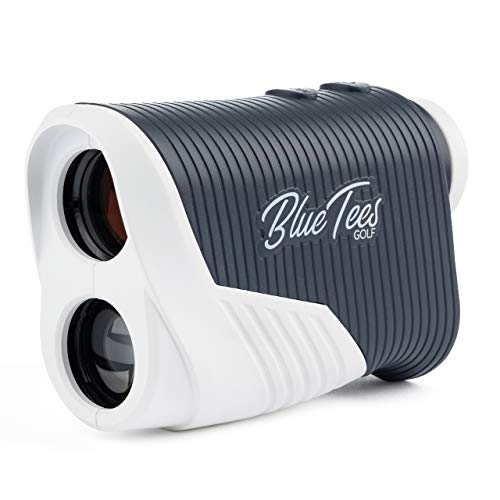
A magnetic strip anchors the Series 2 Pro to a cart frame, so it stays within reach between shots. Slope compensation and a visible indicator let a coach verify it is off for competition. Distance control practice benefits from comparing the plays like number against raw yardage, though a true beginner rarely needs this much device.
Pros
- Slope teaches elevation effects during practice
- Magnetic mount keeps it within reach on a cart
- Indicator confirms slope status at a glance
Cons
- More features than most beginners need
- Magnet adds weight for a walking junior

Nikon Coolshot 20i GIII
Optical clarity separates the Coolshot 20i from budget units, making the flag easier to find before the laser even fires. Slope adjusted readings help on hilly courses and switch off for tournament play. At under five ounces, smaller players hold it steadier than heavier rivals.
Pros
- Very light body stays steady in small hands
- Optical clarity stands out for the size
- Slope reading disables for competition
Cons
- Small buttons take getting used to
- No vibration confirms the lock

Bushnell Tour V5 Shift
Competitive juniors benefit from the JOLT vibration and the visible slope switch that tournament officials check before a round. Lock speed and optics outpace budget units, useful when the clock is running during a shotgun start. Cost is the real barrier for a player still growing into the game.
Pros
- Fast, confident flag locking under pressure
- External slope switch satisfies tournament officials
- Durable build handles frequent competition
Cons
- Expensive for a still developing junior
- Larger and heavier than compact rivals
The lineup, side by side
| # | Model | Magnification | Best for | Score | Price |
|---|---|---|---|---|---|
| 1 | Precision Pro NX7 | 6x | Best overall | 9.4 | Check price |
| 2 | TecTecTec VPRO500 Golf Rangefinder | 6x | Best budget | 9.2 | Check price |
| 3 | Gogogo Sport Vpro GS03 Laser Rangefinder | 6x | Best value with slope | 9.0 | Check price |
| 4 | Callaway 200s Laser Rangefinder | 6x | Best compact option | 8.8 | Check price |
| 5 | Blue Tees Golf Series 2 Pro | 6x | Best for practice rounds | 8.6 | Check price |
| 6 | Nikon Coolshot 20i GIII | 6x | Best optics | 8.3 | Check price |
| 7 | Bushnell Tour V5 Shift | 6x | Best for competitive juniors | 8.0 | Check price |
Questions worth asking
What age can a child start using a rangefinder?
Most juniors manage one from around ten or eleven, once their hands are steady enough to hold a magnified view on a flag. Younger players often do better with a GPS device that shows distances without needing to aim.
Are rangefinders allowed in junior golf tournaments?
Generally yes, provided slope compensation switches off, though individual junior tours set their own conditions. Check each event’s terms and pick a device with a visible external slope indicator to make inspection simple.
Do junior golfers need slope compensation?
It helps during practice by showing how elevation changes an effective distance. Competition bans it outright, so the ability to switch it off clearly matters more than having it at all.
How much should I spend on a junior rangefinder?
An entry level model covers a player still deciding whether golf is their sport. A committed competitive junior benefits from a mid range unit with vibration confirmation and sharper optics, and it holds resale value better too.
Rangefinder or GPS watch for a young golfer?
GPS devices give front, middle and back distances without needing to aim, which suits younger players. Lasers give a precise number to any target and build course awareness. Many juniors start with GPS then move to a laser as their aim steadies.
How do I stop my child losing or breaking a rangefinder?
Attach the wrist lanyard, store it in its case between rounds, and choose a magnetic cart mount model if they ride. A water resistant body helps too, since junior bags end up on wet grass more than adult ones.
Can a rangefinder actually lower a junior’s scores?
Indirectly, yes. Knowing an accurate number removes guesswork and speeds up learning real carry distances with each club, one of the fastest routes to sharper approach play. It does not replace practice on its own.
What batteries do junior rangefinders use?
Most run on a CR2 or CR2032 coin cell that lasts a full season of regular play. Pack a spare, since cold weather drains battery life faster and a dead unit mid round is a common frustration.
Single button or multi mode rangefinder for a beginner?
Single button units like the Precision Pro NX7 remove menu confusion for a first time user. Multi mode devices add flexibility a junior rarely needs until they compete regularly.
Our take
Precision Pro NX7 remains the rangefinder best suited to junior players, thanks to one button operation, a clear pulse on lock and a build that survives a teenager’s bag. Start with TecTecTec VPRO500 for a first season on a budget, and move up to Blue Tees Series 2 Pro once distance control practice becomes part of the routine.
Derek Holt
Derek has a background coaching recreational and amateur athletes and has worked the sales floor at specialty fitness retailers. He focuses on equipment durability, ergonomics and realistic use cases rather than marketing claims.