Picking the Right Snowboard Size and Flex for Kids
Burton’s Chopper suits true beginners with a soft flex and forgiving rocker profile. Rome’s SDS Minishred fits kids who already link turns and want to try switch riding. Burton’s Riglet covers toddlers just learning to balance on a board with parental support.
Burton’s Chopper is the strongest fit for a true beginner, since its soft flex and rocker-heavy camber let a light rider actually bend and control the board. Its main limit shows up once a kid outgrows beginner riding, as an extruded base is slower than sintered options built for progression. Kids who already link turns confidently move faster on Rome’s SDS Minishred and its twin shape. Toddlers not yet ready for lessons should start smaller, on Burton’s Riglet.
Youth boards need a much softer flex and shorter length range than a scaled-down adult board, since kids lack the weight to bend a stiff deck. We compared flex ratings, manufacturer size charts and owner reports on how quickly kids progressed to rank these seven boards.
Our top picks

Burton Chopper Youth Snowboard
A soft flex rating lets light young riders bend and steer the board instead of fighting a stiff deck. Rocker-dominant camber forgives the edge catches that trip up first-time riders. Parents report faster progress on this board compared with a hand-me-down adult board cut down to size.
Pros
- Soft flex suits light beginner riders well
- Rocker profile resists catching an edge
- Length range covers several growth years
Cons
- Extruded base glides slower than sintered options
- Limited once a kid moves into park riding

Rome SDS Minishred Snowboard
A true twin shape lets kids ride switch as easily as forward, useful once basic turns feel automatic. Medium-soft flex handles more aggressive turning than pure beginner boards allow. Ski instructors often recommend this once a child rides confidently without falling on most runs.
Pros
- Twin shape supports switch-riding practice
- Sintered base holds wax and glides faster
- Handles sharper turns than beginner-focused boards
Cons
- Firmer flex forgives less for absolute beginners
- Costs more than entry-level youth boards
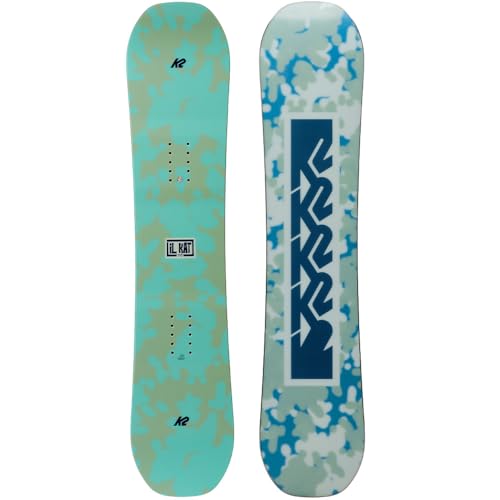
K2 Lil Kat Snowboard
A directional shape and graphics aimed at younger girls pair with a soft flex tuned for lighter riders. Rocker camber stays forgiving through early lessons on the hill. Parents of daughters describe the sizing and flex as a better match than unisex boards scaled down from adult lines.
Pros
- Soft flex matches lighter young riders well
- Rocker shape forgives early mistakes
- Sizing tuned specifically for smaller frames
Cons
- Extruded base needs more frequent waxing
- Directional shape limits switch-riding practice

Burton Chicklet Snowboard
Shorter length options than most youth lines suit smaller kids just starting lessons. Soft, forgiving flex keeps the learning curve gentle through the first several days on snow. Parents of younger children mention this fitting where other youth boards started too long.
Pros
- Shorter sizes fit smaller young beginners
- Forgiving flex eases the first days on snow
- Lighter weight than boards built for older kids
Cons
- Outgrown quickly by kids who progress fast
- Limited top-end length for older siblings to share

Ride Zero Jr Snowboard
A reinforced core and edge construction hold up against the scrapes and impacts common with kids still learning control. Medium flex suits riders who have moved past total beginner status. Rental shops and multi-kid families mention it surviving seasons that wear out softer-built boards.
Pros
- Reinforced build survives repeated impacts
- Sintered base glides well and holds wax
- Suits riders past the absolute-beginner stage
Cons
- Medium flex forgives less for first-timers
- Heavier than boards built for pure beginners

GNU B-Nice Youth Snowboard
A twin shape and lively flex suit kids drawn to small jumps and rail features once basic control feels solid. Magnetraction edge technology adds extra grip on icy patches common at resorts. Parents of freestyle-curious kids mention it handling small park features better than straight beginner boards.
Pros
- Twin shape suits freestyle and small park features
- Magnetraction edges grip icy conditions well
- Playful flex rewards more confident riders
Cons
- Less forgiving than pure beginner boards
- Overkill for kids still learning basic turns
Burton Riglet Snowboard
A short, light board built for toddlers as young as two includes a tip strap parents use to tow and steady the child. Flat, soft construction lets tiny riders balance without fighting camber. Parents buy this specifically to start kids years before a standard youth board fits.
Pros
- Sized specifically for toddlers as young as two
- Tow strap helps parents guide early balance
- Light enough for tiny riders to lift easily
Cons
- Outgrown within a season or two
- Too soft and short once basic balance is mastered
The lineup, side by side
| # | Model | Flex rating | Best for | Score | Price |
|---|---|---|---|---|---|
| 1 | Burton Chopper Youth Snowboard | Soft, beginner | Best overall | 9.4 | Check price |
| 2 | Rome SDS Minishred Snowboard | Medium-soft | Best for progressing riders | 9.1 | Check price |
| 3 | K2 Lil Kat Snowboard | Soft | Best for girls-specific fit | 8.8 | Check price |
| 4 | Burton Chicklet Snowboard | Soft, beginner | Best for younger beginners | 8.6 | Check price |
| 5 | Ride Zero Jr Snowboard | Medium | Best for durability | 8.4 | Check price |
| 6 | GNU B-Nice Youth Snowboard | Medium | Best for park-curious kids | 8.2 | Check price |
| 7 | Burton Riglet Snowboard | Very soft | Best for toddlers | 8.0 | Check price |
Before you buy
How to size a youth snowboard Standing the board upright next to the child, it should reach roughly between chin and nose height for a beginner setup, shorter than the chest-height rule used for adults. Weight matters as much as height, since a light child on a too-long board cannot flex or turn it. Most brands publish a weight range alongside length, and weight should take priority when the two disagree.
Flex rating and why softer suits beginners Youth boards range from very soft toddler flex to medium flex aimed at kids who already ride confidently. Soft flex lets a lighter rider bend the board into a turn, where a stiff board simply resists them. Save medium-flex boards like the Ride Zero Jr or GNU B-Nice for kids past the falling-on-most-runs stage.
Rocker versus camber for kids learning to ride Rocker profiles curve the tip and tail upward, resisting the edge catches that cause most beginner falls. Camber profiles grip better at speed and on hardpack but punish mistakes more severely. Nearly every true beginner youth board leans rocker or a rocker-dominant hybrid for exactly this reason.
When to size up or switch to a twin shape Once a child links turns confidently and wants to try switch riding or small features, a twin shape like the Rome SDS Minishred or GNU B-Nice supports that better than a directional beginner board. Sizing up too early undoes the forgiving flex that helped a beginner progress in the first place. Most kids move through two or three board sizes before reaching adult length.
Good to know
What size snowboard does my child need?
Match length to height and weight, generally reaching between chin and nose height when stood upright. The manufacturer’s published weight range should override the height rule if the two conflict, since flex depends more on weight.
Is rocker or camber better for kids learning to snowboard?
Rocker suits beginners of any age better, since the upturned tip and tail resist the edge catches behind most early falls. Camber suits riders who already control speed and edges with confidence.
How often do youth snowboards need replacing as kids grow?
Most kids outgrow a board’s length range within one to two seasons of steady growth, faster for younger children. A wider length range, like the Burton Chopper’s 90cm to 140cm span, can stretch usable seasons further.
What age can a child start snowboarding?
Many kids start as young as two or three on a toddler-specific board like the Burton Riglet, which includes a tow strap for parent-assisted balance practice. Most ski schools accept structured lessons starting around age four to six.
Should a beginner kid ride a twin or directional snowboard?
A directional or beginner-focused shape suits true first-timers better, since twin shapes are built for switch riding beginners are not yet doing. Move to a twin shape like the Rome SDS Minishred once basic turns and stopping feel automatic.
Which flex rating works best for a beginner child?
Soft flex works best for beginners of any age, since it lets a lighter rider actually bend the board to start a turn. Medium flex boards like the Ride Zero Jr suit kids who already ride confidently and want more edge hold at speed.
Do youth snowboards need a specific base type?
Sintered bases glide faster and hold wax longer, useful once a kid notices speed differences, but they need more upkeep. Extruded bases cost less, resist rock strikes better, and suit beginners still learning basic control.
Can one snowboard work for two kids of different sizes?
It can work if both kids fall within the board’s stated length and weight range, though flex tuned for the lighter child may feel too soft for the heavier one. A wide-range board, like several beginner models here, handles this better than a narrow-range twin shape.
Burton Chopper vs Rome SDS Minishred: which fits my kid?
The Chopper suits a true first-timer through its soft flex and forgiving rocker camber. Its sibling in this lineup, the SDS Minishred, fits a kid who already links turns and wants to try switch riding on a twin shape.
Our pick
Kids just starting lessons progress fastest on the Burton Chopper, since its soft flex and rocker profile forgive early mistakes. Once turns come easily, moving up to the Rome SDS Minishred adds twin-shape support for switch riding. Toddlers not yet ready for lessons should start even smaller, on the Burton Riglet with its tow strap.
Derek Holt
Derek has a background coaching recreational and amateur athletes and has worked the sales floor at specialty fitness retailers. He focuses on equipment durability, ergonomics and realistic use cases rather than marketing claims.


