What Separates a Forgiving Driver From a Fast One
The Ping G430 Max suits most golfers chasing forgiveness on off-center hits, the Callaway Paradym Ai Smoke Max adds the longest carry distance for faster swing speeds, and the Mizuno ST-Max 230 gives mid-handicap players a workable draw bias without sacrificing too much ball speed.
The Ping G430 Max is the safest pick for most golfers, since its larger 460cc head and high moment of inertia forgive off-center hits better than smaller-headed drivers, though it gives up a little ball speed compared to drivers built purely for distance.
Drivers differ most in head size, adjustability, and whether the face design favors forgiveness or raw ball speed, so we compared published specs like loft range, adjustable weight systems, and stock shaft options across seven current models.
Our top picks

Ping G430 Max Driver
Ping built the G430 Max around a 460cc head with a high moment of inertia, which resists twisting on off-center strikes more than smaller heads do. A moveable weight at the back of the sole lets a fitter or golfer bias the trajectory toward a draw or keep it neutral. The face uses a thinner, lighter material to maintain ball speed despite the forgiveness-focused shape.
Pros
- High moment of inertia forgives off-center hits well
- Moveable weight allows a draw bias for golfers who slice
- Adjustable hosel fine-tunes loft without a full refit
Cons
- Slightly less ball speed than distance-focused drivers on center strikes
- 460cc head size is the max legal limit, leaving no room to go bigger

Callaway Paradym Ai Smoke Max Driver
Callaway used machine learning to vary the face thickness across thousands of simulated impact points, aiming to raise ball speed across more of the face than a uniform thickness allows. A forward-shifted weight lowers spin for golfers who already launch the ball high, helping convert that spin reduction into extra carry. The Max version keeps a 460cc head for forgiveness alongside the distance tuning.
Pros
- AI-tuned face raises ball speed across a wider impact area
- Lower spin helps high-launch swings carry further
- Still uses a full 460cc head for reasonable forgiveness
Cons
- Lower spin can hurt players who already struggle to get the ball airborne
- Adjustable weighting is less flexible than Ping’s moveable track system

Titleist TSR2 Driver
Titleist designed the TSR2 for golfers who want a predictable, repeatable ball flight more than maximum adjustability. A single rear weight sets a stable center of gravity rather than offering multiple movable positions, which simplifies fitting at the cost of some customization. The face uses Titleist’s ATI 425 titanium, a material the brand has used across several driver generations for consistent flex behavior.
Pros
- Simple weighting produces a consistent, predictable ball flight
- Wide loft range down to 8 degrees suits faster swing speeds
- Proven face material with a track record across generations
Cons
- Less adjustability than Ping or Callaway’s movable weight systems
- Not aimed at golfers who need strong draw-bias correction

Cobra Darkspeed X Driver
Cobra positions the Darkspeed X for faster swing speeds that already produce enough spin on their own, placing weight low and back to keep spin down without sacrificing too much forgiveness. A thinner crown reduces overall head weight, letting Cobra add that saved weight back into the sole for stability. The X version skips the adjustable weight track found on Cobra’s standard Darkspeed model, favoring a simpler, lighter build.
Pros
- Low-spin build suits players who already generate plenty of spin
- Lighter crown construction without losing sole stability
- Simpler build than track-based competitors, less to fiddle with
Cons
- No adjustable weight track limits fitting flexibility
- Low-spin bias can hurt slower swing speeds that need more lift

Srixon ZX5 Mk II Driver
Srixon includes a sliding weight track on the ZX5 Mk II at a price typically below competing adjustable drivers from Callaway or Titleist. The track lets a golfer bias trajectory toward a draw or fade without a full club fitting. A rebound frame around the face edges aims to maintain ball speed on strikes closer to the heel or toe than dead center.
Pros
- Sliding weight track at a lower price than many competitors
- Rebound frame helps maintain ball speed on off-center hits
- Full adjustable hosel matches pricier drivers’ flexibility
Cons
- Less brand recognition and resale value than Ping, Callaway, or Titleist
- Stock shaft options are more limited than major-brand competitors

Mizuno ST-Max 230 Driver
Mizuno tunes the ST-Max 230 with a draw bias built into the internal weighting, aimed at mid-handicap golfers who tend to slice or fade the ball. A carbon composite crown keeps the head lighter than an all-titanium design, letting Mizuno place more weight low in the sole for stability. The face still uses a titanium insert to preserve ball speed despite the lighter crown.
Pros
- Built-in draw bias helps golfers who fight a slice
- Carbon crown keeps weight low for added stability
- Titanium face insert preserves ball speed despite the lighter build
Cons
- Fixed draw bias is not adjustable for golfers who already draw the ball
- Fewer loft and shaft customization options than adjustable competitors
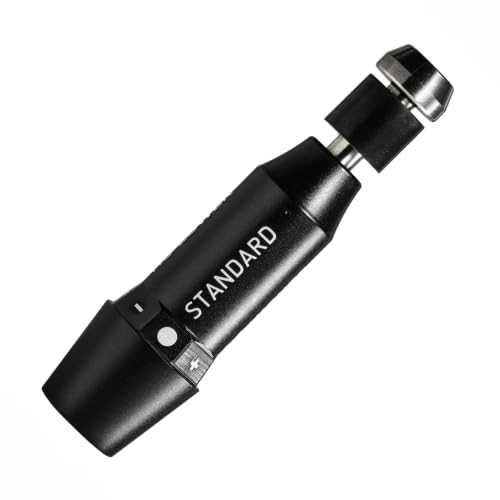
PXG 0311 Gen6 Driver
PXG sells the 0311 Gen6 mainly through custom fitting, where a fitter selects from multiple weight and shaft combinations before the head ships. A forged face insert is thinner at the center than at the edges, aiming to keep ball speed high across a wider strike zone. The brand backs the driver with a fitting-first sales process rather than off-the-shelf retail boxes.
Pros
- Custom fitting process matches weights and shaft to the individual golfer
- Forged face insert maintains ball speed across a wide strike zone
- Interchangeable weights allow more precise trajectory tuning than fixed designs
Cons
- Custom fitting process takes longer than buying off the shelf
- Premium price reflects the fitting service, not just the hardware
What matters most
Head size and forgiveness, explained Golf’s governing bodies cap legal driver head size at 460cc, and most current drivers, including every model compared here, build right up to that limit. A larger head spreads mass further from the center, raising moment of inertia and resisting twist on strikes away from the sweet spot. Smaller or older drivers under 460cc exist but trade away some of that forgiveness for a different feel or look. For most golfers, especially higher handicaps, staying at the 460cc limit is the safer choice.
Adjustability: weight tracks, hosels, and fixed designs An adjustable hosel, found on every driver here, lets a fitter change loft and lie angle by a few degrees without buying a different head. Sliding weight tracks, like Srixon’s ZX5 Mk II or Ping’s moveable weight, add the ability to bias trajectory toward a draw or fade. Some drivers, including the Mizuno ST-Max 230, build the draw bias in permanently instead of offering an adjustable track, which suits golfers who know they need correction but don’t want to fiddle with settings. More adjustability helps golfers working with a fitter more than it helps someone buying off a shelf without professional guidance.
Matching spin tendency to your swing speed Faster swing speeds, generally above 105 mph with the driver, tend to produce excess spin that balloons shots and costs distance, which is why low-spin drivers like the Cobra Darkspeed X target that group specifically. Slower swing speeds often need more launch and spin just to get the ball airborne efficiently, making a low-spin driver counterproductive for that golfer. The Callaway Paradym Ai Smoke Max leans toward lower spin as well, suiting golfers who already launch high. Golfers unsure of their own spin numbers are better served by a club fitting than guessing from a spec sheet.
When custom fitting is worth the extra step Off-the-shelf drivers like the Ping G430 Max or Titleist TSR2 work well for most golfers straight out of the box, since stock loft and shaft combinations cover a wide range of swings. Golfers with unusual swing speeds, strong miss tendencies, or simply the budget for it benefit more from a fitting-first brand like PXG, where the head, weights, and shaft are matched individually. A fitting session typically measures launch angle, spin rate, and ball speed with a launch monitor before recommending a setup. Skipping fitting rarely hurts a beginner much, but it matters more as swing speed and consistency improve.
Side by side
| # | Model | Head size | Best for | Score | Price |
|---|---|---|---|---|---|
| 1 | Ping G430 Max Driver | 460cc | Best overall | 9.4 | Check price |
| 2 | Callaway Paradym Ai Smoke Max Driver | 460cc | Best for maximum carry distance | 9.3 | Check price |
| 3 | Titleist TSR2 Driver | 460cc | Best for consistent, repeatable ball flight | 9.0 | Check price |
| 4 | Cobra Darkspeed X Driver | 460cc | Best for low-spin, aggressive swingers | 8.8 | Check price |
| 5 | Srixon ZX5 Mk II Driver | 460cc | Best value among major-brand drivers | 8.6 | Check price |
| 6 | Mizuno ST-Max 230 Driver | 460cc | Best for a workable draw bias | 8.5 | Check price |
| 7 | PXG 0311 Gen6 Driver | 460cc | Best for golfers wanting premium customization | 8.3 | Check price |
Common questions
What loft should I use on a golf driver?
Most golfers do well between 9 and 10.5 degrees, with higher lofts around 12 degrees helping slower swing speeds launch the ball higher and carry further.
Does a bigger driver head mean more distance?
Not directly. A 460cc head, the legal maximum, mainly adds forgiveness on off-center hits rather than raw distance, which comes more from ball speed and launch conditions.
What is the difference between men’s and women’s golf drivers?
The head and face design are usually identical, with the main differences being lighter stock shafts and higher stock lofts marketed toward typically slower swing speeds, not a different driver model.
How often should golfers replace their driver?
Most golfers see diminishing returns replacing a driver more often than every 3 to 5 years, since face and head technology changes incrementally between generations rather than dramatically each year.
What does moment of inertia mean on a driver?
It measures how much a clubhead resists twisting when struck off-center, so a higher moment of inertia keeps more ball speed and direction consistent on a mishit.
Is an adjustable driver better than a fixed-weight driver?
Adjustable drivers let a fitter fine-tune loft, lie, or draw bias without buying a new head, which helps golfers working with a fitter more than someone who sets it once and never changes it.
Should a high-handicap golfer buy a low-spin driver?
Usually not. Low-spin drivers like the Cobra Darkspeed X suit faster swings that already produce excess spin, while higher handicaps often need more spin and launch to get the ball airborne.
Do I need a custom driver fitting before buying?
It is not required, since off-the-shelf models like the Ping G430 Max perform well for most swings, but a fitting helps golfers with unusual swing speeds or persistent miss patterns.
What is a draw-biased driver?
It is a driver with weight positioned to encourage a right-to-left ball flight for a right-handed golfer, built into models like the Mizuno ST-Max 230 to help golfers who tend to slice.
Can a new driver fix a slice on its own?
A draw-biased or adjustable driver can reduce a mild slice, but a severe slice usually comes from swing path and face angle at impact, which equipment alone cannot fully correct.
Our pick
The Ping G430 Max is the right call for most golfers, since its forgiveness on off-center hits matters more day to day than a small ball speed gain from a distance-focused driver. Golfers with faster, more consistent swings who want every extra yard should look at the Callaway Paradym Ai Smoke Max instead, where the AI-tuned face and lower spin reward a cleaner strike. Anyone fighting a persistent slice is better matched to the Mizuno ST-Max 230, which builds in draw bias without needing a separate fitting session.
Derek Holt
Derek has a background coaching recreational and amateur athletes and has worked the sales floor at specialty fitness retailers. He focuses on equipment durability, ergonomics and realistic use cases rather than marketing claims.