Golf Accessories Worth Packing for Indoor Practice
The Garmin Approach R10 gives the most usable swing data for anyone with room to hit indoors. The PuttOUT Pressure Putt Trainer delivers instant feedback in a hallway’s worth of space. The SKLZ Gold Flex Golf Swing Trainer builds tempo without needing a ball at all.
Real swing data at home comes from the Garmin Approach R10 Portable Launch Monitor, the top pick here. A corridor’s worth of space is all the PuttOUT Pressure Putt Trainer needs to deliver instant putting feedback. Tempo work with the SKLZ Gold Flex Golf Swing Trainer needs no ball or net at all.
Most indoor golf listings assume a garage or basement with a ten foot ceiling, and plenty of homes simply don’t have that. We compared the actual floor footprint and swing clearance each item needs, how meaningful its feedback actually is, how quickly it packs away, and how it holds up on a hard indoor floor.
What we recommend
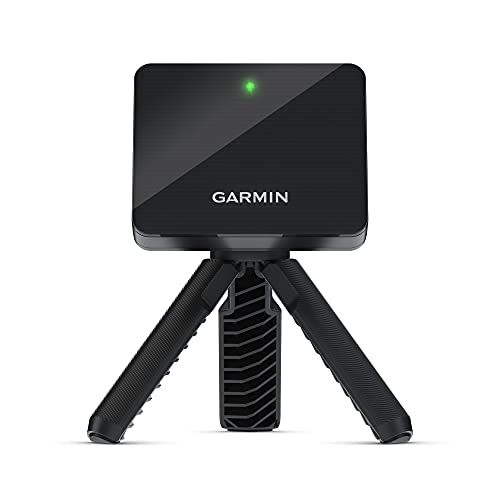
Garmin Approach R10 Portable Launch Monitor
Club head speed, ball speed, launch angle and spin all get reported here, turning a blind net into measurable practice. Setup takes a couple of minutes once it’s paired to a phone and positioned behind the ball. Roughly eight feet of ball flight is required to read shots reliably, the main constraint indoors.
Pros
- Reports real swing and ball data
- Portable between home and the range
- Battery lasts through long sessions
Cons
- Needs real ball flight distance to read
- Costs considerably more than other picks here

PuttOUT Pressure Putt Trainer
A parabolic ramp sends a well struck putt back at the distance it would have rolled past the hole, teaching pace better than a flat cup does. Almost no dedicated room is needed, and it folds flat into a drawer between sessions. Reading a break is the one thing it can’t simulate, since carpet stays flat.
Pros
- Teaches pace control, not just direction
- Needs almost no dedicated floor space
- Stores flat in a drawer
Cons
- Cannot replicate a breaking putt
- Needs a reasonably true surface to work well

SKLZ Gold Flex Golf Swing Trainer
A weighted, flexible shaft loads and unloads through the swing, forcing smoother tempo while stretching the muscles actually used in a golf swing. No ball means ceiling height is the only real limit, so it works fine in a hallway. Feel and warmth build here rather than ball striking skill.
Pros
- Works in nearly any open space
- Builds tempo and stretches golf muscles
- Costs little and needs no setup
Cons
- Gives no feedback on ball striking
- Still needs full swing ceiling clearance

Perfect Practice Putting Mat
A long crystal velvet surface returns a truer roll than the fuzzy mats it competes against. A narrowed practice hole makes the real cup feel generous by comparison once you’re back on a course. Owners report it lies flat quickly after unrolling, rather than holding a curl from packaging.
Pros
- Rolls truer than standard fuzzy mats
- Narrow hole sharpens aim over time
- Lies flat within minutes of setup
Cons
- Needs a long, clear run of floor
- Cannot teach reading a breaking putt
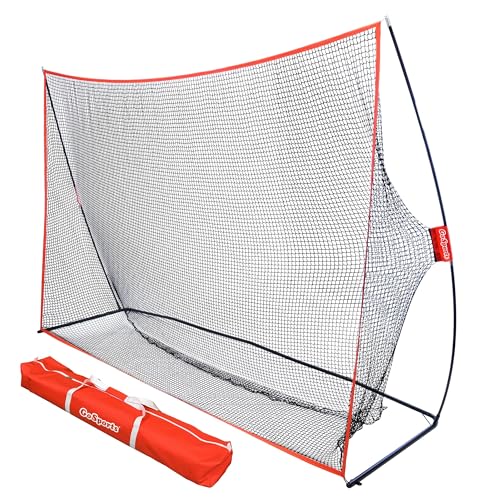
Rukket Haack Golf Net
A braced frame and heavy backstop separate this net from ones a golfer flinches at swinging into. Full swings need a garage or basement with adequate ceiling height to use it properly. Assembly takes longer than the marketing suggests, though the frame stays up reliably once built.
Pros
- Heavy backstop inspires swing confidence
- Frame stays stable through repeated hits
- Packs down into a carry bag
Cons
- Requires real ceiling height to use
- Initial assembly runs longer than expected

Champkey Tri-Turf Golf Hitting Mat
Three turf sections let a golfer practice fairway, rough and tee shots without swapping equipment between them. A thick rubber backing protects a concrete floor and cushions the wrist shock of a fat shot. Weight keeps the mat stable during swings, though that same weight makes it awkward to store.
Pros
- Covers three lie types in one mat
- Rubber backing protects floors and wrists
- Stays put during full swings
Cons
- Heavy and awkward to move or store
- Most used section flattens over time

Callaway Chip-Shot Chipping Net
Scoring zones on this pop up target turn repetitive chipping drills into something closer to a game. A few metres of clear floor is all it needs, and it folds down into a disc for storage. Full swings are off the table here, so it complements a hitting net rather than replacing one.
Pros
- Scoring zones make drills repeatable
- Sets up and folds down in seconds
- Fits a lounge or garden as easily as a garage
Cons
- Limited to chip and pitch shots only
- Light frame can shift on hard floors
How to choose
How much ceiling height do you need to swing indoors Whether a full swing clears the ceiling without touching it decides most of what you can buy. Nine to ten feet of clearance covers most drivers, and irons need a bit less. Stand where practice would happen and take a slow swing with your longest club to see what actually hits. Putting, chipping and tempo trainers become the priority if the answer is the ceiling.
What feedback actually improves an indoor golf swing Hitting balls into a net without knowing where they went builds habits, not necessarily good ones. A launch monitor solves this with hard numbers, though simpler tools help too. Pace comes from a putting return trainer, strike location from impact tape, and distance control from a scoring chipping target. Anything that closes that feedback loop deserves priority over anything that doesn’t.
How do you protect floors and yourself during indoor practice Indoor surfaces take stress they weren’t built for. A hitting mat with thick rubber backing protects concrete and softens the jarring shock a fat shot sends into the wrists. Nets need clearance behind them so a mishit never reaches a wall. Suspended floors carry noise further than expected, so plan session timing around that.
Which indoor golf setup is fastest to use daily The setup that actually gets used beats the one that photographs well, and anything needing fifteen minutes of assembly gets used far less than something that simply unrolls. A dedicated garage or basement corner justifies a permanent net and mat. Shared living space favors putting trainers, chipping nets and swing trainers that store in a cupboard and deploy in under a minute.
How they compare
| # | Model | Type | Best for | Score | Price |
|---|---|---|---|---|---|
| 1 | Garmin Approach R10 Portable Launch Monitor | Portable radar launch monitor | Best overall | 9.4 | Check price |
| 2 | PuttOUT Pressure Putt Trainer | Putting return trainer | Best value | 9.2 | Check price |
| 3 | SKLZ Gold Flex Golf Swing Trainer | Weighted flex swing trainer | Best budget | 9.0 | Check price |
| 4 | Perfect Practice Putting Mat | Putting mat | Best putting mat | 8.8 | Check price |
| 5 | Rukket Haack Golf Net | Hitting net with frame | Best hitting net | 8.6 | Check price |
| 6 | Champkey Tri-Turf Golf Hitting Mat | Multi-surface hitting mat | Best hitting mat | 8.3 | Check price |
| 7 | Callaway Chip-Shot Chipping Net | Pop-up chipping target | Best for chipping | 8.0 | Check price |
Common questions
How much ceiling height do I need to swing a golf club indoors?
Most golfers need roughly nine to ten feet for a full driver swing, and slightly less for irons. Test it with a slow practice swing before buying any net, since ceiling height rules out full swings in plenty of homes.
Can a launch monitor work in a small room?
Radar based monitors like the Approach R10 need several feet of ball flight to read accurately, so a very small room limits them. Camera based units generally handle short distances better, though they cost considerably more.
Do putting mats actually improve your putting?
They help most with stroke repeatability and pace on straight putts. Green reading isn’t something a flat, true mat surface can teach, so treat mat work as mechanics practice rather than a full substitute.
Are foam practice balls worth using indoors?
Yes, especially where ceiling height or net confidence is a concern. They travel a fraction of the distance and cause far less damage, though they won’t give realistic feedback on strike quality or spin.
Will hitting off a mat hurt my wrists?
It can, if the mat sits thin over concrete. A thick rubber backed mat absorbs much more shock from a fat shot, which is the main injury risk during indoor practice.
Is a hitting net safe to use indoors?
A well braced net with a heavy backstop is built for it. Leave clearance behind the net, inspect the netting regularly for wear, and never use one that’s damaged. Cheap, unbraced nets are where problems actually happen.
What should I practice indoors if space is very limited?
Putting and tempo work return the most improvement in minimal space. A putting return trainer paired with a weighted flex trainer needs barely any room and covers pace control and swing rhythm, both of which transfer directly to the course.
How do I stop a hitting mat from sliding on a hard floor?
Choose a heavier mat with a full rubber base rather than a light foam one, and add a rubber underlay if the floor is polished. Weight keeps a mat still, not any adhesive backing.
Which indoor golf accessory works best for beginners?
The SKLZ Gold Flex Golf Swing Trainer and PuttOUT Pressure Putt Trainer both suit beginners well, since neither requires ceiling clearance for a full swing or complicated setup to start using.
Our take
Golfers with real ceiling height and a net get the most improvement by pairing the Garmin Approach R10 Portable Launch Monitor with full swing practice. Most homes get more value per square metre from the PuttOUT Pressure Putt Trainer than anything else here. The SKLZ Gold Flex Golf Swing Trainer keeps tempo sharp through winter without needing a ball at all.
Derek Holt
Derek has a background coaching recreational and amateur athletes and has worked the sales floor at specialty fitness retailers. He focuses on equipment durability, ergonomics and realistic use cases rather than marketing claims.
You might also need

What Makes a Golf Bag Practical for Indoor Storage?

7 Heavy Duty Volleyball Sets That Survive Daily Practice
