Glass break sensors ranked by range and hub support
Ring Alarm Glass Break Sensor fits most homes, listening across roughly 25 feet of glass from one ceiling mount. SimpliSafe Glassbreak Sensor drops onto an existing SimpliSafe base station in seconds. For monitored Vista panels, Honeywell Home 5853 adds flex sensing that catches quiet, slow breaks.
Ring Alarm Glass Break Sensor suits households that already run a Ring base station. One unit listens across about 25 feet, so a bay window and a patio door share a single listener. Its ceiling is the ecosystem: Z-Wave hubs and professional panels cannot enroll it.
Two sensing methods dominate this category, and they fail in opposite ways. Acoustic units wait for a thud followed by a high-frequency crack. Shock units read vibration travelling through one pane. We compared published coverage figures, radio protocols, battery chemistry and hub requirements, then weighed owner reports about false trips from dropped dishes, barking dogs and loud TV audio.
The best picks, ranked

Ring Alarm Glass Break Sensor
Mounted on a ceiling or facing wall, this listener covers roughly 25 feet of glass. Detection keys on a two-stage signature: impact thud first, shatter second. Alerts land in the Ring app timeline and can fire the base station siren.
Pros
- One mount protects a whole wall of windows
- Events appear beside camera clips in the Ring app
- Adhesive or screw mounting, wall or ceiling
Cons
- Enrollment requires a Ring Alarm base station
- Acoustic only, so a slowly cut pane can slip past

SimpliSafe Glassbreak Sensor
Pairing runs off the SimpliSafe base station using an adhesive strip and no tools. Acoustic coverage reaches about 20 feet, which handles a standard living room window wall. Owners report multiple years of service from the single CR123A cell.
Pros
- Setup takes a minute with no wiring
- Single CR123A lasts years between swaps
- Signals reach SimpliSafe professional monitoring
Cons
- Coverage stops 5 feet short of the Ring unit
- No use outside SimpliSafe hardware

Honeywell Home 5853 Wireless Glassbreak Detector
Installers enroll this 345 MHz detector on Vista and Lynx panels, making it the natural add for a monitored house. Flex sensing reads the pane bending while acoustic sensing confirms the shatter. Rated glass types include plate, tempered, laminated and wired, out to about 25 feet.
Pros
- Two signals must agree before it reports
- Handles laminated and wired glazing, not just plate
- Signals reach a central station, not only a phone
Cons
- Requires a compatible Honeywell or Resideo panel
- Panel enrollment is slower than app pairing
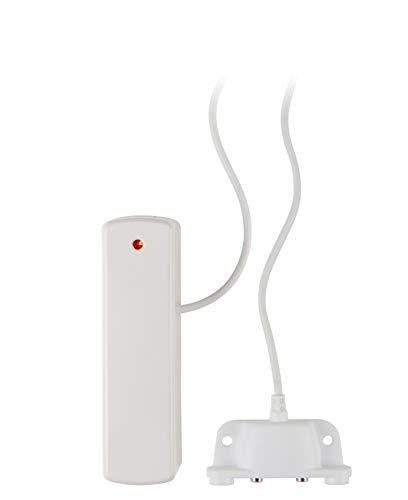
Ecolink Z-Wave Plus Glass Break Detector
Z-Wave Plus reporting opens this one to SmartThings, Hubitat, Ring Alarm and other certified controllers. Acoustic range runs about 20 feet, and the flat housing sits cleanly against a ceiling. A tamper switch tells the hub if someone pries it off the wall.
Pros
- Joins any certified Z-Wave mesh rather than one brand
- Can drive lights and locks through hub automations
- Tamper contact reports removal attempts
Cons
- A Z-Wave hub is mandatory and adds setup
- Range suffers without mains-powered repeaters nearby

YoLink Glass Break Sensor
LoRa radio carries the link far past Wi-Fi limits, which matters for a barn, workshop or detached garage window. Acoustic detection handles standard window glass. Alerts arrive as app push with optional SMS, and a YoLink Hub anchors the network.
Pros
- Reaches outbuildings that defeat Wi-Fi sensors
- Shares a network with YoLink sirens and leak sensors
- Alerts still fire when local Wi-Fi drops
Cons
- Nothing works without the YoLink Hub
- Smaller accessory range than Ring or SimpliSafe

2GIG GB1-345 Wireless Glass Break Detector
Shock and acoustic sensing must both agree before this unit reports, so noisy pets and loud televisions rarely trip it. Coverage sits near 15 feet, sized for one window or a small room. Enrollment works on 2GIG GC2 and GC3 panels plus other 345 MHz controllers.
Pros
- Two-factor logic keeps nuisance trips rare
- Compact body fits window trim and tight frames
- Drops into existing 2GIG panels with no rewiring
Cons
- Smallest coverage radius in this group
- No standalone smartphone app

GE Personal Security Glass Break Alarm
Peel the backing, press it to the pane, flip the switch. Vibration triggers a local siren near 120 decibels when glass breaks or takes a hard hit. Nothing reaches your phone, which is the tradeoff renters accept for zero hub and zero subscription.
Pros
- Runs with no hub, panel or monthly plan
- Each window takes under a minute to arm
- Peels off cleanly when a lease ends
Cons
- Remote notification is not possible
- Protects only the single pane it sits on
Side by side
| # | Model | Sensing method | Best for | Score | Price |
|---|---|---|---|---|---|
| 1 | Ring Alarm Glass Break Sensor | Acoustic, two-stage signature | Best overall | 9.4 | Check price |
| 2 | SimpliSafe Glassbreak Sensor | Acoustic | Best for SimpliSafe systems | 9.2 | Check price |
| 3 | Honeywell Home 5853 Wireless Glassbreak Detector | Flex plus acoustic | Best for professional alarm panels | 9.0 | Check price |
| 4 | Ecolink Z-Wave Plus Glass Break Detector | Acoustic | Best for Z-Wave hubs | 8.8 | Check price |
| 5 | YoLink Glass Break Sensor | Acoustic | Best for detached buildings | 8.6 | Check price |
| 6 | 2GIG GB1-345 Wireless Glass Break Detector | Shock plus acoustic | Best for 345 MHz retrofits | 8.3 | Check price |
| 7 | GE Personal Security Glass Break Alarm | Vibration on the pane | Best budget standalone | 8.0 | Check price |
What to look for
How glass break sensors detect a break Acoustic detection listens for two sounds in order: the low thud of impact, then the high crack of shattering. One acoustic unit can watch a whole wall of windows. Shock detection instead reads vibration inside a single pane, so every window needs its own device. Dual designs, including Honeywell Home 5853 and 2GIG GB1-345, demand both signals before reporting. That pairing is the strongest defense against nuisance alarms in a busy room. Radio choice narrows things further, since Ring, SimpliSafe and 2GIG each speak a closed protocol while Ecolink runs open Z-Wave Plus.
Matching a sensor to your hub or alarm panel Whatever hub you already own decides most of this. Ring Alarm households gain siren triggering and a shared app timeline by staying in-house. SimpliSafe owners get the same benefit from the matching Glassbreak Sensor. Running SmartThings or Hubitat? Ecolink is the only pick here that joins a generic Z-Wave mesh. Monitored Vista or Lynx panels call for the 5853, so a break reaches the central station rather than stopping at a phone. Starting from nothing in a rented apartment, the GE alarm skips hubs entirely.
Where to mount it and how far coverage reaches Mount acoustic sensors on the ceiling or the opposite wall, never on the glass itself. Line of sight matters, because curtains, blinds and upholstered furniture soak up high frequencies. Measure to the farthest pane, then check that number against the rating: 25 feet for Ring and Honeywell, 20 feet for SimpliSafe and Ecolink, 15 feet for the 2GIG. Glazing changes the signature too. Laminated and wired glass fail with a duller sound, and only some detectors list them as supported.
Best picks for renters, pets and loud rooms Renters who cannot drill or enroll a panel are served best by the GE standalone alarm. Households with large dogs, parrots or a loud home theater should avoid single-signal acoustic units in those rooms and choose dual sensing. One limit applies to every pick here: none of them notices a burglar sliding an unlocked window open. Pair glass break coverage with contact sensors on sashes and doors, and treat the two as partners rather than substitutes.
Common questions
How does a glass break sensor work?
Acoustic models wait for two sounds in sequence: a dull thud of impact, then a high-pitched crack as the pane fails. Both must land inside a short timing window before the sensor reports. Shock models skip sound entirely and detect the sharp vibration running through the glass.
Which glass break sensor works with Ring Alarm?
Ring Alarm Glass Break Sensor enrolls directly on the base station and appears beside your cameras in one timeline. Ecolink also joins Ring Alarm over Z-Wave, which helps if you want a single sensor model shared across two different hubs.
Do glass break sensors cause false alarms?
Single-signal acoustic units sometimes trip on dropped plates, slammed doors or television audio at volume. Requiring vibration and sound together, as Honeywell Home 5853 and 2GIG GB1-345 do, cuts those events sharply. Placement helps too, since a sensor aimed away from the kitchen hears fewer dishes.
Can one sensor cover an entire room?
Usually, if it is acoustic. A 25-foot rating reaches every pane in most living rooms from one ceiling mount. Vibration alarms are the exception, protecting only the pane they sit on, so a three-pane bay window would need three of them.
Glass break sensor vs window contact sensor: which do you need?
Contact sensors fire when a sash opens, so a burglar who smashes the glass and climbs through never triggers one. Glass break sensors cover that gap but ignore a quietly slid window. Running both closes the loop, and most alarm kits already bundle contact sensors.
Do glass break detectors need Wi-Fi?
Not the sensors themselves. Ring, SimpliSafe, Ecolink, YoLink and 2GIG units reach a hub or panel on a dedicated radio, and only that hub touches your router. The GE standalone alarm uses no radio at all, so it keeps working during an outage.
Will a glass break sensor work on laminated or double pane windows?
Laminated and wired glass fail with a muffled signature that some acoustic detectors ignore. Honeywell Home 5853 lists plate, tempered, laminated and wired glass as supported. For unusual glazing, confirm the listing first, or choose a shock-sensing unit mounted on the pane.
How long do glass break sensor batteries last?
Most picks here run one CR123A lithium cell, and owners report several years of service because the sensor idles until it hears something. Hubs and apps flag a weak cell before it dies. Keeping one spare per sensor avoids leaving a window uncovered.
Is a glass break sensor worth it without a monitored alarm?
Yes for self-monitored setups, where a phone alert plus a siren still interrupts an intruder. Value drops if nobody checks alerts during the workday. In that case a loud local alarm like the GE unit does more real work than a silent notification.
Our pick
Ring Alarm Glass Break Sensor earns the default recommendation: 25 feet of acoustic coverage, quick enrollment and one app holding every event in the house. Swap to the Honeywell Home 5853 when a monitored panel is already wired in, or when pets and loud rooms make dual sensing worth the harder setup. Renters with no system should stick a GE alarm on the pane tonight and add contact sensors later.
Marcus Chen
Marcus covered consumer electronics for enthusiast tech publications for six years before joining ChoiceCrest. He specializes in translating manufacturer spec sheets into plain-language buying advice, with a focus on audio, computing accessories and smart-home gear.

