How to Pick a Gas Stove Burner That Heats Evenly
Empava’s 30 inch cooktop pairs a high output burner for searing with one that holds a true low simmer. GASLAND Chef’s GH30SF suits small kitchens and annexes needing just two burners. Iwatani’s ZA-3HP portable burner earns a spot for tabletop cooking and power outages.
Empava’s 30 inch cooktop leads this roundup by pairing a high output burner for searing and wok work with a burner that actually holds a low simmer. Most cooktops get one end of that trade wrong. GASLAND Chef’s GH30SF answers for a small kitchen, an annexe or a caravan conversion. Iwatani’s ZA-3HP portable burner deserves a spot in any kitchen regardless of the main cooktop installed.
A single BTU figure hides the two things that actually matter, namely how much heat the biggest burner makes and how low the smallest one goes without going out. Four identical medium burners cook worse than one power burner paired with one true simmer burner. We compared output across the burner range, simmer behaviour, grate material and pan stability, ignition type and cutout requirements, using published specifications alongside what owners report about flame control at low settings.
How to choose
What BTU range do I actually need A combined BTU figure advertised by manufacturers tells almost nothing about daily cooking. What matters is the output of the largest burner, deciding how fast searing and boiling happen, and the minimum flame of the smallest, deciding whether a sauce reduces or catches. One high output burner paired with one true simmer burner beats four identical medium burners, whatever the total figure claims.
What do sealed burners and grates change Sealed burners keep spills on the surface where wiping them up is simple, rather than letting liquid run into the burner housing. Continuous cast iron grates let a heavy pan slide from one burner to another without lifting, which matters once a full stock pot is involved. Cast iron holds pans more steadily than thin steel, at the cost of being heavy to remove for cleaning.
Natural gas, LPG or portable fuel, which one Built in cooktops run on either natural gas or LPG, and switching between them requires a conversion kit with different jets fitted by a qualified person. Butane cartridges power portable burners conveniently indoors but lose output in the cold. Propane performs better at low temperatures instead. Never run an outdoor propane stove indoors, since these appliances need open air ventilation by design.
How do I measure the cutout before ordering Nominal size labels the product, but cutout dimensions vary between models of the same nominal width, and so does the depth needed below the worktop where a drawer may sit. Take cutout dimensions from the manufacturer’s installation sheet rather than the product title, check clearance to rear walls and side cabinets, and confirm the gas connection position. A qualified gas engineer should still handle fitting regardless.
What we recommend

Empava 30 Inch Gas Cooktop EMPV-30GC5B70C
Real range across the burner layout makes this the sensible mainstream choice, with a high output burner for searing and boiling next to a small burner that holds a low flame for sauces. Continuous cast iron grates let a heavy pan slide across the surface rather than requiring a lift. Correct cutout dimensions and a gas connection from a qualified fitter are required, since this is a built in cooktop.
Pros
- Genuine spread between power and simmer burners
- Continuous grates let heavy pans slide
- Converts to LPG with the supplied kit
Cons
- Requires a precise cutout and professional fitting
- Cast iron grates are heavy to lift for cleaning

GASLAND Chef GH30SF 12 Inch Built-in Gas Cooktop
Two burners fit into twelve inches of worktop here, enough for a flat, an annexe, a garden room or a second cooking zone beside an existing hob. Tempered glass wipes clean quickly, and sealed burners keep spills off the gas jets. Cooking order needs planning with only two burners, and tall pans on both at once can be a squeeze.
Pros
- Fits where a full cooktop cannot
- Glass surface cleans in seconds
- Works as a second hob alongside an existing one
Cons
- Two burners forces sequential cooking
- Tight spacing for two large pans
Iwatani ZA-3HP Portable Butane Stove
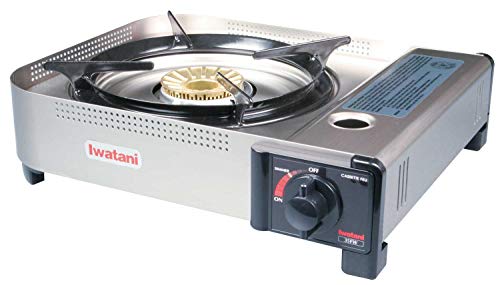
Restaurants and hot pot kitchens treat this portable butane burner as the standard, thanks to a stable flame, solid pan support and a cartridge system that seats reliably. It works on a table, a balcony or during a power cut with zero plumbing involved. Butane cartridges add a running cost, and output drops in cold conditions, worth knowing before relying on it outdoors in winter.
Pros
- Cooks anywhere with no installation
- Stable flame and solid pan support
- Trusted design used in restaurants
Cons
- Cartridges are an ongoing cost
- Butane output drops in cold weather

Bosch 800 Series NGM8058UC 30 Inch Gas Cooktop
Cooks who care about the low end get real attention here, with a simmer burner that holds a flame low enough for chocolate and delicate sauces without cycling off. Fit and finish sit a clear step above budget cooktops, from knob action to grate alignment. Considerably higher cost only makes sense for cooks who use the range often enough to notice the difference.
Pros
- Low simmer setting holds without cycling
- Noticeably better fit and finish
- Knob action feels precise rather than vague
Cons
- Premium outlay over similar sized rivals
- Replacement parts cost more

Thor Kitchen TGC3001 30 Inch Gas Cooktop
Output drives the design here, with a high BTU burner built for wok work, large stock pots and fast searing inside a stainless surround suited to a professional style kitchen. High heat cooking more often than delicate reductions is the correct match for this cooktop. Fingerprints and cooking marks show up on the stainless surface far more readily than on glass.
Pros
- High output burner suits wok and stock pot work
- Professional style stainless look
- Heavy cast iron grates hold pans steady
Cons
- Stainless surface shows marks constantly
- Simmer is less refined than premium rivals
Gas One GS-3400P Dual Fuel Portable Stove
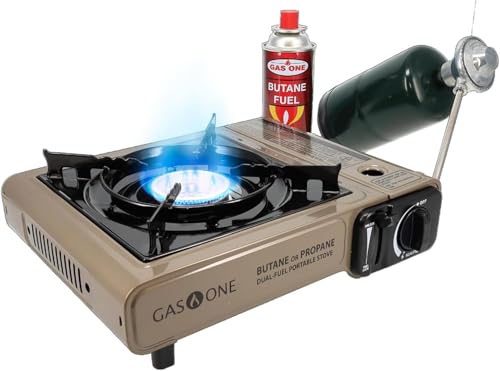
Running on either butane cartridges or propane canisters is the useful trick here, which matters during an emergency when only one fuel is available or in cold weather where propane performs better. Output stays respectable, and a carry case makes storage easy. A lighter build than the Iwatani suits occasional use better than daily cooking.
Pros
- Runs on either butane or propane
- Propane option works better in the cold
- Carry case keeps it tidy in storage
Cons
- Lighter build than restaurant grade portables
- Propane adapter needs care when connecting

Camp Chef Explorer Two Burner Stove
Large pans, canning pots and turkey fryers are the target here rather than delicate work, with the stove standing on its own legs at a workable height. Two high output burners boil serious volumes of water faster than any indoor hob manages. Indoor use is out entirely, since propane appliances of this type need open air ventilation.
Pros
- Handles very large pans and canning pots
- Boils large volumes quickly
- Stands at a usable working height
Cons
- Outdoor use only for safety
- Too much heat for delicate simmering
Compared at a glance
| # | Model | Size | Best for | Score | Price |
|---|---|---|---|---|---|
| 1 | Empava 30 Inch Gas Cooktop EMPV-30GC5B70C | 30 inch built in | Best overall | 9.4 | Check price |
| 2 | GASLAND Chef GH30SF 12 Inch Built-in Gas Cooktop | 12 inch built in | Best for small kitchens | 9.2 | Check price |
| 3 | Iwatani ZA-3HP Portable Butane Stove | Portable butane single burner | Best portable burner | 9.0 | Check price |
| 4 | Bosch 800 Series NGM8058UC 30 Inch Gas Cooktop | 30 inch built in | Best premium build | 8.8 | Check price |
| 5 | Thor Kitchen TGC3001 30 Inch Gas Cooktop | 30 inch built in | Best for high heat cooking | 8.6 | Check price |
| 6 | Gas One GS-3400P Dual Fuel Portable Stove | Portable single burner | Best dual fuel portable | 8.3 | Check price |
| 7 | Camp Chef Explorer Two Burner Stove | Outdoor propane two burner stove | Best outdoor burner | 8.0 | Check price |
Common questions
How many BTU do I need in a gas burner?
Around 5,000 BTU suits gentle simmering, 9,000 covers general cooking, and 12,000 or more is where searing and wok cooking start working properly. A spread across burners matters more than one high number.
What is the difference between sealed and open burners?
Sealed burners join the burner to the cooktop surface, so spills stay on top and wipe away easily. Open burners sit in a well that drains into the appliance, which is harder to clean. Nearly all modern domestic cooktops now use sealed burners.
Can I convert a natural gas cooktop to LPG?
Most models allow it, using a conversion kit of different jets supplied with the appliance or available from the manufacturer. A qualified gas engineer should carry out the work, since jet size and pressure settings affect safety as well as performance.
Are portable butane burners safe indoors?
Butane camping stoves designed for indoor and tabletop use, such as those built for hot pot, work fine indoors with good ventilation and by following the manufacturer’s instructions. Outdoor propane stoves and anything labelled outdoor use only must never go inside.
Why does my gas burner flame go out at low settings?
A partly blocked burner port, an incorrectly seated burner cap, or a burner not designed to run that low usually explains it. Clean the ports with a soft brush and pin, check the cap sits flat, and note whether the problem affects one burner only, which points at that burner rather than the gas supply.
Should the flame be blue or yellow?
A healthy gas flame stays mostly blue with a small lighter inner cone. Persistent yellow or orange flames suggest incomplete combustion from a blocked port or an air shutter problem and deserve attention, since incomplete combustion produces more carbon monoxide.
How do I clean cast iron grates?
Let them cool, then soak in hot water with washing up liquid and scrub with a non metallic brush. Check whether the manufacturer allows dishwasher cleaning, since harsh detergent can strip the matte enamel finish. Dry thoroughly before refitting to avoid rust spots.
Do I need a gas engineer to install a cooktop?
Yes, for any built in gas appliance. Gas connection work is regulated in most countries and must go through a registered or licensed professional. Portable butane and propane burners need no installation, which is part of their appeal.
The bottom line
Empava’s 30 inch cooktop remains the balanced choice for a main kitchen, giving real searing power alongside a burner that genuinely simmers without hunting for the setting. GASLAND Chef’s GH30SF serves small kitchens and second cooking zones better. Whatever gets installed, an Iwatani ZA-3HP tucked in a cupboard earns its keep for tabletop cooking and power outages.
Dana Whitfield
Dana spent eight years buying and merchandising for a regional kitchenware retailer before moving into editorial work. She has handled thousands of SKUs across cookware, small appliances and kitchen organization, and focuses on the practical differences that matter once a product is actually in daily use.