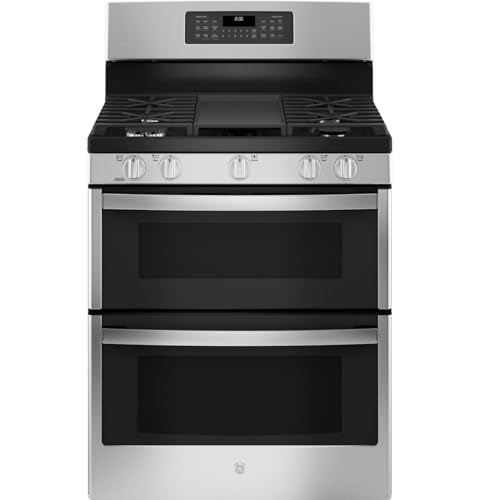
Countertop Gas Stoves Compared for Burner Power
The Iwatani ZA-3HP portable butane stove suits anyone without a plumbed gas line, since it runs on cartridges and needs no installation. Renters wanting a permanent two-burner setup should look at the Gasland Chef GH30SF, while the Empava EMPV-12GC4B67A stainless cooktop suits kitchens that see heavy daily use.
Buy the Iwatani ZA-3HP if you have no gas line and need to cook today. The Gasland Chef GH30SF and Empava EMPV-12GC4B67A make sense once you can cut a permanent cooktop into a worktop. Your choice comes down to one question: can you run a gas supply to the counter?
Two very different products share this search term. Sealed butane camping stoves sit on any counter with zero setup, while narrow gas cooktops need a worktop cutout and a connection to natural gas or propane. We compared burner output, fuel type, safety cutoffs, grate design and installation demands, then weighed ventilation needs, since any indoor gas flame requires airflow.
What matters most
Portable stove or drop-in cooktop: which do you need? Renters, campers and anyone facing an outage need a sealed portable, since it requires zero installation. Butane and propane units run on counters or camp tables without any wiring or cutout. Homeowners planning a permanent narrow hob should look at drop-in cooktops instead, which add two burners and better grates at the cost of a cutout and a qualified gas connection. Settling this question first removes most of the confusion in this category.
Is it safe to run a gas stove indoors? Any indoor gas flame produces combustion byproducts, and small kitchens concentrate them fast. Run an extractor if one exists, or open a window when using a portable stove. Never run a gas burner in a sealed space, such as a camper with the vents shut. Carbon monoxide alarms are inexpensive and worth installing in any room where gas cooking happens regularly.
Burner output, grates and pan stability compared BTU ratings show how fast a burner heats, but a wide flat grate that keeps a pan level matters more day to day. Portable stoves with a narrow trivet struggle under a full stockpot, while continuous cast iron grates let pans slide between burners on a drop-in cooktop. Check whether both burners share the same output, since a dedicated simmer burner beats two identical rings for everyday cooking.
Butane vs propane vs natural gas: running costs Butane cartridges cost the most per hour of cooking, though they store cleanly and handle easily indoors. Propane from a refillable tank costs far less and suits cabins or daily off-grid cooking. Piped natural gas undercuts both, but it needs a fitted connection. Many drop-in cooktops ship with a propane conversion kit, and swapping the jets is a job for the installer, not a DIY afternoon.
The top picks, ranked
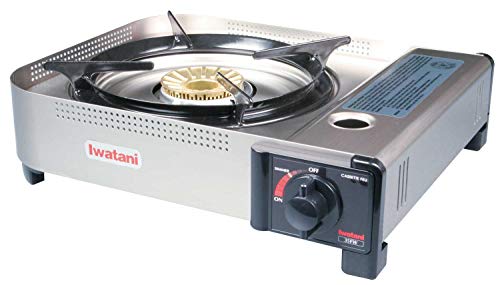
Iwatani ZA-3HP Portable Butane Stove
This sealed butane stove runs on cartridges, so it skips gas lines, wiring and landlord approval entirely. A recessed burner and wide flat grate hold a wok or stockpot steadier than most portables. Pressure spikes trigger the cartridge ejection safety system, which shuts the burner down automatically.
Pros
- Works anywhere with ventilation
- Stable grate holds heavy pans
- Cartridge changes take seconds
Cons
- Cartridges cost more over time
- Single burner limits cooking speed

Gasland Chef GH30SF Gas Cooktop
Two burners fit into a narrow worktop cutout and connect to natural gas, with a propane conversion kit included for cabins and tanked homes. Flame failure devices cut gas supply the moment a burner blows out. That protection matters most in a small kitchen with a window left open for airflow.
Pros
- Two burners fit a narrow slot
- Flame failure device on each burner
- Propane conversion kit included
Cons
- Installation needs a cutout and gas fitter
- Glass surface shows fingerprints and marks

Empava EMPV-12GC4B67A Gas Cooktop
Continuous cast iron grates span both burners, letting a heavy pan slide across rather than get lifted. Stainless steel handles daily wiping better than glass, which suits a cooktop that sees constant use. Natural gas is standard, with an LPG conversion kit for propane setups.
Pros
- Cast iron grates handle heavy pans
- Stainless surface wipes clean fast
- Control knobs feel solid, not loose
Cons
- Professional installation required
- Fingerprints show on stainless surface
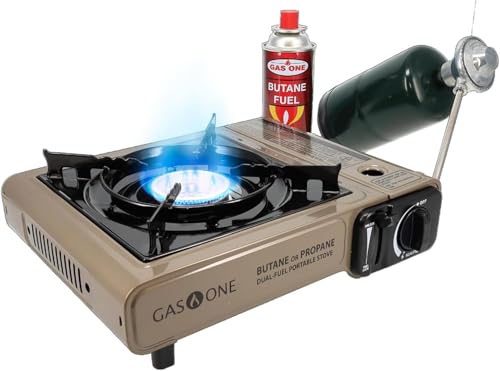
Gas One GS-3400P Dual Fuel Portable Stove
Butane cartridges power this stove by default, and the included hose lets it switch to a propane canister instead. That dual setup covers a power outage at home and a weekend campsite equally well. Owners report propane cuts running cost noticeably compared with cartridges alone.
Pros
- Two fuel options in one stove
- 15000 BTU output outpaces most portables
- Carry case simplifies storage
Cons
- Propane hose adds bulk and clutter
- Grate feels less stable than the Iwatani

Karinear 2 Burner Gas Cooktop
Tiny homes, offices and small apartments gain a real cooktop from this compact drop-in unit, sized for spaces a full range would never fit. Its two burners differ in output, pairing a simmer ring with a faster one instead of two identical rings. LPG and natural gas versions are both available.
Pros
- Fits unusually narrow cutouts
- Simmer and high-output burners paired
- Glass surface looks modern
Cons
- Larger pans only fit one side
- Glass needs careful, frequent cleaning

Camplux JZ-C2 Double Burner Propane Stove
A propane tank and regulator power this freestanding double burner, which suits cabins, workshops and outdoor kitchens where cartridges would run out fast. No cutout is needed, since it simply sits on a counter. Each burner produces around 11000 BTU through cast iron grates.
Pros
- No installation, just a tank hookup
- Runs on standard propane tanks
- Cast iron grates resist warping
Cons
- Tank and hose take up counter space
- Indoor use demands real ventilation
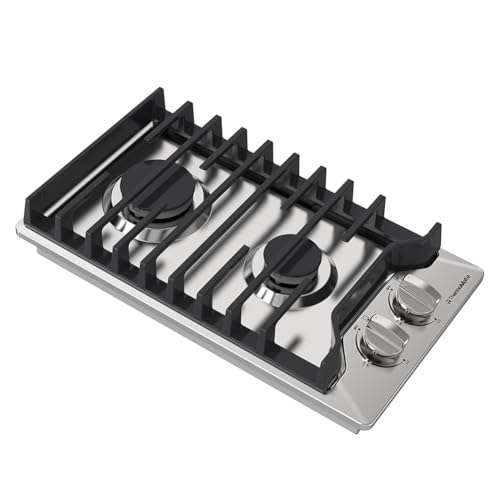
Thermomate 12 Inch Gas Cooktop
Flame failure protection and a propane conversion kit come standard on this basic two-burner drop-in unit. Knob feel and overall finish sit below the pricier picks here. For a rental refit or a secondary kitchen, that trade-off is a reasonable one.
Pros
- Least expensive drop-in option here
- Flame failure cutoff included
- Simple surface, easy to clean
Cons
- Knobs feel light duty
- Grate coating wears with heavy use
How they compare
| # | Model | Burner output | Best for | Score | Price |
|---|---|---|---|---|---|
| 1 | Iwatani ZA-3HP Portable Butane Stove | Around 12000 BTU | Best overall | 9.4 | Check price |
| 2 | Gasland Chef GH30SF Gas Cooktop | 2, tempered glass surface | Best two burner | 9.2 | Check price |
| 3 | Empava EMPV-12GC4B67A Gas Cooktop | 2, stainless surface | Best for build quality | 9.0 | Check price |
| 4 | Gas One GS-3400P Dual Fuel Portable Stove | Around 15000 BTU | Best value | 8.8 | Check price |
| 5 | Karinear 2 Burner Gas Cooktop | 2, differing outputs | Best for narrow counters | 8.6 | Check price |
| 6 | Camplux JZ-C2 Double Burner Propane Stove | 2, cast iron grates | Best for cabins | 8.3 | Check price |
| 7 | Thermomate 12 Inch Gas Cooktop | 2 | Best budget cooktop | 8.0 | Check price |
Questions worth asking
Can you use a countertop gas stove indoors?
Yes, with ventilation. Open a window or run an extractor, clear the area of anything flammable, and skip any stove labeled for outdoor use only.
Do drop-in gas cooktops need professional installation?
Almost always. A qualified fitter should make the gas connection and run the leak test, even though the worktop cutout itself is straightforward joinery.
How long does a butane cartridge last?
Around one to two hours at high output, longer at a simmer. Keep spares on hand, since a low cartridge produces a weak flame well before it runs out.
Is butane or propane better for a portable stove?
Propane performs better in cold weather and costs less per hour from a refillable tank. Butane cartridges store and handle more cleanly indoors, which is why most kitchen portables default to them.
Will a countertop gas stove work during a power outage?
Portable butane and propane models work without electricity, since a piezo igniter sparks the flame. Drop-in cooktops with electronic ignition usually need power, though many can be lit carefully with a match.
What size pan fits on a portable gas stove?
Most portables handle pans up to about ten inches comfortably. Anything larger risks instability and uneven heat around the cartridge chamber.
Do countertop cooktops need a flame failure device?
It is a genuinely valuable safety feature that cuts gas the instant a flame goes out, and it comes standard on every drop-in cooktop here. Treat it as essential in a draughty kitchen with open windows.
Can a two-burner cooktop replace a full range?
For one or two people, largely yes, though you lose the oven and the ability to run four pans at once. Many small kitchens pair a two-burner cooktop with a countertop oven instead.
Best countertop gas stove for a rental kitchen?
A sealed butane stove like the Iwatani ZA-3HP works best, since rentals rarely allow a gas line cutout. It needs nothing beyond a counter and an open window.
Gas cooktop vs electric or induction countertop unit?
Gas responds faster to heat changes and works during a power outage, while induction heats faster overall and stays cooler to the touch. Choose gas if you already cook with gas elsewhere or need it during outages.
Final word
Renters, campers and anyone without a gas line should buy the Iwatani ZA-3HP, since it cooks well on nothing more than a counter and an open window. Homeowners installing a permanent unit get two burners and flame failure protection from the Gasland Chef GH30SF, and the Empava stainless model earns its higher price with cast iron grates. Whatever route you take, ventilate the room before lighting the first burner.
Dana Whitfield
Dana spent eight years buying and merchandising for a regional kitchenware retailer before moving into editorial work. She has handled thousands of SKUs across cookware, small appliances and kitchen organization, and focuses on the practical differences that matter once a product is actually in daily use.