What Garden Tools Belong in Every Home Toolkit?
Fiskars’ 3-Piece Softouch Garden Tool Set is the top pick for everyday planting and weeding. Felco’s F-2 Classic Pruner is the tool most gardeners keep for decades because every part can be replaced, and the Radius Garden 203 PRO Digging Spade spares your wrists in heavy clay.
Most gardening hours go into planting, weeding, and light digging, which is why the Fiskars 3-Piece Softouch Garden Tool Set leads this list. Cast aluminum heads resist the bending that ruins stamped steel, and cushioned grips make repetitive work easier on the hands. Serious pruning calls for the Felco F-2 Classic, since every wearing part can be replaced rather than thrown away. Heavy clay favors the Radius Garden 203 PRO Digging Spade, whose O-grip handle spares the wrist.
Garden tools fail in a predictable place, and it is rarely the blade. A stamped head spot welded to a thin tube bends first, and a varnished handle splinters after one wet winter. Price is a weak signal too, since some expensive tools just add branding to the same imported castings. We compared steel type and heat treatment, handle material and grip design, whether the head and shaft form one piece, spare-part availability, and warranty terms, then weighed those against what owners report about tools surviving years of clay soil and being left out in the rain.
The best picks, ranked
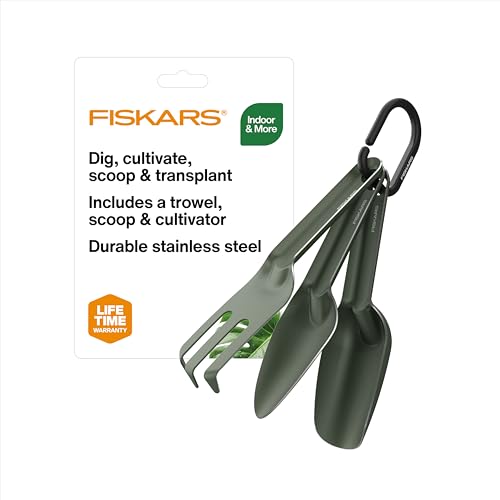
Fiskars 3-Piece Softouch Garden Tool Set
Planting, transplanting, and clearing weeds from borders take up most gardening time, and this trowel, transplanter, and cultivator combination handles all three. Cast aluminum heads do not bend at the neck the way stamped steel does. Cushioned grips make an hour of repetitive work far less punishing on the hands. Heavier jobs like prying rocks still call for a proper spade.
Pros
- Cast heads resist bending at the neck
- Grips stay comfortable through long sessions
- Lifetime warranty backs the whole set
Cons
- Not suited to prying rocks or heavy digging
- Bright handles still vanish in a border

Felco F-2 Classic Manual Hand Pruner
Gardeners talk about Felco pruners in decades rather than seasons because every wearing component ships as a spare part. Blade, anvil, spring, and adjustment nut can all be swapped, so the tool gets maintained instead of replaced. Cuts stay clean through green and semi hard wood alike. Unpadded aluminum grips run cold on frosty mornings.
Pros
- Every wearing part can be replaced
- Bypass cut stays clean without crushing stems
- Edge holds well and sharpens easily
Cons
- Grips run cold without padding
- Costs several times a basic pruner

Radius Garden 203 PRO Ergonomic Steel Digging Spade
A circular O-grip defines this spade, letting you push with your whole forearm instead of twisting a wrist against a T-handle. That difference matters most in dense clay, where a standard handle turns digging painful. The carbon steel blade sharpens for cutting through roots. Weight runs higher than a traditional wooden spade, and the resin shaft feels different from ash.
Pros
- O-grip cuts wrist strain in dense soil
- Blade sharpens for slicing through roots
- Shaft resists flexing under load
Cons
- Heavier than a traditional wooden spade
- Resin shaft feel divides opinion

Nisaku NJP650 Hori Hori Weeding and Digging Knife
One tool replaces several here, since the concave stainless blade digs planting holes, the serrated edge saws through roots, and the straight edge slices root balls and twine. Depth markings etched into the blade help with bulb planting. Sharpness demands respect, and the included sheath is worth wearing instead of tossing loose into a bucket.
Pros
- Replaces a trowel, weeder, and small saw
- Depth markings simplify bulb planting
- Stainless blade shrugs off wet soil
Cons
- Sharp enough to need careful handling
- Wooden handle needs oiling over time

Corona ClassicCUT BP 3180D Bypass Pruner
Corona occupies a useful middle ground, pairing a forged bypass pruner with a replaceable blade at a fraction of premium prices. Cuts stay clean on green growth, and a sap groove keeps the action from gumming up. Steel here does not hold an edge as long as top tier blades, so expect more frequent touch ups during a busy pruning season.
Pros
- Replaceable blade at a modest price
- Sap groove keeps the action smooth
- Comfortable through extended pruning
Cons
- Needs sharpening more often than premium steel
- Latch can feel stiff when new

Grampa’s Weeder The Original Stand Up Weed Puller
Pulling taprooted weeds like dandelions out of a lawn without kneeling on wet grass is the one job this solves properly. A claw grips the root, and the long handle levers it out whole, since a snapped taproot simply regrows. Moist soil suits it best, and it struggles in dry, compacted ground or on shallow rooted weeds.
Pros
- Pulls taproots whole so weeds do not return
- No kneeling or bending required
- Simple design with little to break
Cons
- Struggles in dry, compacted soil
- Not effective on shallow rooted weeds

Bully Tools 92309 Leaf and Thatching Rake
Most rakes fail where the head meets the handle, so Bully Tools builds this to a commercial specification with a thicker gauge head and a solid fiberglass handle. It clears leaves quickly and doubles for pulling thatch out of lawns. Weight runs higher than a plastic leaf rake, which barely matters for thatching but shows across a large lawn.
Pros
- Head joint built to a commercial standard
- Fiberglass handle resists weather and splintering
- Handles thatching as well as leaf clearing
Cons
- Heavier than plastic leaf rakes
- Steel tines can scalp delicate turf if forced
What to look for
What actually breaks first on a cheap tool Almost every cheap garden tool fails in the same spot, where a stamped steel head is spot welded onto a thin tube. Weight on that joint bends the neck or cracks the weld. Better alternatives include a one piece forged head and socket, a cast head with a deep tang running into the handle, or solid strap construction with steel running up both sides. Any of the three will outlast a spot welded tube by years.
Handles decide whether you keep reaching for the tool Ash handles absorb shock and can be replaced, which is why traditional tools still use them, though they need occasional oiling and split if left out in rain. Fiberglass stays weatherproof and stiff, transmitting more shock to the hands but needing no maintenance. Cushioned polymer grips suit hand tools where repetitive motion causes blisters. Handle length should match your height, since a spade that is too short forces you to stoop.
Buy tools you can actually service A tool that lasts five years and one that lasts thirty usually differ in one way, whether parts are available. Pruners with replaceable blades, springs, and pivot bolts can be rebuilt indefinitely. Spades with replaceable handles survive the one drop that would otherwise end them. Check whether the manufacturer sells spares before buying, since that single fact predicts long term cost better than the price tag does.
Maintenance that takes minutes and doubles tool life Scrape soil off blades before storing them, since damp earth holds moisture against steel and starts pitting. Wipe carbon steel with an oily rag after use, and keep stainless tools dry too, since they can still corrode. Sharpen pruners and spade edges with a few passes of a file at the original angle rather than reshaping the bevel. Oil wooden handles once a season, and hang tools up rather than standing them in a bucket of wet grit.
Side by side
| # | Model | Contents | Best for | Score | Price |
|---|---|---|---|---|---|
| 1 | Fiskars 3-Piece Softouch Garden Tool Set | Trowel, transplanter, cultivator | Best overall | 9.4 | Check price |
| 2 | Felco F-2 Classic Manual Hand Pruner | Bypass hand pruner | Best pruner | 9.3 | Check price |
| 3 | Radius Garden 203 PRO Ergonomic Steel Digging Spade | Carbon steel, sharpenable | Best spade | 9.1 | Check price |
| 4 | Nisaku NJP650 Hori Hori Weeding and Digging Knife | Stainless steel, concave | Best multi purpose tool | 8.9 | Check price |
| 5 | Corona ClassicCUT BP 3180D Bypass Pruner | Bypass hand pruner | Best value pruner | 8.6 | Check price |
| 6 | Grampa’s Weeder The Original Stand Up Weed Puller | Stand up weed puller | Best for weeding | 8.3 | Check price |
| 7 | Bully Tools 92309 Leaf and Thatching Rake | Leaf and thatching rake | Best rake | 8.0 | Check price |
Questions worth asking
What garden tools does a beginner actually need?
A hand trowel, bypass pruners, a digging spade, a garden fork, and a rake cover almost everything in a typical garden. Add a hori hori knife once digging and cutting start competing for the same hand.
Are expensive garden tools worth the extra cost?
For pruners, spades, and forks, usually yes, since neck construction and spare-part availability genuinely determine lifespan. For rakes and simple hand tools the gap narrows, and mid priced options perform close to premium ones.
What is the difference between bypass and anvil pruners?
Bypass pruners cut like scissors, with two blades passing each other for a clean cut that heals well on living stems. Anvil pruners crush a stem against a flat plate, which suits dead wood but damages green growth.
How do I stop garden tools from rusting?
Clean soil off after every use, dry the metal, and wipe carbon steel with an oiled rag. Store tools hanging in a dry shed rather than standing on a damp floor. A bucket of oiled sand is a traditional and effective way to store hand tools.
Should I choose wooden or fiberglass handles?
Ash absorbs shock better and can be replaced when it breaks, but needs oiling and shelter. Fiberglass stays weatherproof and strong, though it transmits more vibration and is harder to replace. Pick ash if you maintain tools regularly, fiberglass if you would rather not.
How often should pruners be sharpened?
Touch them up whenever cuts start tearing instead of slicing, which can mean every few weeks during a busy season. A few passes with a fine file or diamond stone at the existing bevel angle is usually enough.
What is a hori hori knife used for?
It digs planting holes, saws through roots, slices root balls when dividing plants, cuts twine, and levers out weeds. Many gardeners find it replaces two or three separate hand tools once they get used to carrying one.
Is a garden tool set better value than buying individually?
Sets work well for hand tools that see similar use, like a trowel and cultivator pair. For pruners, spades, and forks, buying individually lets you spend where quality matters and skip filler pieces you will never use.
How do I know if a tool’s neck construction is strong?
Look for a one piece forged head, a cast head with a deep tang, or solid strap steel running up the handle. Avoid a thin tube with a stamped head spot welded on, since that joint is where most cheap tools fail first.
Our take
For everyday planting and weeding, the Fiskars 3-Piece Softouch Garden Tool Set is the sensible foundation, backed by a lifetime warranty. One pruner is worth spending properly on, and the Felco F-2 Classic earns that spot since replaceable parts turn it into a lifetime purchase. Anyone digging heavy soil regularly should add the Radius Garden 203 PRO Digging Spade for the wrist relief its O-grip provides.
Sierra Daniels
Sierra's background is in landscape design and nursery retail. She focuses on lawn and garden equipment, outdoor furniture and gear durability, weighing published specs against how materials actually hold up outside.