Which Garden Hand Tools Are Worth Keeping in Your Shed?
For most gardeners, the Felco F-2 Classic Hand Pruner wins because every wearing part can be rebuilt rather than replaced whole. Fiskars Big Grip Garden Trowel is the budget value pick with a one piece cast head, and Nisaku NJP650 Hori Hori covers digging, weeding and root cutting in a single blade.
Sharp secateurs change how pruning feels, and the Felco F-2 rebuilds indefinitely instead of going in the bin. Digging is covered between the Fiskars Big Grip Garden Trowel and the Nisaku NJP650 Hori Hori, which between them handle almost every planting and weeding job.
A stamped steel head riveted into a hollow handle is where nearly every cheap tool fails first. That joint flexes under leverage, loosens over a season, then snaps while prying out a root. We compared head construction, whether spare blades and springs are actually sold for each model, handle material, and what owners report about bending, rusting and blistering after a full year outdoors.
What to look for
What to look for before buying any hand tool Check whether the head and handle are cast or forged as one piece, or stamped and riveted together. Riveted joints work loose under leverage and eventually snap, usually mid dig. A visible collar where blade meets handle is the warning sign. One piece construction removes that failure point entirely, so it is worth checking before anything else on a listing.
Which metal suits your soil and your habits Stainless steel resists rust and sheds soil cleanly, which suits clay ground and gardeners who leave tools outside. Carbon steel holds a sharper edge for cutting jobs but rusts if it stays wet. Cast aluminium never corrodes and stays light, though it cannot take a fine edge. Match the metal to how you dig, not just what looks premium.
Why replaceable parts matter more for pruners than trowels A pruner wears out at the blade, spring and pivot, all of which are sold separately on well supported brands. Buying a model with listed spare parts turns a two season tool into a decade long one. Sealed pruners with no parts range go in the bin the moment the blade dulls beyond a simple sharpening.
Keeping edges and handles working through the season Wipe soil and sap off blades after each use, and dry carbon steel before storing it. A fine file or diamond stone on a pruner edge, done regularly, beats waiting until cuts start tearing instead of slicing. Wooden handles want a coat of linseed oil once or twice a year to stop them drying and splitting.
The best picks, ranked

Felco F-2 Classic Manual Hand Pruner
Hardened steel blades pair with forged aluminium handles on this bypass pruner, and the blade, spring, anvil and adjustment nut all ship as separate replacement parts. A worn tool gets rebuilt instead of thrown out. Owners frequently report the same pair still cutting cleanly after a decade of parts swaps.
Pros
- Every wearing part is replaceable
- Clean bypass cut that heals well
- Forged handles resist flexing under load
Cons
- One handle size does not suit small hands
- Needs regular sharpening to keep the cut clean

Fiskars Big Grip Garden Trowel
Head and handle are cast from aluminium as a single piece, so there is no joint left to fail. An oversized grip spreads pressure across the palm instead of digging into the base of the thumb. Compacted soil and light root work rarely bend it, unlike a stamped steel blade.
Pros
- No head to handle joint to fail
- Large grip reduces hand fatigue
- Aluminium head does not rust
Cons
- Wide grip feels bulky for small hands
- Blade edge is too blunt to cut roots

Nisaku NJP650 Hori Hori Weeding Knife
A straight edge on one side and a serrated edge on the other let this stainless soil knife dig, cut roots and divide perennials with a single tool. Depth graduations run along the blade for bulb planting. Most owners who buy one stop reaching for a separate trowel almost entirely.
Pros
- Replaces several tools in one
- Serrated edge cuts through roots
- Depth marks help with bulb planting
Cons
- Sharp enough to need a sheath and care
- Wooden handle needs occasional oiling

Corona ClassicCUT BP 3180 Bypass Pruner
A wider handle span suits gardeners who find slimmer pruners cramped, and a self cleaning sap groove stops the blade gumming up on conifers and fruit wood. The blade itself is replaceable, though fewer spare parts exist than for Felco. Day to day pruning feels comfortable rather than pinched.
Pros
- Comfortable for larger hands
- Sap groove keeps blades running clean
- Blade can be replaced when worn
Cons
- Fewer replacement parts than the leader
- Handle span is too wide for small hands

Radius Garden 100 Ergonomic Hand Trowel
An upturned handle keeps the wrist neutral instead of bending it back on every push, which matters for anyone managing arthritis or repetitive strain. Resin coating on the carbon steel blade helps soil release cleanly. Prepared beds suit it far better than compacted or heavy clay ground.
Pros
- Keeps the wrist in a neutral position
- Coating helps soil release from the blade
- Comfortable grip for long sessions
Cons
- Struggles in hard compacted ground
- Coating chips over time on stony soil

Fiskars Ergo Garden Cultivator
Three curved tines break up a crusted soil surface and drag out shallow weeds without disturbing nearby roots. One piece cast aluminium construction matches the trowel in the same range. Think of it as a supporting tool that saves kneeling, not a first purchase on its own.
Pros
- Breaks surface crust quickly
- One piece build with no joint to loosen
- Comfortable grip shape
Cons
- Only effective at shallow depth
- Tines can snag on established roots
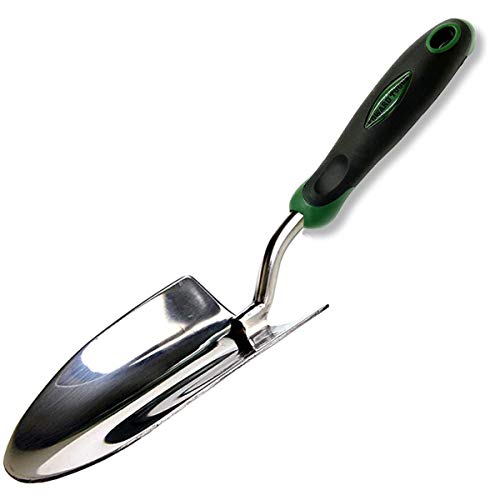
Edward Tools Bend-Proof Hand Trowel
Thick gauge carbon steel gives this trowel a heavier blade than most entry level tools, built for anyone who keeps snapping cheaper ones. Drying it after use prevents surface rust from forming. Based on specifications, it carries the heaviest blade here relative to its size.
Pros
- Thicker blade resists bending
- Simple, sturdy construction
- Hanging hole for shed storage
Cons
- Carbon steel rusts if left damp
- Heavier in the hand than aluminium tools
How they stack up
| # | Model | Type | Best for | Score | Price |
|---|---|---|---|---|---|
| 1 | Felco F-2 Classic Manual Hand Pruner | Bypass hand pruner | Best overall | 9.4 | Check price |
| 2 | Fiskars Big Grip Garden Trowel | Cast aluminium, one piece | Best value | 9.2 | Check price |
| 3 | Nisaku NJP650 Hori Hori Weeding Knife | Stainless steel, around 7 inches | Best all purpose digging tool | 9.0 | Check price |
| 4 | Corona ClassicCUT BP 3180 Bypass Pruner | Bypass hand pruner | Best for larger hands | 8.8 | Check price |
| 5 | Radius Garden 100 Ergonomic Hand Trowel | Carbon steel with resin coating | Best for wrist strain | 8.6 | Check price |
| 6 | Fiskars Ergo Garden Cultivator | Cast aluminium, one piece | Best for weeding between plants | 8.3 | Check price |
| 7 | Edward Tools Bend-Proof Hand Trowel | Heavy gauge carbon steel | Best budget | 8.0 | Check price |
Frequently asked questions
Which garden hand tools do I actually need to start?
A sturdy trowel, a pair of bypass pruners and something for weeding cover most garden work. A hori hori knife can do the job of a trowel and a weeder together. Add a cultivator once you know which tasks you repeat most often.
What is the difference between bypass and anvil pruners?
Bypass pruners cut like scissors, with two blades sliding past each other, leaving a clean cut on living stems. Anvil pruners crush the stem against a flat plate, which suits deadwood but bruises green growth. Bypass is the better default choice for most pruning.
Are stainless steel tools better than carbon steel?
For digging, usually, since stainless sheds soil and resists rust. Good carbon steel holds a sharper edge for longer on cutting tools. Which one wins depends on whether tools actually get cleaned and dried after use.
How do I stop a trowel from bending?
Pick a one piece cast or forged tool instead of a stamped blade riveted to a handle. Use a fork or a hori hori for levering out roots rather than the trowel itself. Bending mostly happens when a trowel gets used as a pry bar.
How often should pruners be sharpened?
Touch up the edge as soon as cuts start tearing instead of slicing cleanly, which during a busy growing season can mean every few weeks. A handful of strokes with a fine file on the bevel usually does it. Full resharpening is only needed after the edge chips.
Do ergonomic handles really help with hand pain?
For arthritis, tendon issues or long sessions, yes. Upturned handles keep the wrist neutral, and wider grips spread pressure across the palm instead of one pressure point. Short bursts of light work benefit less, but comfort costs nothing extra to choose.
Is a hori hori knife worth buying for a small garden?
For most gardeners, yes. One blade digs, cuts roots, plants bulbs to a measured depth and lifts tap rooted weeds whole. It is genuinely sharp, so a sheath and careful handling around children are worth the small extra step.
How should hand tools be stored over winter?
Clean off soil, dry every surface, and lightly oil carbon steel blades before hanging tools rather than leaving them in a damp bucket. Wooden handles need to be fully dry, and a coat of linseed oil before storage prevents cracking.
Bypass pruners vs a hori hori for everyday cutting: which wins?
Bypass pruners give a cleaner, controlled cut on stems up to about an inch thick and heal better on living wood. A hori hori manages thinner roots and rough cutting but is not built for precise stem work. Most gardeners end up owning both.
The bottom line
Felco F-2 Classic Hand Pruner earns its price because replaceable parts keep it in service long after other pruners get discarded. Pair it with the one piece Fiskars Big Grip Garden Trowel for planting, then add a Nisaku NJP650 Hori Hori if a single tool needs to dig, weed and cut roots at once.
Sierra Daniels
Sierra's background is in landscape design and nursery retail. She focuses on lawn and garden equipment, outdoor furniture and gear durability, weighing published specs against how materials actually hold up outside.