Garage Creeper Pads That Actually Keep You Comfortable
The Torin Big Red Foam Creeper Pad is the best overall pick, balancing a durable ribbed vinyl shell with enough foam to block concrete cold on jobs under an hour. Pro-Lift’s mat costs less, and the Lisle pad adds a headrest for longer sessions.
The Torin Big Red Foam Creeper Pad is the best all-around pick, giving most mechanics enough cushioning for an hour under a car without the bulk of a rolling creeper. It is thin enough to store easily yet still blocks concrete cold. The tradeoff is no wheels, so repositioning means dragging the pad by hand.
Creeper pads get confused with rolling creepers constantly, so we compared foam density, cover material, and folded or rolled size against how long each design holds its shape before owners report flattening. Durability feedback and storage practicality shaped the ranking more than headline thickness numbers.
The best picks, ranked
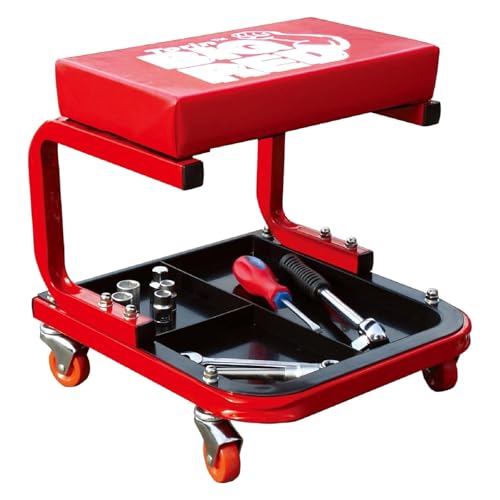
Torin Big Red Foam Creeper Pad
Torin’s pad uses a solid foam core wrapped in a ribbed vinyl shell, so it resists tearing where elbows drag across the surface. At 36 inches long, it covers torso to hips for most adult body types. Owners note it stays flat after storage, unlike thinner rollup mats.
Pros
- Ribbed vinyl resists tearing
- Stays flat in storage
- Blocks cold from concrete
Cons
- No wheels for repositioning
- No built-in headrest
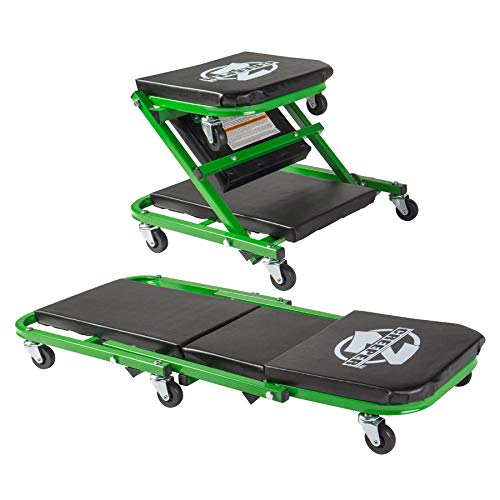
Pro-Lift Vinyl Padded Creeper Mat
Pro-Lift trims the foam core to keep the price low while still covering shoulders to lower back. The vinyl cover wipes clean after oil drips. It folds in half for storage on a shelf or hook.
Pros
- Lowest price in this lineup
- Folds for shelf storage
- Wipes clean quickly
Cons
- Thinner cushioning than premium pads
- Shorter length may not cover tall users

Custom Accessories Original Creeper Pad
This pad rolls into a tight cylinder instead of folding, which matters in a one-car garage with no shelf space. The cover uses lighter vinyl than the Torin or Omega pads. It unrolls flat within seconds and stays put once weighted down.
Pros
- Rolls smaller than folding designs
- Bungee strap keeps it compact
- Lightweight to carry
Cons
- Lighter vinyl wears faster under heavy use
- Needs a flat surface to unroll fully

Omega Lift Padded Creeper Mat
Omega doubles the vinyl layer at the edges, the spots that wear through first on daily-use pads. The foam core keeps its shape after months on a shop floor. Extra weight compared with other pads here actually helps it stay put during work.
Pros
- Reinforced edges outlast single-layer vinyl
- Larger size covers more of the body
- Resists shifting during use
Cons
- Bulkier to store than smaller pads
- Costs more than budget options

Lisle Foam Creeper Pad with Headrest
Lisle raises one end into a shaped headrest, so the neck is not flat against concrete during long jobs under a dash or engine bay. The extra foam adds bulk, but most owners find the tradeoff worth it for exhaust and suspension work. Vinyl covers both faces.
Pros
- Headrest reduces neck strain on long jobs
- Vinyl covers top and bottom
- Good cushioning for exhaust and suspension work
Cons
- Headrest bump limits how far it rolls up
- Heavier than flat pads

FastTool Folding Creeper Pad
FastTool adds a zippered side pocket sized for sockets and small wrenches, so a quick job does not require a separate tool tray. It folds into thirds rather than rolling, fitting flat behind a toolbox. The pocket adds slight stiffness to one edge.
Pros
- Side pocket keeps small tools within reach
- Folds flat for behind-toolbox storage
- Mid-range thickness suits most jobs
Cons
- Pocket zipper is a wear point over time
- Folding creases can show on the vinyl

Partsam Mechanics Creeper Pad
Partsam strips the design down to a thin foam sheet with a basic vinyl wrap, keeping total weight under two pounds. It suits occasional users who need a pad in the trunk for roadside work rather than daily shop use. Cushioning runs noticeably thinner than the rest of this list.
Pros
- Easiest to carry or stash in a trunk
- Lowest bulk of any pad here
- Fine for occasional roadside use
Cons
- Thin foam offers less protection on daily jobs
- Smaller size leaves shoulders exposed
What to look for
What to Look For in a Creeper Pad Foam density and cover material decide how long a pad lasts under knees and elbows. A thicker foam core blocks concrete cold better, while a tougher vinyl shell resists tears from zippers and tool edges. Length matters too: anything under 32 inches leaves shoulders exposed on taller mechanics.
Foam Thickness and Comfort on Concrete Pads between 1 and 1.5 inches thick suit most jobs under 30 minutes. Longer sessions, especially exhaust or suspension work, benefit from the 2-inch headrest designs like Lisle’s. Thinner pads under an inch work fine for quick roadside fixes but transmit more cold and hardness.
Best for Tight Garage Storage Rolling designs like Custom Accessories take up less shelf space than folding pads, since a cylinder tucks into a corner or hangs from a hook. Folding pads lie flatter behind a toolbox but need more floor-to-ceiling clearance to store upright.
When a Wheeled Creeper Makes More Sense A pad has no wheels, so repositioning means dragging it by hand across the floor. Mechanics who slide frequently between the engine bay and wheel wells during the same job usually do better with a rolling creeper seat instead of a stationary pad.
How they stack up
| # | Model | Material | Best for | Score | Price |
|---|---|---|---|---|---|
| 1 | Torin Big Red Foam Creeper Pad | Foam core, vinyl shell | Best overall | 9.4 | Check price |
| 2 | Pro-Lift Vinyl Padded Creeper Mat | Foam core, smooth vinyl | Best value | 9.1 | Check price |
| 3 | Custom Accessories Original Creeper Pad | Foam core, light vinyl | Best for small garages | 8.9 | Check price |
| 4 | Omega Lift Padded Creeper Mat | Foam core, double-layer vinyl | Best for heavy daily use | 8.7 | Check price |
| 5 | Lisle Foam Creeper Pad with Headrest | Foam core, vinyl shell | Best for neck support | 8.5 | Check price |
| 6 | FastTool Folding Creeper Pad | Foam core, vinyl shell | Best for tool storage | 8.3 | Check price |
| 7 | Partsam Mechanics Creeper Pad | Thin foam, basic vinyl | Best lightweight pick | 8.0 | Check price |
Good to know
What is a creeper pad used for?
A creeper pad cushions the body while lying on a garage floor to work underneath a vehicle. It replaces a bare concrete surface with foam and a wipeable vinyl cover.
Are creeper pads better than rolling creepers?
Pads cost less and store smaller, but rolling creepers let a mechanic slide between work areas without standing up. Choose a pad for short jobs and tight storage, a creeper for frequent repositioning.
How thick should a mechanic creeper pad be?
Most pads run between 1 and 2 inches. Thicker foam helps on jobs lasting longer than 30 minutes, while thinner pads suit quick roadside or driveway fixes.
Can you use a creeper pad on a concrete garage floor?
Yes, concrete is the main surface these pads are designed for. The vinyl shell and foam core block both cold and hardness better than lying directly on the slab.
Do creeper pads come with a headrest?
Some do, like the Lisle pad in this list. A built-in headrest reduces neck strain during longer jobs such as exhaust or suspension repairs.
How do you clean a vinyl creeper pad?
Wipe the vinyl shell with a shop rag and mild degreaser after oil or grease contact. Avoid soaking the foam core, since trapped moisture can take days to dry out.
What size creeper pad fits most mechanics?
A length of 34 to 38 inches covers shoulders to hips for most adults. Shorter pads under 32 inches work for smaller frames or quick jobs.
Is a foam or vinyl creeper pad more durable?
Foam is the cushioning core in every pad on this list. Durability comes down to the vinyl cover thickness, with double-layer designs like Omega’s outlasting single-layer budget covers.
Can a creeper pad replace knee pads?
A creeper pad protects the torso while lying flat, not the knees while kneeling. Pair it with separate knee pads for jobs that mix kneeling and lying positions.
Our pick
The Torin Big Red Foam Creeper Pad covers the most ground for typical driveway and garage work, balancing cushioning with a size that still rolls up for storage. Anyone doing long exhaust or suspension jobs should look at the Lisle pad instead, since its built-in headrest cuts neck strain that flat designs do not address. Mechanics in a one-car garage with no shelf space get more from the Custom Accessories pad, which rolls smaller than any folding option here.
Tony Russo
Tony trained as an automotive technician and spent years in service and parts retail before moving into writing. He focuses on garage tools, car care products and accessories from a hands-on maintenance perspective.