Boom Arms That Keep Cable Hidden and Mics Steady
The Elgato Wave Mic Arm LP suits most streaming desks with its internal cable channel and folding low profile. Heavier XLR microphones need the added capacity of the Rode PSA1+ or the Gator Frameworks Deluxe arm instead. Tight budgets still get internal cable routing with the Fifine BM88, just at a lower weight limit.
Elgato’s Wave Mic Arm LP is the pick for most desks, hiding cable end to end while folding flat when not extended. Its 2.2 pound capacity still limits it with heavier XLR microphones, where the Rode PSA1+ or Blue Compass Premium take over instead.
Thread size, desk thickness and mic weight decide which arm actually works, and spec sheets alone rarely make that clear. We compared reach, clamp hardware and owner reports on drift or cable strain across seven current arms, weighing internal routing against real weight capacity.
The shortlist, ranked

Elgato Wave Mic Arm LP
Cable disappears into a fully internal channel from clamp to mic capsule. Spring tension locks the arm in place after months of daily repositioning, without gradual sag. A folding hinge lets it lie flat on desks under 2.36 inches thick.
Pros
- Cable stays hidden along the entire arm
- Spring tension resists drift over time
- Folds flat for shallow desk setups
Cons
- Caps out at 2.2 pounds, too light for heavier XLR mics
- Clamp needs a firm desk edge to grip
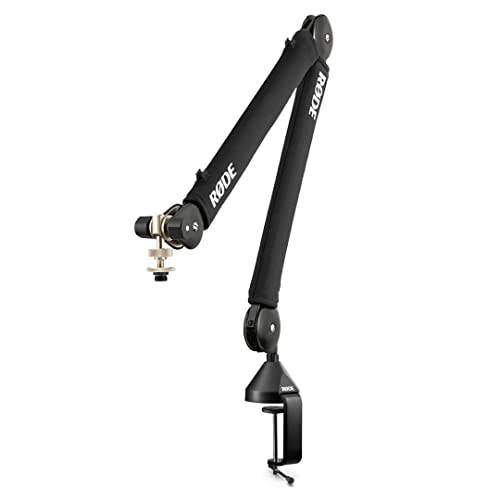
Rode PSA1+
Metal construction extends to 32 inches and swings a full 360 degrees around its clamp. Internal routing replaces the exposed cable path of the original PSA1. Counterweight spring tension holds heavier condenser and dynamic mics without drifting downward.
Pros
- Handles heavier XLR mics without sagging
- Full 360 degree rotation at the base
- Metal joints stay tight over years of use
Cons
- Bulkier footprint than low profile arms
- Priced above most arms in this roundup

Blue Compass Premium
A rubberized channel runs the full length of this steel arm, so no cable segment sits exposed. Vertical travel of 24 inches adjusts between sitting and standing desk heights. Six pounds of rated capacity covers most XLR and USB mics paired with a shock mount.
Pros
- Highest weight capacity in this comparison
- Cable channel covers the entire arm
- Clamp holds tight through repeated repositioning
Cons
- Folds taller than compact low profile arms
- Only mounts via desk clamp, no through desk option

HyperX Boom Arm
A compact folded profile suits desks already crowded with a keyboard tray. Bundled adapters cover 3/8 inch and 5/8 inch threading, extending compatibility beyond HyperX microphones. Internal cable routing at this price point is uncommon among steel arms.
Pros
- Compact folded size fits crowded desks
- Adapters fit most third party microphones
- Internal routing rare in this price range
Cons
- C clamp will not seat on desks over 2 inches thick
- Shorter maximum reach than premium arms

Gator Frameworks Deluxe Desk Mounted Mic Boom Stand
Reach extends to 39 inches, the longest in this lineup, clearing multi monitor setups with room to spare. External clips manage cable rather than an internal channel. Heavy steel spring tension supports a mic and shock mount combo without dropping over a session.
Pros
- Longest reach of any arm in this group
- Spring tension supports mic and shock mount combos
- Standard 5/8 inch threading fits most microphones
Cons
- Cable stays visible without an internal channel
- Full extension needs extra desk clearance

Neewer NW-1 Adjustable Boom Scissor Arm
A steel scissor arm reaches 33 inches and ships with a shock mount and pop filter, unusual bundling at this price. Velcro clips handle cable instead of an internal channel. First time streamers get a low risk way to add a boom arm without extra purchases.
Pros
- Shock mount and windscreen included at no extra cost
- Reach matches arms costing significantly more
- Clamp fits most standard desk edges
Cons
- Cable remains exposed along the arm
- Joints loosen faster than metal built competitors

Fifine BM88
An aluminum alloy build folds under 15 inches while still routing cable through an internal channel. Both 3/8 inch and 5/8 inch threading come standard, skipping extra adapter purchases. Owners adding a second arm for a co-streamer setup pick this most often.
Pros
- Internal routing uncommon at this price
- Compact folded length suits small desks
- Standard threading fits most microphones directly
Cons
- Weight capacity trails the metal built arms
- Spring tension loosens sooner under heavier mics
Before you buy
What to check before buying a mic arm Thread size, desk thickness and mic weight decide whether an arm actually works, before style enters the picture. Most C clamps seat on desk edges up to 2 inches thick, though thicker standing desks need a wider throat opening. Compare the arm’s rated capacity against your microphone plus shock mount, since some USB condensers weigh close to a pound on their own.
Internal versus external cable routing A full internal channel hides cable from clamp to capsule, useful on camera or on a visibly busy desk. External clip systems cost less to manufacture but leave cable running along each joint. Budget arms increasingly ship with internal routing now, so it no longer signals a premium price alone.
Which arm fits a compact or shared desk? Low profile arms folding under 15 inches work well next to a keyboard tray or a second monitor arm. Both the HyperX Boom Arm and Fifine BM88 fold flat and clamp without needing much desk depth. A shorter folded height also keeps the mic from swinging into camera frame by accident.
Which arm holds a heavier XLR microphone? Dynamic XLR microphones like the Shure SM7B outweigh most USB condensers, and a light duty arm sags under that weight plus a shock mount. Rode’s PSA1+ and the Blue Compass Premium rate for higher loads using stiffer internal springs. Match the rated capacity to the actual mic before assuming any boom arm handles it.
How they compare
| # | Model | Material | Best for | Score | Price |
|---|---|---|---|---|---|
| 1 | Elgato Wave Mic Arm LP | Aluminum and steel | Best overall | 9.4 | Check price |
| 2 | Rode PSA1+ | All metal construction | Best for XLR mics | 9.2 | Check price |
| 3 | Blue Compass Premium | Steel with rubberized cable channel | Best cable management | 9.0 | Check price |
| 4 | HyperX Boom Arm | Steel | Best compact design | 8.8 | Check price |
| 5 | Gator Frameworks Deluxe Desk Mounted Mic Boom Stand | Steel spring arm | Best heavy duty reach | 8.6 | Check price |
| 6 | Neewer NW-1 Adjustable Boom Scissor Arm | Steel scissor arm | Best budget | 8.3 | Check price |
| 7 | Fifine BM88 | Aluminum alloy | Best value | 8.0 | Check price |
Questions worth asking
What thread size do gaming mic arms use?
Nearly all use a 5/8 inch mount, with 3/8 inch handled through an included adapter. Check your microphone’s own mount size first, since some USB mics use neither without a separate adapter.
Do mic arms work with USB microphones?
Yes, provided the mic’s stand mount matches the arm’s threading or comes with an adapter. Weight matters more than connection type, since a heavy USB condenser still needs a properly rated spring.
Can a boom arm hold a Shure SM7B?
Only arms rated for around 2 pounds or more, since the SM7B outweighs typical USB mics. The Rode PSA1+ and Blue Compass Premium both clear that bar, while lighter budget arms may sag.
How do you mount a mic arm without drilling into the desk?
A desk clamp is the standard mount and grips the edge without drilling. Through desk grommet mounts exist as an alternative but need a cable pass hole already present or drilled.
What is the difference between spring tension and friction arms?
Spring tension arms use an internal spring to counterbalance the mic, holding position with a light touch. Friction arms rely on tightened joints instead, which can loosen after months of daily use.
Do mic arms include a shock mount?
Some budget arms like the Neewer NW-1 bundle one in, while premium arms such as the Rode PSA1+ expect a separately purchased shock mount. Check the listing rather than assuming either way.
How far can a mic boom arm extend?
Reach ranges from around 24 inches on compact arms to nearly 40 inches on models built for wide or multi monitor desks. Longer reach needs more desk clearance to swing without hitting a screen.
Is internal cable routing worth paying extra for?
It matters most on camera or on a visibly cluttered desk, since the cable disappears into the arm instead of dangling. Off camera, external clip management works fine and saves some cost.
The bottom line
The Elgato Wave Mic Arm LP earns the overall pick for hiding cable completely while staying light enough for most desks. Anyone running a heavier XLR microphone should move up to the Rode PSA1+ or Blue Compass Premium instead. Tight budgets are covered well by the Fifine BM88, which keeps internal routing without the added cost.
Marcus Chen
Marcus covered consumer electronics for enthusiast tech publications for six years before joining ChoiceCrest. He specializes in translating manufacturer spec sheets into plain-language buying advice, with a focus on audio, computing accessories and smart-home gear.