Why Does a Wireless Charger Heat Up a Phone More Than a Cable?
A wireless charger heats a phone up more than a cable mainly because inductive charging converts electricity into a magnetic field and then back into electricity again, and every conversion step in that process loses some energy as heat rather than delivering it all to the battery. A wired cable sends power through a direct electrical connection with far fewer conversion losses, so less of the energy turns into waste heat along the way. Misalignment between the charging pad’s coil and the phone’s coil, along with a phone case blocking some heat from escaping, both make this normal inefficiency more noticeable than it would otherwise be.
How wireless charging actually moves power into the phone
A wireless charger contains a coil that generates an oscillating magnetic field when powered on, and the phone contains its own receiving coil that converts that magnetic field back into electrical current to charge the battery. This back-and-forth energy conversion, from electricity to magnetism and then back to electricity, is the core mechanism of inductive charging and is fundamentally different from a cable simply carrying current directly from charger to battery.
Why that conversion process is inherently less efficient
Every stage of converting energy from one form to another and back loses some portion as heat, which is a basic property of how induction works rather than a flaw in any specific charger. Wired charging skips this conversion almost entirely, moving electrical current through a direct connection, which is why wired charging is consistently more energy efficient than wireless charging at a comparable power level.
How coil misalignment makes heat worse
Wireless charging works best when the phone’s receiving coil sits directly centered over the charging pad’s transmitting coil. Even a small offset forces the system to work less efficiently to transfer the same amount of power, and that lost efficiency shows up as additional heat rather than simply slower charging in many cases.
Why phone cases make the heat more noticeable
A thick phone case, particularly one made from materials that do not conduct heat away quickly, can trap some of the heat generated during wireless charging against the phone’s body instead of letting it dissipate into the surrounding air. This does not cause the extra heat in the first place, but it does make the phone feel warmer to the touch than it would charging case-free.
Why a phone sometimes slows its own charging speed when it gets warm
Modern phones include thermal management software that deliberately reduces charging speed, and sometimes pauses charging altogether, once internal temperature crosses a certain threshold. This is a protective measure to prevent battery degradation or damage from excess heat, not a malfunction, and it is part of why wireless charging can feel slower in warmer rooms or under thicker cases.
Practical ways to reduce the heat during wireless charging
Removing a thick case before placing the phone on the charger, making sure the phone is centered precisely on the charging pad, and charging in a cooler room all reduce the extra heat generated during a wireless charging session. Choosing a charger that matches rather than exceeds the phone’s supported wireless charging wattage can also avoid unnecessary strain that generates more heat than needed.
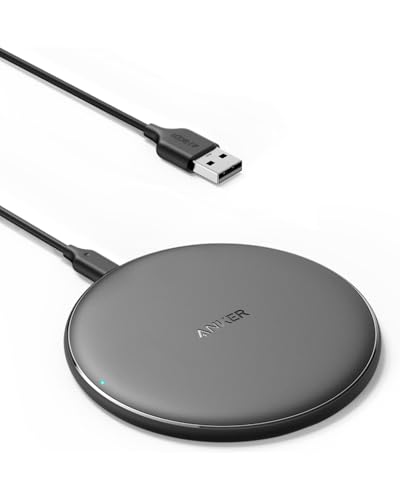
Anker PowerWave Pad
A single-coil wireless charging pad with built-in temperature control circuitry designed to manage heat during charging.

Belkin BoostCharge Pro 3-in-1 Wireless Charging Stand
A multi-device wireless charging stand with cooling considerations built into its stand design for phone, watch and earbuds.
Good to know
Is it bad for my phone’s battery to charge wirelessly if it gets warm?
Occasional warmth during wireless charging is normal and phones have built-in protections against overheating, but consistently charging in ways that generate excess heat, like under a thick case, can contribute to faster long-term battery wear.
Does a faster wireless charger always generate more heat than a slower one?
Generally yes, since higher power transfer through the same inductive process tends to produce more heat as a byproduct, though well-designed fast chargers include better thermal management to offset this.
Why does my phone charge slower wirelessly in summer than in winter?
Higher ambient room temperature gives the phone’s thermal management system less headroom before it throttles charging speed to avoid overheating, so wireless charging can genuinely be slower in warmer conditions.
Should I remove my phone case every time I charge wirelessly?
It is not strictly necessary for thin cases, but removing a thick or insulating case can noticeably reduce heat buildup and may slightly improve charging efficiency, especially with faster wireless chargers.
Does wireless charging damage a phone’s battery faster than wired charging?
Wireless charging is somewhat less efficient and tends to run slightly warmer, and since heat is a known factor in long-term battery degradation, some battery longevity research suggests wired charging may be marginally gentler over years of daily use, though the difference for most users is modest.
Why does my wireless charger feel warm to the touch even without a phone on it?
Many wireless chargers draw a small amount of standby power and some components can generate minor warmth even when idle, though a charger running hot with nothing charging may indicate an internal issue worth checking.
Can misaligning my phone on a wireless charger actually slow down charging and increase heat at the same time?
Yes, both effects often happen together, since poor coil alignment reduces transfer efficiency, which both slows the effective charging speed and increases the proportion of energy lost as heat.
Does a wireless charging stand run cooler than a flat wireless charging pad?
Not inherently; the heat generation depends more on coil design, alignment and power level than whether the charger is shaped as a stand or a flat pad, though stands can sometimes allow better airflow around the phone.
Is it safe to leave a phone on a wireless charger overnight?
Yes, modern phones and chargers include safeguards that stop or reduce power once the battery is full, which prevents the kind of prolonged overheating that would be a safety concern.
Why do some wireless chargers include a small fan?
Higher-wattage wireless chargers sometimes add active cooling with a small fan to actively manage the increased heat generated at faster charging speeds, which passive cooling alone may not handle as effectively.
Does charging wirelessly while using the phone generate more heat than charging while it’s idle?
Yes, since active use adds processor and screen heat on top of the charging process itself, which combines with inductive charging heat to raise the phone’s overall temperature more than idle charging would.
Can a cheap or uncertified wireless charger cause more heat than a reputable one?
Yes, chargers without proper certification or quality coil design and thermal regulation can run less efficiently and generate more excess heat than a well-engineered charger from an established brand.
Does the type of phone case material matter for how much heat gets trapped?
Yes. Thicker cases and materials that insulate rather than conduct heat, such as some rugged rubber cases, tend to trap more heat against the phone than thin, heat-conductive cases.
Will using a wireless charger that outputs more watts than my phone supports cause extra heat?
Not necessarily extra heat, since the phone’s own charging circuitry negotiates and limits the power it actually draws to what it supports, though an incompatible or poorly designed charger could behave differently.
Where this leaves you
The extra warmth during wireless charging is a normal side effect of how induction works, not a sign anything is broken, and it is simply a less efficient path than a direct cable connection. Anyone bothered by it has a straightforward fix available: remove the case, center the phone properly, and accept that a cable will always run a little cooler for the same amount of charge delivered.
Marcus Chen
Marcus covered consumer electronics for enthusiast tech publications for six years before joining ChoiceCrest. He specializes in translating manufacturer spec sheets into plain-language buying advice, with a focus on audio, computing accessories and smart-home gear.
You might also need

Why Do Some All-in-One Printers Jam More Than Single Function Models?

Why Does My Wireless Mouse Lag Even With Fresh Batteries?

Hyleton 140W MacBook Pro Charger: Does It Actually Fast-Charge?
