Which Gaiter Actually Stops Snow, Mud and Crampon Wear
Outdoor Research Crocodile Gaiters lead for deep snow and mountaineering, thanks to a reinforced instep that survives crampon straps. Day hikers get more from the shorter, lighter Kahtoola INSTAgaiter Low. Climbers on technical snow routes should look at the Black Diamond FrontPoint instead.
Outdoor Research Crocodile Gaiters handle deep snow and glacier travel best, since a reinforced Cordura instep survives crampon strap contact that shreds thinner fabric within weeks. Day hikers on maintained trails do not need that bulk. The Kahtoola INSTAgaiter Low covers dew and light scree at a fraction of the weight. Climbers running crampons on technical snow should prioritize the Black Diamond FrontPoint instead, built around strap clearance rather than general trail comfort.
A gaiter has exactly one job: keep debris and moisture out of a boot, yet terrain decides which design actually does it. Full-height fabric blocks deep snow and brush but overheats a calf on a mild trail day. Ankle versions stay cool on light terrain but leave a boot exposed once snow gets deep. We compared height, fabric weight, closure hardware and crampon strap compatibility, then checked owner reports of buckle failure, Velcro wear and fabric abrasion against rock and branches.
How to choose
What height gaiter actually fits your terrain Ankle-height gaiters suit maintained trails with light debris and dew, while full calf-height designs handle deep snow, postholing or heavy brush. Mid-calf options split the difference on muddy or overgrown routes. Matching height to terrain avoids overheating in a tall gaiter or leaving a boot exposed in a short one. Hikers who stick to dry summer trails can often skip gaiters entirely.
Why crampon compatibility matters Crampon straps and boot edges wear through thin fabric fast, which is why mountaineering gaiters add a reinforced instep guard, usually Cordura or a similar abrasion-resistant weave. A gaiter without that reinforcement frays or tears within a season of regular crampon use, no matter how waterproof the main fabric is. Casual snowshoers without crampons can skip this feature and save weight.
Insulated vs uninsulated: which one for the cold Insulated gaiters add warmth for high-altitude or extreme cold conditions but overheat quickly below treeline or on moderate days. Uninsulated full-height gaiters handle most winter hiking and snow travel without that bulk. Reserve insulated models for genuinely cold, exposed routes rather than everyday winter use, since the extra warmth becomes a liability once temperatures climb.
How closures hold up over repeated use Front zips with a storm flap seal best against wind-driven snow but need occasional cleaning to keep the zipper running smoothly. Hook-and-loop closures go on faster yet wear out sooner under repeated abrasion. Underfoot straps keep any gaiter seated properly and are worth replacing promptly once they fray. Buckle straps on budget models are usually the first part to fail.
Our top picks

Outdoor Research Crocodile Gaiters
Cordura fabric reinforces the instep, exactly where crampon points and boot edges wear a gaiter out first. Full calf-height coverage blocks snow well above the ankle during deep postholing, and a front zip with storm flap locks out moisture in wet, heavy snow. The trade-off shows up on warmer days, when the tall design runs hot.
Pros
- Reinforced instep resists crampon abrasion
- Blocks snow well above the ankle
- Storm flap keeps the zip area dry
Cons
- Runs warm on mild-weather hikes
- Heavier than trail-focused gaiters

Kahtoola INSTAgaiter Low
This ankle-height gaiter stops trail debris and light snow without adding calf bulk. Hook-and-loop closure goes on faster than a zip, useful for quick trailhead starts. Deep snow and bushwhacking sit outside its range, but maintained trails suit it well at a fraction of a full gaiter’s weight.
Pros
- Low bulk suits warm-weather hiking
- Goes on and off quickly with hook-and-loop closure
- Lighter than full-height alternatives
Cons
- Not rated for crampon use
- Offers little protection in deep snow

Black Diamond FrontPoint Gaiters
A low front cut clears crampon straps without bunching, the main complaint climbers have with standard gaiters. Waterproof-breathable laminate handles wet snow across long approaches. Ankle mobility takes a small hit compared with lighter trail gaiters, a fair trade for durability under repeated crampon contact.
Pros
- Front cut clears crampon straps cleanly
- Waterproof-breathable fabric handles wet snow
- Holds up to repeated crampon contact
Cons
- Less ankle flexibility than lighter designs
- Costs more than trail-focused gaiters
Yaktrax Summit Gaiter
Nylon shell, front zip closure and an underfoot strap cover the basics of full-height protection for far less than premium mountaineering brands. It holds up fine on winter walks and moderate snow. Regular crampon use is where it falls short, since the fabric lacks a reinforced instep.
Pros
- Affordable full-height coverage
- Underfoot strap keeps the gaiter seated
- Handles occasional winter walks well
Cons
- No reinforced instep for crampon wear
- Fabric feels thinner than premium options
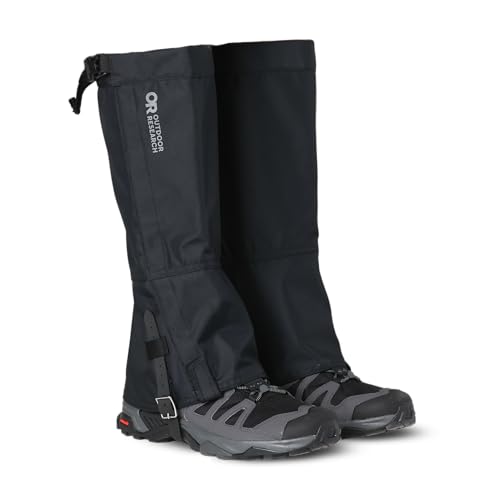
Outdoor Research Rocky Mountain High Gaiters
An insulated nylon shell adds real warmth on exposed, high-altitude routes where wind chill matters as much as snow depth. That same insulation turns uncomfortable below treeline on milder days. Winter mountaineering and cold-weather expeditions suit this gaiter better than general trail hiking.
Pros
- Insulation adds warmth in exposed cold
- Shell handles wind-driven snow well
- Full coverage for deep postholing
Cons
- Too warm for mild or low-altitude hikes
- Bulkier fit than uninsulated gaiters
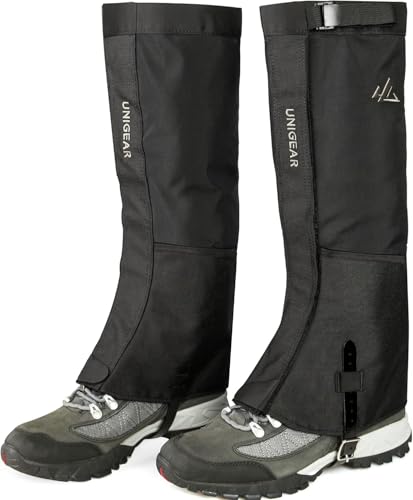
REDCAMP Waterproof Leg Gaiters
A water-resistant coating sheds mud and wet brush on overgrown trails, keeping socks dry without mountaineering-gaiter weight. Mid-calf height suits hiking and hunting more than deep snow. Straps hold securely on uneven ground, though the coating thins after repeated bushwhacking.
Pros
- Sheds mud and wet brush effectively
- Lighter than full mountaineering gaiters
- Affordable for hunting and general hiking
Cons
- Coating wears down with heavy bushwhacking
- Not built for deep snow or crampon use

Rocky Snow Stalker Gaiter
A camouflage print and quiet-finish fabric suit hunters moving through brush and snow without standing out or rustling. Full-height coverage blocks snow and burrs equally well. Weight runs higher than trail-specific gaiters, a reasonable trade for hunters already carrying substantial gear.
Pros
- Camouflage pattern suits hunting use
- Quiet fabric avoids rustling noise
- Blocks burrs and snow effectively
Cons
- Heavier than dedicated hiking gaiters
- Camo pattern has limited use outside hunting
How they compare
| # | Model | Height | Best for | Score | Price |
|---|---|---|---|---|---|
| 1 | Outdoor Research Crocodile Gaiters | Full calf-height | Best overall | 9.4 | Check price |
| 2 | Kahtoola INSTAgaiter Low | Ankle height | Best for day hiking | 9.1 | Check price |
| 3 | Black Diamond FrontPoint Gaiters | Full calf-height | Best for mountaineering | 8.9 | Check price |
| 4 | Yaktrax Summit Gaiter | Full calf-height | Best value | 8.5 | Check price |
| 5 | Outdoor Research Rocky Mountain High Gaiters | Full calf-height | Best for extreme cold | 8.3 | Check price |
| 6 | REDCAMP Waterproof Leg Gaiters | Mid-calf | Best for mud and brush | 8.1 | Check price |
| 7 | Rocky Snow Stalker Gaiter | Full calf-height | Best for hunting | 8.0 | Check price |
Frequently asked questions
What does a gaiter actually do?
It covers the gap between boot and pant leg, blocking snow, mud, water, rocks and debris that would otherwise fall into the boot during hiking or snow travel.
Do I need gaiters for regular hiking?
Not always. Maintained dry trails rarely need one, but wet grass, light snow or loose gravel are enough to justify a low or mid-height gaiter.
Are gaiters necessary for snowshoeing?
Yes, full-height gaiters are close to essential for snowshoeing, since deep or loose snow constantly works its way into boots without one.
Can gaiters be used with crampons?
Only gaiters built with a reinforced instep or front-point design should be paired with crampons. Standard trail gaiters wear through quickly under crampon straps.
What is the difference between ankle and full-height gaiters?
Ankle-height gaiters block light debris and dew with minimal bulk, while full-height gaiters cover the calf for deep snow, heavy brush or postholing conditions.
How do you clean and store gaiters properly?
Rinse off mud and grit after use, let them air dry fully before storage, and avoid folding at the same crease repeatedly, since that is where waterproof coatings crack first.
Are insulated gaiters worth buying?
Only for genuinely cold, high-altitude conditions. On moderate winter hikes, insulated gaiters trap heat and turn uncomfortable faster than uninsulated versions.
Gaiter vs waterproof boots, do you need both?
Waterproof boots keep water out from below and the sides, while gaiters block debris and snow from entering at the top opening, so the two solve different problems and work well together.
The verdict
Outdoor Research Crocodile Gaiters are the pick for anyone facing deep snow or mountaineering season after season, since the reinforced instep outlasts lesser gaiters under crampon abuse. Day hikers on maintained trails should skip that bulk and grab the Kahtoola INSTAgaiter Low instead. Climbers running crampons on technical snow routes get more from the Black Diamond FrontPoint’s strap clearance than from either general-purpose option.
Sierra Daniels
Sierra's background is in landscape design and nursery retail. She focuses on lawn and garden equipment, outdoor furniture and gear durability, weighing published specs against how materials actually hold up outside.