Which Fabric Scissors Actually Hold an Edge?
The Gingher 8 Inch Dressmaker Shears cut tailoring fabric the cleanest thanks to forged knife-edge steel. Fiskars Amplify 8 Inch Scissors give quilters strong value with a softgrip handle. Singer ProSeries 8 Inch Scissors handle basic projects on a tight budget.
Frayed edges almost always come from the blade, not the fabric. Gingher’s 8 Inch Dressmaker Shears use forged chrome-plated steel that keeps a sharp edge for years. Beginners get most of that cutting quality from the Singer ProSeries for far less money.
Blade steel, edge angle and handle shape each change how cleanly a pair separates woven fibers. A soft craft scissor mangles denim or canvas instead of shearing it. We compared listed blade materials, bent versus straight handles and owner reports on edge retention after repeated sharpening.
How to choose
What to look for in fabric scissors Blade material decides edge life more than any other spec. Forged steel outlasts stamped steel through repeated sharpening. Handle shape matters next, since a bent handle lets the bottom blade sit flat on the table for straighter cuts. Length affects control: shorter blades suit detail work, longer blades speed up big pattern pieces. Weight and grip round out comfort during long sessions.
Best fabric scissors for heavy materials like denim and canvas Thick or layered fabric needs a longer blade and harder steel, since a short blade struggles to bite through several layers at once. The Kai 7250 handles this with a 10 inch blade and high carbon steel. Micro-serrated edges also grip synthetic blends that tend to slide under a smooth blade.
Fabric scissors for detail and applique work Small, tapered tips reach into corners a full size shear cannot follow. Havel’s 6 Inch Fine Cut Scissors trims threads close to a seam without nicking the fabric underneath. Most sewers keep a detail pair alongside larger shears rather than swapping one for the other.
How to keep fabric scissors sharp longer Cutting paper, tape or wire with fabric scissors dulls the edge fastest, so label a pair fabric only and store it separately. A drop of sewing machine oil on the pivot screw keeps the blades gliding smoothly. Professional sharpening every year or two restores forged steel far better than a home sharpening stone.
The best picks, ranked

Gingher 8 Inch Knife Edge Dressmaker Shears
Forged chrome-plated steel holds a sharp edge through years of daily cutting, per the manufacturer specifications. The knife-edge blade shears cotton, wool and denim without snagging loose threads. Tailors reserve this pair for fabric only, since paper dulls the edge fast.
Pros
- Forged steel holds an edge far longer than stamped blades
- Bent handle keeps fabric flat against the table while cutting
- Knife edge design shears without snagging threads
Cons
- Cutting paper with these voids the sharp edge
- Higher cost than most fabric scissors on this list

Fiskars Amplify 8 Inch Fabric Scissors
A softgrip handle cuts hand fatigue during long quilting sessions. Fiskars coats the stainless blade to resist residue from adhesive-backed fabric. Owners report the edge stays usable through several quilts before it needs a sharpen.
Pros
- Softgrip handle reduces strain during long sessions
- Coated blade resists residue from adhesive backed fabric
- Stays sharp through multiple quilting projects
Cons
- Right handed grip only in this model
- Not forged steel, so edge life trails Gingher

Kai 7250 Dressmaking Shears
A 10 inch blade covers long straight cuts through denim, canvas and multiple layers in one pass. Kai grinds a micro-serrated edge that grips slippery synthetics. Professional tailors reach for the extra length when cutting pattern pieces.
Pros
- Long blade speeds up cutting large pattern pieces
- Micro serrated edge grips slippery synthetic fabric
- High carbon steel resists chipping
Cons
- Longer length is awkward for detail or curved cuts
- Heavier in hand than 8 inch shears

Singer ProSeries 8 Inch Sewing Scissors
A bent handle keeps the bottom blade flat on the table, the same principle used on pricier tailoring shears. Stainless steel resists rust in a sewing room without climate control. Beginners cutting cotton and light fabric get solid results here.
Pros
- Bent handle design usually found on pricier shears
- Rust resistant stainless steel for basic storage
- Low cost for a beginner sewing kit
Cons
- Edge dulls faster than forged steel options
- Struggles with thick denim or multiple layers

Havel’s 6 Inch Fine Cut Sewing Scissors
A fine, tapered tip reaches into applique corners and trims threads close to a seam. Its shorter 6 inch length suits smaller hands and detail-heavy quilting. Most owners keep a pair alongside larger shears rather than in place of them.
Pros
- Tapered tip reaches tight corners and applique work
- Compact size suits smaller hands comfortably
- Good companion pair to full size dressmaker shears
Cons
- Too short for cutting large pattern pieces
- Not designed for thick or layered fabric
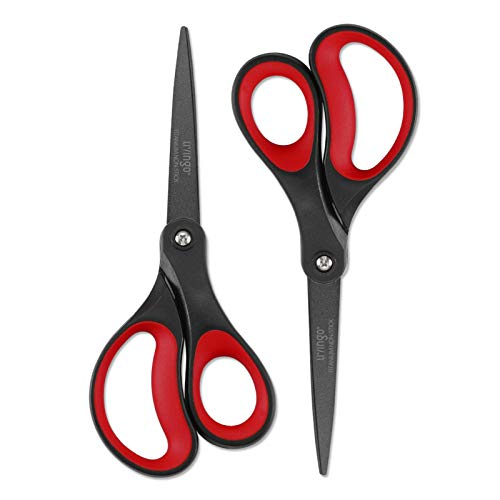
LIVINGO 8 Inch Titanium Fabric Scissors
Titanium coating resists rust better than plain stainless steel, a plus in humid sewing rooms. The blade runs cooler under friction during long cutting sessions, according to the listing. A cushioned handle lowers blister risk on extended projects.
Pros
- Titanium coating adds rust resistance in humid climates
- Cushioned handle reduces blisters during long cuts
- Stays sharp through moderate daily sewing use
Cons
- Coating can wear thin after years of heavy use
- Not rated for leather or upholstery fabric

Mundial 490-8 Classic Forged Bent Trimmers
Nickel-plated forged steel resists tarnish in a busy tailoring shop. The bent trimmer shape matches classic dressmaker shears used in garment construction for decades. Owners note the weight balances well across repetitive cutting shifts.
Pros
- Forged steel construction suits daily professional use
- Nickel plating resists tarnish over years of use
- Balanced weight for repetitive cutting sessions
Cons
- Handle shape takes adjustment if new to bent trimmers
- Fewer color or size options than Fiskars or Singer
The lineup, side by side
| # | Model | Blade length | Best for | Score | Price |
|---|---|---|---|---|---|
| 1 | Gingher 8 Inch Knife Edge Dressmaker Shears | 4 inches | Best overall | 9.4 | Check price |
| 2 | Fiskars Amplify 8 Inch Fabric Scissors | 3.5 inches | Best value | 9.1 | Check price |
| 3 | Kai 7250 Dressmaking Shears | 6.7 inches | Best for heavy fabric | 8.9 | Check price |
| 4 | Singer ProSeries 8 Inch Sewing Scissors | 3.3 inches | Best budget | 8.3 | Check price |
| 5 | Havel’s 6 Inch Fine Cut Sewing Scissors | 2.5 inches | Best for detail work | 8.6 | Check price |
| 6 | LIVINGO 8 Inch Titanium Fabric Scissors | 3.4 inches | Best for rust resistance | 8.4 | Check price |
| 7 | Mundial 490-8 Classic Forged Bent Trimmers | 3.75 inches | Best for tailoring | 8.2 | Check price |
Good to know
What makes scissors specifically for fabric?
Fabric scissors use a knife edge or micro serrated blade ground to shear woven fibers cleanly instead of pushing them apart. A bent handle also keeps the lower blade flat on a cutting table, which straight craft scissors lack.
Why do fabric scissors go dull so fast?
Cutting paper or cardboard with fabric scissors rolls the fine edge almost immediately. Keep a separate pair labeled for paper, and reserve the sharp forged pair for cloth only.
Are forged or stamped scissors better for sewing?
Forged steel holds a sharp edge far longer and resharpens better than stamped steel. Stamped scissors cost less and suit occasional sewing, while forged pairs like the Gingher suit daily tailoring.
What size fabric scissors should I buy?
An 8 inch pair covers most home sewing and quilting. Longer 10 inch shears like the Kai 7250 speed up cutting large patterns, while a 6 inch pair handles detail trimming and applique.
Can fabric scissors cut leather?
Only heavy duty forged pairs handle thin leather well, and even then the edge dulls faster than on cotton. Thick leather needs a rotary cutter or dedicated leather shears instead.
How do you sharpen fabric scissors at home?
A ceramic honing rod maintains an edge between professional sharpenings. Full resharpening realigns the bevel angle and is best left to a professional sharpening service every year or two of regular use.
Does it matter if fabric scissors are left or right handed?
Yes, blade orientation changes which hand applies cutting pressure correctly. A right handed pair used left handed tends to push fabric apart rather than shear it, so left handed sewers should look for a dedicated left handed model.
Do titanium coated scissors cut better than stainless steel?
The coating mainly adds rust resistance and reduces friction, not sharpness. Core steel still determines how long the edge lasts, so titanium-coated stainless performs similarly to plain stainless of the same grade.
Fabric scissors vs pinking shears, which do I need first?
Straight fabric scissors handle most cutting and seam trimming, so buy those first. Pinking shears are a second tool for finishing raw edges on fabrics prone to fraying, like loosely woven cotton.
Is it worth buying separate scissors for quilting?
Quilters cutting multiple layers of cotton batting benefit from a dedicated softgrip pair like the Fiskars Amplify, since general sewing scissors can feel heavy over long sessions. A dedicated pair also avoids dulling from paper templates cut with a household pair.
The verdict
Sewists cutting fabric daily should buy the Gingher 8 Inch Dressmaker Shears once and stop replacing dull pairs. Quilters on a tighter budget get nearly the same comfort from the Fiskars Amplify at a lower cost. Anyone working with denim or multiple layers should add the Kai 7250 for its longer blade, while detail sewers pair either main choice with the Havel’s 6 Inch scissors.
Jake Monroe
Jake worked as a residential contractor for over a decade before shifting to full-time writing. He evaluates power tools, hand tools and workshop gear through the lens of someone who has actually used them on job sites, not just read the box.


