Fabric Dyes Compared by Fiber Type and Wash Fastness
Rit All-Purpose Liquid Dye handles cotton, linen and wool for most household projects. Jacquard Procion MX delivers the deepest, most wash-resistant color on cotton once fixed with soda ash. Rit DyeMore is the only practical option here for polyester and other synthetic blends.
Rit All-Purpose Liquid Dye is the best starting point for cotton, linen and wool projects, since it needs no fixative and mixes in seconds, though it fades fast on polyester.
Fiber content decides which dye actually bonds, so we grouped seven dyes by natural fiber, synthetic fiber and tie-dye use, then compared fastness, application steps and owner feedback.
What we recommend

Rit All-Purpose Liquid Dye
This liquid formula dissolves instantly and dyes cotton, linen, wool, silk and nylon in a single bath. Stovetop, sink and washing machine all work as application methods. Owners report even color across natural fibers with minimal streaking.
Pros
- Works across five natural fiber types
- Dissolves without clumping or premixing
- Broad color range for custom blending
Cons
- Fades faster on polyester blends
- Can stain sinks or tubs if not rinsed quickly

Jacquard Procion MX Fiber Reactive Dye
Procion MX bonds chemically to cellulose fibers instead of just coating them, which is why quilters and tie-dye artists rely on it. Soda ash acts as the fixative that locks the bond in place. Color stays vivid through dozens of washes once cured.
Pros
- Exceptional wash fastness once properly fixed
- Saturated color range suited to tie-dye
- Works in cold water, no stovetop needed
Cons
- Needs soda ash and an extra mixing step
- Will not bond to polyester or other synthetics
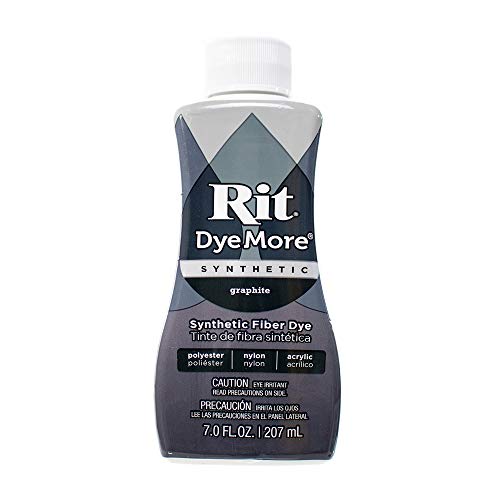
Rit DyeMore Synthetic Fiber Dye
Standard dyes mostly skip polyester, but DyeMore is built to bond with synthetic and semi-synthetic fibers like acetate and acrylic. Near-boiling water is required for full penetration. Owners use it most often on activewear and curtain fabric.
Pros
- One of few dyes formulated specifically for polyester
- Produces deep color on synthetic activewear
- Bonds to blends that other dyes skip entirely
Cons
- Needs sustained high heat throughout the process
- Smaller color selection than Rit’s main line

Dylon Permanent Fabric Dye Pods
Dylon combines dye and fixative into a single pod that goes straight into a washing machine drum with salt. No separate mixing or measuring step is needed. Most owners use it to refresh faded natural-fiber garments rather than start new projects.
Pros
- No separate mixing or measuring required
- Fixative is built directly into the pod
- Well suited to refreshing whole garments
Cons
- Works in a washing machine only, not by hand
- Needs a dedicated rinse cycle to clear residue

Tulip One-Step Tie-Dye Kit
Tulip premixes dye powder with water inside squeeze bottles, removing the measuring and soda ash steps. Gloves, rubber bands and a project guide come included. Color intensity runs lighter than raw Procion MX applied to the same fabric.
Pros
- Ready to use with no mixing required
- Kid-friendly kit with gloves and instructions included
- Fast setup for classroom or group projects
Cons
- Colors fade sooner than fiber-reactive powder dyes
- Less control over exact shade depth

iDye Natural Fabric Dye
iDye’s natural formula targets protein and cellulose fibers, including wool, silk, cotton and linen, without a separate carrier chemical. A dissolvable pouch goes straight into a hot water bath. Owners report smooth, even results on wool yarn and silk scarves.
Pros
- Even color on delicate wool and silk fibers
- Dissolvable pouch cuts down on loose powder mess
- Suited to hand-dyed yarn and small batches
Cons
- Not effective on synthetic fibers
- Pouch size covers only a light fabric weight

iDye Poly Fabric Dye
A carrier chemical built into the pouch helps this dye bond to polyester, something plain dye cannot do alone. Small synthetic-fabric batches cost less per project than DyeMore. Results depend heavily on maintaining a rolling boil throughout the bath.
Pros
- Lower cost per project than liquid synthetic dyes
- Built-in carrier chemical simplifies the process
- Bonds to polyester blends other dyes skip
Cons
- Requires a sustained rolling boil, not just hot water
- Smaller color range than Rit DyeMore
What to look for
What to look for in a fabric dye Fiber content matters more than color choice when picking a dye. Cotton, linen and wool absorb dye directly, while polyester and acrylic need a carrier chemical and higher heat. Application method, stovetop, cold water or washing machine, narrows the list further based on available equipment.
Dyeing cotton, linen, wool and silk Natural fibers take dye without any special carrier. Rit’s liquid formula and iDye’s natural pouch both cover cotton, wool and silk directly. Procion MX pushes further for cotton and cellulose fibers specifically, trading a soda ash step for stronger wash fastness.
Dyeing polyester and synthetic blends Polyester lacks the chemical sites that natural-fiber dyes bond to, so standard formulas slide right off. Rit DyeMore and iDye Poly solve this with a built-in carrier and a near-boiling or rolling-boil bath. Activewear and curtain fabric are the most common projects for this category.
Tie-dye projects and beginner kits Group projects and classrooms favor convenience over maximum saturation. Tulip’s pre-mixed squeeze bottles skip the mixing step that raw powder dye requires. Fiber artists chasing the deepest, most fade-resistant tie-dye color still reach for Procion MX powder instead.
Side by side
| # | Model | Fiber compatibility | Best for | Score | Price |
|---|---|---|---|---|---|
| 1 | Rit All-Purpose Liquid Dye | Cotton, linen, wool, silk, nylon | Best overall | 9.2 | Check price |
| 2 | Jacquard Procion MX Fiber Reactive Dye | Cotton, rayon, hemp, linen | Best for cotton and tie-dye | 9.0 | Check price |
| 3 | Rit DyeMore Synthetic Fiber Dye | Polyester, acetate, acrylic, nylon | Best for polyester and synthetic blends | 8.8 | Check price |
| 4 | Dylon Permanent Fabric Dye Pods | Cotton, linen, viscose | Best for washing machine convenience | 8.6 | Check price |
| 5 | Tulip One-Step Tie-Dye Kit | Cotton and cotton-blend fabrics | Best for beginners and kids’ projects | 8.4 | Check price |
| 6 | iDye Natural Fabric Dye | Wool, silk, cotton, linen | Best for wool and silk | 8.2 | Check price |
| 7 | iDye Poly Fabric Dye | Polyester and polyester blends | Best value for synthetic fabric | 8.0 | Check price |
Questions worth asking
What is the best fabric dye for cotton?
Rit All-Purpose Liquid Dye and Jacquard Procion MX both work on cotton. Procion MX holds color longer once fixed with soda ash.
Can regular fabric dye work on polyester?
Standard dyes like Rit All-Purpose mostly fail on polyester. Formulas built for synthetics, like Rit DyeMore or iDye Poly, are needed instead.
Is fabric dye permanent after one wash?
Fiber-reactive dyes such as Procion MX become close to permanent once fixed correctly. Simpler machine dyes like Dylon fade gradually with repeated washing.
Fabric dye vs tie-dye kit, what is the difference?
A tie-dye kit like Tulip’s premixes dye for convenience. Raw powder dye such as Procion MX needs separate mixing but allows more control over shade depth.
Do I need salt or soda ash to dye fabric?
Cotton and other cellulose fibers usually need soda ash to fix fiber-reactive dye. Some machine dyes, like Dylon pods, build the fixative in already.
How much fabric can one dye bottle or pouch cover?
Coverage depends on the product. Rit liquid bottles handle roughly one pound of dry fabric, while smaller iDye pouches suit lighter projects like a scarf or yarn skein.
Can I dye wool and silk with the same dye as cotton?
Not always. iDye’s natural formula and Rit both cover wool and silk alongside cotton, but synthetic-only dyes like DyeMore are not made for protein fibers.
Why did my dyed fabric come out patchy?
Uneven pre-wetting, too little water in the bath or skipping the fixative step usually causes patchy results, regardless of brand.
Rit All-Purpose vs Jacquard Procion MX, which lasts longer?
Procion MX outlasts Rit All-Purpose on cotton because it bonds chemically with the fiber instead of coating it, provided soda ash is used correctly.
Does fabric dye work on clothing that is already colored?
Yes, but the existing color affects the result. Dyeing over a dark garment produces a blended shade rather than the color shown on the dye label.
Our take
Rit All-Purpose Liquid Dye is the practical starting point for anyone dyeing cotton, linen or wool without special equipment. Fiber artists chasing the longest-lasting color on cotton should pick Jacquard Procion MX instead, despite the extra soda ash step. Anyone working with polyester or synthetic blends needs Rit DyeMore or iDye Poly, since standard dyes will not bond to those fibers at all.
Jake Monroe
Jake worked as a residential contractor for over a decade before shifting to full-time writing. He evaluates power tools, hand tools and workshop gear through the lens of someone who has actually used them on job sites, not just read the box.


