Ergonomic Office Chairs Under 1000: What Actually Adjusts
Steelcase Series 1 wins overall with independent lumbar, depth and arm adjustment plus a twelve-year warranty. Autonomous ErgoChair Pro+ delivers close adjustability for less. Duramont Ergonomic Office Chair covers the budget tier with sliding lumbar and flip-up arms, a fair starting point before spending more on a fully adjustable model.
Steelcase Series 1 tops this group. Independent lumbar, seat depth and arm adjustment work together, backed by a twelve-year warranty no rival matches. Autonomous ErgoChair Pro+ tracks recline angle automatically and costs less. Duramont Ergonomic Office Chair suits a first ergonomic upgrade, pairing mesh support with flip-up arms at the lowest cost in this group.
Ergonomic marketing rarely matches real adjustment range. A chair can list lumbar support while offering only a fixed pad. Seat depth that never moves independently of the backrest limits fit, regardless of cost. We compared published adjustment points, back material, rated weight capacity and warranty length. Then we checked what owners report after months of daily sitting.
The top picks, ranked

Steelcase Series 1
LiveBack technology flexes as you shift position, keeping the backrest matched to your spine’s curve. Seat depth, arm height, arm width and lumbar adjust independently, a rare combination below this price tier. The warranty runs twelve years and covers the gas cylinder and casters.
Pros
- Seat depth, lumbar and arms adjust independently of each other
- Twelve-year warranty outlasts every other pick here
- Mesh back stays breathable through long sitting blocks
Cons
- Armrests do not tilt or angle
- Assembly takes longer than single-box chairs

Autonomous ErgoChair Pro+
A dynamic lumbar pad shifts with recline angle instead of holding one fixed height. Seat depth slides up to two inches to fit shorter and taller frames. Owners note the tilt tension knob keeps recline controlled rather than loose.
Pros
- Lumbar pad tracks recline angle automatically
- Headrest pivots to support the neck during calls
- Sliding seat depth adjusts up to two inches
Cons
- Mesh seat feels firm without an added cushion
- Warranty period is shorter than the Steelcase Series 1

Herman Miller Sayl
A single suspension strand forms the back instead of a wireframe, keeping airflow constant across the whole panel. PostureFit adjusts pelvic support height separately from recline tension. At under 30 pounds, it ranks among the lightest frames in this comparison.
Pros
- Wireframe-free back maximizes airflow during long sessions
- PostureFit adjusts pelvic height independent of recline
- Lightweight frame is easy to reposition around a desk
Cons
- Seat cushion runs thinner than foam rivals
- Base models ship with fixed-height armrests
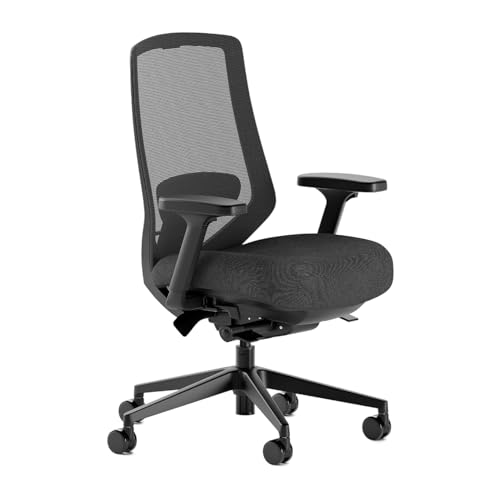
Branch Ergonomic Chair
A narrower seat pan and shorter depth range suit users under five foot six better than most chairs here. Four-way arms move in, out, up and down. Recline locks at four points, which stops the backrest from floating during typing.
Pros
- Seat depth range suits shorter users well
- Four-way arms adjust both width and height
- Four-point recline lock prevents backrest drift
Cons
- Warranty period is the shortest in this group
- Weight capacity trails most other chairs here
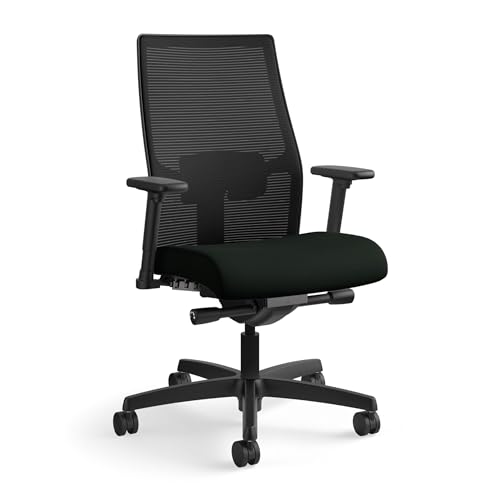
HON Ignition 2.0
Synchro-tilt moves the seat and back together at a two-to-one ratio, so feet stay planted while reclining. Lumbar support slides vertically to sit against the lower back at any height. Shared office fleets favor this model, which keeps replacement parts easy to find.
Pros
- Synchro-tilt keeps feet grounded through the recline
- Sliding lumbar fits a wide range of heights
- Wide stocking makes replacement parts easy to source
Cons
- Base model arms do not adjust in width
- Styling is plainer than the design-forward picks here

Steelcase Leap
The Natural Glide System lets the seat move backward on recline, easing pressure on the lower spine. Owners managing existing back pain cite this model often when comparing chairs. A wide seat option raises capacity to 400 pounds, the highest in this roundup.
Pros
- Natural Glide reduces lower back pressure on recline
- Highest weight capacity of the chairs compared here
- Twelve-year warranty matches the Series 1
Cons
- Sits near the top of this price range
- Foam seat runs warmer than mesh options
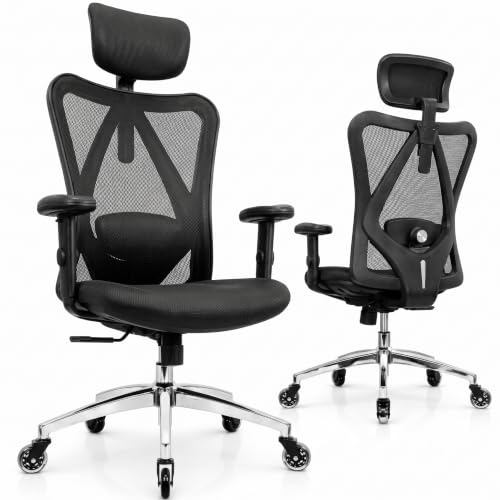
Duramont Ergonomic Office Chair
Mesh back panel and flip-up padded arms cover the basics without the cost of pricier picks above it. Lumbar support slides along a track, and the headrest tilts on its own hinge. Owners describe it as a reasonable starting chair before upgrading to more adjustment.
Pros
- Flip-up arms tuck under a desk easily
- Sliding lumbar and tilting headrest at this cost
- Lowest outlay among the chairs compared here
Cons
- One-year warranty trails every other pick
- Recline tension knob loosens over time
What matters most
What makes an office chair ergonomic Ergonomic design means the adjustment points match how your spine actually moves, not that knobs simply exist. Lumbar support should slide vertically, and on better chairs, in and out too. Seat depth needs to change independent of backrest angle. Recline tension should hold a chosen angle without drifting. Chairs meeting all four points cost more, which explains the gap between the top picks and the budget end here.
Mesh back or foam seat: which suits you Mesh backs breathe better through long sitting blocks and hold shape for years without flattening. Foam seats feel softer at first but compress with time, so density matters more than thickness. Steelcase Leap pairs a foam seat with mesh-friendly design elsewhere, while Herman Miller Sayl commits to mesh throughout. Choose foam if you run cold, mesh if you run warm at a desk.
Best ergonomic chair for smaller or larger frames Seat width, depth range and weight capacity vary more between these chairs than spec sheets suggest at a glance. Branch Ergonomic Chair suits smaller frames with its narrower pan. Steelcase Leap scales to 400 pounds on its wide seat option. Test the seat depth adjustment against your thigh length before assuming any chair fits by default.
Does warranty length signal build quality A twelve-year warranty, offered by Steelcase Series 1, Herman Miller Sayl, HON Ignition 2.0 and Steelcase Leap, signals a manufacturer expects the gas cylinder, tilt mechanism and casters to survive a decade of daily use. Shorter one and two-year terms usually mean thinner components inside the tilt mechanism. Match warranty length to how many hours a day the chair will actually hold you.
Side by side
| # | Model | Back support | Best for | Score | Price |
|---|---|---|---|---|---|
| 1 | Steelcase Series 1 | LiveBack adaptive lumbar | Best overall | 9.4 | Check price |
| 2 | Autonomous ErgoChair Pro+ | Dynamic lumbar, adjustable | Best value | 9.1 | Check price |
| 3 | Herman Miller Sayl | PostureFit ST lumbar | Best for design and airflow | 8.9 | Check price |
| 4 | Branch Ergonomic Chair | Adjustable lumbar pad | Best for smaller frames | 8.6 | Check price |
| 5 | HON Ignition 2.0 | Adjustable sliding lumbar | Best for all-day desk work | 8.4 | Check price |
| 6 | Steelcase Leap | Natural Glide lumbar system | Best lower back support | 8.2 | Check price |
| 7 | Duramont Ergonomic Office Chair | Adjustable sliding lumbar | Best budget | 8.0 | Check price |
Common questions
What is the best ergonomic office chair under 1000?
Steelcase Series 1 rates highest here for adjustability and its twelve-year warranty. Autonomous ErgoChair Pro+ delivers similar adjustment range for less if cost matters more than brand.
Is mesh or foam better for a home office chair?
Mesh breathes better and resists sagging longer, suiting warmer rooms and longer sitting blocks. Foam feels softer initially but compresses over years of use. Neither wins outright; it depends on temperature preference and daily sitting hours.
Can an ergonomic chair actually reduce back pain?
Adjustable lumbar support that matches your spine’s curve can ease pressure linked to poor posture. Owners of the Steelcase Leap frequently cite reduced lower back strain. Results vary by condition, so a chair is not a substitute for medical advice.
How do I find the right seat depth for my body?
Sit fully back against the backrest, then check the gap behind your knees. Two to three fingers of space is the target. Branch Ergonomic Chair and Steelcase Series 1 both offer sliding seat depth to dial this in.
Steelcase Series 1 vs Herman Miller Sayl: which fits better?
Series 1 adds independent seat depth adjustment and a twelve-year warranty at a lower cost. Sayl leans into design and airflow with its wireframe-free back. Pick Series 1 for adjustability, Sayl if ventilation and looks matter more.
Is a refurbished ergonomic chair worth buying?
Refurbished units from brands like Steelcase and Herman Miller can offer near-new adjustability for less, provided the seller documents the mechanism was inspected. Confirm the warranty transfers or a return window exists before buying secondhand.
What weight capacity does an ergonomic chair need?
Match the chair’s rated capacity to your actual weight with margin, not exactly to it. Steelcase Leap’s 400-pound wide seat option suits larger frames, while most chairs here rate between 275 and 300 pounds.
How long do ergonomic office chairs typically last?
Chairs backed by twelve-year warranties, including the Series 1, Sayl, Ignition 2.0 and Leap, are built to survive roughly that long under daily office use. Budget chairs with one-year warranties often need mechanism repairs within a few years.
Which chair works best for small or petite frames?
Branch Ergonomic Chair’s narrower seat pan and shorter depth range suit users under five foot six. Its four-way arms adjust width and height to match a smaller frame. Weight capacity tops out at 275 pounds, lower than most rivals here.
The verdict
Steelcase Series 1 stands out as the strongest all-around pick, pairing independent adjustment points with the longest warranty in the group. Choose Autonomous ErgoChair Pro+ instead if similar adjustability at a lower cost matters more than brand name. Anyone still deciding whether an ergonomic chair helps should start with Duramont Ergonomic Office Chair before committing to a pricier model.
Marcus Chen
Marcus covered consumer electronics for enthusiast tech publications for six years before joining ChoiceCrest. He specializes in translating manufacturer spec sheets into plain-language buying advice, with a focus on audio, computing accessories and smart-home gear.