Building Sets That Teach Gears, Circuits and Real Mechanics
The Engino STEM Discovering Mechanics Set covers the widest range of mechanisms for hands-on learning. Younger builders do better with the oversized pieces in Learning Resources Gears! Gears! Gears! Kids curious about electronics should start with Snap Circuits Jr SC-100.
Gears, levers and cranks separate a real engineering kit from a branded box of blocks. Engino’s STEM Discovering Mechanics Set builds pulleys, gears and cranks across several models in one purchase. Smaller hands need bigger pieces and one concept at a time, which is where Learning Resources Gears! Gears! Gears! fits. Snap Circuits Jr SC-100 adds a safe first look at electrical circuits alongside the mechanical options here.
STEM branding gets slapped on plenty of sets that teach nothing beyond stacking. We compared what mechanical or electrical principle each kit actually demonstrates, how many pieces come in the box, and the age range the maker recommends.
Our top picks

Engino STEM Discovering Mechanics Set
Multiple included models walk a child through gears, pulleys, levers and cranks instead of repeating one idea. A manual explains the physics behind each build in language suited to the target age group. Owners report kids revisit finished builds to try their own variations afterward.
Pros
- Covers multiple distinct mechanical concepts
- Manual explains the underlying physics clearly
- Pieces are compatible with other Engino sets
Cons
- Small parts require adult supervision for younger kids
- Fewer decorative pieces than toy focused building sets

Thames & Kosmos Engineering STEM Lift Truck Kit
One motorized lift truck model gets the full focus here, teaching gear ratios and motor mechanics in real detail. A geared motor included in the box shows the torque and speed tradeoff directly during use. Owners note the finished truck actually lifts small loads, which makes the concept visible instead of theoretical.
Pros
- Deep focus on one working mechanism
- Motorized build demonstrates gear ratio effects directly
- Manual illustrates each construction stage clearly
Cons
- Single project limits variety compared to modular kits
- Motor requires batteries not included

LEGO Technic Off-Road Buggy
Working steering, suspension and a differential push this Technic set past typical brick building into genuine mechanical complexity. Its pieces plug into the wider Technic ecosystem for future builds. Parents of older kids say the suspension visibly responds to uneven terrain during play, not just on paper.
Pros
- Working suspension and steering teach real mechanics
- Compatible with broader Technic piece ecosystem
- Higher complexity suits kids outgrowing basic kits
Cons
- Steeper learning curve than beginner focused kits
- No manual explanation of the physics involved

K’NEX Imagine Engineering Building Set
Dozens of model options come from the same rods and connectors, so kids rebuild rather than shelve the set after one project. Triangulated connections teach basic structural stability along the way. Owners say the pieces keep getting pulled back out for new builds months after purchase.
Pros
- High piece count enables many different builds
- Teaches structural stability concepts through triangulated pieces
- Long term replay value from one purchase
Cons
- Less focused on a single deep mechanical concept
- Smaller connector pieces are easy to lose

Snap Circuits Jr SC-100
No soldering or tools stand between a kid and over 100 basic circuit builds here, making electrical engineering approachable early. Each project includes a short explanation of what the circuit actually does. Parents pair this with a mechanical kit when a child asks how electronics work in addition to gears.
Pros
- No soldering or tools required for circuit building
- Over 100 different circuit projects included
- Safe introduction to electrical engineering concepts
Cons
- Does not cover mechanical engineering concepts
- Requires batteries not included

4M KidzRobotix Robot Arm Kit
Water filled syringes drive this robot arm instead of a motor, teaching basic fluid mechanics through hands-on pressure and movement. Assembly follows a defined sequence that builds early process skills. Owners say the finished arm genuinely picks up small, lightweight objects during play.
Pros
- Teaches hydraulic mechanics rarely covered by other kits
- Functional arm performs a real pick and place task
- No batteries or motors needed
Cons
- Water based pistons can leak if assembled imprecisely
- Limited to one build with no reconfiguration
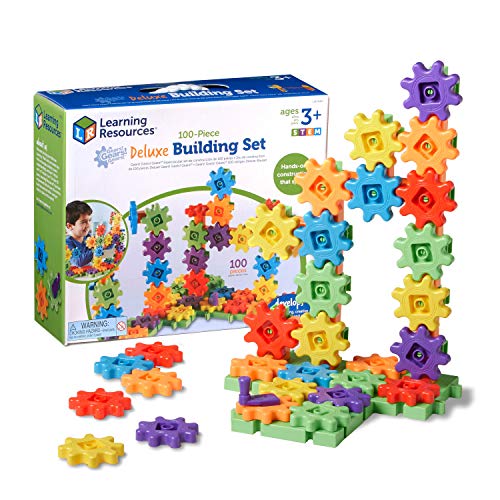
Learning Resources Gears! Gears! Gears! Building Set
Oversized pieces snap together easily for small hands, introducing gear meshing well before a child is ready for tiny connector kits. Bright colors and immediate turning motion make cause and effect obvious. Parents often treat this as the first engineering toy before moving to detailed kits later.
Pros
- Large pieces suit young children’s hand size
- Immediate visual feedback from turning gears
- Safe starting point before smaller connector kits
Cons
- Concept depth is limited compared to kits for older kids
- Kids outgrow the simplicity relatively quickly
What matters most
What actually makes a kit an engineering kit A genuine engineering kit teaches a mechanical or electrical concept, not just how pieces snap together. Gears, levers, circuits and hydraulics all count; decorative building alone does not. Check whether the included manual explains why a mechanism works, since that’s what separates a real STEM kit from a branded toy.
Matching complexity to age Kits for kids under 6, like Learning Resources Gears! Gears! Gears!, rely on oversized pieces and one concept at a time. Ages 8 and up can usually handle a multi mechanism kit such as Engino’s set. Teens and confident builders get more from something like LEGO Technic, which models real vehicle suspension and steering.
Mechanical builds versus electrical builds Most kits here teach mechanical principles: gears, pulleys, levers and structural stability. Snap Circuits Jr is the outlier, focused entirely on basic electrical circuits instead. A kid drawn to both areas is better served owning one kit from each category than expecting a single box to cover everything.
How much reuse a kit offers over time K’NEX Imagine and its high piece count support many different builds, keeping a kid engaged for months. Thames & Kosmos takes the opposite approach, going deep on one motorized lift truck rather than offering variety. Decide whether your child prefers rebuilding one complex model or exploring several simpler ones.
Compared at a glance
| # | Model | Mechanisms covered | Best for | Score | Price |
|---|---|---|---|---|---|
| 1 | Engino STEM Discovering Mechanics Set | Gears, pulleys, levers, cranks | Best overall | 9.3 | Check price |
| 2 | Thames & Kosmos Engineering STEM Lift Truck Kit | Gear ratios, motorized lift mechanism | Best single project depth | 9.0 | Check price |
| 3 | LEGO Technic Off-Road Buggy | Steering, suspension, differential | Best for older kids | 8.8 | Check price |
| 4 | K’NEX Imagine Engineering Building Set | Structural stability, basic linkages | Best variety of builds | 8.6 | Check price |
| 5 | Snap Circuits Jr SC-100 | Basic electrical circuits | Best for electronics basics | 8.4 | Check price |
| 6 | 4M KidzRobotix Robot Arm Kit | Hydraulic pistons, basic robotics | Best for robotics introduction | 8.2 | Check price |
| 7 | Learning Resources Gears! Gears! Gears! Building Set | Gear meshing and rotation | Best for younger children | 8.0 | Check price |
Common questions
What age is appropriate for engineering building kits?
Simple gear kits work from around age 4, while multi mechanism kits with smaller pieces generally target 8 and up. Always check the specific box’s stated age range, since piece size varies a lot between brands.
Do engineering kits actually teach STEM skills?
A kit that explains the mechanical or electrical principle behind each build teaches genuine STEM concepts. One marketed as STEM but offering only generic assembly steps teaches far less.
What is the difference between LEGO Technic and regular LEGO sets?
Technic uses specialized beams, gears, axles and pins to build functioning mechanisms like steering and suspension. Those pieces generally don’t interchange with classic LEGO brick sets.
Are engineering kits safe for young children?
Small connector pieces pose a choking hazard below a kit’s stated age minimum, so check the manufacturer’s guidance first. Larger piece kits built for younger ages, like Learning Resources Gears! Gears! Gears!, address that risk directly.
Can engineering kits help with school STEM projects?
Yes. Concepts like gear ratios, circuits and hydraulics line up with common elementary and middle school science curricula. A finished build can also work as a physical demonstration piece.
Do you need batteries for engineering kits?
Motorized or circuit based kits, including Snap Circuits Jr and the Thames & Kosmos lift truck, need batteries that usually aren’t included. Purely mechanical kits like Engino’s run on hand cranking with no batteries at all.
What is the best engineering kit for a kid who likes robots?
The 4M KidzRobotix Robot Arm Kit introduces basic robotics through hydraulic control, which is more approachable than motorized builds for beginners. Kids ready for added complexity can move to something motorized like the Thames & Kosmos lift truck.
How many pieces should an engineering kit have?
Piece count matters less than what those pieces teach; a focused 50 piece kit can cover a concept as thoroughly as a 400 piece one. Higher counts mostly buy more build variety, not more learning depth.
Which engineering kit is best for a first purchase?
Learning Resources Gears! Gears! Gears! suits a first purchase for kids under 8 because of its size and simplicity. For an 8 or older beginner, the Engino set offers more concept variety without overwhelming a new builder.
Are mechanical or electrical kits better for beginners?
Mechanical kits tend to be more forgiving for a first purchase since there’s no risk of wiring something incorrectly. Electrical kits like Snap Circuits Jr are still beginner friendly, since the color coded components prevent most mistakes.
Our take
Pick the Engino STEM Discovering Mechanics Set for the broadest coverage of real mechanical concepts in a single box. Parents of kids under 8 should start with Learning Resources Gears! Gears! Gears! instead, since the smaller connector pieces in advanced kits suit older hands better. Skip any kit without a manual that explains the physics if actual learning, not just assembly, is the goal.
Rachel Simmons
Rachel previously worked in child-product retail and brings a practical, detail-first eye to gear reviews, focusing on safety standards, ease of use and the fine print that matters most for new caregivers.


