Which Electric Chainsaw Fits Your Yard Cleanup Job
DEWALT’s DCCS670X1 60V leads on raw cutting power for occasional felling. Greenworks’ 40V 16-inch model balances battery runtime against price for regular limbing. Oregon’s CS1500 corded saw suits owners working near an outlet who want unlimited runtime without swapping batteries.
Electric chainsaws split into two families: corded models that never run dry near an outlet, and battery models built for roaming a large yard.
Bar length and motor voltage decide what diameter wood a saw handles safely, so specs across all seven models got compared against typical limbing, pruning, and small-tree felling jobs, plus feedback from owners running each platform.
What we recommend

DEWALT DCCS670X1 60V MAX Cordless Chainsaw
A 60V FLEXVOLT battery powers this 16-inch bar with enough torque for felling small trees, not just limbing. Tool-free chain tensioning speeds up adjustments mid-job. Brushless motor construction extends service life over brushed designs.
Pros
- Enough torque for small tree felling, not just limbing
- Tool-free chain tensioning saves time mid-job
- Brushless motor extends long-term durability
Cons
- Heavier than 40V battery saws in this lineup
- Battery and charger add to overall cost

Greenworks 40V 16-inch Cordless Chainsaw
Greenworks fits the same 16-inch bar onto a lighter 40V platform, trading some torque for less arm fatigue during long limbing sessions. Automatic oiling keeps the chain lubricated without manual pumping. This battery also powers other tools across the Greenworks 40V lineup.
Pros
- Lighter weight reduces fatigue during long sessions
- Battery shares across the Greenworks 40V tool line
- Automatic oiler removes a manual maintenance step
Cons
- Less torque than 60V models for thick logs
- Runtime drops noticeably on dense hardwood
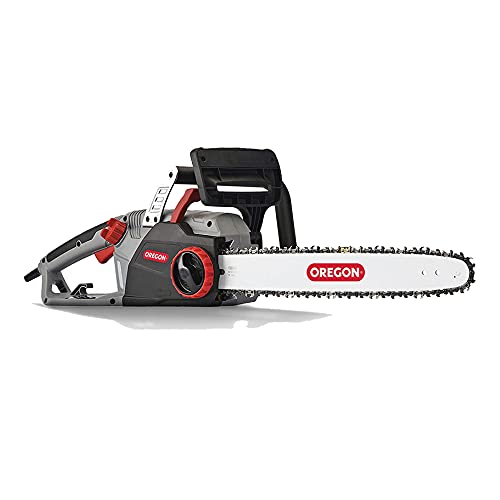
Oregon CS1500 15 Amp Corded Chainsaw
Fifteen amps of continuous power flow from a standard outlet, so runtime never ends mid-job the way it can on a battery saw. Oregon’s PowerSharp system sharpens the chain in seconds without removing it. Cord length becomes the real limit on range from the outlet.
Pros
- No battery runtime limit while plugged in
- Self-sharpening system speeds up chain maintenance
- Longer 18 inch bar than most battery competitors
Cons
- Extension cord limits range from an outlet
- Cord management adds friction on brushy terrain

Makita XCU04PT1 18V X2 LXT Cordless Chainsaw
Two 18V batteries combine to power this 16-inch bar, letting owners already invested in Makita’s 18V lineup skip a separate battery platform. Tool-less chain adjustment and a built-in oil window round out the feature set.
Pros
- Compatible with existing Makita 18V battery stock
- Tool-less chain adjustment speeds up field use
- Built-in oil window shows fluid level at a glance
Cons
- Requires two batteries occupying dual charging slots
- Bulkier battery housing than single-battery designs

BLACK+DECKER LCS1240 40V Cordless Chainsaw
A 12-inch bar keeps this saw affordable and suited to light limbing and small branch cleanup rather than felling. Tool-free chain tensioning and automatic oiling carry over from pricier models despite the lower price point.
Pros
- Lowest price point among battery models compared
- Lightweight design suits occasional light use
- Tool-free tensioning despite the budget price
Cons
- 12 inch bar limits cutting to smaller branches
- Smaller battery capacity means shorter runtime

EGO Power+ CS1804 18-inch Chainsaw
An 18-inch bar on EGO’s 56V platform matches corded-saw reach without the cord. Brushless motor design and an automatic chain tensioner keep maintenance low. The same battery runs across EGO’s wider 56V outdoor tool lineup.
Pros
- 18 inch bar matches corded saw cutting reach
- Battery works across EGO’s 56V tool ecosystem
- Automatic chain tensioner reduces manual adjustment
Cons
- 56V battery adds cost if not already owned
- Heavier bar length increases arm fatigue over time
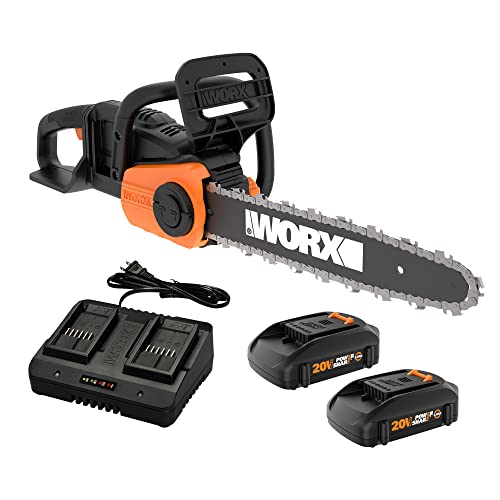
WORX WG384 40V Cordless Chainsaw
Two 20V batteries combine for 40V output, and either one can run the saw alone at reduced power if the other depletes. That flexibility helps during long yard cleanup sessions when swapping batteries mid-job is inconvenient.
Pros
- Either battery can run the saw solo in a pinch
- Automatic oiling reduces mid-job maintenance
- Included charger handles both batteries
Cons
- Reduced power output when running on one battery
- Runtime trails single high-capacity battery designs
How to pick the right one
Corded versus battery: how to decide A corded saw like the Oregon CS1500 draws power from an outlet indefinitely, which suits repeat trims close to the house. Battery saws sacrifice that endless runtime for mobility, letting an owner clear brush anywhere in the yard without dragging a cord. Weight and cord management usually decide which type fits daily habits better than raw power specs.
What bar length cuts through A 12-inch bar, like BLACK+DECKER’s LCS1240, handles small branches and light pruning without much reach. Bars between 16 and 18 inches, found on the DEWALT and EGO models, cut through logs and small trunks more efficiently. Bar length roughly caps the diameter a saw cuts safely in a single pass.
Voltage and real-world cutting power Higher voltage generally delivers more torque through dense wood. DEWALT’s 60V platform outperforms 40V saws like the Greenworks on thick hardwood, though 40V models cut softer wood just as effectively while staying lighter in hand. Amperage plays the same torque role on corded saws like the Oregon CS1500.
Does brand battery loyalty pay off Owners already holding batteries for Makita’s 18V or EGO’s 56V lineups save money buying a bare tool instead of a full kit. Buyers starting from zero should compare kit pricing, since battery and charger costs vary widely between brands. Cross-compatible batteries also work in trimmers, blowers, and other yard tools from the same maker.
How they stack up
| # | Model | Bar length | Best for | Score | Price |
|---|---|---|---|---|---|
| 1 | DEWALT DCCS670X1 60V MAX Cordless Chainsaw | 16 inches | Best overall | 9.5 | Check price |
| 2 | Greenworks 40V 16-inch Cordless Chainsaw | 16 inches | Best value | 9.1 | Check price |
| 3 | Oregon CS1500 15 Amp Corded Chainsaw | 18 inches | Best for unlimited runtime | 8.8 | Check price |
| 4 | Makita XCU04PT1 18V X2 LXT Cordless Chainsaw | 16 inches | Best for existing Makita battery owners | 8.5 | Check price |
| 5 | BLACK+DECKER LCS1240 40V Cordless Chainsaw | 12 inches | Best budget | 8.1 | Check price |
| 6 | EGO Power+ CS1804 18-inch Chainsaw | 18 inches | Best for longer bar reach | 8.0 | Check price |
| 7 | WORX WG384 40V Cordless Chainsaw | 16 inches | Best for dual-battery runtime | 8.0 | Check price |
Questions worth asking
How long does a battery chainsaw run on one charge?
Runtime depends on battery capacity and wood density. Most 40V saws in this comparison deliver 30 to 45 minutes of active cutting per charge.
Is a corded or battery chainsaw better for a large yard?
Battery models suit large yards better since there is no cord to manage across the property. Corded saws still work fine for cleanup close to the house.
What bar length do I need to fell a small tree?
A 16 to 18-inch bar, like the DEWALT DCCS670X1 or EGO CS1804, reaches trunks up to roughly 14 inches in diameter.
Can electric chainsaws cut through hardwood?
Yes. Higher-voltage saws like the DEWALT 60V model handle hardwood without stalling, though cutting speed slows compared to softer wood.
Do electric chainsaws need bar oil?
Yes. Every model in this comparison uses an automatic or manual oiling system that needs bar oil refilled periodically.
How much lighter is a battery chainsaw than a gas model?
Battery chainsaws typically weigh several pounds less than comparable gas saws, since they skip the fuel tank and combustion engine.
What is a brushless motor and does it matter for a chainsaw?
Brushless motors, used in the DEWALT and Makita models here, reduce internal friction and generally outlast brushed motors under heavy repeated use.
Are two-battery chainsaws better than single-battery models?
Dual-battery designs like the WORX WG384 add backup runtime, though single high-capacity batteries in saws like the Greenworks often hold power more consistently.
Which electric chainsaw is best for felling small trees?
The DEWALT DCCS670X1 handles small tree felling best here, thanks to its 60V platform and 16-inch bar delivering more torque than 40V competitors.
Our take
DEWALT’s DCCS670X1 fits anyone tackling occasional felling or thick logs, since its 60V platform outtorques every 40V competitor here. Lighter yard cleanup favors the Greenworks 40V for its balance of weight and runtime. Anyone working consistently near an outlet should pick the Oregon CS1500 instead, since corded power removes battery limits entirely.
Sierra Daniels
Sierra's background is in landscape design and nursery retail. She focuses on lawn and garden equipment, outdoor furniture and gear durability, weighing published specs against how materials actually hold up outside.