How to Pick a Pan That Cooks Eggs Evenly
The Tramontina Professional 8-inch nonstick fry pan is the best egg pan for most kitchens. The All-Clad HA1 offers better heat distribution and oven range, and the GreenPan Valencia Pro is the pick if you prefer a ceramic nonstick coating.
The Tramontina Professional 8-inch nonstick fry pan is the best egg pan for most people, with the All-Clad HA1 leading on heat evenness and the GreenPan Valencia Pro covering ceramic coating preferences.
Egg pans are trickier than they look because the coating that releases an omelette perfectly in month one often fails by month twelve, and heavier pans hold heat but resist quick temperature changes. We compared coating chemistry, base thickness and what owners report about coating life.
What to look for
What size pan works best for cooking eggs? An 8 inch pan is the right size for one to three eggs, and it is what most omelette technique assumes. A 10 inch pan spreads a two egg omelette too thin, while a 6 inch pan cramps a scramble. If eggs are the main purpose, buy the small pan even if you already own a larger skillet.
Which coating handles eggs better, nonstick or ceramic? PTFE nonstick gives the slickest release but degrades above roughly 500 degrees Fahrenheit and wears out in a few years. Ceramic tolerates higher heat and contains no PTFE, but its release fades faster with use. Cast iron and carbon steel never wear out but demand seasoning and technique.
Does my egg pan need to work on induction? Plain aluminium pans will not work on induction hobs regardless of coating quality. Look for a bonded stainless base or a magnetic disc if your hob is induction. Cast iron and carbon steel always work.
How do I make a nonstick coating last longer? Keep nonstick to low and medium heat, use silicone or wooden utensils, avoid cooking sprays which leave a polymer residue, and let the pan cool before washing. Owners report these habits are the difference between a coating lasting one year and five.
The top picks, ranked
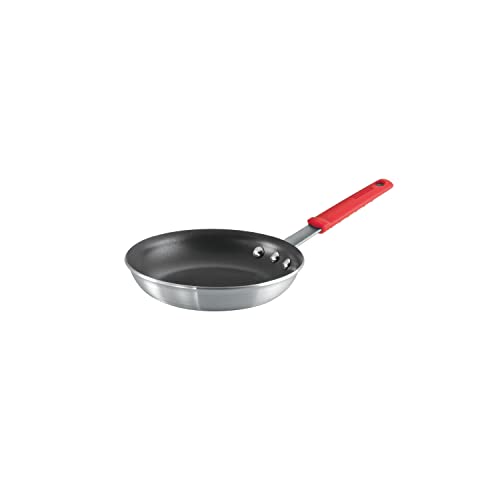
Tramontina Professional 8-Inch Nonstick Fry Pan
This restaurant style aluminium pan combines a genuinely slick coating with a satin finished handle that stays cool on the hob. The heavy gauge base resists warping better than thin nonstick pans. Owners report the coating outlasts most rivals when kept to low and medium heat.
Pros
- Excellent egg release
- Stay cool riveted handle
- Resists warping over time
Cons
- Not induction compatible
- Handle is long for small hobs

All-Clad HA1 Hard Anodized Nonstick 8-Inch Fry Pan
Induction ready thanks to a stainless steel bonded base, this pan gives the most even heat of any nonstick option here, which matters for a French omelette. The hard anodised body shrugs off scratches on the exterior. It is oven safe to a higher temperature than most nonstick pans.
Pros
- Very even heating
- Works on induction hobs
- High oven temperature rating
Cons
- Heavier than plain aluminium
- Premium outlay for a small pan

GreenPan Valencia Pro 8-Inch Ceramic Nonstick Frypan
GreenPan’s ceramic coating is free of PTFE entirely, which suits anyone avoiding traditional nonstick chemistry. It handles higher heat than PTFE without degrading, though ceramic release does fade sooner. The magnetic base makes it induction compatible.
Pros
- No PTFE in the coating
- Tolerates high heat well
- Induction ready
Cons
- Release performance fades sooner
- Needs oil to stay effective
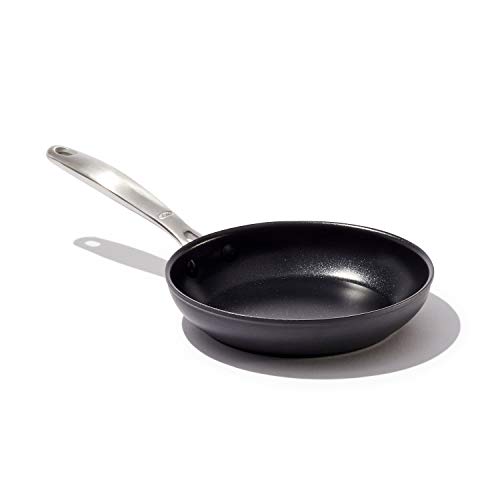
OXO Good Grips Pro 8-Inch Frying Pan
OXO’s rolled handle is noticeably more comfortable than flat stamped alternatives, which counts when you are tilting the pan to slide an omelette out. The three layer coating releases eggs cleanly from the first use. The hard anodised body distributes heat evenly for the weight.
Pros
- Comfortable balanced handle
- Clean release from new
- Solid everyday build
Cons
- Not induction compatible
- Coating dislikes high heat

Cuisinart 622-20 Chef’s Classic Nonstick Hard Anodized Skillet
This mid weight pan does the daily fried egg job without fuss, costing less than the premium names above it. The riveted stainless handle stays secure over time. Owners report the coating lasts well if metal utensils are kept away.
Pros
- Good value for the build
- Sturdy riveted handle
- Even everyday performance
Cons
- Not induction ready
- Handle warms on gas hobs
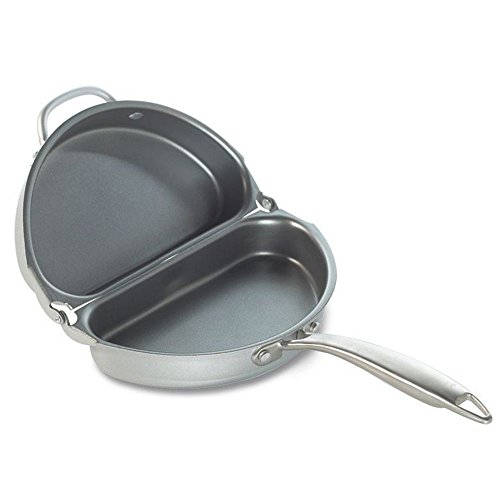
Nordic Ware Italian Frittata and Omelette Pan
Two linked pans let you flip a frittata without breaking it, which solves the one job a standard skillet handles badly. The nonstick interior releases eggs cleanly and the pans lock together securely. It is a specialist rather than an everyday pan.
Pros
- Flipping is genuinely easy
- Great for filled omelettes
- Even heating cast body
Cons
- Bulky to store
- Not induction compatible

Lodge L5SK3 8-Inch Cast Iron Skillet
Seasoning takes time to build, but once it does, this cast iron skillet handles eggs perfectly well and will not wear out the way a coating does. Heat retention is superb, though it is slower to respond to hob adjustments. It works on every hob type including induction.
Pros
- Lasts indefinitely with care
- Works on any heat source
- Excellent heat retention
Cons
- Needs seasoning maintenance
- Heavy for one handed tilting
How they compare
| # | Model | Size | Best for | Score | Price |
|---|---|---|---|---|---|
| 1 | Tramontina Professional 8-Inch Nonstick Fry Pan | 8 inches | Best overall | 9.4 | Check price |
| 2 | All-Clad HA1 Hard Anodized Nonstick 8-Inch Fry Pan | 8 inches | Best heat control | 9.2 | Check price |
| 3 | GreenPan Valencia Pro 8-Inch Ceramic Nonstick Frypan | 8 inches | Best ceramic option | 9.0 | Check price |
| 4 | OXO Good Grips Pro 8-Inch Frying Pan | 8 inches | Best handle comfort | 8.8 | Check price |
| 5 | Cuisinart 622-20 Chef’s Classic Nonstick Hard Anodized Skillet | 8 inches | Best value | 8.6 | Check price |
| 6 | Nordic Ware Italian Frittata and Omelette Pan | Two hinged pans | Best for omelettes and frittatas | 8.3 | Check price |
| 7 | Lodge L5SK3 8-Inch Cast Iron Skillet | 8 inches | Best budget pick | 8.0 | Check price |
Common questions
What size pan is best for eggs?
Eight inches suits one to three eggs and gives an omelette the right thickness. Anything larger spreads the mixture too thin, and anything smaller makes stirring a scramble awkward.
Is nonstick or cast iron better for eggs?
Nonstick is easier and more forgiving day to day. Cast iron performs just as well once seasoning is established and lasts far longer, but it needs maintenance and more butter or oil to behave.
Are nonstick pans safe to use?
PTFE coatings are considered safe at normal cooking temperatures. The concern is overheating an empty pan above roughly 500 degrees Fahrenheit, which can degrade the coating. Ceramic coatings avoid PTFE entirely if you prefer.
How long should a nonstick coating last?
Owners report two to five years of regular use depending on heat, utensils and washing. Coatings kept off high heat and out of the dishwasher last considerably longer than those that are not.
Can I use metal utensils on nonstick?
Better not to, even on coatings marketed as metal utensil safe. Small scratches spread over time and are the usual reason a pan starts sticking. Silicone and wood cost little and remove the risk.
Do I need butter or oil in a nonstick pan?
A small amount helps. Ceramic coatings in particular rely on a thin layer of fat to perform, and a dry pan on heat accelerates coating breakdown regardless of type.
Is dishwashing nonstick pans acceptable?
Most are labelled dishwasher safe, but detergent and heat shorten the coating’s life. Hand washing with a soft sponge is the single easiest way to extend it.
How do I stop eggs sticking to cast iron?
Preheat the pan gently until evenly hot, add enough fat, and let the eggs set briefly before moving them. Sticking almost always comes from a pan that is too cold, too hot, or under seasoned.
Our take
The Tramontina Professional 8-inch pan is the sensible everyday choice, with a coating that releases cleanly and a build that will not warp. Move to the All-Clad HA1 if you have an induction hob or want the most even heat, and consider the Lodge skillet if you would rather maintain seasoning than replace a coating every few years.
Dana Whitfield
Dana spent eight years buying and merchandising for a regional kitchenware retailer before moving into editorial work. She has handled thousands of SKUs across cookware, small appliances and kitchen organization, and focuses on the practical differences that matter once a product is actually in daily use.


