Sustainable Wooden Puzzles That Hold Up to Toddler Play
Melissa & Doug’s Wooden Alphabet Sound Puzzle fits toddlers learning letters, Hape’s Multi Puzzle Box Set covers preschoolers with themed sets, and PlanToys’ Wooden Puzzle Truck adds Montessori style rubberwood pieces. All three rely on water based, non-toxic finishes over renewable wood.
Toddlers starting letter recognition do best with Melissa & Doug’s Wooden Alphabet Sound Puzzle, which pairs chunky knobs with a built-in sound module on sustainably harvested wood. Its narrower age window is the tradeoff, since many preschoolers outgrow the 26-piece layout within a year.
Wooden puzzles vary more than marketing photos suggest. We compared listed wood species, finish descriptions, piece counts, and age recommendations across seven current listings, then weighed owner feedback on durability and choking-hazard warnings to narrow the field.
The shortlist, ranked

Melissa & Doug Wooden Alphabet Sound Puzzle
Twenty-six letter pieces pair with a sound module that plays the matching phonetic sound once a piece sits correctly. Owners report the plywood base resists warping better than cardboard alternatives, and the water-based paint holds up through repeated mouthing. It targets early literacy rather than shape sorting.
Pros
- Sound module reinforces letter recognition
- Large knobs suit smaller hands
- Sturdy plywood board resists warping
Cons
- Requires batteries for the sound feature
- Some letters ship with faint paint edges

Hape Multi Puzzle Box Set
Four themed puzzles covering numbers, shapes, vehicles, and animals pack into one rubberwood storage box. Based on specifications, Hape sources wood from managed forests and uses water-based dyes across all pieces. Preschoolers get variety without four separate boxes cluttering a shelf.
Pros
- Storage box keeps pieces organized
- Four themes extend replay value
- Rubberwood is a fast-renewing hardwood
Cons
- Individual puzzles are simpler than standalone sets
- Box lid fit loosens with heavy daily use

PlanToys Wooden Puzzle Truck
Reclaimed rubberwood pulp bonded with a formaldehyde-free adhesive forms this truck puzzle. Each block doubles as a stacking piece once removed from the frame, extending play beyond the puzzle format. Muted colors follow PlanToys’ signature natural-dye approach.
Pros
- Pieces double as stacking blocks
- Uses reclaimed wood pulp construction
- Muted dyes avoid heavy pigment loads
Cons
- Fewer pieces than standard puzzle sets
- Limited to one vehicle theme

Melissa & Doug Wooden Peg Puzzles Set of 3
Vehicles, farm animals, and numbers make up this bundle, each board fitted with oversized knobs sized for early pincer grip. Owners note the birch plywood holds its shape after repeated drops, a common concern with lighter puzzle woods. Three separate boards mean early learners are not stuck with one theme.
Pros
- Oversized knobs suit early pincer grip
- Birch plywood resists chipping
- Three themes in one bundle
Cons
- Piece counts are low for older toddlers
- Board thickness varies slightly between the three sets
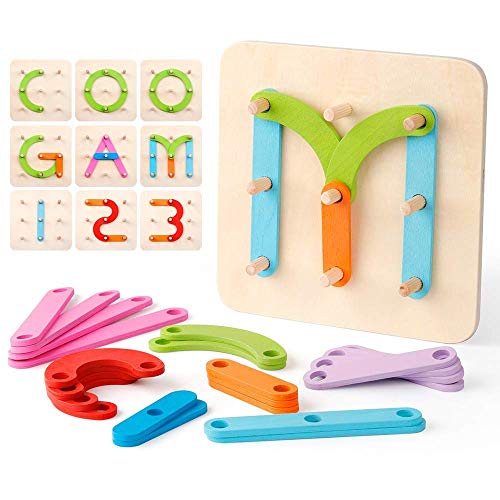
Coogam Wooden Number Puzzle Board
Number recognition meets counting practice on this board, built from color-coded pieces set into a solid pine frame. The listing describes a smooth, sanded finish meant to cut splinter risk on edges. It costs less than name-brand alternatives while covering a similar early math skill set.
Pros
- Combines counting with number shapes
- Smooth sanded edges reduce splinter risk
- Priced lower than comparable branded sets
Cons
- Pine is softer and dents more easily than hardwood
- Fewer piece variations than themed multi-packs

Wooden Wonders Chunky Puzzle Bundle
Vehicles, dinosaurs, farm animals, and shapes fill this four-puzzle bundle, packaged in one gift-ready box. Based on the listing, the boards use a mixed hardwood core under a matte water-based coating. Packaging favors direct gift giving over everyday shelf storage.
Pros
- Gift ready packaging saves wrapping time
- Four themes appeal to a range of interests
- Matte coating resists fingerprint smudging
Cons
- Storage box is less durable than the puzzle boards
- Some pieces run thinner than single-theme puzzles
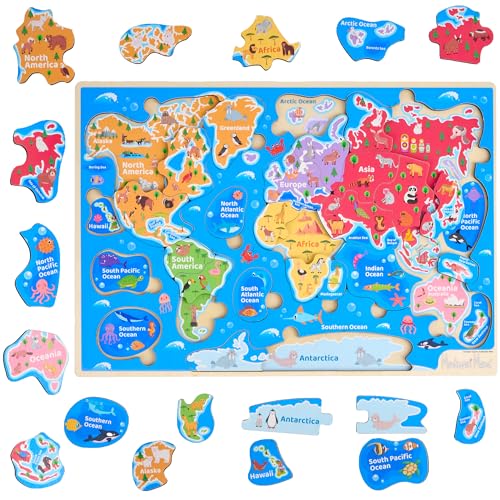
Skillmatics Wood Puzzle Explore the World
Continents and oceans come to life through this color-coded wooden map. Skillmatics lists FSC certified wood sourcing and water-based inks on current packaging. It suits preschoolers ready to move past basic shape and letter puzzles into early geography concepts.
Pros
- Introduces continents and oceans early
- FSC certified wood sourcing per the listing
- Bright color coding aids memory recall
Cons
- Advanced concept for children under 4
- Board lacks a raised frame to contain loose pieces
Compared at a glance
| # | Model | Wood type | Best for | Score | Price |
|---|---|---|---|---|---|
| 1 | Melissa & Doug Wooden Alphabet Sound Puzzle | Plywood board with basswood pieces | Best overall | 9.4 | Check price |
| 2 | Hape Multi Puzzle Box Set | Rubberwood | Best for preschoolers | 9.1 | Check price |
| 3 | PlanToys Wooden Puzzle Truck | Reclaimed rubberwood pulp | Best for montessori-style learning | 9.0 | Check price |
| 4 | Melissa & Doug Wooden Peg Puzzles Set of 3 | Birch plywood | Best for toddlers 1-2 years | 8.8 | Check price |
| 5 | Coogam Wooden Number Puzzle Board | Solid pine | Best value | 8.6 | Check price |
| 6 | Wooden Wonders Chunky Puzzle Bundle | Mixed hardwood core | Best for gift sets | 8.3 | Check price |
| 7 | Skillmatics Wood Puzzle Explore the World | FSC certified wood | Best for preschool geography skills | 8.0 | Check price |
What to look for
What makes a wooden puzzle eco friendly Wood source is where an eco-friendly puzzle starts. Brands listing FSC certification or reclaimed wood pulp draw from managed or recycled supply chains. Finish matters just as much as sourcing. Water-based paints and vegetable dyes skip the solvents found in some plastic toy coatings and hold up to toddler mouthing.
Sustainably sourced wood and non-toxic finishes Rubberwood, birch plywood, and solid pine dominate this category because they grow quickly and machine cleanly. Rubberwood in particular comes from trees already past their latex-producing years, so puzzle production reuses material that would otherwise go to waste. Finish language like non-toxic water-based paint is worth more than a vague natural materials claim. Sanded edges cut splinter risk, especially on softer woods like pine.
Best first puzzles for toddlers Children under two need fewer, larger pieces with knobs sized for an early pincer grip. Peg puzzles with four to six pieces per board, like Melissa & Doug’s toddler bundle, suit this stage better than dense multi-piece sets. Plywood construction resists warping when dropped, which happens often at this age. Sound modules add engagement but are not required for basic shape and color learning.
Best for skill building with preschoolers Once children reach three or four, puzzles can introduce counting, letters, and geography alongside shape recognition. Piece counts of seven or more encourage problem solving without causing frustration. Montessori-style sets that double as stacking or sorting toys extend play value past the puzzle itself. Multi puzzle boxes let preschoolers rotate themes without needing a shelf full of separate boards.
Frequently asked questions
Are wooden puzzles better than cardboard puzzles for toddlers?
Wooden puzzles generally hold up longer under repeated handling and resist tearing along the edges. Cardboard puzzles can soften or delaminate after contact with drool or spills. Wood also supports chunky knob designs that suit early pincer grip better than flat cardboard pieces.
What age are wooden puzzles good for?
Most peg-style wooden puzzles start around 12 to 18 months, once a child can grasp a knob and place it into a matching slot. Puzzles with smaller interlocking pieces and higher counts suit children three and older. Age ranges vary by piece size and complexity, so check the manufacturer’s listed range before buying.
Are wooden toys safer than plastic for babies?
Wooden toys avoid the phthalates and BPA sometimes found in low-quality plastic items, provided the finish is listed as non-toxic. Solid wood pieces also resist cracking into sharp shards the way brittle plastic can. Safety still depends on piece size, since small parts pose choking risks regardless of material.
How do you clean a wooden puzzle?
Wipe pieces with a damp cloth and mild soap, then dry them right away to prevent warping. Avoid soaking wooden puzzles or running them through a dishwasher, since prolonged water exposure can swell the wood and crack the finish. A soft brush clears debris from grooves without scratching the paint.
What is the best wooden puzzle for a 2 year old?
Peg puzzles with four to six large pieces work well at this age, such as the Melissa & Doug toddler peg puzzle set. Chunky knobs and simple themes like farm animals or vehicles match a two-year-old’s motor skills and attention span. Puzzles with more than ten small pieces tend to frustrate children under three.
Do Montessori wooden puzzles need to be certified?
Montessori-style puzzles do not require a specific certification, but brands like PlanToys highlight formaldehyde-free adhesives and natural dyes to align with Montessori material philosophy. The key traits are simple, purposeful design and materials that support independent, hands-on learning rather than a formal certification label.
Melissa & Doug vs Hape wooden puzzles, which is better?
Melissa & Doug tends to favor single-theme boards with strong name recognition and wide availability. Hape leans toward multi puzzle sets bundled into one storage box, which suits families wanting variety without buying separate boxes. Both use water-based finishes, so the choice often comes down to storage preference and theme variety.
Can wooden puzzles help with child development?
Wooden puzzles build fine motor skills through grasping and placing pieces, and they reinforce shape, letter, or number recognition depending on the design. Repeated use also supports problem solving as children learn to test orientations before a piece fits. Age-appropriate piece counts matter, since puzzles too advanced for a child can discourage rather than build these skills.
Our pick
Melissa & Doug’s Wooden Alphabet Sound Puzzle is the strongest overall pick for households focused on early literacy, thanks to its durable plywood board and built-in sound feedback. Families wanting broader Montessori-style play should choose PlanToys’ Wooden Puzzle Truck instead, since its stacking blocks extend use beyond the puzzle frame. Budget-conscious buyers can pick Coogam’s number puzzle board without giving up core safety or finish quality.
Rachel Simmons
Rachel previously worked in child-product retail and brings a practical, detail-first eye to gear reviews, focusing on safety standards, ease of use and the fine print that matters most for new caregivers.