Which Tricycle Actually Fits Your Toddler’s Stage
Radio Flyer’s 4 in 1 Stroll N Trike ranks best overall, moving through four stages from push stroller to independent pedaling. Joovy’s Tricycoo 4.1 delivers the strongest value with a true steering parent handle and a freewheel clutch. Schwinn’s Roadster suits toddlers who already pedal confidently, thanks to a low, stable steel frame.
Radio Flyer’s 4 in 1 Stroll N Trike lasts the longest through toddlerhood, moving from a harnessed push stroller to a full pedal trike. Joovy’s Tricycoo 4.1 gives parents the most direct steering control during the pushing stage. Schwinn’s Roadster rewards a toddler who already pedals with a low, stable ride.
Convertible trikes look similar in photos but differ sharply in which stages actually work. A parent handle that only pushes instead of steering, or plastic wheels that skid, changes daily use more than the age range printed on the box. We compared stated age ranges, conversion mechanisms, wheel material, and adjustment ranges, and weighed what owners report about assembly and how long each trike stayed useful.
Before you buy
How do I know which tricycle stage my child needs? Manufacturer age ranges run optimistic at the low end. A child needs steady trunk control and the ability to sit unsupported before even a harnessed push trike helps, which in practice means past the first birthday for most toddlers. Independent pedaling usually starts between two and three years old, once leg length reaches a full pedal rotation. Buy for the stage your child is in now, plus one stage ahead, rather than for the full advertised range.
What do the four convertible stages actually cover? A four stage trike typically moves from a parent steered stroller with harness and canopy, to parent pushed pedaling, to a guardrail equipped learner trike, then to a plain independent tricycle. Value depends on whether every stage actually works, not just the count. Models like the Joovy Tricycoo 4.1 use a steering push handle that lets a parent aim the trike properly, while cheaper handles only shove it forward. Skip the conversions and buy a classic trike, such as the Schwinn Roadster or Radio Flyer Classic Red, once a child already pedals unaided.
Which wheels and frame keep a tricycle stable? Rubber tread grips pavement and rolls quieter than bare molded plastic, a difference most buyers underestimate until they hear both side by side. A wide rear track paired with a low seat height cuts down tipping through sharp turns. Limited turning radius counts as a safety feature on trikes built for younger riders, not a flaw. Wide plastic wheels, like those on the Fisher-Price Tough Trike, handle grass and gravel better than narrow treaded tires.
How long does tricycle assembly take, and is it safe? Most tricycles ship part assembled, needing a wrench, a screwdriver, and thirty to sixty minutes. Check seat bolts, pedal cranks, and handle joints before the first ride, then recheck monthly since vibration loosens fasteners over time. Establishing a helmet habit early pays off once a child moves to a bicycle. Keep rides to sidewalks, driveways, and parks away from traffic, and never leave a harnessed toddler unattended in a push trike.
What we recommend

Radio Flyer 4 in 1 Stroll N Trike
Four configurations carry this trike from a parent steered stroller with harness and canopy to a plain independent tricycle. Owners strip away the guardrail, footrest, and handle in stages as a child gains skill. According to the listing, the steel frame keeps the ride stable even loaded with a toddler and cargo.
Pros
- Covers nearly the full toddler age span
- Harness and canopy make the earliest stage a real stroller substitute
- Steel frame holds a stable stance at every stage
Cons
- Assembly needs several tools and close to an hour
- Heavier to lift than a single stage trike

Joovy Tricycoo 4.1 Tricycle
A push handle on the Tricycoo 4.1 steers the front wheel directly, rather than just shoving the trike forward. Rubber tread wheels roll quietly and grip pavement better than bare plastic. A freewheel clutch keeps pedals still while a parent pushes, so small feet stay clear.
Pros
- Push handle steers instead of only pushing
- Freewheel clutch stops pedals spinning against little feet
- Rubber tread stays quiet on hard floors
Cons
- Final independent stage feels lighter duty than a dedicated trike
- Age window runs narrower than four in one rivals

Schwinn Roadster Tricycle
Retro steel styling pairs with a real wooden rear deck on the Roadster, built for a toddler who pedals unaided. A wide rear track and low seat keep it stable through fast turns. No harness or push handle exists here, so this suits a stage three purchase, not a first trike.
Pros
- Wide rear track holds steady through sharp turns
- Steel and wood construction resists years of use
- Adjustable seat stretches usable life by a year or more
Cons
- No harness or handle for a toddler still learning
- Weight makes it hard for a small child to steer alone at first

Little Tikes 4 in 1 Deluxe Edition Trike
Straps and a high seat back support toddlers younger than most convertible trikes accept. A steering push handle lets a parent do all the early work while a child gets used to riding. Molded plastic wheels replace rubber tread, so pavement rides run noisier than on the Joovy.
Pros
- Accepts toddlers younger than most trikes on this list
- Full harness and tall seat back add early support
- Canopy and storage suit longer outings
Cons
- Plastic wheels run noisier and grip less than rubber tread
- Top age rating ends sooner than five year rated models

Radio Flyer Classic Red Tricycle
Chrome handlebars and a steel frame define this single stage trike, built for a child who already steers and pedals without help. Nothing converts and nothing detaches, leaving little to break or misplace. A limited turning radius helps prevent tipping mid turn.
Pros
- Minimal parts mean minimal points of failure
- Limited turning radius lowers tipping risk on sharp turns
- Steel build often gets passed down between siblings
Cons
- No harness or parent handle at any stage
- Assembly instructions run sparse compared to convertible models
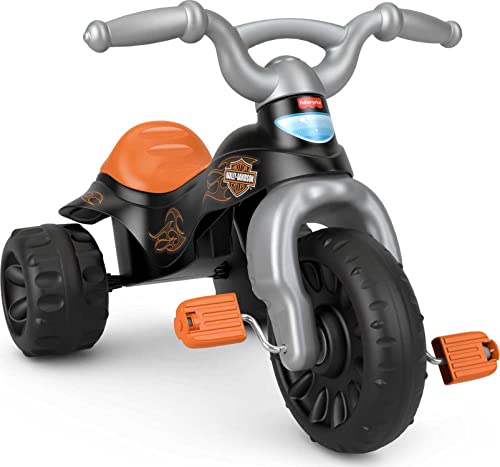
Fisher-Price Harley-Davidson Tough Trike
Wide plastic wheels on the Tough Trike roll over grass, gravel, and uneven paths better than narrow wheeled steel trikes. A storage compartment under the seat holds small toys for longer outings. Pedals stay fixed to the front wheel with no freewheel, so feet get pushed around once a child stops pedaling.
Pros
- Wide wheels handle grass and gravel better than narrow tires
- Low, wide body resists tipping on uneven ground
- Under seat storage keeps kids engaged on longer rides
Cons
- No freewheel, so pedals spin whenever the trike moves
- Plastic wheels wear faster on abrasive surfaces
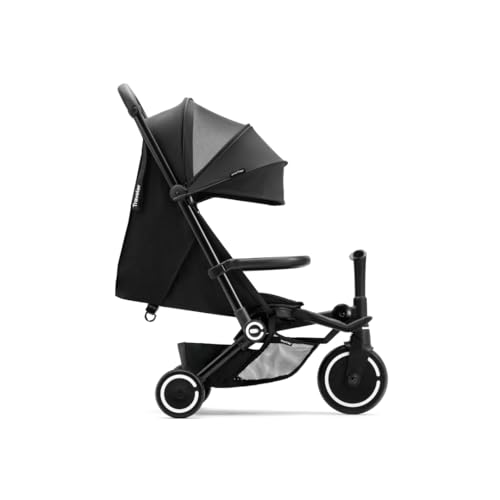
smarTrike STR3 Folding Baby Tricycle
A folding frame collapses the STR3 down for apartment closets or a car trunk, solving the storage complaint that follows most convertible trikes. Multiple stages carry a child through harnessed pushing to independent pedaling. Owners report the fold takes a few tries before it becomes quick.
Pros
- Folds flat for apartments and car trunks
- Starts younger than most convertible trikes
- Rubber tread stays quiet on hard floors
Cons
- Folding mechanism takes practice to operate quickly
- Extra folding parts add more to maintain
How they stack up
| # | Model | Age range | Best for | Score | Price |
|---|---|---|---|---|---|
| 1 | Radio Flyer 4 in 1 Stroll N Trike | About 9 months to 5 years | Best overall | 9.4 | Check price |
| 2 | Joovy Tricycoo 4.1 Tricycle | About 12 months to 4 years | Best value | 9.2 | Check price |
| 3 | Schwinn Roadster Tricycle | About 2 to 4 years | Best for confident pedalers | 9.0 | Check price |
| 4 | Little Tikes 4 in 1 Deluxe Edition Trike | About 9 months to 3 years | Best for younger toddlers | 8.8 | Check price |
| 5 | Radio Flyer Classic Red Tricycle | About 2.5 to 5 years | Best simple design | 8.6 | Check price |
| 6 | Fisher-Price Harley-Davidson Tough Trike | About 2 to 5 years | Best for rough surfaces | 8.3 | Check price |
| 7 | smarTrike STR3 Folding Baby Tricycle | About 6 months to 3 years | Best for small storage spaces | 8.0 | Check price |
Frequently asked questions
What age can a toddler start riding a tricycle?
Harnessed push handle trikes suit many toddlers from twelve to eighteen months, once they sit unsupported. Independent pedaling typically starts between two and three years old.
Is a tricycle or a balance bike better for toddlers?
Each teaches something different. A tricycle builds pedaling and steering with full stability, while a balance bike builds balance ahead of a pedal bicycle. Many families use a trike first, then add a balance bike around two and a half.
What does a freewheel clutch do on a tricycle?
It disconnects the pedals from the front wheel while a parent pushes, so pedals stay still. Without one, like on the Fisher-Price Tough Trike, pedals spin against a child’s feet as the trike rolls.
How do I know if a tricycle seat is adjusted correctly?
A child should reach the pedal’s furthest point with a slight knee bend. Hands should rest comfortably on the handlebars without stretching forward.
Do toddlers need a helmet on a tricycle?
Trike speeds stay low, but a helmet habit formed early carries over once a child graduates to a bicycle. Many pediatric safety groups recommend helmets for all wheeled riding.
Are rubber tricycle wheels worth paying more than plastic?
On pavement and indoor floors, yes. Rubber tread grips better and rolls quieter than bare plastic, which tends to skid on smooth surfaces. On grass or gravel, wheel width matters more than the difference in material.
How long does tricycle assembly take?
Budget thirty to sixty minutes for a convertible model, using basic hand tools. Simple designs like the Radio Flyer Classic Red assemble faster since nothing converts.
Can a tricycle be used indoors?
Small trikes with rubber tread work fine in a hallway or large room without marking floors. Plastic wheeled models run louder and scuff more, so they suit outdoor use better.
Is a convertible trike better than a classic trike?
Convertible trikes like the Radio Flyer 4 in 1 stretch across several years of growth, which suits families who want one purchase to last. A classic trike, such as the Schwinn Roadster, brings less complexity once a child already pedals confidently.
Final word
Radio Flyer’s 4 in 1 Stroll N Trike gives most families the longest run of use, since every one of its four stages works rather than existing as a token conversion. Joovy’s Tricycoo 4.1 wins out when steering control and a freewheel clutch matter most. Schwinn’s Roadster suits a toddler who already pedals confidently and just needs a stable, durable ride.
Rachel Simmons
Rachel previously worked in child-product retail and brings a practical, detail-first eye to gear reviews, focusing on safety standards, ease of use and the fine print that matters most for new caregivers.


