3D Puzzle Kits That Actually Skip the Plastic
ROKR’s 3D Wooden Puzzle leads for sustainability with plastic-free plywood pieces, best for anyone building a display model start to finish. UGears suits builders who want working gears in the same wood-only format. Wrebbit fits families who want a lighter, glue-free recycled card build.
ROKR’s 3D Wooden Puzzle tops this list because every piece laser-cuts from birch plywood, with zero plastic components, though larger kits take several hours to finish.
Marketing copy calls plenty of puzzles eco friendly without backing it up, so we checked the materials list, plastic content, and packaging across seven current Amazon listings instead of trusting the box alone.
The top picks, ranked
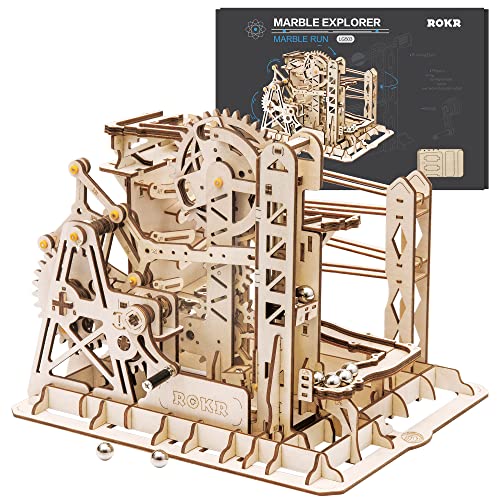
ROKR 3D Wooden Puzzle (Mechanical Gear Series)
Every piece in this kit laser-cuts from birch plywood, skipping the plastic components found in many licensed 3D puzzle lines. Tab-and-slot joints hold the finished model together without glue. Owners report the assembled pieces stay firm enough to display on a shelf without extra adhesive.
Pros
- No plastic parts anywhere in the kit
- Glue-free assembly holds without adhesive
- Recyclable cardboard packaging
Cons
- Higher piece count models take hours to build
- Plywood edges can splinter if forced

UGears Mechanical Models (Locomotive or Truck Series)
Gears, wheels, and rubber-band motors in this kit come entirely from wood and natural rubber, with no metal axles. Once assembled, the model actually moves rather than sitting as a static display. Packaging carries FSC certification, matching the wood-only build inside the box.
Pros
- Working gears and motors from wood alone
- FSC-certified packaging
- No metal or plastic axles
Cons
- More complex assembly than static puzzle kits
- Higher price than non-mechanical wood puzzles

Wrebbit 3D Puzzle (Landmark Series)
Safety Foam Technology panels made from recycled cardstock replace the solid plastic sheets used in many landmark puzzle kits. Interlocking tabs click each panel into place, so no glue or tools are needed. The finished build stays noticeably lighter than a comparable wood model.
Pros
- Recycled cardstock reduces plastic use
- Lightweight compared to wood kits
- No glue or tools required
Cons
- Small plastic tabs still present in joints
- Less durable long-term than solid wood pieces
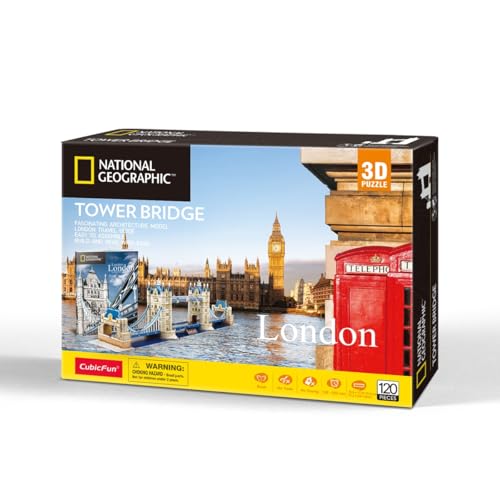
CubicFun 3D Puzzle (National Landmarks Series)
Fewer, larger foam-card pieces make this landmark kit easier to manage than premium wood sets built for adults. A recycled paperboard base cuts down on plastic content overall. Small support tabs are still injection molded, so the kit isn’t entirely plastic-free.
Pros
- Larger pieces suit younger builders
- Recycled paperboard base reduces plastic
- Lower price point than premium wood kits
Cons
- Small plastic tabs still included
- Less detailed finish than wood models
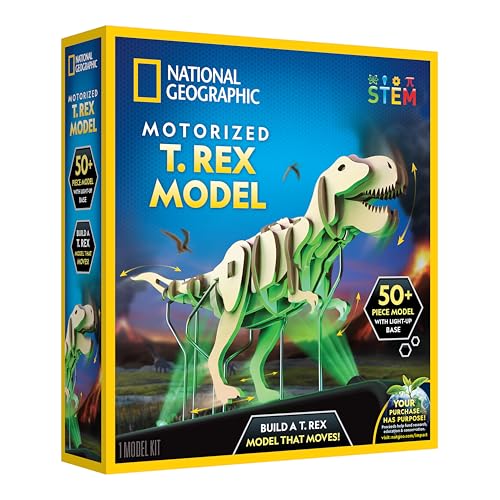
National Geographic 3D Wood Puzzle (Animal Series)
FSC-certified plywood forms every piece in this animal-themed kit, with a fact sheet about the featured species tucked inside the box. Pieces punch out cleanly from pre-cut sheets, so no extra tools are needed. Classroom and homeschool buyers get the added reading material at no extra cost.
Pros
- FSC-certified wood sourcing
- Includes educational species fact sheet
- No plastic anywhere in the kit
Cons
- Fewer piece-count options than hobbyist brands
- Designs skew toward younger audiences

Ravensburger 3D Puzzle (Night Edition Series)
Recyclable cardboard panels form the base kit, with a separate LED light add-on for after-dark display rather than a built-in plastic part. Assembly skips glue entirely on the base structure. Buyers who add the optional light kit do introduce a small plastic housing around the bulb.
Pros
- Base kit uses no plastic parts
- Recyclable cardboard construction
- Optional LED kit for display lighting
Cons
- LED add-on introduces plastic housing
- Less structurally rigid than solid wood kits

ROKR Robotime Mini 3D Wooden Puzzle (Music Box Series)
Plywood-only construction carries over from ROKR’s larger kits, just scaled down into a compact music box format. Fewer pieces mean a shorter build session for a first-time buyer. Once finished, the mechanism actually plays music, unlike a purely static wood puzzle.
Pros
- Lower cost entry into plastic-free puzzles
- Shorter build time than full-size kits
- Functions as a working music box
Cons
- Smaller finished size than full ROKR kits
- Limited to music box style designs
How they stack up
| # | Model | Primary material | Best for | Score | Price |
|---|---|---|---|---|---|
| 1 | ROKR 3D Wooden Puzzle (Mechanical Gear Series) | Birch plywood | Best overall | 9.3 | Check price |
| 2 | UGears Mechanical Models (Locomotive or Truck Series) | Laser-cut plywood | Best for working mechanisms | 9.1 | Check price |
| 3 | Wrebbit 3D Puzzle (Landmark Series) | Recycled cardstock foam panels | Best glue-free recycled card option | 8.8 | Check price |
| 4 | CubicFun 3D Puzzle (National Landmarks Series) | Foam-backed recycled paperboard | Best for younger builders | 8.5 | Check price |
| 5 | National Geographic 3D Wood Puzzle (Animal Series) | FSC-certified plywood | Best for educational use | 8.3 | Check price |
| 6 | Ravensburger 3D Puzzle (Night Edition Series) | Recyclable cardboard panels | Best for display pieces | 8.1 | Check price |
| 7 | ROKR Robotime Mini 3D Wooden Puzzle (Music Box Series) | Birch plywood | Best budget | 8.0 | Check price |
How to pick the right one
What plastic-free actually means on the materials list Look for plywood, cardstock, or foam-backed paperboard listed as the primary material instead of injection-molded plastic sheets. Some kits still use small plastic tabs in the joints, as seen with Wrebbit and CubicFun. Reading the specific materials list beats trusting an eco label on the box.
Certified wood sourcing worth checking for FSC certification confirms the plywood came from a managed forestry program rather than unregulated logging. Both National Geographic and UGears list FSC-certified sourcing on their packaging. That distinction carries more weight than a generic sustainable claim with no certification behind it.
Matching piece count to the builder’s age Younger builders do better with fewer, larger pieces, like CubicFun’s simplified landmark sets. Teens and adults get more out of ROKR’s or UGears’s higher piece counts and working mechanisms. Complexity should track attention span first, piece count second.
Why packaging matters as much as the puzzle itself A wood puzzle shipped inside a plastic-wrapped box undercuts its own eco claim before the lid even opens. Recyclable cardboard without a plastic display window, used across most wood kits here, keeps the whole package consistent with the plastic-free pitch inside.
Frequently asked questions
What makes a 3D puzzle eco friendly?
Certified or sustainable wood sourcing, minimal plastic components, recyclable packaging, and glue-free assembly all count toward a genuinely eco friendly design rather than a marketing label alone.
Are wood 3D puzzles better for the environment than foam ones?
Generally yes, since wood is biodegradable and often FSC-certified, while foam-backed cardstock puzzles usually include small plastic tabs and don’t break down as easily.
Do eco friendly 3D puzzles require glue?
Most premium wood kits, including ROKR and UGears, use tab-and-slot joints with no glue at all, which also makes disassembly and storage easier.
Are 3D wood puzzles better for kids or adults?
Both, depending on piece count. Simplified sets from CubicFun or National Geographic suit kids around age 8 and up, while ROKR’s and UGears’s detailed kits suit teens and adults.
What does FSC certification mean on a wood puzzle?
It confirms the wood came from a forest managed under Forest Stewardship Council standards, which regulate replanting rates and harvest practices.
Can a 3D puzzle with moving parts still be eco friendly?
Yes, UGears builds working gears and rubber-band motors entirely from wood and natural rubber, with no metal or plastic in the mechanism.
How long does it take to build a 3D wood puzzle?
Build time tracks piece count, from under an hour for a compact kit like ROKR’s music box series to several hours for detailed mechanical models.
Are recycled cardstock puzzles as sturdy as wood ones?
They’re lighter and less rigid than solid plywood, which suits display pieces like Wrebbit’s landmark models, but wood kits hold up better to repeated handling.
Wood puzzle vs foam puzzle: which lasts longer in storage?
Wood pieces resist warping and crushing better over time, while foam-backed panels can compress or bend if stacked under other items.
The verdict
ROKR’s plywood 3D puzzle earns the top spot for a build that stays plastic-free from the pieces to the packaging. Builders chasing moving mechanical parts in the same wood-only format should pick UGears instead, while parents of younger kids get an easier build from CubicFun’s larger, simplified pieces.
Rachel Simmons
Rachel previously worked in child-product retail and brings a practical, detail-first eye to gear reviews, focusing on safety standards, ease of use and the fine print that matters most for new caregivers.