Do You Need a Dual Screen Laptop Extender for Work?
Mobile Pixels Trio Max tops this list, with 14.1 inch panels on a magnetic slide out mount. Mobile Pixels Duex Plus is the lighter single panel value pick. Xebec Tri-Screen 2 suits frequent travelers who want a clamp on frame instead of a permanent plate.
Mobile Pixels Trio Max earns the top spot because its panels nearly match a laptop’s own screen size instead of feeling like an afterthought. Duex Plus does similar work with one lighter panel for smaller machines. Xebec Tri-Screen 2 trades a permanent adhesive plate for a rigid clamp, which frequent travelers tend to prefer.
Marketing photos rarely show the real tradeoffs of this category. Every panel bolted to a lid adds weight the hinge was never designed to carry, and slim cables in product shots often become an awkward loop in daily use. We compared panel size and resolution, attachment method, whether power and video share one cable, published weight, and how far each panel tilts, then weighed that against what owners report about hinge strain over months of use.
How to choose
What ports do you need for a laptop extender? Attached panels need both video and power. The cleanest setups run both over one USB C port with DisplayPort Alt Mode. Not every USB C port outputs video, and some laptops support it on only one port. Dual panel extenders often need two ports or a powered hub, which can mean giving up charging. Confirm your laptop’s port capabilities before you buy, since mismatched ports are the most common reason an extender fails to work.
How much weight does an attached panel add? Laptop hinges are built for the weight of one display, not a display plus two extra panels hanging off the sides. Two to three extra pounds increases hinge stress every time the lid opens. Some laptops even tip backward once panels extend outward. Lighter single panel extenders put less strain on the hinge. A standalone monitor on its own stand avoids the issue completely.
What panel size do you actually need? Ten inch panels handle chat windows, terminals, and reference documents well. Spreadsheets and timelines get frustrating at that size, since text stays small even at good resolution. Fourteen inch panels cost more and weigh more, but hold up for real work. Match panel size to the applications you plan to run on it, not just the price.
Should you get a standalone monitor instead? Attached extenders deliver on their core promise: a portable multi monitor setup that travels with the laptop. Fixed desk work is a different story. A standalone portable monitor sits at a proper height, offers a larger screen, and leaves no permanent hardware on the laptop. Attached extenders earn their place when work happens from unpredictable locations with limited desk space.
The best picks, ranked

Mobile Pixels Trio Max
Two 14.1 inch 1080p panels slide out from a magnetic backplate fixed to the laptop lid. Each panel rotates up to 270 degrees, useful for showing a screen to someone across a table. Owners report the magnetic mount is convenient, though the backplate itself stays on the laptop permanently.
Pros
- Panel size closely matches typical laptop screens
- Magnetic mount attaches and releases quickly
- 270 degree rotation supports presenting to others
Cons
- Adds noticeable weight to the laptop lid
- Backplate remains stuck to the laptop permanently

Mobile Pixels Duex Plus
A single 13.3 inch 1080p panel slides out on the same magnetic mount as the Trio Max, minus the second screen. One panel keeps weight down and balances better on smaller laptops. Based on specifications, it works with Windows, macOS, and Android devices over one cable.
Pros
- Noticeably lighter than dual panel setups
- One cable handles both power and video
- Works across Windows, macOS, and Android
Cons
- Only one extra screen, not two
- Panel brightness is modest next to rivals

Xebec Tri-Screen 2
Two 10.1 inch panels sit inside a clamping frame that grips the laptop lid rather than gluing to it. No adhesive plate stays behind once removed. Panels tilt independently, and resolution reaches 1920 by 1200, sharper than most rivals at this panel size.
Pros
- Leaves no adhesive residue on the laptop
- Clamp frame stays rigid during travel
- Higher pixel density than 1080p panels
Cons
- Small panel size limits detailed work
- Clamp fit varies by laptop thickness
LIMINK S19 Triple Portable Monitor
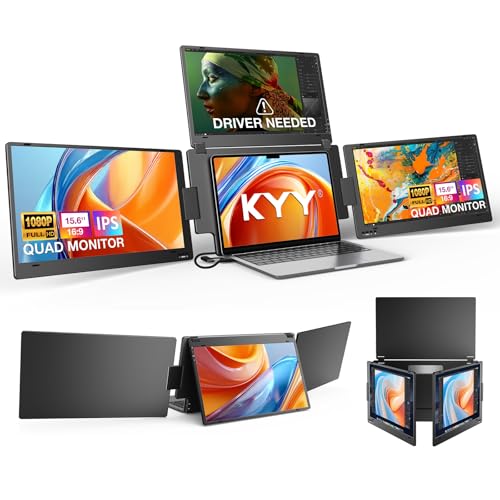
Two 14 inch 1080p panels fold out from one hinge assembly, giving the largest combined screen area in this group. Weight climbs accordingly, so a desk based setup suits it better than a daily commute. Owners report the pivot mechanism feels solid despite the added bulk.
Pros
- Largest total screen area of any option here
- Panels swivel and rotate independently
- Brightness holds up well for the class
Cons
- Heavy to carry for regular travel
- Often needs two ports or a hub

Ofiyaa P2 Triple Portable Monitor
A clip on bracket holds two 10.1 inch panels at 1920 by 1200 resolution, at a lower cost than premium rivals. Brightness and panel quality trail the top picks, which is where the savings come from. Weight stays light enough for daily backpack use.
Pros
- Lowest cost entry into dual panel extenders
- Resolution stays sharp despite the small size
- Light enough to carry in a backpack
Cons
- Panels run dimmer than premium options
- Clip mount feels less secure than a clamp
FOPO Triple Portable Monitor
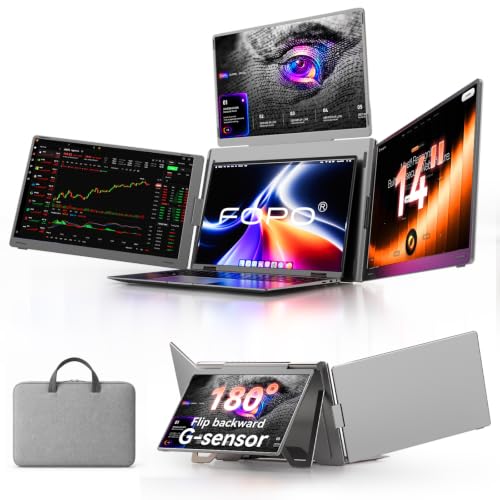
An adjustable mount fits laptops from 13 to 17 inches, wider than most rivals here. Both 13.3 inch panels rotate into portrait mode, useful for long documents or code. A carrying case ships with the unit for transport.
Pros
- Fits an unusually wide range of laptop sizes
- Portrait rotation works on both panels
- Included case simplifies transport
Cons
- Setup takes longer than magnetic mount designs
- Total weight adds up across both panels
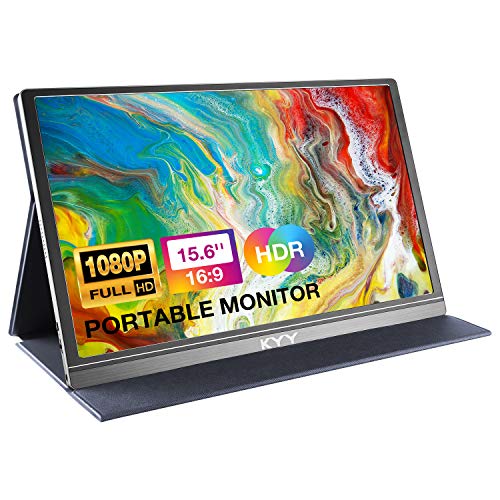
KYY 15.6-Inch Portable Monitor
This is a standalone 15.6 inch 1080p monitor, not a panel bolted to the lid. A folding smart cover doubles as its stand, and one USB C cable handles power and video. No extra weight ever reaches the laptop hinge.
Pros
- Largest single screen of any option here
- Adds zero strain to the laptop hinge
- Doubles as a monitor for consoles or cameras
Cons
- Needs its own desk space beside the laptop
- Cover stand wobbles on soft surfaces
How they stack up
| # | Model | Panel size | Best for | Score | Price |
|---|---|---|---|---|---|
| 1 | Mobile Pixels Trio Max | 14.1 inch | Best overall | 9.4 | Check price |
| 2 | Mobile Pixels Duex Plus | 13.3 inch | Best value | 9.2 | Check price |
| 3 | Xebec Tri-Screen 2 | 10.1 inch each | Best for travel | 9.0 | Check price |
| 4 | LIMINK S19 Triple Portable Monitor | 14 inch each | Best for screen area | 8.7 | Check price |
| 5 | Ofiyaa P2 Triple Portable Monitor | 10.1 inch each | Best budget dual panel | 8.5 | Check price |
| 6 | FOPO Triple Portable Monitor | 13.3 inch each | Best for wide laptops | 8.3 | Check price |
| 7 | KYY 15.6-Inch Portable Monitor | 15.6 inch | Best standalone alternative | 8.0 | Check price |
Common questions
Do dual screen laptop extenders need special software?
Most connect over USB C with DisplayPort output and need no drivers at all. Models using plain USB A instead rely on DisplayLink software, which does need an install. That software also uses some processor capacity, so battery life and performance take a small hit.
Will a laptop extender work with a MacBook?
Generally, yes, over USB C. Apple silicon MacBook Air and base Pro models support only a limited number of external displays natively. A dual panel extender may need a DisplayLink adapter to drive both screens at once. Check your specific model’s external display limit first.
How much weight do laptop screen extenders add?
Single panel extenders typically add around one and a half pounds. Dual panel units commonly add two and a half to four pounds. That weight sits entirely on the lid, raising both carrying weight and hinge stress. Lighter laptops are the most likely to tip backward once panels extend.
Do extender panels drain the laptop battery?
Yes, unless an external power source is connected. Two extra panels can shorten battery runtime by a third or more, depending on brightness. Working unplugged for long stretches favors a single panel extender or lower brightness settings.
Can a tablet or phone use a laptop screen extender?
Many models support Android devices and some tablets over USB C, as long as the device outputs video. iPads with USB C generally work fine. Support varies enough between models that checking the specific listing beats assuming, especially for gaming handhelds.
Does a magnetic backplate damage a laptop lid?
The plate attaches with adhesive meant to stay in place. Removing it usually leaves residue that isopropyl alcohol cleans off, though the process takes patience. Clamping frame designs like the Xebec Tri-Screen 2 avoid the issue by never gluing to the lid.
Is a portable monitor better than an attached extender?
For a fixed desk setup, usually. Standalone monitors run larger, sit at a healthier height, and add no strain to the laptop. Attached extenders win when desk space is unpredictable or everything needs to travel as one unit.
What resolution is enough for a second screen?
1080p covers panels up to around 14 inches without trouble. Smaller 10 inch panels benefit from 1920 by 1200 resolution for sharper text, though that requires some scaling. Going higher than that mostly adds cost and power draw on screens used for reference material.
How long do dual screen laptop extenders typically last?
Moving parts like sliding mounts and rotation hinges wear faster than a fixed monitor stand. Owners report magnetic and clamp mounts holding up well for a year or more of regular use. Cable connectors tend to fail before the panels themselves do.
Our take
Mobile Pixels Trio Max delivers the most usable extra workspace, since its panels match a typical laptop screen instead of offering a narrow strip. First time buyers should start with the lighter, cheaper Duex Plus, which puts less strain on the hinge. Travelers who dislike adhesive plates will prefer the clamping Xebec Tri-Screen 2 instead.
Marcus Chen
Marcus covered consumer electronics for enthusiast tech publications for six years before joining ChoiceCrest. He specializes in translating manufacturer spec sheets into plain-language buying advice, with a focus on audio, computing accessories and smart-home gear.