Digital angle gauges that hold on a saw blade
Wixey WR300 handles most shop work, reading to 0.1 degree from a magnetic base that grips a saw blade. iGaging AngleCube packs the same readout into a one inch body that clears blade teeth. Electricians get more from the Klein Tools 935DAG and its conduit v-groove.
Wixey WR300 fits woodworkers who set bevels on a table saw or a jointer fence. Its 0.1 degree readout and strong base magnet let you zero on cast iron, then move to the blade plate in one step. Height is the tradeoff. On a 7.25 inch blade the body rocks against carbide teeth.
Three different jobs hide behind one product name: setting a machine angle, reading an existing angle, and calculating a miter. Picks here come from comparing published resolution and accuracy figures, magnet placement, display size and relative zero behavior. Owner reports about temperature drift, battery drain and magnets sliding on painted steel settled the close calls.
How to choose
What to look for in a digital angle gauge Resolution counts the decimal places on screen. Accuracy describes how far a reading can sit from truth, usually quoted as one tolerance near zero and a looser one near 45 degrees. A display showing 0.05 degree steps still misleads if the tool was never zeroed. Zero on the machine surface at the start of every session, because sensors shift as a shop warms up. Magnet layout deserves the same attention as the numbers, since a base only magnet limits you to horizontal surfaces.
Setting blade and bevel angles on machines Zero on the saw table, lift the gauge onto the blade plate, and bevel reads out directly. Keep it off the teeth, because carbide tips sit proud of the plate and skew the number. Under 8 inches of blade diameter there is barely a flat landing area, which is where cube shaped bodies pay off. Jointer fences, bandsaw tables and drill press platens all follow the identical routine. Owners who keep a second gauge on the miter saw stop walking back and forth.
Best angle gauge for conduit and pipe bending Round stock rolls a flat base straight off the pipe. Machining a v-groove into that base fixes the problem, which is why the Klein 935DAG and the AccuMASTER suit electricians and pipefitters. Sound alerts matter here because your eyes belong on the bender, not the screen. Try the magnet on galvanized and painted conduit before trusting it overhead. Rubber overmolding counts for more on a jobsite than in a heated shop.
Copying angles for trim, stairs and crown molding Corners in older houses rarely land on 90 degrees, so measuring beats assuming. Two leg finders bridge both walls, report the real angle, then halve it into a miter figure. Protractor styles with locking arms take a stair stringer or countertop angle straight to the saw fence. Neither job suits a magnetic cube, which explains why trim carpenters carry one of each. Plan on two tools instead of hunting for one that covers everything.
Our top picks

Wixey WR300 Type 2 Digital Angle Gauge
Zero on the saw table, move it to the blade plate, and bevel shows up directly on screen. A switch toggles absolute and relative zero, so nobody does subtraction mid setup. Backlighting earns its keep when you crouch under a machine, though the tall body will not sit flat between small blade teeth.
Pros
- Relative zero removes mental math on bevel cuts
- Backlit numbers stay readable in a dim shop
- Base magnet grips cast iron and blade plate alike
Cons
- Body height fights small diameter blades
- Auto shutoff can end a reading mid adjustment

iGaging AngleCube Digital Angle Gauge
One inch cube proportions let this gauge sit flat where taller bodies rock on carbide. Magnets sit on the base and on one side face, covering a blade and a fence without moving the tool. Buttons measure only a few millimeters across, so gloved fingers miss the zero function.
Pros
- Clears the teeth on 7.25 and 8 in blades
- Two magnet faces read blade and fence
- Pocket sized for an apron or tool belt
Cons
- Tiny buttons frustrate gloved hands
- Screen area trails larger bench gauges

Klein Tools 935DAG Digital Electronic Level and Angle Gauge
A v-groove machined into the base straddles EMT and rigid conduit instead of rolling off it. Tones fire at level and plumb, letting you watch the pipe while pulling the bender handle. Thickness rules it out for tight machine setups, and the rubber overmold adds bulk in a pouch.
Pros
- V-groove seats on round conduit and pipe
- Audible alerts free your eyes for the bend
- Overmold shrugs off a fall from a ladder
Cons
- Too thick for close blade and fence work
- Beep blends into other jobsite alarms

Calculated Industries 7434 AccuMASTER 2-in-1 Digital Level and Angle Finder
Angle readings and short level checks come from one machined body with a grooved base. Numbers flip automatically when the tool goes upside down, which helps on overhead joist and duct work. Stated accuracy sits looser than the Wixey figure; fine joinery notices that, framing never will.
Pros
- Replaces a torpedo level on small jobs
- Auto inverting screen suits overhead reads
- Grooved base sits on pipe and flat stock
Cons
- Accuracy spec trails the top two picks
- Long body cannot fit between blade teeth

AccuRemote Digital Electronic Magnetic Angle Gauge
Feature list mirrors the premium gauges: 0.1 degree steps, magnetic base, relative zero. Savings turn up in the housing, which flexes, and in a magnet that slides on painted sheet metal. Keep it as a dedicated miter saw gauge so your main unit never leaves the table saw.
Pros
- Core readout matches the premium units
- Light body hangs on a blade without tipping it
- Two button layout learns in seconds
Cons
- Magnet loses grip on painted steel
- Housing flexes under thumb pressure
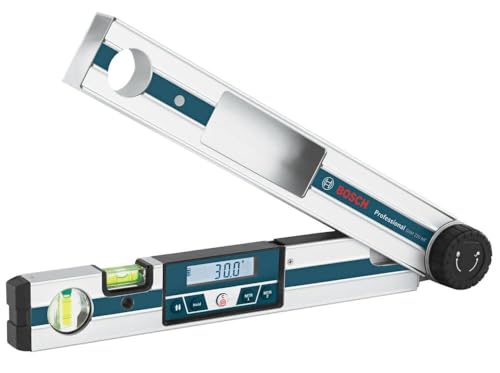
Bosch GAM 220 MF Digital Angle Finder
Two long legs open into a corner, then the screen reports both the corner angle and the miter to cut. Range extends to 220 degrees, enough for splayed corners common in older houses. Carrying that capability means a tool that lives in the truck rather than a pouch.
Pros
- Halves an out of square corner for you
- Long legs average out wavy drywall
- Locks the angle for transfer to a saw
Cons
- Far too large for machine setup
- Legs need protection in transit

GemRed 82412 Digital Angle Finder Protractor
Stainless arms carry inch and millimeter graduations, so one tool reports length and angle together. Tighten the thumbscrew and a reading travels with you to a bevel gauge or miter saw. Blade setup stays off the table here, since nothing magnetic references a machine surface.
Pros
- Copies angles off existing trim and furniture
- Marked arms double as a short rule
- Hold button freezes a reading before you move
Cons
- No magnet, so blade tilt is out
- Thin arms flex against a hard surface
The lineup, side by side
| # | Model | Resolution | Best for | Score | Price |
|---|---|---|---|---|---|
| 1 | Wixey WR300 Type 2 Digital Angle Gauge | 0.1 degree | Best overall | 9.4 | Check price |
| 2 | iGaging AngleCube Digital Angle Gauge | 0.1 degree | Best for table saws | 9.2 | Check price |
| 3 | Klein Tools 935DAG Digital Electronic Level and Angle Gauge | 0.1 degree | Best for electricians | 9.0 | Check price |
| 4 | Calculated Industries 7434 AccuMASTER 2-in-1 Digital Level and Angle Finder | 0.05 degree display | Best value | 8.8 | Check price |
| 5 | AccuRemote Digital Electronic Magnetic Angle Gauge | 0.1 degree | Best budget | 8.6 | Check price |
| 6 | Bosch GAM 220 MF Digital Angle Finder | 0 to 220 degrees | Best for miter and crown cuts | 8.3 | Check price |
| 7 | GemRed 82412 Digital Angle Finder Protractor | 7 in stainless steel | Best for copying existing angles | 8.0 | Check price |
Common questions
How accurate are digital angle gauges?
Consumer units typically quote around 0.2 degree across the full range and tighter near zero. Zeroing on the machine table immediately before a cut removes most of the drift you would otherwise carry into the setup.
Can a digital angle gauge set a table saw blade?
Yes, and that job sells most of them. Zero the gauge on the table, set it against the blade plate rather than the teeth, then tilt until the number matches your target.
What is the difference between an angle gauge and an angle finder?
Gauges read the tilt of one surface using gravity, held in place by a magnet. Finders use two arms to measure the opening between two surfaces, which is what corners and trim work need.
Which digital angle gauge is best for small table saw blades?
iGaging AngleCube, because a one inch body clears carbide teeth on 7.25 and 8 inch blades. Taller gauges rock on the tips and report a bevel that is off by a fraction of a degree.
Wixey WR300 vs iGaging AngleCube: which one should I buy?
Bigger display and easier buttons favor the Wixey at a bench. Blade diameter decides the rest, and 8 inches or less points to the AngleCube.
Do digital angle gauges need recalibration?
Session zeroing covers normal use. Full calibration only becomes necessary when flipping the tool 180 degrees on one flat surface gives two different readings.
Why does my angle gauge drift after a few minutes?
Sensor output moves with temperature, most noticeably when a cold tool warms up indoors. Let it sit for a minute, then zero again on your reference surface.
Is a digital angle gauge worth it over a bevel square?
For machine setup, yes, because a bevel square reports no number at all. Transferring an angle you never need to quantify still belongs to the bevel square.
What gauge works for bending EMT conduit?
Klein Tools 935DAG, since its grooved base straddles round pipe and it beeps at level and plumb. Flat based woodworking gauges roll off before the bend finishes.
Can one gauge handle both woodworking and trim carpentry?
Only partly. Magnetic gauges set machines but cannot read a wall corner, so most trim carpenters pair one with a two leg finder such as the Bosch GAM 220 MF.
Final word
Wixey WR300 earns the first purchase for anyone with a table saw, since one tool covers bevel tilt, jointer fences and drill press tables with numbers readable from a crouch. Shops running 7.25 inch blades should add the iGaging AngleCube rather than fight a tall body against carbide teeth. Trim carpenters measuring wall corners gain almost nothing from either and should start with the Bosch GAM 220 MF.
Jake Monroe
Jake worked as a residential contractor for over a decade before shifting to full-time writing. He evaluates power tools, hand tools and workshop gear through the lens of someone who has actually used them on job sites, not just read the box.