How to Pick a Rotary Cutter by Blade Size and Fabric
The Olfa RTY-2/G suits daily quilting with a 45mm blade and one-thumb safety lock. The Fiskars Amplify cuts thick layers with less hand pressure. The Olfa RTY-1/G turns tighter curves for applique. Blade size should match the typical cut, not the price tag.
Quilters cutting straight strips and blocks daily get the most balanced result from the Olfa RTY-2/G, which pairs a standard 45mm blade with a slide-lock guard that retracts with one thumb motion.
We compared blade diameter, guard mechanism, and handle shape against owner feedback, since a 60mm blade shears batting in fewer passes while a 28mm blade turns tight curves that a larger disc would overshoot.
The best picks, ranked
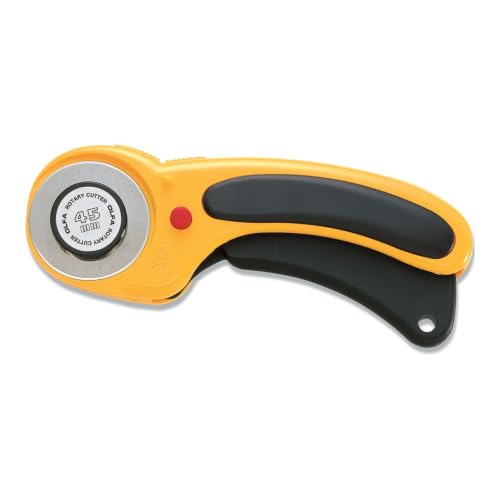
Olfa RTY-2/G 45mm Rotary Cutter
A standard 45mm tungsten steel blade pairs with a slide-action guard that locks closed automatically between cuts. The contoured grip suits right- and left-handed use, useful in a household sharing one cutter.
Pros
- Blade auto-retracts between cuts
- Comfortable for long cutting sessions
- Ambidextrous handle design
Cons
- 45mm struggles on very tight curves
- Replacement blades cost adds up over time

Fiskars Amplify 60mm Rotary Cutter
A gear-driven mechanism multiplies hand force, so several layers of batting take less pressure to cut through. The larger 60mm blade covers more fabric per stroke, speeding up long straight edges.
Pros
- Cuts thick stacked layers easily
- Less hand fatigue on long cuts
- Large blade covers more distance per pass
Cons
- Bulkier for detailed curved cuts
- Higher price than standard 45mm cutters
Olfa RTY-2/DX 45mm Deluxe Rotary Cutter
The same 45mm blade format gets a curved handle shape that follows the natural angle of a cutting hand. Pattern pieces that need a steady, controlled straight line benefit most.
Pros
- Affordable relative to specialty cutters
- Curved grip reduces wrist strain
- Widely available replacement blades
Cons
- Manual guard needs a deliberate slide
- Not ideal for very thick layers

Olfa RTY-1/G 28mm Compact Rotary Cutter
A 28mm blade turns tighter curves than 45mm or 60mm discs allow, suiting applique shapes and small pattern pieces. Its lighter body reduces hand fatigue during slow, detailed cutting.
Pros
- Handles tight curves cleanly
- Lightweight for detailed work
- Compact size fits smaller hands
Cons
- Small blade slows straight-line cutting
- Needs more passes on thick fabric

Martelli Ergo 45mm Rotary Cutter
An angled handle keeps the wrist straight during long cuts, which owners with arthritis or repetitive strain report eases pain. The 45mm blade accepts standard replacement blades from other brands.
Pros
- Wrist-neutral grip eases strain
- Compatible with common 45mm blades
- Owners report less hand fatigue
Cons
- Handle shape takes adjustment time
- Costs more than basic 45mm cutters

Fiskars 45mm Titanium Softgrip Rotary Cutter
A titanium coating resists dulling longer than uncoated steel, cutting down on how often the blade needs replacing. Cushioning in the softgrip handle helps during extended holding.
Pros
- Titanium coating extends blade life
- Cushioned grip for long sessions
- Reliable retractable safety guard
Cons
- Titanium blades cost more to replace
- Coating does not prevent all dulling
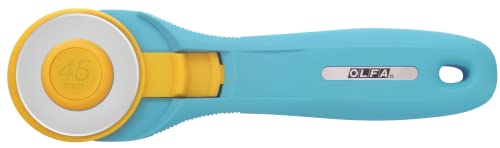
Olfa Splash 45mm Rotary Cutter
The same 45mm Olfa blade format used in premium models sits inside a simpler plastic body here. Beginners and occasional sewers get standard cutting performance without an ergonomic handle upgrade.
Pros
- Lowest price among 45mm options
- Uses widely available standard blades
- Lightweight for casual use
Cons
- Basic grip tires the hand faster
- Housing feels less durable long-term
Side by side
| # | Model | Blade size | Best for | Score | Price |
|---|---|---|---|---|---|
| 1 | Olfa RTY-2/G 45mm Rotary Cutter | 45mm tungsten steel | Best overall | 9.3 | Check price |
| 2 | Fiskars Amplify 60mm Rotary Cutter | 60mm | Best for thick fabric | 9.0 | Check price |
| 3 | Olfa RTY-2/DX 45mm Deluxe Rotary Cutter | 45mm | Best value | 8.8 | Check price |
| 4 | Olfa RTY-1/G 28mm Compact Rotary Cutter | 28mm | Best for curves and applique | 8.6 | Check price |
| 5 | Martelli Ergo 45mm Rotary Cutter | 45mm | Best for arthritis or hand strain | 8.5 | Check price |
| 6 | Fiskars 45mm Titanium Softgrip Rotary Cutter | 45mm titanium-coated | Best for blade longevity | 8.3 | Check price |
| 7 | Olfa Splash 45mm Rotary Cutter | 45mm | Best budget | 8.0 | Check price |
What to look for
What to look for in a rotary cutter Blade diameter, safety guard style, and handle shape drive most of the difference between models. A larger blade covers more distance per stroke but turns curves less easily. Check whether the guard retracts automatically or needs a manual slide, since that affects one-handed use.
Matching blade size to your project A 45mm blade covers most quilting strips and blocks as the standard size. A 60mm blade suits long straight cuts through thick batting or several fabric layers. Small pattern pieces and applique curves call for a 28mm blade instead, where a larger disc would overshoot the line.
Best for thick layers and batting Cutting through folded fabric or stacked batting goes easier with a larger blade and, ideally, a gear-assisted mechanism. The Fiskars Amplify reduces the hand pressure needed per pass for this exact job.
Best for hand strain and long cutting sessions Hours of cutting, or arthritis, benefit from a handle angle that keeps the wrist neutral. The Martelli Ergo and Fiskars Softgrip target that specific need ahead of raw cutting speed.
Questions worth asking
What size rotary cutter is best for quilting?
A 45mm blade covers most quilting needs, from strips to blocks. Reserve a 60mm blade for thick layers and a 28mm blade for curves or small applique shapes.
How do rotary cutter safety guards work?
Most use a spring-loaded or slide-action shield that covers the blade edge when not actively cutting. Auto-retract versions close the guard the moment pressure releases, cutting the risk of accidental cuts.
45mm vs 60mm rotary cutter, which should I buy?
Everyday quilting blocks and strips call for 45mm. Pick 60mm if multiple fabric layers or batting come up regularly and fewer passes per cut matters.
Can a rotary cutter cut curves?
Smaller blades, like 28mm models, pivot in a tighter radius than 45mm or 60mm blades, so they handle curves without overshooting the line.
Is a rotary cutter better than fabric scissors?
Paired with a cutting mat and ruler, a rotary cutter gives straighter, more repeatable cuts across multiple layers than scissors, which is why most quilters use one for strip piecing.
How often do rotary cutter blades need replacing?
Fabric type and cutting frequency determine blade life, but a dull blade tugs at fabric instead of slicing cleanly. Titanium-coated blades, like the Fiskars option, last longer between replacements.
What rotary cutter is best for hand pain or arthritis?
Ergonomic designs such as the Martelli Ergo or Fiskars Softgrip keep the wrist in a more neutral position, reducing the pressure needed per cut.
Are rotary cutter blades interchangeable between brands?
Most 45mm and 60mm blades follow a common diameter standard and fit multiple cutter brands, though fit can vary slightly, so checking compatibility before buying replacements is worthwhile.
What is the best rotary cutter for applique?
The 28mm Olfa RTY-1/G turns tight curves cleanly, which is exactly what applique shapes and small pattern pieces need.
Do beginners need an expensive rotary cutter?
Not necessarily. The Olfa Splash uses the same 45mm blade format as premium models in a simpler body, which covers occasional projects without the added cost of an ergonomic handle.
Our take
The Olfa RTY-2/G covers the widest range of everyday quilting tasks and remains the pick for most sewists. Anyone cutting thick batting regularly should choose the Fiskars Amplify instead, and quilters focused on applique or curved piecing should reach for the 28mm Olfa RTY-1/G over a standard 45mm blade.
Jake Monroe
Jake worked as a residential contractor for over a decade before shifting to full-time writing. He evaluates power tools, hand tools and workshop gear through the lens of someone who has actually used them on job sites, not just read the box.


