How to Pick a Desk Hutch That Actually Adds Storage
Sauder’s Beginnings Hutch wins for most desks, mixing an enclosed cabinet with an open shelf for hidden and visible storage. Buyers who prefer simple adjustable shelving should look at the South Shore Axess Hutch instead. Way Basics’ zBoard Eco Desk Hutch suits anyone wanting tool-free, eco-friendly assembly.
Sauder’s Beginnings Hutch tops this list by pairing an enclosed cabinet with an open shelf, hiding clutter while still displaying binders or a printer. Home office buyers who want both visible and hidden storage in one unit get the most use from it. Engineered wood laminate scratches more easily than solid hardwood, though, so heavy daily use in a shared space wears the finish faster.
Mounting style, material, and how much desktop space a hutch steals all vary by model. Specifications, material construction, and owner feedback across wood, eco-friendly, wall-mounted, and mesh options separate genuine upgrades from add-ons that just take up space.
How to choose
What to look for in a desk hutch Vertical storage above or beside a work surface is what a desk hutch adds, without stealing floor space. Material affects both weight capacity and how a piece resists warping near a window or radiator. Some hutches rest on the desktop while others bolt to the wall above it, so mounting style matters too. Storage configuration ranges from fully open shelving to enclosed cabinets with adjustable interior shelves. Matching the finish to your existing desk collection helps if you want a coordinated look.
Wood, eco-friendly, and mesh construction compared Engineered wood with laminate, like the Sauder Beginnings Hutch and Bush Cabot Hutch, resists scratches better than raw particleboard but still needs a level surface to avoid warping. Way Basics builds its zBoard hutch from recycled paperboard, cutting weight and skipping formaldehyde-based adhesives entirely. Steel mesh, used in the SimpleHouseware organizer, shrugs off humidity and never delaminates, though it displays clutter instead of hiding it. Particleboard units like the South Shore Axess Hutch keep the build simple but flex more under heavy binders.
Which desk hutch fits a small or shared desk? Full-width hutches often cannot fit corner and narrow desks without blocking a monitor. Wall-mounted options, such as Prepac’s 32 inch Elite Hutch, free the entire desktop by moving storage onto the wall instead. Multiple people can access open shelving without digging through a closed cabinet, which suits shared desks in home offices. Renters should check whether a hutch needs wall anchors before committing to that route.
Cable management and monitor riser integration Cords tend to pile up wherever a hutch sits directly behind a monitor or laptop dock. Mesh-sided hutches route power strips through open gaps instead of trapping them against a wall. Combining elevation with a drawer, monitor riser hybrids like the FITUEYES stand keep cables and small parts under the screen rather than scattered across the desk. Cutting neck strain during long typing sessions comes down to matching riser height to eye level.
What we recommend

Sauder Beginnings Hutch
Cinnamon cherry laminate covers the engineered wood frame, matching Sauder’s Beginnings desk line. An enclosed cabinet sits above an open shelf, splitting hidden storage from display space. Panel construction ships with hardware included, and owners report assembly finishing in under an hour.
Pros
- Enclosed cabinet keeps clutter out of sight
- Matches Sauder Beginnings desk collection finish
- Open shelf holds binders or a small printer
Cons
- Engineered wood scratches more easily than solid wood
- Requires a compatible desk width for mounting
South Shore Axess Hutch
Laminated particleboard forms the shell, paired with two adjustable shelves for books or supplies. Pure White and Chocolate finishes match the wider Axess desk lineup. Skipping an enclosed cabinet keeps the build simple for buyers who just need extra shelf space.
Pros
- Two adjustable shelves fit binders of different heights
- Matches South Shore Axess desk finishes
- Compact profile fits narrow desktops
Cons
- No enclosed storage for hiding clutter
- Particleboard back panel feels less sturdy than solid shelves
Way Basics zBoard Eco Desk Hutch
Recycled paperboard, branded zBoard, replaces standard MDF in this hutch’s construction. Assembly skips tools entirely, relying on peel-and-stick adhesive strips and interlocking tabs. Owners report the open cubby layout suits notebooks, folders, and small plants rather than heavier equipment.
Pros
- Tool-free assembly finishes in minutes
- Formaldehyde-free recycled material
- Lightweight enough to reposition often
Cons
- Adhesive-strip joints hold less weight than screwed frames
- Limited color options compared to wood finishes

Prepac Elite 32-Inch Wall-Mounted Hutch
Mounting to the wall instead of resting on the desktop, this hutch frees the entire desk surface for a keyboard, monitor, or paperwork. Its 32 inch frame holds two fixed shelves, wide enough for binders or a small printer without a desktop hutch’s footprint. Narrow and corner desks gain the most from this layout.
Pros
- Wall mounting frees the full desk surface
- 32 inch width suits narrow or corner desks
- Two fixed shelves resist sagging under books
Cons
- Requires wall studs or anchors for safe mounting
- Fixed shelf height cannot adjust to taller items

Bush Furniture Cabot Hutch
Two enclosed cabinets sit above an open shelf section, giving this hutch a mixed storage layout. Adjustable shelves inside each cabinet let owners resize compartments for binders or supply bins. Harvest Cherry laminate finish matches the rest of the Cabot desk collection for buyers building a matching office set.
Pros
- Two enclosed cabinets hide bulk supplies
- Adjustable interior shelves resize compartments
- Matches Bush Cabot collection finish
Cons
- Taller profile can crowd rooms with low ceilings
- Heavier unit needs two people during wall anchoring
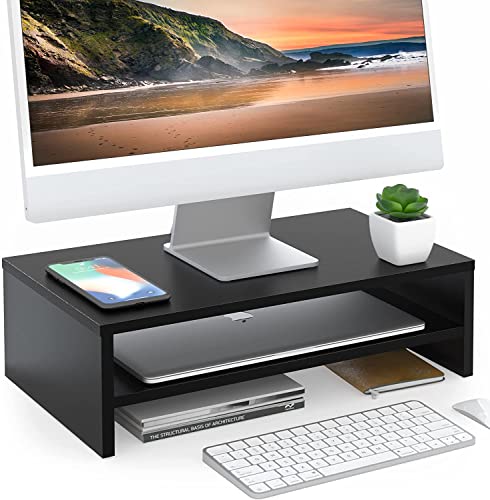
FITUEYES Monitor Stand Riser with Storage Shelf
A monitor riser pairs with hutch-style storage underneath the platform on this hybrid piece. Sliding drawer holds pens and cables out of sight, while the open shelf below fits a keyboard when it is not in use. Metal frame legs raise the monitor roughly 3.9 inches, easing neck strain during long sessions.
Pros
- Sliding drawer separates small supplies from cables
- Raises monitor for a more ergonomic eye line
- Metal frame supports monitors up to 44 pounds
Cons
- Riser platform limits monitor size to typical desktop displays
- Underside shelf height may not fit tall keyboards with palm rests

SimpleHouseware Mesh Desktop Organizer with Sliding Drawer
Steel mesh replaces solid panels in this hutch-style organizer’s construction. Open mesh sides and a rear cutout let charging cables and power strips route through rather than tangle behind the desk. A sliding metal drawer separates loose supplies from the open mesh shelving above.
Pros
- Rear cutout routes cables instead of hiding them behind furniture
- Sliding drawer keeps small items separate from open shelving
- Steel mesh resists warping compared to particleboard in humid rooms
Cons
- Mesh construction shows contents rather than concealing them
- Smaller footprint holds less than full wood hutch cabinets
Side by side
| # | Model | Material | Best for | Score | Price |
|---|---|---|---|---|---|
| 1 | Sauder Beginnings Hutch | Engineered wood with laminate finish | Best overall | 9.4 | Check price |
| 2 | South Shore Axess Hutch | Laminated particleboard | Best value | 9.1 | Check price |
| 3 | Way Basics zBoard Eco Desk Hutch | Recycled zBoard paperboard | Best budget | 8.9 | Check price |
| 4 | Prepac Elite 32-Inch Wall-Mounted Hutch | Laminate composite wood | Best for small desks | 8.7 | Check price |
| 5 | Bush Furniture Cabot Hutch | Engineered wood with laminate | Best for storage | 8.4 | Check price |
| 6 | FITUEYES Monitor Stand Riser with Storage Shelf | Engineered wood top with metal frame | Best for monitor and laptop setups | 8.2 | Check price |
| 7 | SimpleHouseware Mesh Desktop Organizer with Sliding Drawer | Steel mesh | Best for cable management | 8.0 | Check price |
Common questions
What is a desk hutch used for?
A desk hutch adds shelving or cabinet space above or beside a desktop, holding books, binders, or a printer without using floor space.
How do you attach a hutch to a desk?
Most hutches rest on brackets that hook onto the back edge of the desktop, while wall-mounted models like Prepac’s Elite Hutch bolt directly into wall studs or anchors instead.
Are wood or metal mesh desk hutches better?
Engineered wood hutches such as the Sauder Beginnings Hutch match desk finishes and hold more weight, while steel mesh options like SimpleHouseware’s resist humidity but leave contents visible.
Can a desk hutch fit a small or narrow desk?
Wall-mounted hutches such as Prepac’s 32 inch Elite Hutch free the entire desktop, fitting narrow or corner desks better than models that stand on the surface.
Is a desk hutch worth adding to a home office?
Owners report a hutch clears desktop clutter by moving binders, cables, and supplies to a separate tier, which matters most on desks under 48 inches wide.
What is the difference between a desk hutch and a monitor riser?
A hutch adds shelving above the desk surface, while a monitor riser lifts the screen higher; the FITUEYES stand combines both functions with a drawer underneath the platform.
How much weight can a desk hutch shelf hold?
Capacity varies by material: metal frame monitor stands like FITUEYES list support up to 44 pounds, while eco-friendly paperboard hutches such as Way Basics’ zBoard suit lighter loads like folders and notebooks.
Sauder Beginnings Hutch vs South Shore Axess Hutch, which is better?
Choose the Sauder Beginnings Hutch for concealed storage behind cabinet doors. Choose the South Shore Axess Hutch if open, adjustable shelves fit your workflow better.
Which desk hutch works best for cable management?
SimpleHouseware’s mesh organizer routes cords through a rear cutout and open mesh sides, keeping charging cables and power strips from tangling behind the desk.
Do desk hutches need tools to assemble?
Way Basics’ zBoard hutch uses peel-and-stick adhesive strips and skips tools entirely, while panel-built models like the Sauder and Bush Cabot hutches need the included hardware and roughly an hour to assemble.
Our pick
Sauder’s Beginnings Hutch earns the top spot by combining enclosed cabinet storage with an open shelf that matches most desk finishes. Narrow-desk buyers should choose Prepac’s 32 inch Elite Hutch instead, since wall mounting frees the entire desktop. Anyone prioritizing tool-free setup and recycled materials should skip both and pick the Way Basics zBoard Eco Desk Hutch.
Marcus Chen
Marcus covered consumer electronics for enthusiast tech publications for six years before joining ChoiceCrest. He specializes in translating manufacturer spec sheets into plain-language buying advice, with a focus on audio, computing accessories and smart-home gear.


