Countertop RO Filters Worth Plugging In, No Plumber
For most kitchens, the Waterdrop N1 gives the best mix of filtration stages and counter footprint. The Bluevua RO100ROPOT-LITE costs less but holds a smaller reservoir. The AquaTru Classic suits families who refill less often, though its larger body eats more counter space.
A countertop RO filter removes dissolved minerals, lead, and chlorine taste from tap water without any drilling, saddle valves, or under-sink plumbing. The Waterdrop N1 leads this list for most kitchens, pairing four-stage filtration with a digital TDS readout and a footprint that fits a standard counter. Its main tradeoff is the outlet it needs nearby, since every countertop RO unit runs on power rather than water pressure alone.
We chose these seven by comparing published filtration stages, reservoir or tank size, rated flow rate, and filter replacement intervals across each manufacturer’s listing, then checked that pattern against aggregated owner reviews for leaks, noise, and real-world refill frequency.
What we recommend

Waterdrop N1 Countertop Reverse Osmosis System
This unit skips a bulky tank in favor of a tankless design, so it produces filtered water on demand instead of waiting for a reservoir to refill. A built in digital display reads total dissolved solids in real time. Owners often place it next to the sink and run the drain line into a small catch container instead of plumbing it.
Pros
- No drilling or saddle valve required
- Digital display shows water quality instantly
- Compact enough for a standard counter
Cons
- Needs an outlet within reach of the sink
- Produces some wastewater during each cycle

Bluevua RO100ROPOT-LITE Countertop Reverse Osmosis System
Bluevua keeps the price down while still running a full reverse osmosis membrane rather than a simple carbon stage. The reservoir holds enough for a few glasses between fills. Replacement filters are sold as a combined cartridge, which simplifies maintenance for buyers who do not want to track three separate parts.
Pros
- Lower cost than most countertop RO systems
- Single combined filter simplifies replacement
- Light enough to move between counters
Cons
- Smaller reservoir means more frequent refills
- Fewer stages than premium competitors

AquaTru Classic Countertop Reverse Osmosis Water Filtration System
AquaTru batches water into a larger holding reservoir rather than filtering it drop by drop, so a family can draw several glasses without waiting on the unit to catch up. The four stage process includes a carbon block ahead of the membrane. Its wider base takes up more counter depth than slimmer tankless models.
Pros
- Reservoir covers several glasses before refilling
- No permanent installation or drain tap needed
- Replacement filters snap in without tools
Cons
- Takes up more counter depth than tankless units
- Full filtration cycle takes several minutes per batch

Brondell Cypress Countertop Reverse Osmosis Water Filter System
Brondell built the Cypress around a narrower base than most RO units in this category, which matters in galley kitchens with limited counter run. It still carries a full reverse osmosis membrane plus carbon stages ahead and after it. A small LED indicator signals when a filter needs attention.
Pros
- Narrow base suits small kitchens
- LED indicator flags filter changes
- Quiet during the fill cycle
Cons
- Reservoir holds less than wider competitors
- Replacement filters cost more than generic cartridges

SimPure Y7P-W Countertop Reverse Osmosis System
SimPure pairs an extra sediment pre-filter with its RO membrane, which helps on well water that carries more grit and hardness than municipal supply. The tankless build routes filtered water straight to a dispensing tap. Owners on hard water report changing the sediment stage sooner than the schedule listed.
Pros
- Extra sediment stage handles gritty water well
- Tankless design saves counter depth
- Dispenses directly without a separate reservoir
Cons
- Filters wear faster on very hard water
- Fewer third party filter options than bigger brands
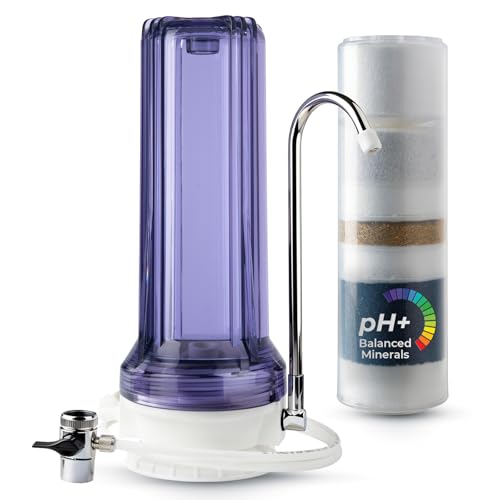
iSpring CT10 Countertop Reverse Osmosis Water Filter
iSpring built the CT10 around twist-in cartridges rather than screw fittings, cutting a filter swap down to under a minute. The unit draws from a built in reservoir rather than a direct line. It is one of the simpler setups here for someone who wants minimal fuss during maintenance.
Pros
- Twist-in cartridges need no tools to replace
- Straightforward single button operation
- Lower price than several competitors here
Cons
- Smaller brand footprint means fewer accessories
- Reservoir capacity trails the AquaTru Classic

AquaTru Connect Countertop Reverse Osmosis System
This newer AquaTru model adds app connectivity on top of the same four stage filtration as the Classic, so filter life and water usage show up on a phone instead of a small panel. It suits buyers who already track other smart appliances. The app adds a setup step the Classic does not require.
Pros
- App tracks filter life automatically
- Same proven four stage filtration as the Classic
- Sends alerts before a filter runs out
Cons
- WiFi setup adds an extra step
- Costs more than the non connected Classic model
Before you buy
What a countertop RO system actually filters Reverse osmosis pushes tap water through a semi permeable membrane that blocks dissolved lead, fluoride, and most dissolved minerals. A carbon stage ahead of the membrane usually handles chlorine taste and odor first. Together these stages produce water closer to distilled than a basic pitcher filter manages. None of this requires a drain tap or drilled hole, since the whole process happens inside the countertop unit.
Reservoir size and refill habits Tankless models like the Waterdrop N1 or SimPure Y7P-W filter on demand, so there is no reservoir to run dry mid use. Reservoir style units like the AquaTru Classic batch a few liters at a time, which covers a household without constant refills but takes up more counter depth. Either style still needs several minutes to produce a full batch, since reverse osmosis is slower than a basic carbon filter.
Best for small kitchens and rentals A countertop unit makes the most sense for renters or small kitchens where drilling a faucet hole is not an option. Slimmer bodies, like the Brondell Cypress, matter more than filtration stage count once counter space runs short. Anyone moving within a year or two also avoids the labor of uninstalling an under sink system this way.
When plumbed under sink filtration makes more sense instead A household that drinks several gallons a day, or wants filtered water piped straight to a dedicated faucet, usually outgrows a countertop unit’s reservoir and flow rate. Under sink RO systems also hide the equipment in a cabinet instead of occupying counter space permanently. Anyone already comfortable with basic plumbing, or owning their home long term, often gets more value from that route instead.
The lineup, side by side
| # | Model | Filtration stages | Best for | Score | Price |
|---|---|---|---|---|---|
| 1 | Waterdrop N1 Countertop Reverse Osmosis System | 4 | Best overall | 9.4 | Check price |
| 2 | Bluevua RO100ROPOT-LITE Countertop Reverse Osmosis System | 3 combined into one cartridge | Best budget | 9.1 | Check price |
| 3 | AquaTru Classic Countertop Reverse Osmosis Water Filtration System | 4 | Best for daily family use | 9.0 | Check price |
| 4 | Brondell Cypress Countertop Reverse Osmosis Water Filter System | 4 | Best for tight counter space | 8.8 | Check price |
| 5 | SimPure Y7P-W Countertop Reverse Osmosis System | 5 | Best for well water and high mineral content | 8.6 | Check price |
| 6 | iSpring CT10 Countertop Reverse Osmosis Water Filter | 4 | Best for quick filter changes | 8.3 | Check price |
| 7 | AquaTru Connect Countertop Reverse Osmosis System | 4 | Best for tracking filter life remotely | 8.0 | Check price |
Frequently asked questions
What does RO stand for in a countertop filter?
RO stands for reverse osmosis, a filtration method that pushes water through a dense membrane to block dissolved minerals, lead, and other contaminants smaller than typical carbon filters catch.
Do countertop RO systems need a drain line?
Most do not require a permanent drain line. They either route a small amount of wastewater into a catch container or discharge it through a short hose that can sit in a sink drain.
How often do the filters need replacing?
Most countertop units need a filter change every 6 to 12 months depending on usage and water hardness, with sediment stages often needing attention sooner on well water.
Can a countertop RO system remove fluoride?
Yes. Reverse osmosis membranes reduce fluoride along with lead and other dissolved minerals, which is one reason RO differs from a basic carbon pitcher filter.
Is countertop reverse osmosis water safe to drink daily?
Yes, RO water is safe for daily drinking. Some households add a remineralization stage afterward since RO also strips beneficial minerals along with contaminants.
What is the difference between countertop and under sink RO?
Countertop units sit on the counter and plug into an outlet with no drilling, while under sink systems install inside a cabinet and tie into the cold water line and a dedicated faucet.
Do these systems waste a lot of water?
Reverse osmosis produces some wastewater during filtration, typically a few parts for every part of filtered water produced, though tankless designs tend to run more efficiently than older tank based units.
Can renters install a countertop RO filter without tools?
Yes. Countertop units are built specifically for no drilling and no permanent plumbing, so a renter can set one up and remove it later without leaving a mark.
How long does a batch of filtered water take?
Tankless units deliver water within a minute or two per use, while reservoir style units can take 10 to 20 minutes to fill a multi liter tank.
Does countertop RO water taste different from tap water?
Most owners report a noticeably cleaner taste with less chlorine flavor, since the carbon stage and membrane remove the compounds responsible for most off tastes in tap water.
Our take
The Waterdrop N1 is the strongest default pick here, combining tankless convenience with a real time TDS display at a price that undercuts most four stage competitors. Families who want a bigger buffer between refills should look at the AquaTru Classic instead, and anyone on a tight budget can start with the Bluevua RO100ROPOT-LITE and upgrade later.
Dana Whitfield
Dana spent eight years buying and merchandising for a regional kitchenware retailer before moving into editorial work. She has handled thousands of SKUs across cookware, small appliances and kitchen organization, and focuses on the practical differences that matter once a product is actually in daily use.