The Right Glue for Countertops That Holds Up
Loctite PL Premium ranks highest for bonding countertops to cabinet frames thanks to strength across mixed substrates. Liquid Nails Fuze It covers the widest range of materials, and Weld-On 40 is the correct pick for invisible solid surface seams.
Loctite PL Premium is the adhesive worth reaching for when fixing a countertop down, Liquid Nails Fuze It handles odd material combinations best, and Weld-On 40 is the right product for seaming solid surface material invisibly.
Countertop adhesive is not a single product category. Gluing a laminate top to a cabinet, seaming two pieces of solid surface, and sealing a sink rim are three jobs with three different failure modes. We compared published substrate lists, open time, gap filling capability, water and heat resistance, plus owner reports of bonds that failed where steam or standing water was involved.
What we recommend
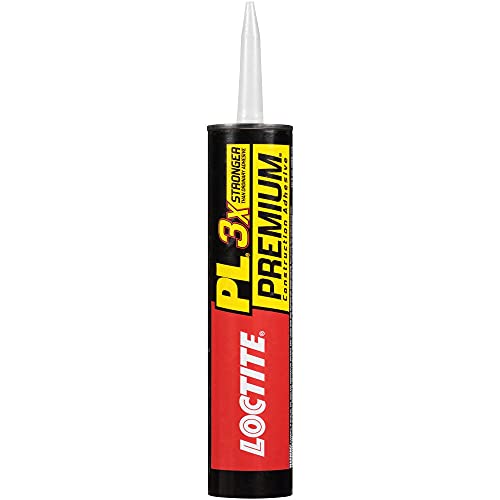
Loctite PL Premium Construction Adhesive
A polyurethane formula bonds wood, laminate, stone, tile and metal, covering nearly every combination met when fixing a top to a cabinet frame. Curing happens through a reaction with moisture, so it works in damp conditions and holds strength around a sink. It foams slightly while curing, so clamp or weight the joint rather than trusting the bead alone.
Pros
- Very strong across mixed material joints
- Cures reliably even in damp conditions
- Waterproof once set, suitable near sinks
Cons
- Foams as it cures, so joints need weighting
- Cleanup needs solvent rather than water

Liquid Nails Fuze It All Surface Adhesive
Awkward pairings like laminate to metal or plastic to stone are where Fuze It earns its keep, since standard construction adhesives often struggle there. A fast initial grab cuts down on extended clamping. It stays flexible enough afterward to absorb the small movements a countertop experiences daily, and water cleans it up before it cures.
Pros
- Bonds material pairings most adhesives cannot
- Fast grab shortens clamping time
- Cleans up with water while still wet
Cons
- Less gap filling ability than polyurethane
- Full cure takes longer than the grab implies

Weld-On 40 Two Part Acrylic Adhesive
Seaming solid surface countertop material calls for a two part methacrylate, not a construction adhesive, because the joint gets sanded flush until it disappears. Weld-On 40 is the established product for that job, chemically bonding the pieces together rather than just sticking them. Working time runs short, measured in minutes, so plan the joint before mixing anything.
Pros
- Produces genuinely invisible seams when done right
- Chemically bonds rather than surface sticking
- Sands and polishes to match the surrounding material
Cons
- Very short working time punishes hesitation
- Colour match to your material needs checking first

Gorilla Heavy Duty Construction Adhesive
Old cabinet frames are rarely flat, and this adhesive bridges the gaps that result without the bond going weak. It resists water, carries low odour, and stays paintable once cured. Grab strength holds a heavy top in place so it will not creep during curing, making it practical for a laminate top over a slightly wavy base.
Pros
- Bridges uneven surfaces without losing strength
- Low odour suits indoor work
- Strong initial grab holds heavy tops steady
Cons
- Not intended for visible seams
- Thick consistency is harder to gun in cold weather
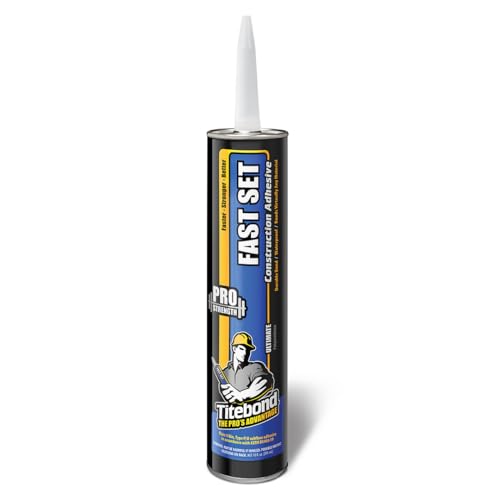
Titebond Fast Set Polyurethane Construction Adhesive
Getting a kitchen back in service the same day calls for a faster cure than standard construction adhesives offer, and this one reaches handling strength within hours. It bonds the usual countertop substrates and turns waterproof once cured. Speed cuts both ways, since the shorter open time means the piece needs correct positioning the first time.
Pros
- Much faster return to service than standard adhesive
- Waterproof and suitable in wet areas
- Strong bond on wood and laminate
Cons
- Short open time leaves no room for repositioning
- Still foams, so joints need clamping
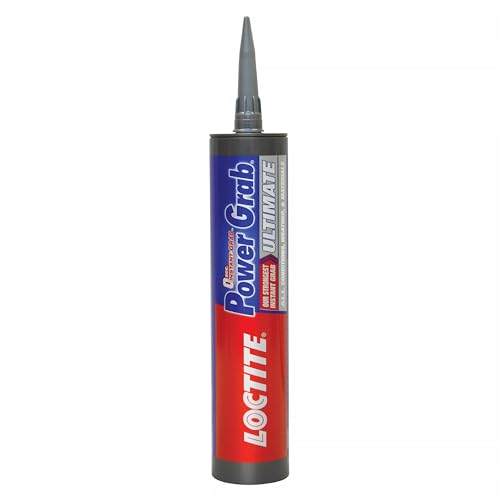
Loctite Power Grab Ultimate Construction Adhesive
Instant grab is the whole point here, keeping a backsplash panel or trim piece in place on a vertical surface without bracing while it cures. That makes it the companion product for a countertop job rather than the adhesive for the top itself. Low odour and water cleanup while wet suit indoor work in a kitchen that is still in use.
Pros
- Holds vertical pieces in place immediately
- Low odour for occupied indoor spaces
- Cleans up with water while wet
Cons
- Not a structural adhesive for heavy tops
- Instant grab leaves little room to adjust

GE Advanced Silicone 2 Kitchen and Bath Sealant
The joint between a countertop and backsplash, or around a sink rim, needs a flexible waterproof seal rather than a rigid adhesive, since a rigid bead cracks as materials shift. This silicone stays flexible, resists mould, and carries a rating for permanent water exposure. It functions as a sealant rather than a glue, complementing the adhesives above instead of replacing them.
Pros
- Stays flexible so the bead does not crack
- Rated for constant water exposure
- Formulated to resist mould growth
Cons
- Provides little structural strength as a bond
- Cannot be painted over afterward
Compared at a glance
| # | Model | Type | Best for | Score | Price |
|---|---|---|---|---|---|
| 1 | Loctite PL Premium Construction Adhesive | Polyurethane construction adhesive | Best overall | 9.4 | Check price |
| 2 | Liquid Nails Fuze It All Surface Adhesive | Hybrid polymer adhesive | Best for mixed materials | 9.2 | Check price |
| 3 | Weld-On 40 Two Part Acrylic Adhesive | Two part methacrylate | Best for solid surface seams | 9.0 | Check price |
| 4 | Gorilla Heavy Duty Construction Adhesive | Hybrid construction adhesive | Best gap filling | 8.8 | Check price |
| 5 | Titebond Fast Set Polyurethane Construction Adhesive | Polyurethane, fast setting | Best fast cure | 8.6 | Check price |
| 6 | Loctite Power Grab Ultimate Construction Adhesive | Hybrid polymer, instant grab | Best for vertical work | 8.3 | Check price |
| 7 | GE Advanced Silicone 2 Kitchen and Bath Sealant | 100 percent silicone sealant | Best for sealing edges | 8.0 | Check price |
How to choose
Identify the material before picking the adhesive Laminate on chipboard, solid surface acrylic, quartz, butcher block and tile all behave differently. Solid surface seams need a two part methacrylate that sands flush. Stone and quartz call for a construction adhesive or dedicated stone epoxy. Laminate tops fixed to a cabinet frame need a strong construction adhesive. Buying the wrong category is a bigger mistake than buying a mediocre product within the right one.
Open time is the spec that decides the job Open time describes how long you have to position a piece before the adhesive skins over. A heavy countertop walked into place wants a long open time. A backsplash panel meant to stay unaided wants instant grab instead. Read the tube for both open time and full cure time, since they are very different numbers on the same product.
Prepare the surfaces properly first Nearly every adhesive failure traces back to a contaminated or dusty surface. Vacuum the substrate, wipe it with isopropyl alcohol, then let it dry completely. Old silicone must come out fully, since nothing bonds reliably to silicone residue. On laminate and other non porous surfaces, a light scuff with abrasive paper gives the adhesive something to grip.
Heat and water are the real enemies The area behind a hob and around a sink sees steam, spills and thermal cycling that finds any weakness in a bond. Choose a waterproof, not merely water resistant, product for those zones, seal the perimeter with flexible silicone rather than rigid filler, and let the full cure time pass before returning the surface to wet service.
Frequently asked questions
What glue holds a countertop to the cabinets?
A polyurethane or hybrid construction adhesive such as Loctite PL Premium or Liquid Nails Fuze It is the standard approach, applied in beads along the cabinet rails. Many installers also add mechanical fixings from below where the cabinet design allows it.
How do I glue two pieces of countertop together at a seam?
For solid surface acrylic, use a two part methacrylate such as Weld-On 40 and sand the joint flush afterward. Laminate seams typically use a colour matched seam filler plus mechanical draw bolts underneath instead of adhesive alone.
Can I use silicone to attach a countertop?
Silicone functions as a sealant, not a structural adhesive, and will not hold a top reliably in place. Use a construction adhesive for the bond itself, and reserve silicone for sealing the perimeter, the sink rim and the backsplash joint.
Is construction adhesive heat resistant enough near a hob?
Cured polyurethane and hybrid adhesives tolerate normal kitchen temperatures well. They are not designed for direct contact with hot cookware, so protect the surface itself and keep the adhesive line out of direct heat.
How long before I can use the countertop after gluing it?
Initial grab often happens within an hour, but full cure usually needs twenty four hours and sometimes longer in cold or dry conditions. Avoid heavy use, standing water and cleaning products until the tube’s full cure time has passed.
How do I remove old countertop adhesive?
Cut the bulk away with a stiff putty knife or an oscillating tool, then soften what remains with a purpose made adhesive remover. Cured polyurethane is stubborn and often needs mechanical removal. Never use a heat gun near laminate, which blisters easily.
What adhesive works for a butcher block top?
Solid wood moves seasonally, so it needs a fixing method that allows movement, typically slotted mechanical fasteners from below rather than a continuous rigid bond. A rigid glue line across the full width can cause the timber to split as it shifts.
Which adhesive works best for a laminate repair?
Lifting laminate edges are usually repaired with contact cement applied to both surfaces, left to tack, then pressed together firmly. For small chips, a colour matched seam filler beats trying to glue the fragment back into place.
Quartz vs laminate countertops: does the adhesive differ?
Yes. Quartz and stone respond best to a dedicated stone epoxy or a strong polyurethane like Loctite PL Premium, while laminate tolerates a broader range including hybrid adhesives such as Liquid Nails Fuze It. Always confirm the substrate list on the product before buying.
Our pick
Loctite PL Premium is worth keeping on hand for most countertop work, since it bonds mixed substrates strongly and holds up in the damp conditions around a sink. Reach for Liquid Nails Fuze It when the joint involves plastics or metal, and if solid surface seaming is the job, only a two part methacrylate such as Weld-On 40 delivers a joint that disappears.
Dana Whitfield
Dana spent eight years buying and merchandising for a regional kitchenware retailer before moving into editorial work. She has handled thousands of SKUs across cookware, small appliances and kitchen organization, and focuses on the practical differences that matter once a product is actually in daily use.