Cordless jump packs for road trips, 800 to 4000 amps
NOCO Boost Plus GB40 is the pack most drivers should carry, since 1000 peak amps covers petrol engines to about 6 L and it weighs 2.4 lb. Large diesel vans need the 3000 amp Boost Pro GB150. HULKMAN Alpha85 adds a voltage screen and 20000 mAh of phone power.
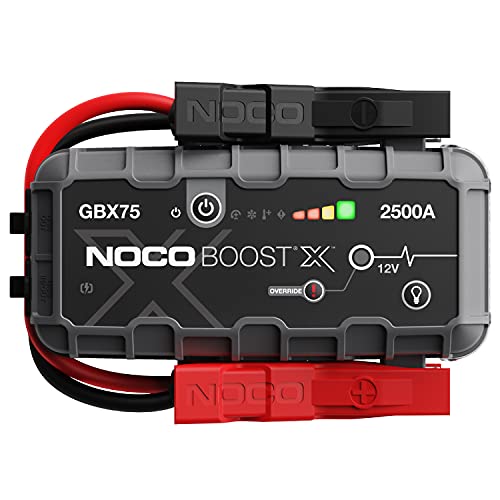
Keep the NOCO Boost Plus GB40 in a glovebox if you drive a normal petrol car. Its 1000 peak amps crank engines up to roughly 6 L, and reverse polarity protection forgives clamps fitted backwards in the dark. Diesel vans above 3 L fall outside that rating, so those drivers want a bigger pack.
Amp figures printed on packaging hide more than they reveal. We compared manufacturer engine limits, cell capacity in mAh, USB and USB-C output, protection circuits and stated standby time. Owner feedback filled the gaps on cold starts and on how fast each pack bleeds charge sitting in a boot.
The best picks, ranked

NOCO Boost Plus GB40
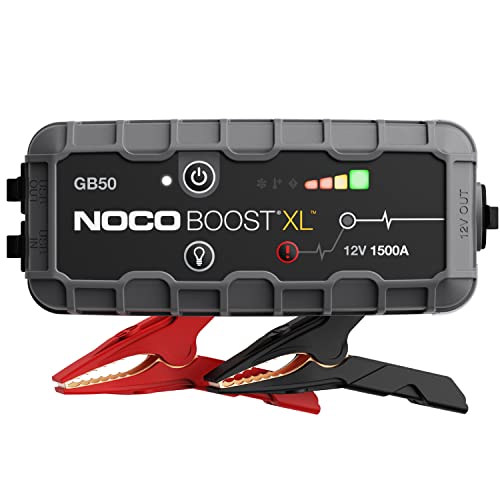
Size is the argument here. At roughly 2.4 lb the GB40 lives in a door pocket, so it actually travels with you instead of sitting in a garage. NOCO rates the 1000 amp output for petrol engines to about 6 L and diesels to 3 L, and a manual override forces a start when the pack cannot read a flat battery.
Pros
- Slips into a door pocket or glovebox
- Spark proof clamps plus reverse polarity protection
- Holds usable charge for months between trips
Cons
- Micro USB recharging takes hours
- Outside its rating for big diesel engines
NOCO Boost Pro GB150
Vans, trucks and boat engines are the reason this exists. Three thousand peak amps and heavy gauge cables cover petrol to about 10 L and diesel to 8 L, including batteries buried behind a seat. At 7.5 lb it belongs in a boot or toolbox rather than a glovebox.
Pros
- Cranks engines smaller packs refuse
- Long thick cables reach awkward battery positions
- Built in 12 V socket runs accessories
Cons
- Too heavy to carry casually
- More capacity than a small petrol car ever needs

HULKMAN Alpha85
Diagnostics set the Alpha85 apart. Its colour LCD reports pack charge, battery voltage and the reason an attempt failed, which saves guessing on a hard shoulder. HULKMAN rates 2000 peak amps for petrol engines to about 8.5 L, and the 20000 mAh cell doubles as phone and tablet power.
Pros
- Screen explains a failed start instead of blinking
- USB-C refills the pack faster than micro USB
- Strong amp rating for a pack this size
Cons
- Bulkier than a glovebox pack like the GB40
- Waking the screen often nibbles reserve charge

GOOLOO GP4000
Capacity carries this pick. 26800 mAh keeps phones, a camera and a tablet alive across several days away from a socket, and USB-C power delivery feeds a small laptop. GOOLOO rates 4000 peak amps for petrol and diesel engines to roughly 10 L, with an LED work light for repairs after dark.
Pros
- Biggest cell in this group at 26800 mAh
- Charges two devices at speed while driving
- Diesel rated as well as petrol
Cons
- Heavier than a true glovebox pack
- Clamp cables run shorter than the NOCO sets

Stanley J5C09 Jump Starter
Punctures happen more often than flat batteries on a long trip. Stanley answers both, bolting a 120 PSI compressor with hose and gauge alongside 1000 peak amps of cranking power. Sealed lead acid inside explains the 18 lb weight and the mains only recharge, so top it up the night before you leave.
Pros
- Inflates a tyre and starts an engine from one case
- Moulded housing and handle survive boot knocks
- USB port keeps a phone going
Cons
- Roughly seven times the weight of the GB40
- Recharges from a mains outlet only

NOCO Genius5 Smart Battery Charger
Charging, not jump starting, is the job. Five amps at 6 V or 12 V rebuilds a tired battery over several hours, and a repair mode targets sulphation that a jump pack simply bypasses. Hookup at a campsite or a garage socket is mandatory, which rules this out as roadside kit.
Pros
- Fixes the battery rather than masking the fault
- Handles lithium, AGM, gel and wet cells
- Weighs 1.3 lb and stores in a door pocket
Cons
- Useless without a mains outlet
- Cannot crank an engine by itself

DBPOWER 800A Portable Jump Starter
Small petrol cars are the whole brief. DBPOWER quotes 800 peak amps, enough for engines to about 2.5 L, which covers most hatchbacks and compact saloons. An 18000 mAh cell handles weekend phone duty, and a plain LCD shows remaining percentage without the fault codes HULKMAN prints.
Pros
- Lightest lithium pack in this group
- 18000 mAh covers a weekend of phone charging
- Two button operation with no menus
Cons
- Not rated for diesel or large petrol engines
- Owners report long recharge times
Compared at a glance
| # | Model | Peak amps | Best for | Score | Price |
|---|---|---|---|---|---|
| 1 | NOCO Boost Plus GB40 | 1000 A | Best overall | 9.4 | Check price |
| 2 | NOCO Boost Pro GB150 | 3000 A | Best for large diesel engines | 9.2 | Check price |
| 3 | HULKMAN Alpha85 | 2000 A | Best value | 9.0 | Check price |
| 4 | GOOLOO GP4000 | 4000 A | Best for charging devices | 8.8 | Check price |
| 5 | Stanley J5C09 Jump Starter | 1000 A, 500 instant amps | Best with an air compressor | 8.6 | Check price |
| 6 | NOCO Genius5 Smart Battery Charger | 5 A at 6 V or 12 V | Best for campsite top ups | 8.3 | Check price |
| 7 | DBPOWER 800A Portable Jump Starter | 800 A | Best budget | 8.0 | Check price |
Before you buy
How many amps you actually need Engine displacement sets the target, not the largest number on the box. A 1.6 L petrol hatchback cranks fine on 800 peak amps, which is exactly what the DBPOWER pack offers. Family cars and petrol SUVs up to 6 L sit inside the GB40 rating. Past 6 L petrol or 3 L diesel, step up to the 3000 amp GB150. Cold adds another margin, because a chilled battery has higher internal resistance and the starter draws more current.
Jump starter vs battery charger These two fix different faults. A jump pack delivers one short burst, gets the engine running and leaves the alternator to refill the battery. Where the battery itself is sulphated or deeply flat, that burst only buys a single journey. NOCO Genius5 works the slow way instead, holding 5 A for hours until the cells recover. Campers with a hookup benefit from carrying both, since the charger repairs overnight what the pack papered over that morning.
When a compressor or power bank earns its space Weight is the price of extras, so be honest about the trip. Stanley J5C09 makes sense for towing and rough campsites, where a slow puncture is likelier than a dead battery and the 120 PSI pump saves packing a separate inflator. Long drives away from sockets tilt the other way, toward the GOOLOO GP4000 and its 26800 mAh cell. Commuters need neither, and a 2.4 lb pack is far easier to keep in the car year round.
Storing a pack between road trips A flat jump starter is just a paperweight. Lithium cells shed a few percent each month, so check the level quarterly and charge fully before any long drive. Summer heat accelerates that loss, which argues for a footwell over a sun baked dashboard. Sealed lead acid units like the Stanley self discharge faster still and want attention closer to monthly. Owners who skip the routine tend to discover it at the worst possible moment.
Frequently asked questions
How many amps does a jump starter need for a road trip?
Size it to the engine. Around 800 peak amps starts a small petrol car, 1000 amps covers most family cars and petrol SUVs, and diesels above 3 L want 2000 amps or more.
Can a jump starter fully charge a dead car battery?
No. It supplies a short cranking burst, then the alternator takes over. Real recharging needs a mains unit such as the NOCO Genius5 running for several hours.
Is the NOCO GB40 enough for an SUV?
For petrol SUVs up to about 6 L, yes. A large diesel pickup or van sits outside that rating and calls for the Boost Pro GB150.
What happens if you connect the clamps backwards?
On packs with reverse polarity protection, including the NOCO models, nothing. Current stays off until the clamps are corrected. Cheaper units without that circuit can blow a fuse or damage electronics.
Do cordless jump starters work in cold weather?
Yes, though output falls as temperature drops. Keeping the pack in the cabin overnight rather than the boot makes a noticeable difference to the first attempt.
How often should you recharge a jump starter in storage?
Every three months suits lithium packs like the GB40 and Alpha85. Lead acid units such as the Stanley J5C09 lose charge faster and want a monthly check.
Can you take a lithium jump starter on a plane?
Usually not. Most exceed the watt hour limit airlines allow in cabin bags, and lithium packs are banned from checked luggage. Confirm the figure with your carrier first.
Which jump starter is best for a campervan?
Pair the GB150 for a large diesel with the Genius5 for hookup nights. That combination cranks the engine and lets a tired battery recover properly overnight.
Is a colour screen worth it on a jump pack?
It helps most when a start fails. HULKMAN Alpha85 reports battery voltage and a fault reason, pointing at the battery, the connection or the starter motor instead of leaving you guessing.
NOCO GB40 vs HULKMAN Alpha85, which should you pick?
Choose the GB40 for pocketability and long shelf standby. Pick the Alpha85 for 2000 amps, USB-C recharging and 20000 mAh of device power in one case.
Our pick
Carry the NOCO Boost Plus GB40 if you drive a normal petrol car, because 2.4 lb fits anywhere and reverse polarity protection forgives a clumsy connection at 2 am. Diesel van and truck drivers should accept the 7.5 lb of the Boost Pro GB150 rather than trust a pack that cannot turn the engine over. Add the Genius5 when you camp with a hookup, since repairing a tired battery beats jump starting it every morning.
Tony Russo
Tony trained as an automotive technician and spent years in service and parts retail before moving into writing. He focuses on garage tools, car care products and accessories from a hands-on maintenance perspective.