Which compact sump pump fits your basement pit?
Zoeller M53 Mighty-Mate suits a standard 18 inch crock, moving near 43 gallons per minute at five feet of lift. WAYNE CDU790 drops into 11 inch basins and draws water from above the silt line. Superior Pump 91250 covers crawl spaces on a quarter horsepower.
Zoeller M53 Mighty-Mate is the pick for a standard residential crock. Its cast iron case pulls motor heat into the surrounding water during back to back storm cycles. Flow sits near 43 gallons per minute at five feet of lift. A vertical float needs swing clearance, so pits under 11 inches rule it out.
Flow ratings confuse buyers because manufacturers quote them at different lift heights. A pump that looks strong at zero lift can fall short once discharge climbs eight feet to a rim joist. We compared published flow curves, switch designs, basin fit and housing material. Owner reports on silt clogging and float failure filled in the rest.
What we recommend
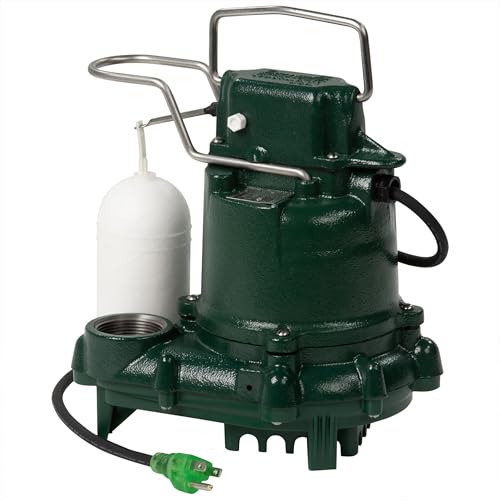
Zoeller M53 Mighty-Mate 1/3 HP Submersible Sump Pump
Cast iron housing and a cast iron motor case give heat a path out into the pit water. Zoeller rates flow near 43 gallons per minute at five feet of lift. Plumbers keep specifying it because owners commonly report a decade of service.
Pros
- Cast iron sheds motor heat during back to back cycling
- Float switch assembly can be swapped without a new pump
- Passes solids up to half an inch, so pit grit rarely jams it
Cons
- Roughly 22 pounds to haul out of a deep crock
- Vertical float needs clearance a 10 inch crock cannot give

WAYNE CDU790 1/3 HP Submersible Cast Iron and Stainless Steel Sump Pump
Intake sits at the top of the housing, above the level where silt and pea gravel settle. Wayne rates the CDU790 up to 4600 gallons per hour at zero lift. Cast iron and stainless keep weight moderate for a metal bodied pump.
Pros
- Top suction intake keeps settled silt away from the impeller
- Fits 11 inch basins that block wider pumps
- Vertical float works without tether swing room
Cons
- Float switch remains the usual long term failure point
- Startup is noticeably louder than the Zoeller M53

Superior Pump 91250 1/4 HP Thermoplastic Submersible Utility Pump
Quarter horsepower is plenty for crawl spaces, window wells and pits that fill only after heavy rain. Superior rates output up to 1800 gallons per hour. Adapters for garden hose and 1-1/4 inch pipe come in the box, and no float is fitted.
Pros
- Carries easily between window wells and crawl spaces
- Hose and rigid pipe adapters both included
- Pulls standing water down to a shallow level
Cons
- No integrated float, so it needs a separate switch to start itself
- Thermoplastic body is not built for continuous duty
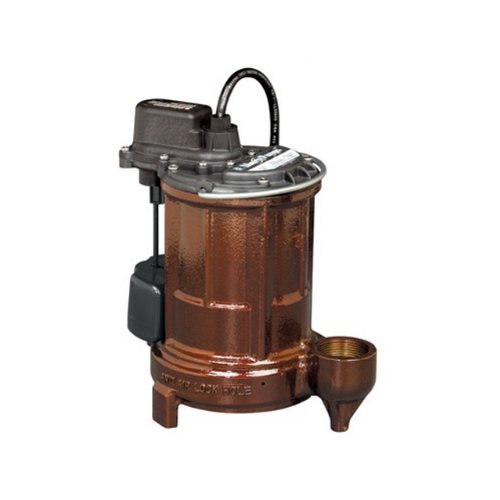
Liberty Pumps 257 1/3 HP Submersible Sump Pump
Liberty designed the 257 around cramped pits, and it drops into basins 10 inches across. A vertical magnetic float replaces the mechanical microswitch, removing one wear point. Quick disconnect cord lets you pull the pump without touching house wiring.
Pros
- Clears 10 inch pits that block most cast iron rivals
- Magnetic float has no mechanical contacts to burn
- Quick disconnect cord shortens a replacement job
Cons
- Narrow on and off window can short cycle in a wide pit
- Spare parts are harder to find locally than Zoeller items

Little Giant 6-CIA 1/3 HP Submersible Sump Pump
Pressure diaphragm senses water level, so no float arm can snag on a rough crock wall. Little Giant rates the 6-CIA near 2760 gallons per hour at five feet. Epoxy coated cast iron holds up under constant immersion.
Pros
- Diaphragm switch needs zero swing room
- Epoxy coated iron resists corrosion in standing water
- Low overall height suits shallow basins
Cons
- Trigger level is fixed and cannot be adjusted
- Not rated for effluent or heavy solids

Superior Pump 92341 1/3 HP Thermoplastic Submersible Sump Pump
Nine pounds means one hand stays on the ladder while the other carries the pump. Superior rates it up to 2760 gallons per hour, with a tethered float handling on and off duty. Thermoplastic never rusts, though it moves motor heat more slowly than iron.
Pros
- Light enough to install single handed in a crawl space
- Housing cannot corrode in a permanently damp pit
- Tether length sets how deep the trigger point sits
Cons
- Runs hotter than cast iron on long storm cycles
- Tethered float needs a wide basin to swing freely

Red Lion RL-SC33T 1/3 HP Cast Iron Submersible Sump Pump
Cast iron body plus a tethered float points this at basins 14 inches and wider. Flow lands near 2900 gallons per hour at five feet of lift. Adjusting the tether stretches each cycle, which cuts motor starts over a wet week.
Pros
- Adjustable tether cuts short cycling in a deep pit
- Cast iron body tolerates repeated long runs
- 1-1/2 inch NPT discharge fits common check valve kits
Cons
- Too wide for an 11 inch basin
- Tethered float can hang up on a rough crock wall
Side by side
| # | Model | Motor | Best for | Score | Price |
|---|---|---|---|---|---|
| 1 | Zoeller M53 Mighty-Mate 1/3 HP Submersible Sump Pump | 1/3 HP, cast iron housing | Best overall | 9.4 | Check price |
| 2 | WAYNE CDU790 1/3 HP Submersible Cast Iron and Stainless Steel Sump Pump | 1/3 HP, cast iron and stainless housing | Best value | 9.2 | Check price |
| 3 | Superior Pump 91250 1/4 HP Thermoplastic Submersible Utility Pump | 1/4 HP, thermoplastic housing | Best budget | 9.0 | Check price |
| 4 | Liberty Pumps 257 1/3 HP Submersible Sump Pump | 1/3 HP, cast iron and epoxy coated | Best for narrow crocks | 8.8 | Check price |
| 5 | Little Giant 6-CIA 1/3 HP Submersible Sump Pump | 1/3 HP, cast iron volute | Best for shallow pits | 8.6 | Check price |
| 6 | Superior Pump 92341 1/3 HP Thermoplastic Submersible Sump Pump | 1/3 HP, thermoplastic housing | Best lightweight pick | 8.3 | Check price |
| 7 | Red Lion RL-SC33T 1/3 HP Cast Iron Submersible Sump Pump | 1/3 HP, cast iron housing | Best for wide basins | 8.0 | Check price |
What to look for
What to check before buying a compact sump pump Vertical lift comes first. Measure from the water line in the pit to the point where discharge leaves the house. Add about one foot of equivalent lift for every ten feet of horizontal pipe, and another foot per elbow. Compare that total against a flow curve rather than the headline gallons per hour, which is quoted at zero lift. One third horsepower serves most residential basements. Half horsepower earns its place only with a high water table or a long discharge run.
Cast iron or thermoplastic: which housing lasts? Iron carries motor heat into the surrounding water, keeping windings cooler when storms trigger cycles minutes apart. Zoeller, Liberty, Little Giant and Red Lion all build with it. Thermoplastic weighs under half as much and never corrodes, which is why the Superior 92341 goes in single handed. Pits that run a few times a week do fine on plastic. Pits that cycle hourly through spring justify hauling the extra weight down the stairs.
Best for narrow crocks and crawl spaces Measure the crock before shortlisting anything. Tethered floats need roughly 14 inches of width to swing, so they bind in a small basin. Vertical floats work down to about 11 inches, and the magnetic float on the Liberty 257 goes to 10. Diaphragm switches, as fitted to the Little Giant 6-CIA, need no swing room at all. Crawl spaces are a different job entirely: shallow water and no permanent pit suit a utility pump such as the Superior 91250. Switches kill more pumps than motors do, so match switch style to the space first.
Backup power and the mistake owners repeat A primary pump is dead weight during a blackout, and storms cut power exactly when the pit fills. Battery backup pumps mount higher in the same crock, so basin room has to be planned before the primary goes in. Water powered backups skip batteries but need municipal supply pressure, which rules out well systems. Owners with no space for a second pump should fit a check valve about a foot above the discharge and keep a spare primary on the shelf. Sourcing a replacement at 2 a.m. in a flooding basement is the part nobody plans for.
Frequently asked questions
What size sump pump do I need for a small basement?
One third horsepower covers most residential basements with under ten feet of lift. Step up to half horsepower only when the water table sits high, the discharge run is long, or the pit refills within a minute of shutting off.
Is 1/3 HP enough for a sump pump?
Yes for a typical home. A third horsepower unit such as the Zoeller M53 moves around 43 gallons per minute at five feet, which clears a standard 18 inch crock quickly. Quarter horsepower belongs in crawl spaces and window wells.
Will a compact sump pump fit an 11 inch basin?
WAYNE CDU790 fits 11 inch basins, and Liberty Pumps 257 drops into 10 inch pits. Tethered float models like the Red Lion RL-SC33T want closer to 14 inches so the float can swing clear.
Cast iron or thermoplastic sump pump: which lasts longer?
Iron usually lasts longer in a pit that cycles often, because the housing carries heat away from the motor windings. Thermoplastic holds up fine in light duty pits and cannot rust. Duty cycle decides this, not the material alone.
How often should a sump pump run?
Every few hours through heavy rain is normal. Cycling every minute in dry weather usually points to a failed check valve, groundwater seepage, or a float set too low in the crock.
Can I use a utility pump as a sump pump?
Only as a stopgap. Utility pumps such as the Superior 91250 have no integrated float, so they cannot start themselves when water rises. They work well for draining a window well or a flooded crawl space under supervision.
Do compact sump pumps need a check valve?
Yes. Without one, the column of water in the discharge pipe drains back into the pit and the pump restarts immediately. Mount the valve about a foot above the pump so it stays serviceable.
How long do sump pumps last?
Owners commonly report seven to ten years from a cast iron pump in a normal pit. Constant cycling shortens that considerably. Switches fail before motors in most cases, so inspect the float once a year.
Which sump pump is best for a crawl space?
Superior Pump 91250 handles crawl space water at a quarter horsepower and weighs little enough to carry through a hatch. Pair it with a separate float switch if you want it to run unattended.
Why does my sump pump keep short cycling?
Short cycling usually means the float turns off too high, the pit is too small for the pump flow, or discharge water returns through a missing check valve. An adjustable tether, as on the Red Lion RL-SC33T, lets you lengthen the run.
Our take
Zoeller M53 Mighty-Mate is the pick for a standard 18 inch crock, since cast iron absorbs the back to back cycling that cooks lighter pumps. Choose the WAYNE CDU790 when the basin measures 11 or 12 inches and silt keeps settling in the bottom. Crawl spaces and window wells are the one place to reach for the Superior Pump 91250 instead.
Jake Monroe
Jake worked as a residential contractor for over a decade before shifting to full-time writing. He evaluates power tools, hand tools and workshop gear through the lens of someone who has actually used them on job sites, not just read the box.


