Comforters That Stay Warm Without Overheating You
Utopia Bedding’s Comforter leads for everyday value, pairing down-alternative microfiber fill with box stitching that survives home washing. Hot sleepers should choose the Cozy Earth Bamboo Comforter for its breathable viscose fill, while the Egyptian Bedding Goose Down Comforter delivers lofty warmth for cold bedrooms.
For most beds, the Utopia Bedding Comforter is the practical pick: a plush down-alternative fill, box stitching that keeps it even, and a machine washable build. Sleepers who run hot will do better with the breathable Cozy Earth Bamboo Comforter, and cold bedrooms justify the lofty Egyptian Bedding Goose Down option.
Buying a comforter goes wrong easily because a fill that feels luxurious at first can trap heat, clump after one wash, or shed feathers within months. To sort the field we compared fill type, warmth level, breathability, construction details like baffle-box stitching, and care requirements, using product specifications and the durability patterns owners report across seasons of use.
The best picks, ranked
Utopia Bedding Comforter
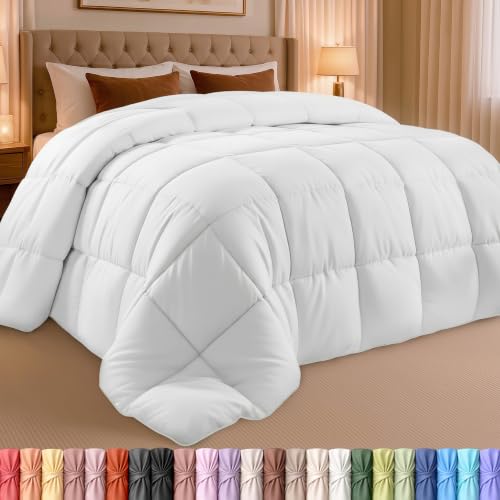
Soft microfiber fill sits inside box stitching that keeps it spread evenly across the whole quilt. Use it alone or as a duvet insert; either way it stays light enough for year-round sleeping. Owners report it survives repeated home washes, though the loft never quite matches true down and cold rooms may want more warmth.
Pros
- Works as comforter or duvet insert
- Box stitching keeps fill even
- Machine washable at home
Cons
- Not as lofty as true down
- Medium warmth only for cold rooms

Cozy Earth Bamboo Comforter
Bamboo viscose fill regulates temperature for sleepers who wake up overheated under standard bedding. Baffle-box quilting keeps the lightweight fill in place while the breathable construction wicks moisture through the night. Warmth stays deliberately low, so very cold rooms call for a heavier option, and the materials command a premium.
Pros
- Breathable fill helps hot sleepers
- Wicks moisture through the night
- Light without feeling flat
Cons
- Premium price
- Too light for very cold rooms

Egyptian Bedding Goose Down Comforter
Goose down packed into baffle-box chambers builds a lofty, insulating layer suited to cool bedrooms. High fill power traps warmth without the weight of a heavy quilt, and the baffles stop the down migrating into cold spots. Plan on professional cleaning, and warm sleepers should look at lighter fills instead.
Pros
- Lofty down traps warmth well
- Baffle box prevents cold spots
- Insulates without heavy weight
Cons
- Best cleaned professionally
- Not suited to warm sleepers
Puredown Lightweight Down Comforter
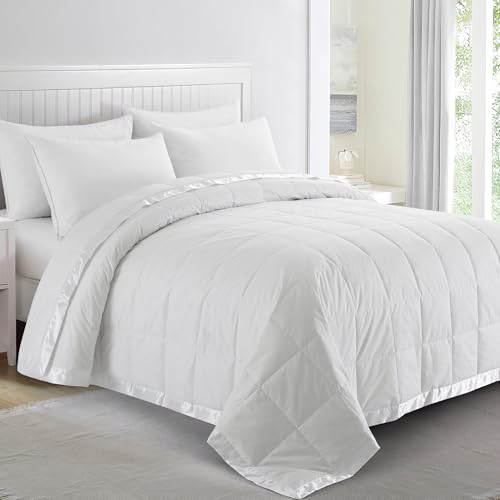
A lighter down blend inside sewn-through boxes gives real down loft without winter-weight heat, matched to milder nights and warmer sleepers. Cotton on the shell feels smooth against skin and breathes better than polyester. Expect slight down shedding at first, and pair it with a warmer layer once deep winter arrives.
Pros
- Real down at a lighter weight
- Cotton shell feels smooth
- Breathable for milder nights
Cons
- Not warm enough for cold rooms
- Down may shed slightly at first
Bedsure Comforter
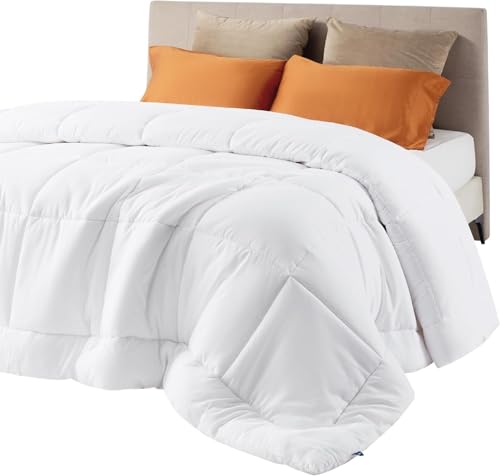
Brushed microfiber on the shell wraps a fluffy down-alternative fill for a cozy feel at a friendly cost. Even stitching holds the fill in place through washing, and a wide color range lets it double as a bedspread without a cover. Heat retention runs high for hot sleepers, and the loft settles with heavy nightly use.
Pros
- Soft brushed shell feels cozy
- Fill stays put with even stitching
- Multiple colors to match decor
Cons
- Runs warm for hot sleepers
- Loft settles with heavy use

Buffy Cloud Comforter
Recycled fiber fill inside a eucalyptus-derived shell targets buyers who want a smaller footprint from their bedding. Owners describe the feel as breathable and cloud-soft, with all-season warmth that holds temperatures steady overnight. Costs sit above basic microfiber comforters, and the size range is narrower than mainstream brands.
Pros
- Recycled and plant-based materials
- Breathable, soft hand feel
- Steady all-season warmth
Cons
- Costs more than basic microfiber
- Limited size options

Linenspa All-Season Down Alternative Quilted
Quilted microfiber fill and corner tabs that anchor a duvet cover keep the cost of this one low. Medium all-season warmth and a simple home-wash routine suit guest rooms and first apartments well. Stitching detail stays basic, and the microfiber can flatten sooner than pricier fills under nightly use.
Pros
- Low price for the fill quality
- Corner tabs hold a duvet cover
- Easy to wash at home
Cons
- Microfiber can flatten over time
- Basic stitching detail
Compared at a glance
| # | Model | Fill | Best for | Score | Price |
|---|---|---|---|---|---|
| 1 | Utopia Bedding Comforter | Down-alternative microfiber | Best overall | 9.4 | Check price |
| 2 | Cozy Earth Bamboo Comforter | Bamboo viscose blend | Best for hot sleepers | 9.2 | Check price |
| 3 | Egyptian Bedding Goose Down Comforter | Goose down | Best down | 9.0 | Check price |
| 4 | Puredown Lightweight Down Comforter | Lightweight down blend | Best lightweight down | 8.8 | Check price |
| 5 | Bedsure Comforter | Down-alternative | Best value | 8.6 | Check price |
| 6 | Buffy Cloud Comforter | Recycled fiber | Best eco-friendly | 8.3 | Check price |
| 7 | Linenspa All-Season Down Alternative Quilted | Down-alternative microfiber | Best budget | 8.0 | Check price |
What to look for
Down vs down alternative: which fill is right? Fill is the first fork in the road. Down gives the best warmth for its weight and a lofty feel, but it costs more, can trigger allergies, and often needs professional cleaning. Down-alternative microfiber mimics that softness at a lower price, washes at home, and suits allergy-prone sleepers, though it flattens sooner. Budget, warmth needs, and washing habits should decide between them.
How warm should a comforter be for your room? Match warmth to bedroom temperature and how hot you sleep. All-season medium weights, like the Utopia and Bedsure here, cover most homes year-round. Bedrooms that stay cold call for high-loft down such as the Egyptian Bedding option. Hot sleepers should reverse the logic and prioritize breathable fills like the Cozy Earth bamboo or Puredown’s lightweight blend over anything dense.
Why does comforter stitching matter? Stitching keeps fill from bunching into hot and cold spots. Baffle-box construction uses internal fabric walls that give down room to loft evenly, which is why the Egyptian Bedding comforter uses it. Sewn-through box stitching is simpler and standard on down-alternative fills. Corner tabs are worth seeking out too, since they anchor a duvet cover so the comforter cannot slide around inside it.
How do you wash and care for a comforter? Check the care label before anything else. Down-alternative fills usually take a gentle home machine wash, while true down often needs professional cleaning or a commercial-size machine. Dry thoroughly with dryer balls to restore loft, since damp fill clumps and can mildew. A duvet cover takes most of the daily wear and stretches the time between washes considerably.
Common questions
What is the difference between a comforter and a duvet?
A comforter is a single quilted piece with fill sewn inside, ready to use on its own. A duvet is an insert made for a separate cover, though many comforters with corner tabs work both ways.
Is down or down alternative better?
Down warms more per ounce and lasts longer, but costs more and can bother allergies. Down alternative is cheaper, home washable, and allergy-friendly, which makes it the better everyday choice for many sleepers.
Which comforter is best for hot sleepers?
Breathable, moisture-wicking fills win: bamboo viscose like the Cozy Earth, or a lightweight down blend like the Puredown. Both release heat instead of trapping it, so you stay comfortable through the night.
How often should you wash a comforter?
Every two to three months keeps it fresh, or more often without a duvet cover. Using a cover lets you launder the comforter itself far less, since the cover absorbs the daily wear.
What does fill power mean on a down comforter?
Fill power measures how much loft an ounce of down produces. Higher numbers mean fluffier, warmer down at less weight, so a high fill power comforter is generally warmer, lighter, and longer lasting.
Can you put a comforter in the washing machine?
Most down-alternative comforters take a gentle machine cycle, but read the care label first. True down usually does better with professional cleaning, and oversized comforters may need a commercial machine.
What size comforter should I buy?
Start from your mattress size, then consider sizing up for extra drape or a shared bed. Oversized adds cozy overhang; a snug fit can leave the mattress edges exposed.
How do you keep a comforter fluffy?
Dry it completely after washing and add a couple of dryer balls to redistribute the fill. Regular shaking and occasional airing outdoors also help the loft recover between washes.
Do comforters need a duvet cover?
No, but a cover protects the shell, cuts washing frequency, and lets you change the look cheaply. Comforters with corner tabs, like the Linenspa, hold a cover in place without shifting.
The bottom line
The Utopia Bedding Comforter earns the top spot with even box stitching, easy home washing, and all-season warmth that suits most beds. Hot sleepers should spend up on the breathable Cozy Earth Bamboo Comforter, and cold bedrooms justify the lofty Egyptian Bedding Goose Down. Match fill and warmth to your room and sleep style, and any of these will serve for years.
Dana Whitfield
Dana spent eight years buying and merchandising for a regional kitchenware retailer before moving into editorial work. She has handled thousands of SKUs across cookware, small appliances and kitchen organization, and focuses on the practical differences that matter once a product is actually in daily use.