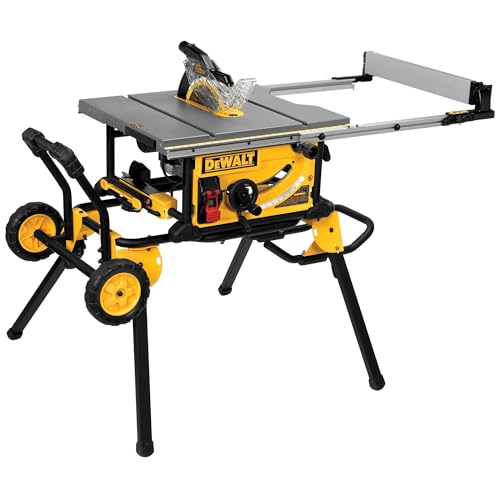
Circular saw worn out? 7 replacements that last
Skilsaw SPT77WML-01 replaces a dead framing saw best, since worm drive gearing keeps torque in wet lumber at 8.8 pounds. Lighter overhead work suits the DeWalt DWE575SB and its electric brake. Crews wanting 5800 RPM in a magnesium shell should pick the Makita 5007MG.
Skilsaw SPT77WML-01 suits framers replacing a worn saw, because worm drive gearing holds blade speed through soaked 2 by stock. Magnesium housing and shoe keep the tool at 8.8 pounds. Blade sits on the left, so sidewinder users need a week to retrain their sight line.
Saws retire for a short list of reasons. Bearings whine, the shoe stops reading square, or the lower guard hangs open. We compared amp draw, no load RPM, cut depth at 90 degrees, bevel stops and shoe material across corded and cordless models. Owner feedback on guard behaviour and brake wear settled the close calls.
Before you buy
What to check before you replace a circular saw Three signs push a saw into retirement: bearing whine, a shoe that no longer reads square, and a guard that hangs open. Check amp draw first, since 15 amps is the corded standard. Cut depth at 90 degrees comes next. Under 2-1/4 inches, a saw cannot clear a 2 by 4 in one pass. Shoe material predicts how the tool ages, because stamped steel bends where magnesium keeps its shape.
Worm drive vs sidewinder: which suits your work Worm drive saws gear the motor down and place the blade on the left. That layout trades speed for torque, which is why the Skilsaw SPT77WML-01 copes with soaked framing lumber. Sidewinders such as the DeWalt DWE575SB drive the blade directly, weigh less and reach full speed faster. Framers lean worm drive. Remodelers and weekend users almost always prefer a sidewinder, especially on ladders.
Corded or cordless for your workload Corded saws hold speed for hours and need no battery planning. Milwaukee’s 2732-20 matches them at 5800 RPM, then drains packs quickly in thick stock. Short bursts scattered across a site favour cordless. Sustained ripping, a shop bench or a full day of decking still points to a 15 amp cord. Anyone already holding M18 batteries saves the most by going cordless.
Best replacement saw for plywood and sheet goods Sheet goods punish framing saws. Twenty four tooth blades tear plywood veneer, while 60 tooth blades leave an edge ready to finish. Makita’s SP6000J1 solves it differently, riding a 55 inch rail and dialling down to 2000 RPM for melamine. Arbor size matters on every blade swap, usually 5/8 inch on 7-1/4 inch saws. Cabinet work justifies a track saw. A framer facing one panel job a month is better off spending on a good blade.
The shortlist, ranked

SKILSAW SPT77WML-01 Lightweight Worm Drive Circular Saw
Worm drive gearing multiplies torque, so a blade buried in wet 2 by 10 keeps turning instead of bogging down. Magnesium housing and shoe hold the total to 8.8 pounds, light for this gear layout. Right handed users see the cut line directly, since the blade runs on the left side.
Pros
- Torque survives soaked framing lumber
- Magnesium body shrugs off drops from sawhorse height
- Left blade puts the cut line in plain view
Cons
- Gear oil level needs checking every few months
- Sidewinder users must relearn the sight line
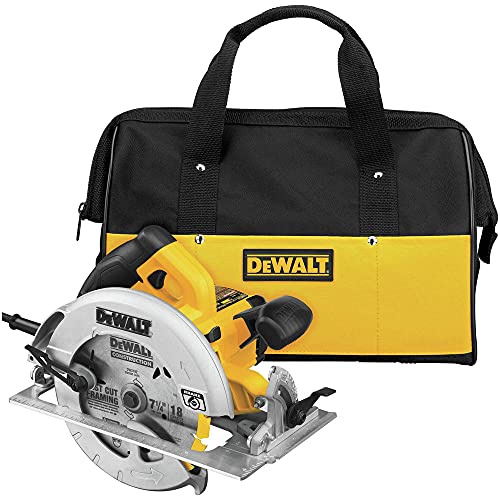
DEWALT DWE575SB 7-1/4 inch Circular Saw with Electric Brake
At 8.8 pounds this sidewinder matches the worm drive on weight while spinning up faster. Releasing the trigger drops an electric brake on the blade, which shortens the pause between repeat cuts. Depth at 90 degrees reaches 2-9/16 inches, clearing 2 by stock in a single pass.
Pros
- Electric brake shortens the gap between cuts
- Bevel reaches 57 degrees for rafter and compound work
- Weight stays manageable on overhead cuts
Cons
- Shoe is stamped steel rather than magnesium
- Cord goes stiff in cold weather

Makita 5007MG Magnesium 7-1/4 inch Circular Saw
Base, guards and housing are all magnesium, so the frame stays true after a fall off a plywood stack. Two LEDs throw light ahead of the blade, which helps inside framed walls and crawl spaces. Weight lands at 10.6 pounds, nearly two pounds over the DeWalt.
Pros
- Magnesium guards keep their shape after drops
- 5800 RPM leaves a clean edge in plywood
- Built in LEDs light the line in dark framing
Cons
- Heaviest sidewinder here at 10.6 pounds
- Bevel lever sits awkwardly for left handed users
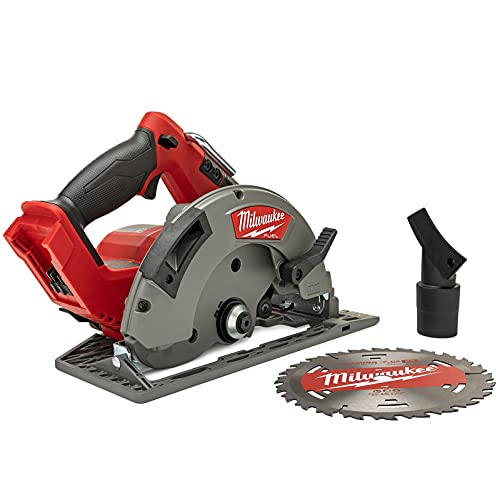
Milwaukee 2732-20 M18 FUEL 7-1/4 inch Cordless Circular Saw
Brushless motor reaches 5800 RPM, the same no load speed as the corded Makita 5007MG. Depth of 2-1/2 inches at 90 degrees clears a 2 by 4 with room to spare. Milwaukee ships it as a bare tool, so budget an M18 High Output pack if the platform is new to you.
Pros
- Blade speed matches corded saws in sheet goods
- No motor brushes to replace over the tool life
- Magnesium shoe stays square on a busy site
Cons
- Battery and charger are sold separately
- Bevel stops at 50 degrees
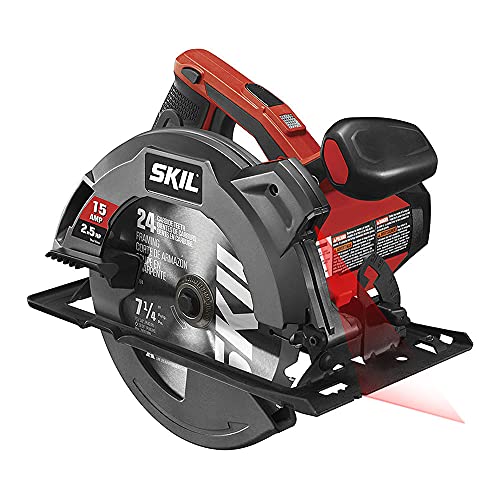
SKIL 5280-01 15 Amp 7-1/4 inch Circular Saw
Weight drops to 6.95 pounds, the lightest corded saw in this group and a relief on a ladder. A single beam laser projects a line ahead of the blade for freehand rips. Plastic guards flex more than magnesium, which points this one at weekend jobs rather than daily framing.
Pros
- Lightest corded saw here at 6.95 pounds
- Laser guide helps with freehand rip cuts
- Depth lever moves with one hand
Cons
- Guards and shoe flex under rough handling
- Bevel tops out at 51 degrees

Bosch CS10 7-1/4 inch 15 Amp Circular Saw
An anti snag lower guard swings open on narrow offcuts where other guards catch and kick. Bevel runs to 56 degrees, with detents you can feel through work gloves. Around 10 pounds gives it a planted feel through long rips in sheet goods.
Pros
- Guard opens cleanly on thin offcuts
- Detents at common bevel angles land by feel
- Mass steadies long rip cuts through plywood
Cons
- No electric brake fitted
- About 10 pounds, heavier than the DeWalt

Makita SP6000J1 6-1/2 inch Plunge Circular Saw with Guide Rail
Plunge action and a 55 inch guide rail turn a sheet of plywood into a straightedge job. Speed dials from 2000 to 5200 RPM, and the lower settings stop melamine chipping along the edge. Its 6-1/2 inch blade reaches 2-3/16 inches, short of thick timber.
Pros
- Guide rail delivers a factory straight edge
- Variable speed reduces chipping in melamine and laminate
- Plunge start begins cuts in the middle of a panel
Cons
- Cuts shallower than any 7-1/4 inch saw here
- Guide rail adds bulk in the van
How they compare
| # | Model | Motor | Best for | Score | Price |
|---|---|---|---|---|---|
| 1 | SKILSAW SPT77WML-01 Lightweight Worm Drive Circular Saw | 15 amp | Best overall | 9.4 | Check price |
| 2 | DEWALT DWE575SB 7-1/4 inch Circular Saw with Electric Brake | 15 amp | Best value | 9.2 | Check price |
| 3 | Makita 5007MG Magnesium 7-1/4 inch Circular Saw | 15 amp | Best for job site durability | 9.0 | Check price |
| 4 | Milwaukee 2732-20 M18 FUEL 7-1/4 inch Cordless Circular Saw | M18 18V, bare tool | Best cordless | 8.8 | Check price |
| 5 | SKIL 5280-01 15 Amp 7-1/4 inch Circular Saw | 15 amp | Best budget | 8.5 | Check price |
| 6 | Bosch CS10 7-1/4 inch 15 Amp Circular Saw | 15 amp | Best for clean bevel cuts | 8.2 | Check price |
| 7 | Makita SP6000J1 6-1/2 inch Plunge Circular Saw with Guide Rail | 12 amp | Best for sheet goods | 8.0 | Check price |
Good to know
How do I know when a circular saw needs replacing?
Listen for bearing noise and check whether the shoe still reads square against the blade. Guards that stick open and a motor that smells hot under load are the other signals.
Which circular saw is best for framing?
Skilsaw SPT77WML-01. Worm drive torque holds blade speed in wet 2 by material, and a magnesium body keeps the saw at 8.8 pounds.
Worm drive vs sidewinder: which should I buy?
Pick worm drive for framing torque and a left side sight line. Choose a sidewinder for lower weight, faster spin up and easier overhead work.
Is a cordless circular saw powerful enough to replace a corded one?
For framing and sheet work, yes. Milwaukee’s 2732-20 reaches 5800 RPM. Ripping hardwood all day still favours a 15 amp corded saw.
What size blade does a replacement circular saw need?
7-1/4 inch is the standard and cuts 2 by material in one pass. Track saws such as the Makita SP6000J1 run 6-1/2 inch blades and reach 2-3/16 inches deep.
Can I put a smaller blade on my circular saw?
Yes, provided the arbor matches and the guard clears it. Cut depth falls accordingly, and the depth scale stops reading true.
Does an electric brake actually matter?
It cuts the wait between passes and keeps a spinning blade off your material. DeWalt’s DWE575SB has one. Bosch’s CS10 does not.
What bevel range should a replacement saw have?
Most jobs stop at 45 degrees. Rafters and compound cuts want more, which is why the DWE575SB reaches 57 degrees and the Makita 5007MG reaches 56.
Are magnesium shoes worth it over stamped steel?
Magnesium stays flat after a drop and saves weight. Stamped steel bends, and a bent shoe throws off every square cut you make afterwards.
Which saw cuts plywood without chipping the edge?
Makita SP6000J1, run on its rail at the lower end of the 2000 to 5200 RPM range. On a standard saw, a 60 tooth blade and a slow feed get close.
The verdict
Buy the Skilsaw SPT77WML-01 if the old saw gave out doing framing work, since torque and a rigid magnesium shoe are exactly what that job demands. Anyone cutting overhead or from a ladder should take the lighter DeWalt DWE575SB and its brake instead. Cabinet panels and melamine point straight at the Makita SP6000J1 with its guide rail.
Jake Monroe
Jake worked as a residential contractor for over a decade before shifting to full-time writing. He evaluates power tools, hand tools and workshop gear through the lens of someone who has actually used them on job sites, not just read the box.