Which Circular Saw Should a Weekend DIY Builder Buy?
DEWALT DWE575SB fits most DIY work. It weighs 8.8 pounds, cuts 2 9/16 inches deep, and brakes the blade on trigger release. Makita 5007MG tracks straighter through long plywood rips on its magnesium shoe. SKIL 5280-01 covers occasional projects at the lowest weight here.
DEWALT DWE575SB earns the top slot for homeowners cutting decking, studs and sheet goods. A 15 amp motor drives a full 7 1/4 inch blade, yet the body stays at 8.8 pounds. Dust is the weak point, since the chute throws chips toward your face unless a shop vac is attached. Anyone ripping full sheets weekly will track straighter with the heavier Makita 5007MG.
Spec sheets hide the trade that actually decides this purchase. We compared cut depth at 90 and 45 degrees, bevel stops, shoe material and bare weight across seven saws. Owner reports filled in guard snagging, blade wobble and how well each depth lever holds after a season of use. Rankings reflect that mix of published specifications and aggregated feedback.
The shortlist, ranked
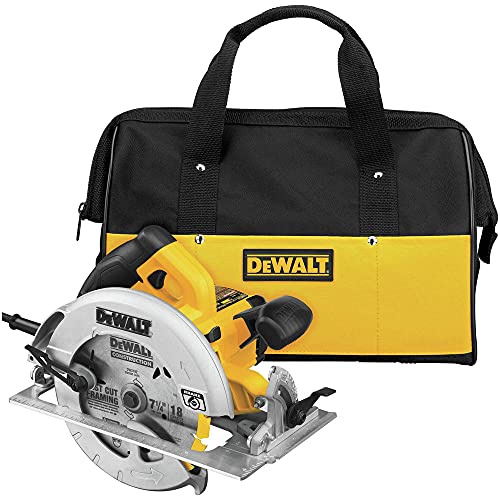
DEWALT DWE575SB Circular Saw
DEWALT trimmed this 7 1/4 inch saw to 8.8 pounds without stepping down to a smaller motor. An electric brake stops the blade seconds after you release the trigger, which counts on a crowded bench. Bevel travel reaches 57 degrees, so rafter tails and angled trim stay inside its range.
Pros
- Light for a full size 15 amp saw, which delays arm fatigue
- Electric brake shortens blade spindown between cuts
- 57 degree bevel covers rafters and angled trim
Cons
- Chips exit toward the operator without a shop vac adapter
- Stamped shoe dents more easily than a magnesium base

Makita 5007MG Magnesium Circular Saw
Magnesium replaces plastic on the base and both guards, so the shoe stays flat after it hits a garage floor. Two LED lights sit above the cut line, and 5800 RPM keeps the blade clearing wet pressure treated lumber. Extra mass steadies a long rip, which is the whole argument for the accuracy slot.
Pros
- Magnesium shoe resists bending, so a rip fence stays square
- Dual LED lights make pencil lines readable indoors
- Highest no load speed among the corded 15 amp picks here
Cons
- Nearly two pounds heavier than the DWE575SB
- Bevel stops at 45 degrees instead of 50 plus

DEWALT DCS570B 20V MAX Circular Saw
Brushless drive spins a full 7 1/4 inch blade at 5500 RPM, putting this saw in corded territory for depth. Because it ships bare, 20V MAX packs already sitting in the garage carry straight over. Depth of 2 9/16 inches clears a 2×4 in one pass, the same figure as the corded DWE575SB.
Pros
- Full size blade avoids the depth penalty of compact cordless saws
- Brushless motor stretches cuts per charge
- Bare tool sale skips duplicate batteries for DEWALT owners
Cons
- Battery and charger are a separate purchase from scratch
- A 5.0Ah pack adds noticeable weight at the rear
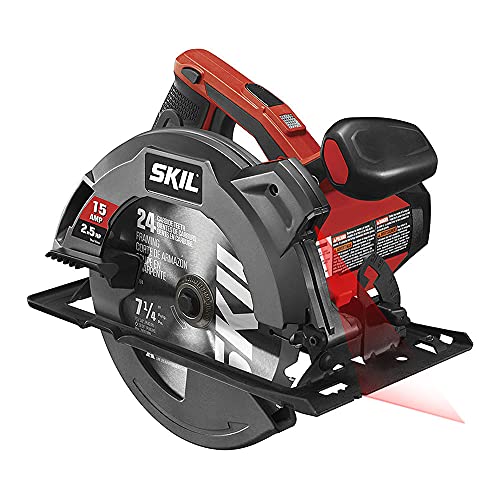
SKIL 5280-01 Circular Saw
SKIL keeps the feature list short: 15 amps, a 7 1/4 inch blade, a single beam laser and a spindle lock. At 6.95 pounds it is the lightest corded saw in this group, which suits ladder work and cuts held overhead. Bevel reaches 51 degrees with a positive stop at 45.
Pros
- Lightest corded saw here at under 7 pounds
- Laser guide gives beginners a line to follow
- Carbide blade and spindle lock included in the box
Cons
- No electric brake, so the blade coasts after release
- Laser drifts out of calibration once the saw takes a knock

Bosch CS5 Circular Saw
Bosch pairs a 6200 RPM motor with an anti snag lower guard that opens cleanly on thin offcuts and bevel starts. Composite footplate construction holds the saw rigid without pushing weight up. Bevel travel of 56 degrees covers roof framing and stair stringers.
Pros
- Guard drops cleanly on narrow rips instead of catching
- Fastest no load speed in this lineup at 6200 RPM
- Dust blower keeps the pencil line visible mid cut
Cons
- Left side blade puts the motor over the offcut for right handers
- Depth lever feels stiff until it wears in
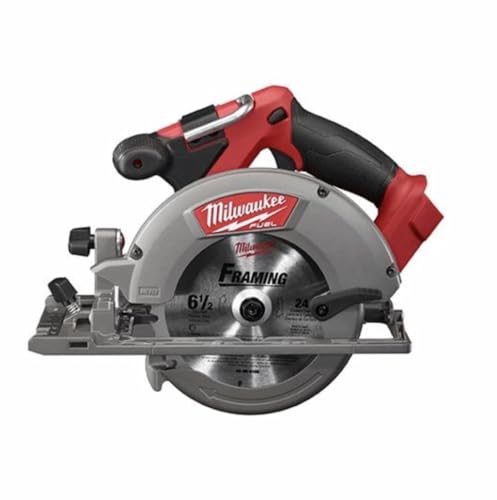
Milwaukee 2730-20 M18 FUEL Circular Saw
Shrinking the blade to 6 1/2 inches drops body weight and makes this easy to steer across a sawhorse. Depth of 2 1/8 inches at 90 degrees still clears 2x lumber in one pass. Magnesium shoe and guard survive a truck box better than the plastic used on lighter saws.
Pros
- Compact body suits overhead cuts and awkward angles
- Magnesium shoe shrugs off jobsite knocks
- Brushless motor holds speed through plywood and OSB
Cons
- Depth tightens at a 45 degree bevel more than a 7 1/4 inch saw
- 6 1/2 inch blades are stocked less widely than 7 1/4 inch

WORX WORXSAW WX429L Compact Circular Saw
Weighing 4.4 pounds with a 4 1/2 inch blade, this one targets plywood, paneling and trim rather than framing. Cut depth of 1 11/16 inches at 90 degrees handles 3/4 inch sheet goods with room to spare. Left side blade and a small footprint make it the easiest saw here for a first timer to control.
Pros
- Light enough to guide one handed across a sheet
- Small blade leaves less tearout on plywood faces
- Stores in a drawer rather than taking shelf space
Cons
- Cannot cut through a 2×4 in a single pass
- 4 amp motor bogs in hardwood thicker than half an inch
What to look for
What matters most on a DIY circular saw Cut depth at 90 degrees settles the first question. Below 2 1/4 inches a saw will not clear a 2×4 in one pass, which takes most 4 1/2 and 5 3/8 inch models out of framing work. Weight decides the second question. Two pounds either way changes how long your cut line stays straight, especially above shoulder height. Shoe material is the quiet variable: magnesium bases, as on the Makita 5007MG and Milwaukee 2730-20, stay flat after a drop that would dent stamped steel. Electric brakes and spindle locks each save a few seconds per cut, and those seconds stack up over an afternoon of repetitive work.
Corded or cordless for home projects Corded saws still hold the edge on sustained power. A 15 amp motor never sags halfway through a rip and never waits on a charger. Battery saws earn their keep when the work moves: fence lines, deck frames, a shed at the back of the yard. Full size cordless models such as the DCS570B keep a 7 1/4 inch blade and the same 2 9/16 inch depth as a corded saw, so the old depth compromise has largely gone. Already own packs on one platform? Buying the bare tool skips duplicate batteries entirely. Starting from nothing means adding a battery and charger to the plan, which shifts the comparison back toward a corded saw.
Blades and cut depth for common DIY materials Match the blade to the material instead of forcing one blade through everything. A 24 tooth framing blade rips 2x lumber quickly and leaves a rough edge behind. Plywood and melamine want 40 to 60 teeth, and scoring the face with a utility knife reduces tearout further. Posts are the exception. Any 7 1/4 inch saw needs two passes on a 4×4, since maximum depth stops near 2 9/16 inches, so mark all four faces first. Wet pressure treated stock loads the motor hardest, which is where the 5800 RPM Makita pulls ahead. Sheet goods reward a light body instead, and that is the entire case for the 4.4 pound WORXSAW.
Setting up safely if this is your first saw Guard behavior is what beginners notice first. Anti snag lower guards, including the one on the Bosch CS5, drop cleanly rather than catching a thin offcut and kicking the saw sideways. Support both sides of a cut on foam board or sacrificial lumber so the offcut cannot pinch the blade. Set depth so roughly a quarter inch of tooth shows below the workpiece, which limits exposure and softens kickback force. Before the first cut, square the shoe against the blade, because factory settings drift in shipping. One habit worth building early: let the blade reach full speed before it touches wood, then push at a pace the motor can hold.
Compared at a glance
| # | Model | Blade size | Best for | Score | Price |
|---|---|---|---|---|---|
| 1 | DEWALT DWE575SB Circular Saw | 7 1/4 in | Best overall | 9.4 | Check price |
| 2 | Makita 5007MG Magnesium Circular Saw | 7 1/4 in | Best for cut accuracy | 9.2 | Check price |
| 3 | DEWALT DCS570B 20V MAX Circular Saw | 7 1/4 in | Best cordless | 9.0 | Check price |
| 4 | SKIL 5280-01 Circular Saw | 7 1/4 in | Best budget | 8.8 | Check price |
| 5 | Bosch CS5 Circular Saw | 7 1/4 in | Best guard design | 8.6 | Check price |
| 6 | Milwaukee 2730-20 M18 FUEL Circular Saw | 6 1/2 in | Best compact cordless | 8.3 | Check price |
| 7 | WORX WORXSAW WX429L Compact Circular Saw | 4 1/2 in | Best for one handed cuts in sheet goods | 8.0 | Check price |
Questions worth asking
What size circular saw is best for DIY?
A 7 1/4 inch saw is the practical default. It clears 2x lumber in one pass and blades for it sit on every hardware shelf. Step down to 6 1/2 inches only when reach and weight matter more than depth.
Is a corded or cordless circular saw better for home use?
Corded models give steadier power for garage and shop work. Cordless suits fences, decks and anywhere an extension cord becomes a trip hazard. Full size cordless saws such as the DCS570B close the depth gap completely.
Can a circular saw cut through a 4×4 post?
Not in one pass. Maximum depth on a 7 1/4 inch saw lands around 2 9/16 inches. Mark all four faces, cut from two opposite sides, and check the meeting point with a square.
How many amps does a DIY circular saw need?
Fifteen amps is the standard for full size corded saws and covers framing, decking and sheet goods. Smaller 4 to 6 amp saws such as the WORXSAW stay useful for plywood and trim only.
Sidewinder vs worm drive: which suits DIY better?
Sidewinders weigh less and steer more easily, which fits occasional projects. Worm drives deliver more torque through wet lumber and sit longer in the hand, which is why framers who cut all day favor them.
Which blade should I use for cutting plywood?
A 40 to 60 tooth fine finish blade gives the cleanest edge. Cut with the good face down on a right blade saw, because teeth exit through the upper surface and chip it.
Do laser guides or LED lights actually help?
LED lighting helps genuinely, especially indoors and in crawl spaces. Lasers shift out of alignment after knocks, so treat one as a rough aid and trust a clamped straightedge for accuracy.
Is a 6 1/2 inch circular saw big enough for framing?
It clears 2×4 and 2×6 stock at 90 degrees. Depth tightens noticeably once you bevel to 45, and replacement blades are harder to find locally, so regular framing still favors 7 1/4 inches.
What is the best circular saw for a beginner?
Light saws with a visible cut line build confidence fastest. SKIL 5280-01 at 6.95 pounds works well for framing scale projects, while the WORXSAW suits anyone starting on plywood and trim.
Does a circular saw need an electric brake?
No, though it changes how a saw feels in use. A brake stops the blade quickly after release, cutting the wait before you set the saw down. Models without one, including the SKIL 5280-01, coast for several seconds.
Our take
Buy the DEWALT DWE575SB for the mix of decking, studs and sheet goods most homeowners actually cut. An 8.8 pound body keeps a full 15 amp motor manageable through a long afternoon, and the electric brake makes repetitive crosscutting safer. Swap to the Makita 5007MG if long plywood rips dominate your work, since the magnesium shoe and extra mass repay the two pound penalty. Cutting away from an outlet? Skip both and take the DEWALT DCS570B, which loses nothing on depth.
Jake Monroe
Jake worked as a residential contractor for over a decade before shifting to full-time writing. He evaluates power tools, hand tools and workshop gear through the lens of someone who has actually used them on job sites, not just read the box.


