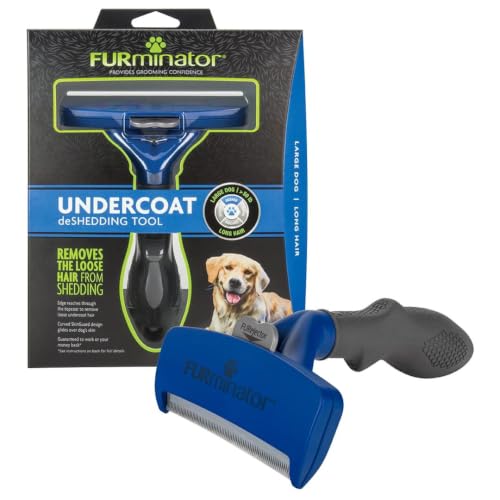
Deshedding Tools That Cut Loose Fur Without a Fight
The FURminator deShedding Tool for Cats removes the most loose undercoat per session for most short and medium haired cats. The KONG ZoomGroom suits cats with sensitive skin who dislike metal teeth, and the HappyDo Pet Grooming Glove works for cats that resist any tool resembling a brush.
The FURminator deShedding Tool for Cats leads this group, because its fine stainless steel edge pulls loose undercoat out in noticeably larger amounts per stroke than a standard brush. Its metal teeth feel firmer against skin than rubber alternatives, so cats with thin or sensitive skin may do better with a softer tool.
We compared how each tool removes undercoat versus just surface fur, coat length compatibility, skin comfort, and owner notes on how well cats tolerated each design.
What to look for
Why Deshedding Tools Differ From Regular Brushes A regular brush smooths the visible topcoat, but a deshedding tool reaches into the undercoat to pull out hair that would otherwise shed around the house. That distinction explains why a tool like the FURminator removes noticeably more loose fur per session than a standard bristle brush. Heavier shedding breeds and seasonal coat changes benefit most from this deeper approach.
Matching the Tool to Coat Length Short haired cats generally do well with a fine-tooth tool or rubber nub brush like the KONG ZoomGroom, since there is less volume of undercoat to work through. Long haired cats need a comb with wider teeth first, like the Safari Cat Shedding Comb, to clear tangles before a finer tool reaches the undercoat. Using a fine metal tool directly on a matted long coat can pull uncomfortably on the skin.
Skin Sensitivity and Tool Material Metal-edged tools remove the most fur but feel firmer against skin, which matters for cats with thin coats or sensitive areas near the belly and legs. Rubber-based options like the ZoomGroom or a grooming glove trade some removal power for a gentler feel. Older cats or those with skin conditions usually do better starting with a softer material.
Easing a Resistant Cat Into Grooming A cat that fights any brush may still tolerate a wearable grooming glove, since the motion resembles petting rather than a grooming session. Short, frequent sessions work better than one long session that ends in struggling. Building tolerance gradually with a gentle tool first makes it easier to introduce a more effective metal tool later.
The best picks, ranked

FURminator deShedding Tool for Cats
The FURminator’s fine stainless steel edge reaches through the topcoat to pull loose undercoat hair without cutting it. A FURejector button releases collected fur with one press, which speeds up longer grooming sessions.
Pros
- Removes significantly more loose undercoat than a standard brush
- FURejector button clears collected fur quickly
- Edge width is sized specifically for cats, not resized dog tools
Cons
- Metal edge feels firmer against skin than rubber tools
- Not intended for cats with skin conditions or very thin coats

Hertzko Self-Cleaning Slicker Brush
A button retracts the fine wire bristles on this slicker brush, pulling collected fur off in one motion instead of pulling it out by hand. That self-cleaning step matters most for cats that shed heavily enough to clog a standard brush fast.
Pros
- Button retraction clears fur without pulling it out by hand
- Works across a wider range of coat lengths than most combs
- Bristles are gentler than a metal deshedding edge
Cons
- Pulls less undercoat per stroke than a dedicated deshedding tool
- Retraction mechanism adds moving parts that can wear over years

KONG ZoomGroom
The ZoomGroom uses flexible rubber nubs instead of metal or wire, massaging the skin while loosening shed fur. Cats that flinch from firmer tools often tolerate this one noticeably better.
Pros
- Soft rubber nubs suit cats with sensitive or thin skin
- Doubles as a bath time scrubber, adding versatility
- Static-reducing design leaves less fur floating in the air
Cons
- Removes less undercoat than a metal deshedding edge
- Less effective on long haired cats with heavy mats

Safari Cat Shedding Comb
This comb pairs wider-spaced teeth on one side with finer teeth on the other, letting an owner work through a longer coat before switching to the finer side for undercoat. Long haired breeds benefit from that two-stage approach.
Pros
- Two tooth spacings handle tangles then undercoat in one tool
- Rubberized handle keeps grip steady during longer sessions
- Durable stainless construction holds up over repeated use
Cons
- Metal teeth require a gentler hand around sensitive areas
- Overkill for short haired cats with minimal undercoat

JW Pet GripSoft Cat Shedding Blade
JW Pet’s shedding blade keeps the design simple, with fine teeth set into a basic rubber-gripped frame. It covers routine deshedding without the added mechanisms found on pricier tools.
Pros
- Lower cost than premium deshedding tools
- Fine teeth still pull a meaningful amount of loose fur
- Simple design with fewer parts to wear out
Cons
- No self-cleaning or fur-release mechanism
- Less refined ergonomics than higher priced competitors
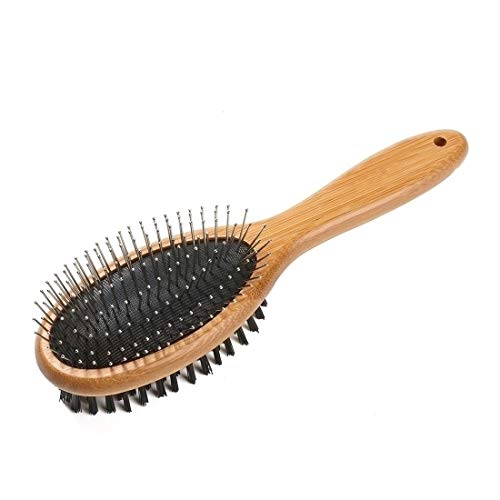
Bass Brushes Dual-Sided Cat Brush
Bass Brushes combines natural bristle on one side with wire pins on the other, letting an owner smooth the topcoat and then work through loose undercoat with the same tool. It suits a lighter, more general grooming routine.
Pros
- Two-sided design covers smoothing and deshedding in one brush
- Wood handle feels sturdier than many plastic competitors
- Natural bristle side works well for light daily maintenance
Cons
- Pin side pulls less undercoat than a dedicated deshedding blade
- Not suited to cats with significant matting

HappyDo Pet Grooming Glove
This glove slips over an owner’s hand, letting petting motions double as grooming instead of introducing a separate tool shape a cat might shy away from. Anxious cats often tolerate a gloved hand better than any brush.
Pros
- Feels like petting rather than grooming to a nervous cat
- Comes as a pair for two-handed use
- Low learning curve for first-time deshedding users
Cons
- Removes noticeably less undercoat than a metal deshedding tool
- Silicone tips wear down faster than stainless steel
How they compare
| # | Model | Edge Type | Best for | Score | Price |
|---|---|---|---|---|---|
| 1 | FURminator deShedding Tool for Cats | Fine stainless steel | Best Overall | 9.4 | Check price |
| 2 | Hertzko Self-Cleaning Slicker Brush | Fine wire bristles | Best Self-Cleaning Design | 9.0 | Check price |
| 3 | KONG ZoomGroom | Natural rubber | Best for Sensitive Skin | 8.8 | Check price |
| 4 | Safari Cat Shedding Comb | Dual-length stainless steel | Best for Long-Haired Cats | 8.7 | Check price |
| 5 | JW Pet GripSoft Cat Shedding Blade | Fine metal blade teeth | Best Budget Pick | 8.3 | Check price |
| 6 | Bass Brushes Dual-Sided Cat Brush | Natural bristle and wire pin | Best Dual-Sided Bristle and Pin Brush | 8.4 | Check price |
| 7 | HappyDo Pet Grooming Glove | Wearable glove with silicone tips | Best for Anxious or Resistant Cats | 8.2 | Check price |
Good to know
How often should I deshed my cat?
Once or twice a week works for most cats, increasing to a few times weekly during spring and fall shedding seasons.
Can deshedding tools hurt my cat’s skin?
Used with light pressure they should not, but metal-edged tools can irritate skin if pressed too hard or used on already irritated areas.
Do indoor cats shed as much as outdoor cats?
Indoor cats often shed more evenly year round due to stable indoor temperatures, rather than in sharp seasonal bursts like outdoor cats.
Is a deshedding tool the same as a dematting tool?
No. Deshedding tools pull loose undercoat, while dematting tools are designed specifically to cut through existing tangles and mats.
Will deshedding reduce hairballs?
Removing loose fur before a cat ingests it while self-grooming can reduce how much hair ends up swallowed, which may lower hairball frequency.
Can I use a cat deshedding tool on a dog?
Some tools like the FURminator come in separate dog-sized versions, since a cat-sized tool is often too small for a dog’s coat.
Why does my cat’s coat feel thinner after deshedding?
Removing a large amount of trapped undercoat can make the coat feel noticeably lighter, which is the intended effect rather than a problem.
How long does a deshedding session take?
Five to ten minutes usually covers a full session, though cats with heavy undercoat may need a few shorter sessions across the week.
Our pick
The FURminator deShedding Tool for Cats remains the strongest overall pick for removing loose undercoat quickly on short and medium haired cats. Owners of cats with sensitive or thin skin should choose the KONG ZoomGroom instead, trading some removal power for a gentler feel. Anyone with a cat that resists tools entirely can start with the HappyDo Pet Grooming Glove and work up to a more effective tool once the cat tolerates handling.
Olivia Hartley
Olivia spent several years working at an animal shelter and a pet-supply retailer before joining the editorial team. She researches pet gear with an emphasis on safety, comfort and the fine print that owners often miss.