How to Choose a Car Phone Charger That Charges Fast
Anker 535 Car Charger leads on real per port wattage and steady heat handling on long drives. Belkin BoostCharge Pro Dual USB-C 45W suits two fast charging phones at once. Ugreen 63W Dual Port Car Charger matches that speed in a smaller body for less outlay.
Anker 535 Car Charger is the sensible starting point, backed by real 45W USB-C output and a metal shell that sheds heat. Belkin BoostCharge Pro Dual USB-C 45W suits two phones charging fast at once. Ugreen 63W Dual Port Car Charger covers similar ground for less money. All three run proper USB Power Delivery instead of slow legacy output.
Box wattage is nearly always a combined figure across every port, not a promise to one phone. We compared published wattage per port, protocol support, socket depth and owner reports of heat and rattling. That comparison, not the number on the packaging, decided this ranking.
How to choose
Read the wattage as a total, not a per port promise Nearly every dual port charger prints its combined output on the box. A 67W unit rarely gives 67W to a single phone, and a 45W dual USB-C model often splits close to the middle under load. Check the per port breakdown in the specifications before assuming a charger will run a laptop or tablet at full speed.
Match the charging protocol to your phone USB Power Delivery is the baseline every phone expects now. Recent Samsung and Google phones also benefit from PPS, which lets the charger fine tune voltage. Older accessories still want Quick Charge on a USB-A port. A charger listing both PD and PPS covers the widest range of current phones.
Check your socket depth before ordering Many cars hide their 12V socket in a recessed cubby, behind a sliding door or under an armrest. Long chargers either will not seat properly or stop the lid closing. Flush, low profile designs such as the Spigen exist for exactly that reason, so measure your socket recess before ordering.
Heat is the usual reason a charger dies early Car cabins reach high temperatures in summer, leaving little headroom for a charger already running warm. Metal bodied units shed heat better than sealed plastic ones, and owners report fewer sudden failures with alloy housings. Stop using any charger that becomes too hot to hold comfortably.
Our top picks

Anker 535 Car Charger (67W)
A 45W USB-C port pairs with a 22W USB-A port here, so a phone and a tablet both charge quickly without either crawling. Aluminium housing sheds heat better than the plastic shells common on cheaper units, a frequent failure point according to owner reports. It sits nearly flush in most 12V sockets.
Pros
- Delivers a genuine 45W on USB-C
- Runs cooler than plastic bodied rivals
- Sits nearly flush in the socket
Cons
- Ships without a cable
- USB-A output drops when both ports are loaded
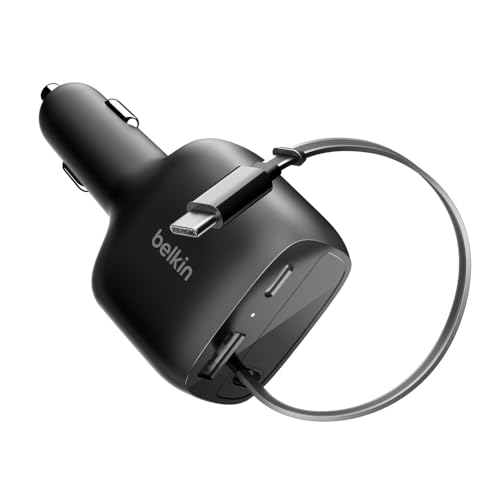
Belkin BoostCharge Pro Dual USB-C Car Charger 45W
Two USB-C ports with PPS support give both passengers modern fast charging, rather than one strong port and one afterthought. Split evenly, each settles near 20W, still enough for a quick refill. An LED ring confirms power flow even in a dark footwell.
Pros
- PPS suits recent Samsung and Pixel phones
- Both ports match in quality
- LED ring shows power status clearly
Cons
- Combined output caps single device peak
- Sits proud of the socket more than the Anker

Ugreen 63W Dual Port Car Charger
A 30W USB-C output sits beside a USB-A port here, enough for a phone plus a dash cam or headphones running together. Build quality beats generic listings, with a metal ring and a firm socket grip. Owners report it stays seated over rough roads instead of working loose.
Pros
- Strong output for the price
- Firm grip even in worn sockets
- Handles a phone plus accessory well
Cons
- Runs noticeably warm under full load
- No PPS support on the USB-A side

Scosche PowerVolt PD30 USB-C Car Charger
Nothing but a single 30W USB-C port, which suits anyone charging only one phone at a time. Scosche keeps the housing tiny, so it disappears into a centre console socket. Based on specifications, it should run a modern iPhone or Pixel close to peak speed.
Pros
- Full 30W reaches one device
- Nearly invisible once installed
- No port confusion to worry about
Cons
- Charges only one device at a time
- No USB-A port for older accessories

Spigen ArcStation Car Charger PC2100
Recessed 12V sockets, common in compact cars, reject longer chargers, and this one was designed around that limit. Dual ports cover a phone and a passenger’s device together. Output trails the Anker, but the fit problem it solves is real in many small cars.
Pros
- Fits recessed and shallow sockets
- Sits nearly flush against the dash
- Packs two ports into a small body
Cons
- Lower peak output than rivals
- Flush design makes removal fiddly

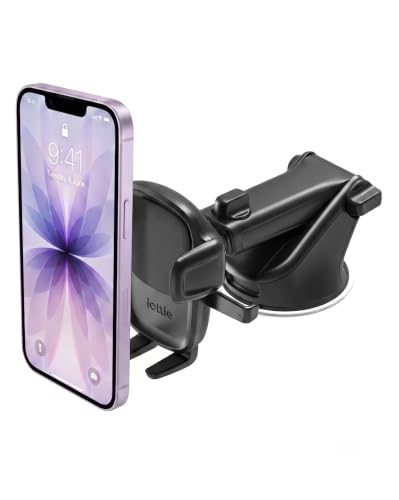
iOttie Easy One Touch Wireless 2 Car Mount Charger
A telescoping dash or vent mount combines with 10W Qi charging here, so navigation duty stops draining the battery. One touch arms clamp around the phone with a single push, useful when pulling away quickly. Wireless charging trails cable speed, so treat it as a top up rather than a rapid refill.
Pros
- Holds and charges from one unit
- Releases the phone with one hand
- Telescoping arm reaches most mounting spots
Cons
- Wireless output slows under navigation load
- Thick cases can block coil alignment

Nekteck 45W USB-C Car Charger
A captive cable removes any doubt about whether a loose cable is the bottleneck, paired with a 45W USB-C port. Anyone who has burned through generic cables gains from that certainty. The fixed lead is also its weak point, since damage means replacing the whole charger.
Pros
- Cable and charger are matched for speed
- Enough power for small laptops
- No loose lead to misplace
Cons
- Captive cable cannot be swapped out
- Charges only one device at a time
Side by side
| # | Model | Total output | Best for | Score | Price |
|---|---|---|---|---|---|
| 1 | Anker 535 Car Charger (67W) | 67W combined | Best overall | 9.4 | Check price |
| 2 | Belkin BoostCharge Pro Dual USB-C Car Charger 45W | 45W combined | Best for two fast charging phones | 9.2 | Check price |
| 3 | Ugreen 63W Dual Port Car Charger | 63W combined | Best value | 9.0 | Check price |
| 4 | Scosche PowerVolt PD30 USB-C Car Charger | 30W | Best budget | 8.8 | Check price |
| 5 | Spigen ArcStation Car Charger PC2100 | 40W combined | Best for tight console sockets | 8.6 | Check price |
| 6 | iOttie Easy One Touch Wireless 2 Car Mount Charger | Qi wireless up to 10W | Best for mounting and charging together | 8.3 | Check price |
| 7 | Nekteck 45W USB-C Car Charger | 45W | Best for single port simplicity | 8.0 | Check price |
Common questions
Will a higher wattage car charger damage my phone?
No. A phone negotiates the power it accepts through USB Power Delivery, so a 67W charger only supplies what the phone requests. Extra wattage simply gives headroom for a tablet or second device.
Why does my phone charge slowly in the car?
The usual causes are a cable rated for low current, a USB-A port instead of USB-C, or a phone throttling because it got hot from sun or navigation. Swapping to a USB-C to USB-C cable rated for Power Delivery fixes most cases.
Can a car charger drain my battery when the engine is off?
Most cars cut power to the 12V socket with the ignition off, but some keep it live. If yours stays powered, unplug the charger overnight, since even a small idle draw adds up over days of parking.
Do I need PPS support for fast charging?
Only if you own a recent Samsung Galaxy or Google Pixel, since both use PPS for their fastest charging. iPhones do not use it, so a standard Power Delivery charger already covers them.
Is wireless charging in the car worth it?
It suits navigation, since the phone sits mounted and topped up without a cable in the way. Charging speed trails a cable connection, though, so pick cable charging when a short drive needs a fast refill.
Can a car charger run a laptop?
A 45W or higher USB-C port keeps a small ultrabook alive and charges it slowly. Larger laptops requesting 65W or more will still run down in use, so check the laptop’s rated input first.
Do I need a special cable for fast charging?
Yes, in practice. Many bundled cables only carry low current. Fast charging needs a USB-C to USB-C cable rated for at least 60W, or a USB-C to Lightning cable for older iPhones.
What does the LED on a car charger actually tell me?
It confirms the socket is live and the charger is receiving power, nothing more. Check the phone’s own charging indicator to confirm it is actually fast charging.
Is USB-C better than USB-A in a car charger?
USB-C generally wins, since it carries higher wattage and supports Power Delivery and PPS. USB-A still works for older accessories and Quick Charge devices, so a mixed port charger covers both cases.
The bottom line
Anker 535 Car Charger is the sensible default for most drivers, with real 45W on USB-C and a metal body built for a hot cabin. Households charging two phones fast should pick Belkin BoostCharge Pro Dual USB-C 45W instead. Ugreen 63W Dual Port Car Charger covers similar ground for less outlay.
Marcus Chen
Marcus covered consumer electronics for enthusiast tech publications for six years before joining ChoiceCrest. He specializes in translating manufacturer spec sheets into plain-language buying advice, with a focus on audio, computing accessories and smart-home gear.