Car Camping Mattresses: Foam, Air, or Self-Inflating?
REI’s Co-op Camp Bed 4.0 suits most car campers with thick self-inflating foam, the Exped MegaMat Duo 15 fits couples needing a wider shared surface, and the Coleman Queen Airbed offers a lower-cost option for occasional trips. Setup time and available floor space should drive the final choice.
REI’s Co-op Camp Bed 4.0 fits most car campers who want foam comfort without a separate pump, since its valve self-inflates to 4 inches in a few minutes. The tradeoff is a bulkier roll than any air mattress on this list.
Car camping mattresses trade pack weight for comfort because they ride in a vehicle instead of a backpack, so we compared thickness, surface texture, and setup effort rather than ounces, weighing owner feedback on durability alongside published specs.
The shortlist, ranked

REI Co-op Camp Bed 4.0
A self-inflating valve pulls this pad up to 4 inches of foam cushioning within a few minutes, no separate pump required. Brushed polyester on top grips sleeping bags better than the slick face on most air mattresses. Solo campers or couples in a single tent get consistent support night after night.
Pros
- Self-inflates without a pump
- Foam core holds shape better than air alone
- Non-slip surface keeps sleeping bags in place
Cons
- Packs bulkier than a standalone air mattress
- Weighs more than backpacking-style pads

Exped MegaMat Duo 15
Two campers share this mattress without sliding toward a center gap, since it spans nearly 58 inches wide. A 6-inch foam core resists bottoming out under hip and shoulder pressure across multiple camping seasons. A topping valve lets sleepers dial in extra firmness after the initial self-inflation.
Pros
- Wide surface comfortably fits two sleepers
- Thick foam core resists bottoming out
- Durable enough for repeated seasonal use
Cons
- Packed size demands real trunk space
- Heavier than any single-width pad on this list

Coleman Queen Airbed with Built-In Pump
Plug this Coleman airbed into a car outlet or portable battery and its built-in pump fills the full queen mattress in minutes. Garage storage space matters more here than packed size inside a vehicle. Between camping trips, the same mattress works as a spare bed for houseguests.
Pros
- Built-in pump skips a separate device
- Queen size fits larger tents comfortably
- Doubles as a home guest bed off-season
Cons
- Ground debris can puncture the air chambers
- Needs a power source before it holds any air

Therm-a-Rest MondoKing 3D
Reinforced fabric on the underside shrugs off abrasion from rocky or uneven campsite ground. Triangular foam coring inside adds support along the edges, where cheaper pads tend to compress unevenly. Campers who pitch tents on gravel pads or rough forest floor gain the most from this build.
Pros
- Reinforced bottom resists ground abrasion
- Edge support prevents uneven compression
- Reliable self-inflating valve
Cons
- Costs more than basic self-inflating pads
- Still needs a few manual breaths to fully top off

Lightspeed Outdoors 2-Person Air Mattress
An attached inflatable pillow section cuts one more item from the packing list. Width is sized to match a typical two-person tent floor, so sleepers do not roll toward gaps along the tent walls. Manual pumping takes more effort than a self-inflating valve, but the price stays well below foam options.
Pros
- Attached pillow means one less item to pack
- Sized to match common tent footprints
- Costs less than premium foam pads
Cons
- Some versions need a pump sold separately
- Air-only design insulates less than foam
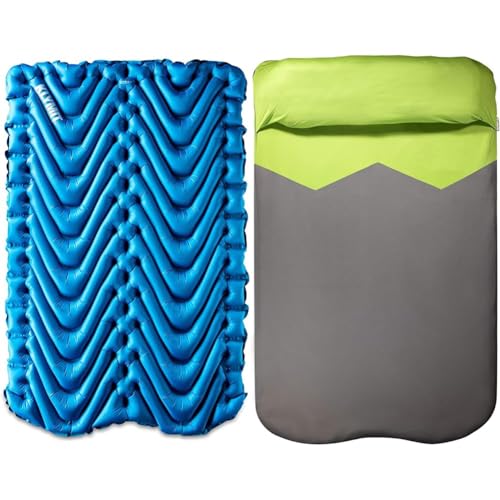
Klymit Insulated Double V
Synthetic fill inside this double-wide pad blocks heat loss to the ground, a real factor during shoulder-season or high-elevation trips. V-shaped internal chambers stop air from shifting into cold pockets overnight. Packed size stays smaller than any foam pad on this list, though setup takes a manual valve and lung power.
Pros
- Insulation cuts ground cold transfer
- V-chamber layout limits cold air pooling
- Packs smaller than foam alternatives
Cons
- Manual inflation takes more effort than self-inflating pads
- Feels less plush than thick foam options

Intex Dura-Beam Queen Airbed
Internal fiber beams replace old-style air coils, so the sleeping surface stays flatter than bump-style air mattresses. Most versions ship with a built-in pump for quick setup at a campsite or at home. Occasional campers get a low-cost backup mattress without paying for a foam pad they rarely use.
Pros
- Flatter surface than older air mattress designs
- Affordable for occasional campers
- Built-in pump on most versions
Cons
- Wears out faster than foam pads over many trips
- Provides little insulation from cold ground
How to choose
What to look for in a car camping mattress Pack weight matters less here than in backpacking, so prioritize thickness, surface texture, and setup time instead. A self-inflating valve expands a pad on its own, while a full air mattress needs a pump, built-in or separate, to reach firm support.
Foam vs air vs self-inflating pads Foam-only pads hold their shape night after night but roll up bulkier for the trunk. Air mattresses pack down small and inflate taller, though punctures and heat loss are bigger risks. Self-inflating pads split the difference, pairing a foam core with air for faster setup than pure foam.
Which mattress works best for couples and larger tents Double-width options like the Exped MegaMat Duo 15 or Klymit Insulated Double V give two sleepers a shared surface without a center gap. Measure your tent floor before buying, since a 58-inch mattress can overhang the walls of a snug two-person tent.
Best setup for cold weather or rough ground An R-value rating signals how well a pad blocks heat loss to frozen or damp ground during shoulder-season trips. Reinforced bottom fabric, like the layer on the Therm-a-Rest MondoKing 3D, resists punctures on gravel or rocky campsites better than standard air mattress material.
Side by side
| # | Model | Thickness | Best for | Score | Price |
|---|---|---|---|---|---|
| 1 | REI Co-op Camp Bed 4.0 | 4 inches | Best overall | 9.4 | Check price |
| 2 | Exped MegaMat Duo 15 | 6 inches | Best for couples | 9.1 | Check price |
| 3 | Coleman Queen Airbed with Built-In Pump | Queen | Best budget | 8.8 | Check price |
| 4 | Therm-a-Rest MondoKing 3D | 4 inches | Best for durability | 8.6 | Check price |
| 5 | Lightspeed Outdoors 2-Person Air Mattress | 2-person | Best for tent floor coverage | 8.4 | Check price |
| 6 | Klymit Insulated Double V | Double, approx. 47 inches | Best for cold-weather car camping | 8.2 | Check price |
| 7 | Intex Dura-Beam Queen Airbed | Queen | Best for occasional or backup use | 8.0 | Check price |
Questions worth asking
What is the best mattress for car camping?
Self-inflating foam pads like the REI Co-op Camp Bed 4.0 balance comfort, durability, and quick setup better than basic air mattresses for most car campers.
Air mattress vs self-inflating pad, which is better for camping?
Air mattresses pack smaller and feel plush at full inflation, but self-inflating pads hold their shape and insulation more reliably across a multi-night trip.
How thick should a car camping mattress be?
Four inches suits most car campers, while couples or side sleepers often prefer six inches for extra cushioning against hip pressure.
Do car camping mattresses need a pump?
Self-inflating pads need only the internal valve opened, sometimes topped off with a few manual breaths. Full air mattresses usually need a built-in or separate pump to reach firm inflation.
Can a car camping mattress fit two people?
Double-width mattresses like the Exped MegaMat Duo 15 or Lightspeed 2-Person model are sized for two sleepers in a shared tent.
How do you keep a camping mattress warm on cold ground?
Look for an insulated pad with an R-value rating, or place a foam pad underneath an air mattress to add a barrier against ground cold.
Are foam camping mattresses more durable than air mattresses?
Foam and self-inflating pads generally resist punctures better since they do not rely solely on trapped air, holding up across repeated rocky or uneven campsites.
What size mattress fits a standard car camping tent?
Most two-person tents fit a single 25 to 30 inch wide pad or a double-width mattress up to about 58 inches, so check your tent floor dimensions before buying.
Is a self-inflating pad worth the extra cost over a basic air mattress?
For frequent car campers, yes, since the foam core resists punctures and holds shape longer than an air-only mattress used every weekend.
Our take
REI’s Co-op Camp Bed 4.0 remains the pick for solo campers and couples who want quick setup without giving up foam comfort. Couples who need more shared width should size up to the Exped MegaMat Duo 15 instead. Campers heading out only once or twice a year can skip the premium pad and save with the Coleman Queen Airbed.
Sierra Daniels
Sierra's background is in landscape design and nursery retail. She focuses on lawn and garden equipment, outdoor furniture and gear durability, weighing published specs against how materials actually hold up outside.