Outdoor Tents Compared for Wind, Rain and Setup
The Coleman Skydome 6-Person leads for family camping, with fast setup and solid weather protection. Backpackers get more from the MSR Hubba Hubba 2-Person and its pole strength. Tight budgets are covered well by the ALPS Mountaineering Lynx 2 instead.
An exposed family site calls for the Coleman Skydome 6-Person first, since it pitches fast and its taped seams handle a wet night without drama. Backpackers should look at the MSR Hubba Hubba 2-Person for pole strength and low weight. Tight budgets are served well by the ALPS Mountaineering Lynx 2 instead.
Tents resist easy comparison, since a capacity rating can mean a palace or a squeeze, and a high waterproof number means little without taped seams. We compared hydrostatic head, seam sealing, aluminum against fiberglass poles, vestibule and floor dimensions, and packed weight against how far you would actually carry it.
The top picks, ranked

Coleman Skydome 6-Person Tent
Pre attached hubbed poles cut setup to a few minutes, which matters arriving at a dark, rainy site. Steeper walls than a classic dome add real interior space for the same footprint. Owners report the welded floor and inverted seams keep water out through sustained rain.
Pros
- Pitches far faster than a classic dome
- Steep walls add usable interior space
- Reliable in sustained rain
Cons
- Fiberglass poles weigh more than aluminum
- Large packed size for the car trunk

MSR Hubba Hubba 2-Person Tent
This tent set the standard for lightweight freestanding shelters, pairing strong aluminum poles with fabric built for real mountain weather. Two doors and two vestibules mean neither camper climbs over the other. A taut pitch keeps it quiet and dry in wind, according to owner reports.
Pros
- Excellent strength for the weight
- Two doors and vestibules
- Pitches taut and stays quiet in wind
Cons
- Expensive for occasional use
- Tight for two large sleeping mats

NEMO Aurora 3P Tent
Extra headroom and larger vestibules than most three person tents turn a wet afternoon tolerable instead of miserable. An included footprint saves a separate purchase. Small ceiling light pockets get used every night, according to owners.
Pros
- Generous headroom and vestibules
- Footprint included
- Thoughtful interior storage
Cons
- Heavier than minimalist backpacking tents
- Bulkier packed size
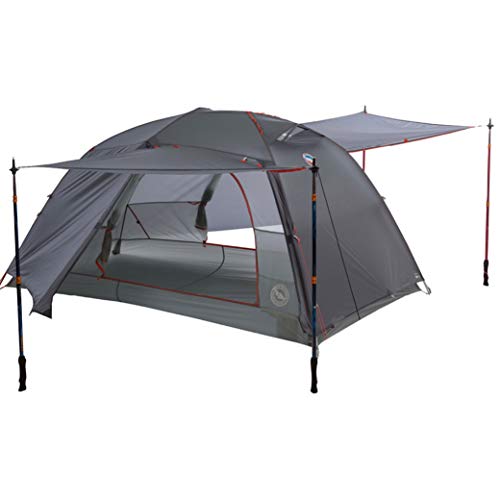
Big Agnes Copper Spur HV UL2
Steep, high volume walls give this tent interior space that outsizes its weight, a trade off ultralight tents usually botch. Aluminum hubbed poles and light fabric keep pack weight down for long trips. Thin fabrics need a footprint and a careful pitch site, owners report.
Pros
- Very light for a freestanding two person tent
- Steep walls maximise interior space
- Two doors and vestibules
Cons
- Lightweight fabrics need careful handling
- Footprint sold separately

Marmot Tungsten 2P Tent
A full coverage fly, taped seams and a robust pole set suit campers who face changeable weather rather than count grams. An included footprint is unusual at this price. It handles rain and wind noticeably better than budget tents at a similar weight, per owner reports.
Pros
- Strong weather protection
- Footprint included
- Durable fabrics for the weight
Cons
- Heavier than ultralight rivals
- Interior is snug for two large campers

Kelty Late Start 2 Tent
Pre bent poles and color coded clips make this a genuinely quick pitch, even for a first timer. The fly extends far enough to create a usable vestibule for boots and packs. Owners call it a sensible first backpacking tent for weekend trips.
Pros
- Very quick and intuitive pitch
- Usable vestibule for gear
- Good value aluminum poles
Cons
- Only one door
- Ventilation is limited in humid conditions

ALPS Mountaineering Lynx 2 Tent
Aluminum poles set this tent apart at a price where rivals fit fiberglass. That metal bends rather than shattering in wind. A full fly creates a vestibule at each door, and owners call it tougher than its price suggests.
Pros
- Aluminum poles at a budget level
- Two doors and vestibules
- Tough enough for regular use
Cons
- Heavy for backpacking
- Ventilation could be better
How they stack up
| # | Model | Capacity | Best for | Score | Price |
|---|---|---|---|---|---|
| 1 | Coleman Skydome 6-Person Tent | 6 people | Best overall for families | 9.4 | Check price |
| 2 | MSR Hubba Hubba 2-Person Tent | 2 people | Best for backpacking | 9.2 | Check price |
| 3 | NEMO Aurora 3P Tent | 3 people | Best for comfort | 9.0 | Check price |
| 4 | Big Agnes Copper Spur HV UL2 | 2 people | Best ultralight | 8.8 | Check price |
| 5 | Marmot Tungsten 2P Tent | 2 people | Best all round backpacking value | 8.6 | Check price |
| 6 | Kelty Late Start 2 Tent | 2 people | Best for quick setup | 8.3 | Check price |
| 7 | ALPS Mountaineering Lynx 2 Tent | 2 people | Best budget | 8.0 | Check price |
How to choose
How should you read a tent’s capacity rating? As a maximum, not a comfort level. Manufacturers count how many sleeping mats fit side by side with zero space left over. A two person tent holds two people and little else. Size up by one if you want room for packs and space to sit up. Car campers who do not carry the weight can size up two and gain real comfort.
Does a high waterproof rating actually mean a dry tent? Not by itself. Hydrostatic head numbers measure fabric pressure resistance, but a tent leaks at its weakest seam. Taped or welded seams, a bathtub floor running several inches up the walls, and a fly reaching close to the ground matter more than the number on the label. A modest rating with excellent construction beats a big number with poor construction, in real rain.
Are aluminum tent poles worth the extra cost? Usually, yes. Fiberglass poles cost less and hold up fine on calm summer nights, but they splinter when they fail and cannot be field repaired. Aluminum bends instead, holds a taut pitch longer, and lasts for many more seasons. Exposed sites or shoulder season trips make pole material the spec that most decides whether a tent survives a bad night.
How do you stop condensation instead of just blaming rain? Most reported leaks are actually condensation, formed when warm breath meets cold fly fabric. Double wall tents, with a separate inner and fly, manage this far better than single wall designs. High and low vents help move air through. Leave a vent cracked even on cold nights, and pitch with a gap between inner and fly.
Questions worth asking
What waterproof rating do you need in a tent?
About 1500mm hydrostatic head handles typical rain, and 3000mm or higher suits sustained downpours on exposed sites. Seam sealing and a well cut fly matter just as much as the number itself.
Is a tent footprint worth buying?
Generally yes. A footprint protects the floor from abrasion and punctures, the most common way a tent fails, and adds a little insulation. Some tents include one, and a cut sheet of polycryo works as a lighter, cheaper alternative.
Should you choose a freestanding or non freestanding tent?
Freestanding tents stand without stakes, which helps on rock, sand or hard ground and suits beginners. Non freestanding designs save weight but demand good pitching technique and reliable stake placement.
How do you stop condensation from forming inside a tent?
Ventilate constantly. Open high and low vents even in cold weather, skip cooking inside, and keep wet gear in the vestibule rather than the inner tent. Pitch somewhere air moves rather than in a still hollow.
How many people actually fit in a four person tent?
Comfortably, two adults plus gear. Four adults fit shoulder to shoulder with packs stored in the vestibule instead of inside. Family campers usually do better sizing up to a six person tent for four people.
Can you use a three season tent through winter?
It handles cold nights but not snow loading or strong winter wind, since mesh panels and lighter poles are not built for it. Four season tents use stronger poles, less mesh and steeper walls to shed snow.
How should a tent be stored between camping trips?
Completely dry and loosely packed, never compressed long term in its stuff sack. Damp storage causes mildew that permanently damages the waterproof coating, the single most common reason a tent starts leaking.
How long should a well made tent actually last?
Many seasons with care, though the fly coating usually degrades before the fabric wears through. Ultraviolet exposure is the main enemy, so avoid leaving a tent pitched in full sun for weeks at a stretch.
The verdict
A family site calls for the Coleman Skydome 6-Person, since it pitches fast and keeps water out when weather turns. Backpackers get more from the extra spent on the MSR Hubba Hubba 2-Person, for its pole strength and low weight. The ALPS Mountaineering Lynx 2 delivers aluminum poles on a tight budget instead.
Derek Holt
Derek has a background coaching recreational and amateur athletes and has worked the sales floor at specialty fitness retailers. He focuses on equipment durability, ergonomics and realistic use cases rather than marketing claims.


