Camp Stoves Built for Week-Long Trips, Not Weekends
For long camping trips, the Camp Chef Everest 2X High Pressure 2 Burner Stove leads on heat output and wind resistance for full camp kitchens. The Coleman Classic Propane Camp Stove costs less and still handles a week of cooking. Solo travelers save pack weight with the GSI Outdoors Pinnacle Camp Stove.
The Camp Chef Everest 2X High Pressure 2 Burner Stove suits car campers cooking full meals across several days, backed by 40,000 BTU combined output and a wind-resistant burner design. Its 14 pound weight makes it a poor match for anyone hiking in on foot.
Long trips push fuel type, burner count, and weight in different directions, so no single stove wins every category. We compared listed BTU output, fuel compatibility, and owner feedback on durability across car camping, group trips, and multi-day hikes.
The top picks, ranked

Camp Chef Everest 2X High Pressure 2 Burner Stove
Two independently controlled burners reach 20,000 BTU each, fast enough to boil water or hold a steady simmer for sauces. A three-sided wind block and cast aluminum burner heads keep the flame steady in open, breezy campsites. Base camp cooks appreciate the 14 pound build for car camping over several days.
Pros
- High-pressure regulator holds output steady in cold weather
- Wind block shields the flame during exposed camp cooking
- Simmer control handles sauces and slow-cooked meals well
Cons
- Weight and size rule out backpacking trips
- Requires a hose adapter to run off a standard propane tank
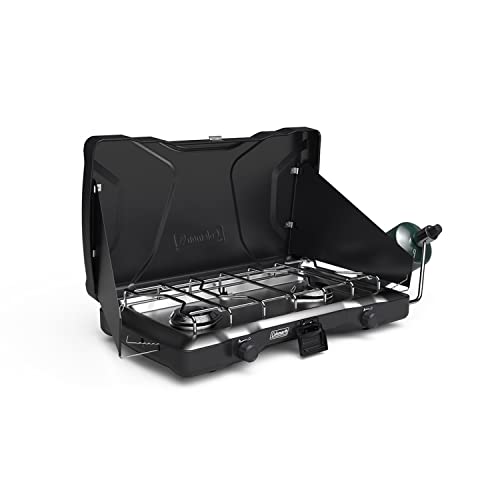
Coleman Classic Propane Camp Stove (2-Burner)
Two burners share 20,000 BTU combined, enough to run a coffee pot and a skillet side by side. Wind guards on three sides shield the flame on breezy mornings. Pressure control technology keeps the flame consistent as the canister empties.
Pros
- Lower cost keeps it accessible for occasional long trips
- Pressure control burner holds flame steady as fuel runs low
- Two burners cover breakfast and dinner prep at once
Cons
- Combined output trails high-pressure two-burner stoves
- Folds into a wide, bulky footprint for packing

GSI Outdoors Pinnacle Camp Stove
A single burner draws 9,000 BTU from a threaded isobutane canister, enough to boil a liter of water in a few minutes. Folding pot supports and a piezo igniter keep setup simple at camp. At 5.5 ounces, it barely registers in a pack built for multi-day hiking.
Pros
- Push-button piezo ignition skips the need for matches
- Packed weight barely affects overall trip load
- Folding pot supports store flat for easy packing
Cons
- Single burner limits cooking to one pot at a time
- Isobutane canisters can be harder to find in remote towns
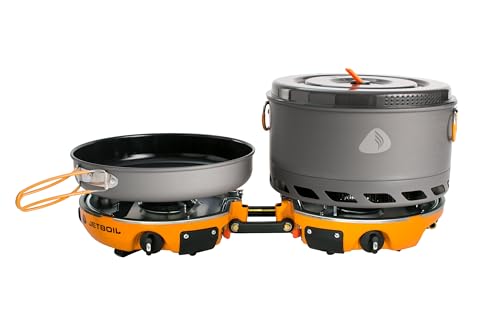
Jetboil Genesis Basecamp System
Two burners connect through a shared hose, so one canister feeds both while cooking for a group. Each burner reaches 10,000 BTU, enough to run a pot and a pan at once. Jetboil FluxRing cookware pairs with the system for quicker heat transfer.
Pros
- Shared fuel line reduces canisters needed for group meals
- Compatible with Jetboil FluxRing pots for quicker boiling
- Two burners let a group cook a main and a side together
Cons
- Costs more than standalone two-burner propane stoves
- Setup takes longer than single-unit stoves

MSR WhisperLite Universal Multi-Fuel Stove
This burner runs on white gas, kerosene, or a screw-on canister, so fuel choice adapts to what is available on a long route. Output adjusts between roughly 6,500 and 10,000 BTU depending on fuel and altitude. A field cleaning cable clears the jet without extra tools.
Pros
- Multi-fuel design keeps cooking running when canisters run out
- Field-serviceable jet lowers the risk of a trip-ending clog
- Works reliably at altitude where canister stoves lose pressure
Cons
- Liquid fuel modes need priming before reaching full flame
- Single burner slows meal prep for more than two people

Primus Onja Stove
A wide burner head spreads 8,500 BTU evenly under the pot, cutting hot spots during simmering. Fold-out pot supports steady wider cookware than most canister stoves. Folded down to 12.7 ounces, it fits a jacket pocket on multi-day hikes.
Pros
- Wide burner head reduces scorching on simmered meals
- Compact folded size suits multi-day hiking trips
- Pot supports steady cookware wider than the burner base
Cons
- No windscreen included in the base package
- Only supports one pot at a time

Coleman Cascade 3-in-1 Propane Camp Stove
Swappable plates turn one base into a burner, griddle, or grill, useful for rotating meals across a longer trip. The single open burner puts out 12,000 BTU for boiling or frying. At 13 pounds, it travels best by vehicle rather than on foot.
Pros
- Interchangeable plates add variety to multi-day camp meals
- Griddle plate handles pancakes and eggs without extra cookware
- Grill plate works for meats without a separate cook set
Cons
- Only one open burner works at a time
- Heavier and bulkier than dedicated two-burner stoves
How they compare
| # | Model | Burner count | Best for | Score | Price |
|---|---|---|---|---|---|
| 1 | Camp Chef Everest 2X High Pressure 2 Burner Stove | 2 | Best overall | 9.4 | Check price |
| 2 | Coleman Classic Propane Camp Stove (2-Burner) | 2 | Best value | 9.1 | Check price |
| 3 | GSI Outdoors Pinnacle Camp Stove | 1 | Best budget | 8.8 | Check price |
| 4 | Jetboil Genesis Basecamp System | 2 (connected by hose) | Best for group cooking | 8.6 | Check price |
| 5 | MSR WhisperLite Universal Multi-Fuel Stove | 1 | Best for extended fuel efficiency | 8.3 | Check price |
| 6 | Primus Onja Stove | 1 | Best for backpacking | 8.1 | Check price |
| 7 | Coleman Cascade 3-in-1 Propane Camp Stove | 1 burner plus griddle and grill plates | Best for versatile cooking | 8.0 | Check price |
How to choose
Matching Stove Type to Trip Length Weekend trips rarely demand the same stove as a week in the backcountry. Car campers can bring a two-burner propane stove like the Camp Chef Everest 2X without worrying about pack weight. Backpackers covering several days need something closer to the Primus Onja or MSR WhisperLite Universal. Distance from a vehicle, more than trip length alone, decides which category fits best.
Which Fuel Type Works Best for Multi-Day Cooking? Propane canisters stay cheap and easy to find near campgrounds, which suits stoves like the Coleman Classic. Isobutane canisters weigh less but get harder to source outside outdoor retailers. Multi-fuel stoves such as the MSR WhisperLite Universal switch between white gas, kerosene, and canisters, useful on routes far from resupply points. Cold weather also favors liquid fuel, since canister blends lose pressure below freezing.
Cooking for a Group Versus Traveling Solo Feeding four or more people works better with two connected burners, like the Jetboil Genesis Basecamp System. Solo hikers gain more from a lightweight single burner such as the GSI Outdoors Pinnacle. One canister or tank can feed multiple burners on a group stove, cutting fuel carried per person. Matching burner count to group size avoids a line forming at the cook station.
Handling Wind, Altitude, and Simmer Control Open campsites expose a flame to gusts that pull heat away from the pot. Wind blocks on stoves like the Camp Chef Everest 2X and Coleman Classic hold a steadier flame in those conditions. Higher elevations thin canister pressure, so high-pressure regulators or liquid fuel stoves perform more consistently above treeline. Simmer control also matters for sauces and rice, not only for boiling water.
Frequently asked questions
What is the best camping stove for a week-long trip?
The Camp Chef Everest 2X High Pressure 2 Burner Stove handles a week of daily cooking well. Its 40,000 BTU combined output and wind block keep meals consistent from the first day to the last.
How many BTUs does a camping stove need to boil water quickly?
Around 9,000 to 12,000 BTU brings a liter of water to a boil within a few minutes. The GSI Outdoors Pinnacle and Coleman Cascade both fall in that range.
Can a backpacking stove work for car camping too?
Yes, a single-burner stove like the Primus Onja works fine at a car campsite. It cooks one pot at a time, which slows meal prep for larger groups.
Is propane or isobutane better for cold weather camping?
Isobutane blends lose pressure as temperatures drop below freezing. Propane and multi-fuel options like the MSR WhisperLite Universal hold steadier output in cold conditions.
Which camping stove works best for cooking for a group?
The Jetboil Genesis Basecamp System suits groups well. Its two burners share one fuel line and can run a pot and a pan at the same time.
Does a multi-fuel stove work better than propane on long trips?
Multi-fuel stoves like the MSR WhisperLite Universal help on routes far from towns, since they burn white gas or kerosene once canisters run out. Propane stoves stay simpler for trips near reliable fuel stops.
How much propane do I need for a 5-day camping trip?
A single 1 pound propane canister typically covers about 2 to 3 days of moderate two-burner cooking. A 5-day trip usually needs two canisters or a larger refillable tank with an adapter.
What is the difference between a two-burner stove and a backpacking stove?
Two-burner stoves like the Coleman Classic run higher combined BTU output but weigh 10 pounds or more. Backpacking stoves such as the GSI Outdoors Pinnacle weigh under a pound but cook one pot at a time.
Is a 3-in-1 stove worth it for camp cooking?
The Coleman Cascade swaps between a burner, griddle, and grill plate, which adds variety for longer trips. Only one plate runs at a time, so it suits solo or two-person meals more than large groups.
Final word
The Camp Chef Everest 2X High Pressure 2 Burner Stove takes the top spot for long trips, pairing 40,000 BTU combined output with wind resistance and steady simmer control. Anyone hiking in on foot should skip the extra weight and choose the Primus Onja instead, since it packs down to under 13 ounces. Groups cooking multiple dishes at once get more use out of the Jetboil Genesis Basecamp System.
Sierra Daniels
Sierra's background is in landscape design and nursery retail. She focuses on lawn and garden equipment, outdoor furniture and gear durability, weighing published specs against how materials actually hold up outside.


