How to Pick a Camera Lens for the Shots You Actually Take
Sony’s FE 24-70mm f/2.8 GM II is the sharpest all-round zoom for full-frame shooters, according to specifications and owner reports. Sigma’s 18-50mm f/2.8 DC DN is the best value pick for APS-C bodies, and Canon’s RF 50mm f/1.8 STM is the cheapest way to brighter, blurrier photos on an EOS R body.
Sony’s FE 24-70mm f/2.8 GM II leads this list for full-frame versatility, while Sigma’s 18-50mm f/2.8 DC DN wins on value for APS-C shooters. Canon’s RF 50mm f/1.8 STM remains the simplest upgrade for anyone starting on a budget mirrorless kit.
Lens shopping gets complicated fast, since mount, sensor size and focal length all must align before optics even enter the picture. We compared published aperture, stabilization, minimum focus distance and weight, then checked what owners report about autofocus reliability and edge sharpness in daily use.
Our top picks

Sony FE 24-70mm f/2.8 GM II
A constant f/2.8 aperture holds steady across the most-used zoom range for everyday and professional work. Sony cut significant weight versus the first-generation version, which owners say matters on long shooting days. Linear autofocus motors track quickly for both stills and video.
Pros
- Sharp from corner to corner through the zoom
- Notably lighter than the original GM version
- Fast, near-silent linear autofocus motors
Cons
- Premium price puts it out of reach for casual shooters
- Relies on in body stabilization since it lacks optical IS

Sigma 18-50mm f/2.8 DC DN Contemporary
A constant f/2.8 aperture fits into a compact APS-C body lighter than many kit lenses. Sony E, Fujifilm X and L mount versions cover most crop-sensor systems. Owners report it delivers the biggest image-quality jump available from a bundled 18-55mm kit lens.
Pros
- Constant f/2.8 in a genuinely pocketable size
- Close minimum focus distance for detail shots
- Costs far less than first party equivalents
Cons
- No optical stabilization built in
- Zoom range falls short for distant subjects

Canon RF 50mm f/1.8 STM
This compact nifty fifty is the cheapest route to shallow depth of field on an EOS R body. A quiet STM motor suits video work as well as stills. Based on specifications, it gathers roughly two and a half stops more light than a typical kit zoom at the same focal length.
Pros
- Affordable entry into fast prime glass
- Small and light enough to leave mounted
- Pleasing background blur for portraits
Cons
- Plastic mount reflects its budget build
- Fixed focal length means zooming with your feet

Tamron 28-75mm f/2.8 Di III VXD G2
A lighter, cheaper alternative to first-party f/2.8 zooms covers Sony E and Nikon Z full-frame bodies. The VXD linear motor focuses fast and stays nearly silent during video. Owners report focus breathing is better controlled than on the original G1 version.
Pros
- Strong optics well under first party pricing
- Quiet autofocus suits video recording
- Useful close focus at the wide end
Cons
- Starts at 28mm rather than a true 24mm wide
- Manual focus ring feels less refined
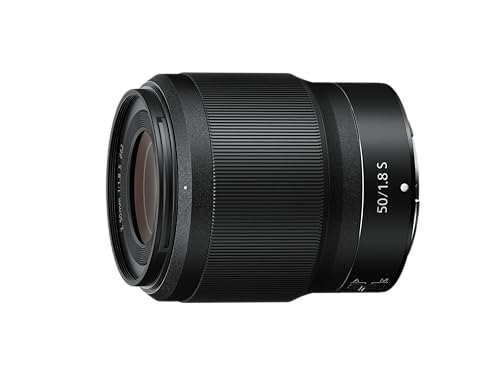
Nikon NIKKOR Z 50mm f/1.8 S
Nikon’s S-line standard prime performs sharply even wide open at f/1.8. A larger body than most fifties reflects an optical formula built for correction over compactness. Owners report clean rendering with minimal color fringing along high-contrast edges.
Pros
- Excellent sharpness at maximum aperture
- Weather sealed metal build
- Smooth, quiet stepping motor focus
Cons
- Larger and heavier than most 50mm primes
- Costs considerably more than entry level fifties

Sony FE 70-200mm f/4 G OSS II
Trading one stop of aperture for a lighter body makes this telephoto easier to handhold at events and outdoors. Optical stabilization helps at slower shutter speeds. Based on specifications, it focuses closer than most lenses in its class, opening near-macro framing.
Pros
- Light enough to carry all day at this reach
- Close focusing extends its usefulness
- Optical stabilization helps in dim venues
Cons
- f/4 limits low light and background separation
- Still bulkier than a standard zoom

Canon EF 50mm f/1.8 STM
This EF version of Canon’s nifty fifty remains a standard upgrade for anyone shooting a Rebel or older EOS DSLR. A metal mount and seven-blade aperture improve on the older Mark II design. It also adapts onto RF bodies if you later switch systems.
Pros
- One of the cheapest fast primes available
- Metal mount outlasts plastic competitors
- Adapts easily to Canon mirrorless bodies
Cons
- Autofocus hunts more in low light
- Edges look softer wide open than newer designs
How they stack up
| # | Model | Mount | Best for | Score | Price |
|---|---|---|---|---|---|
| 1 | Sony FE 24-70mm f/2.8 GM II | Sony E, full frame | Best overall | 9.4 | Check price |
| 2 | Sigma 18-50mm f/2.8 DC DN Contemporary | Sony E, Fuji X, L mount, APS-C | Best value | 9.2 | Check price |
| 3 | Canon RF 50mm f/1.8 STM | Canon RF, full frame | Best budget | 9.0 | Check price |
| 4 | Tamron 28-75mm f/2.8 Di III VXD G2 | Sony E and Nikon Z, full frame | Best for hybrid shooters | 8.8 | Check price |
| 5 | Nikon NIKKOR Z 50mm f/1.8 S | Nikon Z, full frame | Best for portraits | 8.6 | Check price |
| 6 | Sony FE 70-200mm f/4 G OSS II | Sony E, full frame | Best for reach | 8.3 | Check price |
| 7 | Canon EF 50mm f/1.8 STM | Canon EF, full frame | Best for DSLR owners | 8.0 | Check price |
How to choose
How to match a lens to your camera mount A lens only works if its mount fits your camera body, so start there before comparing optics. Sony E, Canon RF, Nikon Z, Fujifilm X and Micro Four Thirds are all separate physical fittings, and adapters help in limited directions. Confirm whether a lens targets full frame or APS-C, since a crop lens on a full frame body either vignettes heavily or forces a reduced-resolution crop mode.
What a wider aperture actually buys you A maximum aperture such as f/1.8 or f/2.8 lets in more light and produces stronger background blur. That helps in dim rooms and for portraits, though it adds glass, weight and cost. A constant f/2.8 zoom holds that aperture across its whole range, while a variable f/3.5 to f/5.6 kit lens dims as you zoom in, which is why full-zoom indoor shots often look blurry.
Prime lens vs zoom lens, which fits your shooting style Primes carry one focal length and tend to be sharper, lighter and brighter for the price. Zooms cover a range and spare you from swapping glass in tight spaces. Many owners land on one everyday zoom plus one fast prime rather than choosing a side. Events and travel favor the zoom, while portraits and low light favor the prime.
Do you need image stabilization, and does weight matter Optical stabilization inside a lens matters most for telephoto reach and for bodies without in body stabilization. Weight matters more than most buyers expect, since the sharpest lens left at home does nothing. Check filter thread size against any filters you already own, and check minimum focus distance if food, product or detail shots interest you.
Questions worth asking
What is the best all round camera lens to start with?
A fast standard prime around 35mm or 50mm is the usual first upgrade, since it costs little and performs far better in low light than a kit zoom. Shooters who need more range often pick a constant f/2.8 zoom like the Sigma 18-50mm or Tamron 28-75mm instead.
Will a third party lens hurt my image quality?
Not necessarily. Sigma, Tamron and Viltrox now build optics that compete closely with first party glass, and owners report autofocus has improved considerably on recent releases. Trade-offs usually show up in firmware update convenience and resale value, not raw sharpness.
Can I use a crop sensor lens on a full frame camera?
Usually yes, but the camera crops the image to avoid dark corners, reducing effective resolution. It works as a stopgap and disappoints as a permanent plan. A full frame lens, by contrast, works perfectly on a crop body, though the field of view narrows by the crop factor.
Do I need image stabilization in the lens itself?
It depends on your body. In body stabilization makes lens stabilization a bonus rather than a requirement at wide and standard focal lengths. Past 100mm, optical stabilization in the lens still noticeably improves handheld keeper rates.
What does a constant f/2.8 aperture actually mean?
The maximum aperture stays at f/2.8 no matter where the zoom sits. A variable aperture lens might start at f/3.5 wide and drop to f/5.6 zoomed in, roughly a stop and a half less light. Constant aperture zooms weigh more and cost more, but exposure stays predictable throughout the zoom.
Is a 50mm lens good for portraits?
On a full frame body, a 50mm gives natural headshots and half-body portraits with little distortion. The same lens frames tighter on APS-C, closer to a 75mm equivalent, which many photographers prefer for portraits. An 85mm remains the traditional choice for more compression.
How much should a first lens cost?
Spend enough to get a fast aperture and a mount matching your long-term system, and no more. Entry level primes deliver most of the visible improvement for a modest outlay, letting buyers save serious money for a professional zoom once they know which focal lengths they actually use.
Should I buy a used camera lens?
Lenses age well, so used glass is a reasonable buy if the elements are clean and the focus motor runs smoothly. Check for fungus, haze, scratched front elements and loose zoom rings. Optics change generation to generation slower than camera bodies, so a well-kept older lens can serve for a decade.
Sigma 18-50mm vs Tamron 28-75mm, which zoom is better?
The Sigma suits APS-C bodies and stays smaller and cheaper. The Tamron covers full frame bodies with a longer reach at the telephoto end, at a higher price and weight.
Our take
Sony’s FE 24-70mm f/2.8 GM II earns the top spot for anyone who wants one lens that handles nearly everything on a full frame body. Crop sensor shooters get most of that flexibility for far less from the Sigma 18-50mm f/2.8 DC DN. Beginners on Canon RF should start with the RF 50mm f/1.8 STM and learn which focal length they gravitate toward.
Marcus Chen
Marcus covered consumer electronics for enthusiast tech publications for six years before joining ChoiceCrest. He specializes in translating manufacturer spec sheets into plain-language buying advice, with a focus on audio, computing accessories and smart-home gear.
You might also need

How to Pick a 35mm Film Camera That Still Holds Up

How Often Should a Router Actually Be Restarted for Best Performance?

Action Camera Mounts That Actually Hold Firm in Any Situation
