Field Monitors for Checking Focus and Exposure On Set
The Atomos Ninja V stands out for combining a bright HDR screen with built-in ProRes RAW recording. Buyers who only need a monitor without recording should look at the SmallHD Focus Pro 7, while anyone on a tighter budget can get solid daylight visibility from the Feelworld Master MA7.
The Atomos Ninja V earns the top spot because it doubles as both a reference-quality monitor and a ProRes RAW recorder, cutting the need for a separate recording device. Its main limitation is a battery life that runs shorter than monitor-only competitors during long shoots. Buyers who only need monitoring, not recording, have lighter and cheaper options covered below.
We compared published brightness ratings, resolution, recording formats and mounting hardware rather than running our own on-set brightness testing.
How to choose
What a field monitor adds beyond the camera’s own screen Most camera LCDs are too small and too dim for confident focus and exposure checks outdoors. A dedicated field monitor adds size, brightness and tools like waveform, false color and focus peaking that many camera bodies lack natively. Some models, like the Atomos Ninja V, extend this further by recording directly from the monitor itself.
Monitor-only versus monitor-recorder designs A monitor-recorder like the Ninja V removes the need for a separate recording device, useful for cameras that output higher quality footage over HDMI than their internal card allows. Monitor-only designs, including the SmallHD Focus Pro 7 and Portkeys BM7 II, cost less and run lighter since they skip recording hardware entirely. Buyers who already own a capable recorder, or whose camera’s internal recording is sufficient, gain little from paying for recording features twice.
Brightness and size for different shooting environments Outdoor and daylight shooting demands brightness above 1000 nits, found on the Ninja V, SmallHD Focus Pro 7, Portkeys BM7 II and SmallHD Indie 7. Indoor or controlled lighting setups can use lower-brightness monitors like the Feelworld Master MA7 without a visible downside. Larger 7 inch screens suit camera operators checking focus closely, while compact 5 to 5.5 inch monitors like the Desview R6 II fit gimbal and handheld rigs better.
Matching a monitor to the crew role using it Colorists and DITs benefit most from calibrated, LUT-capable monitors like the SmallHD Indie 7, since color accuracy matters more to their job than portability. Camera operators pulling focus need a bright, sharp screen close to the lens, which favors the SmallHD Focus Pro 7 or Atomos Shinobi 7. Gimbal operators and solo shooters should prioritize weight and compact mounting over screen size, pointing toward the Desview R6 II.
The shortlist, ranked
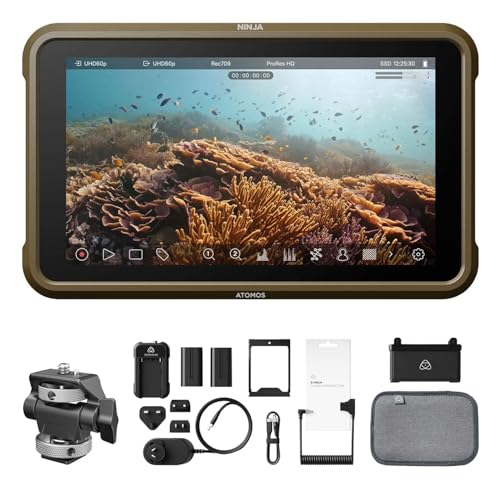
Atomos Ninja V
This 5 inch monitor reaches 1000 nits of brightness, enough to judge exposure in direct sunlight without a hood in most conditions. Beyond monitoring, it records ProRes RAW and ProRes directly from compatible mirrorless cameras over HDMI, skipping the camera’s internal codec limits. A 1920×1080 panel keeps focus peaking and zebra exposure tools sharp enough to trust for critical focus checks.
Pros
- Doubles as a recorder, capturing ProRes RAW over HDMI
- 1000 nit brightness holds up in direct sunlight
- Focus peaking and exposure tools stay sharp at this resolution
Cons
- Battery life runs shorter than monitor-only competitors
- Recording features add setup complexity for monitor-only users

SmallHD Focus Pro 7
SmallHD builds this 7 inch monitor around daylight visibility, rating it bright enough for outdoor use without recording features adding cost or complexity. A touchscreen interface speeds up switching between focus assist tools, waveform and false color exposure aids. Its larger 7 inch size suits camera operators who want a bigger reference image than clip-on monitors offer.
Pros
- 2200 nit brightness exceeds most recorder-equipped monitors
- Touchscreen speeds up switching between exposure tools
- Larger 7 inch screen suits dedicated camera operators
Cons
- No recording functionality, requiring a separate recorder if needed
- Larger size adds more weight to a rig than compact clip-on monitors

Portkeys BM7 II
This 7 inch monitor packs waveform, false color, LUT loading and 3D LUT support at a lower cost than SmallHD or Atomos alternatives. A built-in battery plate accepts common NP-F style batteries, simplifying power on set without extra adapters. Brightness runs lower than the SmallHD Focus Pro 7, which matters most for direct sunlight shooting.
Pros
- LUT and 3D LUT support at a lower cost than premium monitors
- NP-F battery plate simplifies on-set power
- Waveform and false color tools match pricier competitors
Cons
- Menu system is less polished than SmallHD’s touchscreen interface
- Build quality feels less rugged than Atomos or SmallHD hardware

Feelworld Master MA7
Feelworld keeps cost down on this 7 inch monitor while still including focus assist, false color and HDMI cross conversion between HDMI and SDI signals. Brightness lags behind the SmallHD and Portkeys options, which shows most when shooting outdoors without a monitor hood. It suits buyers assembling a first camera rig who need core monitoring tools without premium pricing.
Pros
- Lower cost than most other 7 inch field monitors here
- HDMI to SDI cross conversion adds flexibility with other gear
- Core focus and exposure tools cover most basic needs
Cons
- 450 nit brightness struggles in direct outdoor sunlight
- Build materials feel less durable than pricier competitors

Desview R6 II
At a smaller 5.5 inch size, this monitor clips directly to a camera’s hot shoe or cage rail without adding much bulk, suited to run-and-gun or gimbal work. It still includes focus peaking, false color and zebra patterns despite its compact footprint. Brightness and resolution trail the larger 7 inch monitors in this list, a tradeoff for its lighter weight.
Pros
- Compact size suits gimbal and run-and-gun shooting
- Includes focus peaking and false color despite small footprint
- Lighter weight than 7 inch monitors for handheld rigs
Cons
- Lower brightness than larger monitors limits outdoor visibility
- Smaller screen makes fine focus checks harder than on 7 inch models

Atomos Shinobi 7
Atomos trims recording features from this 7 inch monitor, keeping it lighter than the Ninja V while still offering 1500 nits of brightness and the same exposure tools the brand is known for. Its slim profile and lower weight suit gimbal setups where every added gram affects balance. HDR preview support helps judge log footage without guessing how it will grade later.
Pros
- Lighter weight than the recording-capable Ninja V
- 1500 nit brightness handles most outdoor conditions
- HDR preview aids judging log footage on set
Cons
- No recording capability despite the Atomos recorder lineup name recognition
- Costs more than the Feelworld or Desview monitors at a similar size
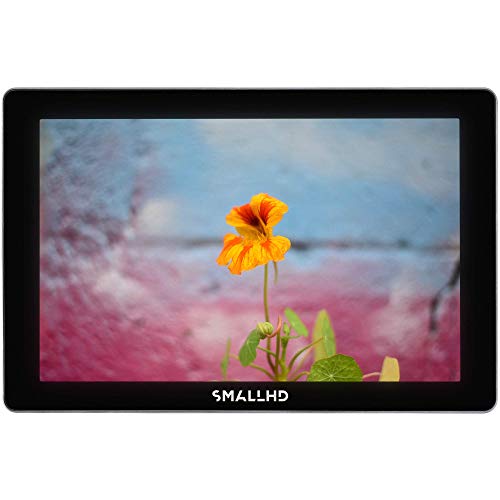
SmallHD Indie 7
SmallHD targets this monitor at colorists and DITs who need accurate color rather than just exposure checks, with factory calibration and 3D LUT support built in. A 7 inch panel at 2000 nits balances brightness with the color accuracy the Focus Pro line prioritizes less. Its touchscreen interface matches the rest of SmallHD’s lineup, easing the learning curve for crews already using other SmallHD gear.
Pros
- Factory color calibration suits color-critical monitoring work
- 3D LUT support helps preview graded looks on set
- Touchscreen interface matches other SmallHD monitors for crews
Cons
- Costs more than the Portkeys or Feelworld monitors
- Overkill for operators who only need basic focus and exposure checks
The lineup, side by side
| # | Model | Screen Size | Best for | Score | Price |
|---|---|---|---|---|---|
| 1 | Atomos Ninja V | 5 inch | Best Overall Monitor-Recorder | 9.3 | Check price |
| 2 | SmallHD Focus Pro 7 | 7 inch | Best Monitor-Only for Daylight Use | 9.0 | Check price |
| 3 | Portkeys BM7 II | 7 inch | Best Value Full-Featured Monitor | 8.7 | Check price |
| 4 | Feelworld Master MA7 | 7 inch | Best Budget Pick | 8.4 | Check price |
| 5 | Desview R6 II | 5.5 inch | Best Compact Clip-On Monitor | 8.2 | Check price |
| 6 | Atomos Shinobi 7 | 7 inch | Best Lightweight Monitor for Gimbal Rigs | 8.1 | Check price |
| 7 | SmallHD Indie 7 | 7 inch | Best for Color-Critical Monitoring | 8.0 | Check price |
Good to know
Do I need a field monitor if my camera has a flip screen?
A flip screen works for casual shooting, but a dedicated field monitor adds brightness, size and professional tools like waveform and false color that most camera screens lack.
Can a field monitor record video by itself?
Only monitor-recorder models like the Atomos Ninja V can record directly. Monitor-only designs like the SmallHD Focus Pro 7 require the camera or a separate recorder to capture footage.
What brightness do I need for outdoor monitoring?
Most field monitors rated above 1000 nits, such as the SmallHD Focus Pro 7 and Portkeys BM7 II, stay visible in direct sunlight without a monitor hood.
Is a 5 inch or 7 inch field monitor better?
A 7 inch screen, like the SmallHD Indie 7, shows more detail for focus checks, while a 5 to 5.5 inch monitor like the Desview R6 II stays lighter for gimbal or handheld work.
Do field monitors work with any camera?
Most connect over HDMI or SDI, which covers the majority of mirrorless and cinema cameras, though signal format and resolution support vary by monitor.
What is false color on a camera monitor?
False color overlays different colors onto the image based on exposure value, helping operators judge highlights and shadows more precisely than viewing brightness alone.
Can I use a field monitor to check focus for manual lenses?
Yes. Focus peaking, available on every monitor in this list, highlights in-focus edges, which is especially useful with manual lenses lacking autofocus confirmation.
Do I need a separate battery for a field monitor?
Most field monitors, including the Portkeys BM7 II, use common NP-F style batteries, though some smaller monitors can draw power directly from the camera rig.
Is the Atomos Ninja V worth it if I already have a recorder?
Not necessarily. Buyers with an existing capable recorder may prefer a monitor-only option like the SmallHD Focus Pro 7 to avoid paying for duplicate recording hardware.
The bottom line
The Atomos Ninja V is the strongest pick for shooters who want monitoring and ProRes RAW recording in one device. Anyone who already owns a recorder or does not need one should choose the SmallHD Focus Pro 7 instead, since its daylight brightness and touchscreen tools stand out without the added recording cost. Crews working on a tighter budget can still get reliable core monitoring from the Feelworld Master MA7, provided they shoot mostly indoors or in shaded conditions.
Marcus Chen
Marcus covered consumer electronics for enthusiast tech publications for six years before joining ChoiceCrest. He specializes in translating manufacturer spec sheets into plain-language buying advice, with a focus on audio, computing accessories and smart-home gear.


