Camera Drones With Flight Time and Footage That Hold Up
DJI Air 3 leads the field with dual cameras and a long rated flight time. DJI Mini 4 Pro suits travelers who want sub-250-gram convenience with full obstacle sensing. DJI Mavic 3 Pro takes the win when image quality matters most.
DJI Air 3, DJI Mini 4 Pro and DJI Mavic 3 Pro rise to the top of this lineup. Each records stable 4K, holds position in light wind, and gives newer pilots enough automation to fly with confidence.
A spec sheet undersells how much flight time, sensor size and obstacle sensing matter compared with headline resolution. We compared those factors alongside portability and control feel, since they separate footage that looks cinematic from footage that looks jittery.
The top picks, ranked
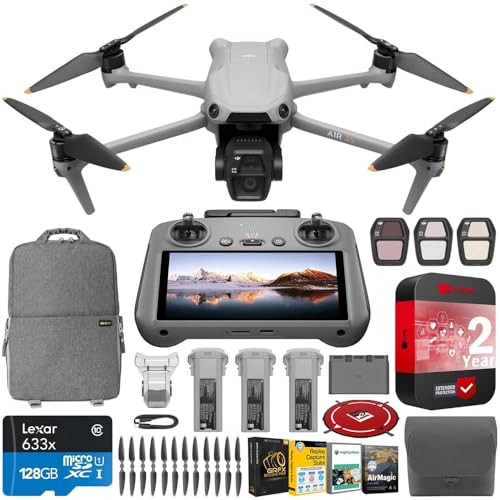
DJI Air 3 Fly More Combo Drone
A wide and a medium telephoto camera share one airframe on the Air 3, so pilots reframe a shot without repositioning the drone. Long rated flight time and all-directional obstacle sensing add up to a confident everyday flyer. Weight puts it past the 250 gram registration threshold in most regions.
Pros
- Two useful focal lengths
- Long rated flight time
- All directional obstacle sensing
Cons
- Heavier than a mini drone
- Requires drone registration

DJI Mini 4 Pro Drone
Weight stays under 250 grams on the Mini 4 Pro, yet it still packs omnidirectional obstacle sensing and a true vertical shooting mode for social clips. Owners report it packs down small enough to carry anywhere without feeling like a compromise. Its sensor trails the larger models in low light.
Pros
- Very light and packable
- Obstacle sensing on all sides
- True vertical video mode
Cons
- Smaller sensor than larger models
- Wind affects it more

DJI Mavic 3 Pro Drone
A Four Thirds Hasselblad main camera sits alongside two zoom lenses on the Mavic 3 Pro, which is why serious creators reach for it first. Based on specifications, it delivers the widest dynamic range in this lineup. Size and weight make it the least pocketable option here.
Pros
- Large main sensor for the class
- Three focal lengths built in
- Excellent dynamic range
Cons
- Priced at the high end
- Larger to carry

DJI Mini 3 Drone
A lightweight body and strong battery life carry over from the Mini 4 Pro, while extras get trimmed to reach a friendlier price. First-time pilots get clean 4K footage without paying for features they may not use yet. Obstacle sensing points only downward, so open spaces suit it best.
Pros
- Affordable for a 4K drone
- Light enough to skip heavy rules
- Long battery life
Cons
- Downward sensing only
- No high frame rate video

Autel Robotics EVO Lite Plus Drone
Autel builds a one inch sensor with an adjustable aperture into the EVO Lite Plus, which helps footage hold up in dim conditions. Pilots wanting a DJI alternative with a larger sensor in a smaller body get a genuine option here. The companion app feels less refined than DJI’s.
Pros
- Large one inch sensor
- Adjustable aperture for light
- Long rated flight time
Cons
- Obstacle sensing is limited
- App feels less polished

DJI Neo Drone
Launching straight from a palm, the tiny DJI Neo targets people who just want quick selfie-style clips without learning a controller. Range and sensor size get traded for that simplicity, making it approachable for absolute first-timers. Wind quickly becomes a limiting factor given its light weight.
Pros
- Extremely light and simple
- Launches from your hand
- Automated tracking shots
Cons
- Short range and battery
- Struggles in any wind
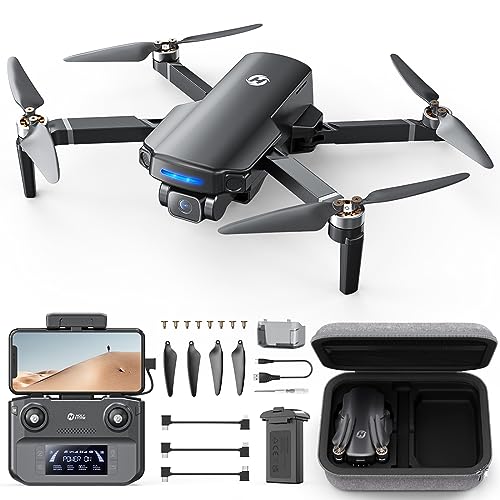
Holy Stone HS720G Drone
GPS return-to-home and a stabilized 4K camera arrive at an entry-level price on the HS720G. This drone is not in the same class as the DJI leaders, but owners report it flies steadily enough for casual practice. Two included batteries extend a single outing.
Pros
- Very affordable starting point
- GPS return to home
- Includes two batteries
Cons
- No obstacle avoidance
- Smaller sensor than rivals
Compared at a glance
| # | Model | Cameras | Best for | Score | Price |
|---|---|---|---|---|---|
| 1 | DJI Air 3 Fly More Combo Drone | Dual 1 over 1.3 inch sensors | Best overall | 9.4 | Check price |
| 2 | DJI Mini 4 Pro Drone | Under 250 grams | Best for travel | 9.1 | Check price |
| 3 | DJI Mavic 3 Pro Drone | Four Thirds Hasselblad | Best image quality | 8.9 | Check price |
| 4 | DJI Mini 3 Drone | Under 250 grams | Best value | 8.7 | Check price |
| 5 | Autel Robotics EVO Lite Plus Drone | 1 inch CMOS | Best for low light | 8.4 | Check price |
| 6 | DJI Neo Drone | About 135 grams | Best for beginners | 8.2 | Check price |
| 7 | Holy Stone HS720G Drone | 4K with EIS smoothing | Best budget pick | 8.0 | Check price |
How to choose
What to look for in a camera drone Sensor size, flight time and obstacle sensing matter more than the megapixel number on the listing. Weight also decides which registration rules apply in a given region. Balance those four factors against how and where you actually plan to fly before comparing individual models.
How sensor size affects image quality A larger sensor like the one on the Mavic 3 Pro or Autel EVO Lite Plus gathers more light, so footage holds up better at dawn, dusk and in shadow. Resolution numbers grab headlines, but sensor size does the heavier lifting for detail and dynamic range. Two drones can share the same 4K label and still look very different in low light.
Do I need to register my drone Weight under 250 grams often skips the strictest registration and labeling rules in many regions, which explains the popularity of the mini class. A sub-250-gram drone like the Mini 4 Pro removes a lot of paperwork before the first flight. Heavier models such as the Air 3 and Mavic 3 Pro usually require registration.
Best camera drone for beginners vs experienced pilots New pilots benefit most from omnidirectional obstacle sensing, since it helps prevent the crashes that end a drone’s life early. Models like the Air 3 and Mini 4 Pro watch in every direction, while budget drones often sense downward only. Experienced flyers can trade some of that sensing for the larger sensor and longer reach that models like the Mavic 3 Pro offer.
Frequently asked questions
Do I need to register a camera drone?
It depends on weight and where you fly. Drones under 250 grams often skip registration for recreational use, while heavier models like the Air 3 and Mavic 3 Pro usually require it. Always check local rules first.
Which drone is best for beginners?
DJI Neo and DJI Mini 3 are the most forgiving here. Neo launches from a palm for simple clips, while Mini 3 adds real 4K and longer flights once a pilot wants to grow.
How important is obstacle avoidance on a camera drone?
For new pilots it matters a lot. Omnidirectional sensing on the Air 3 and Mini 4 Pro helps prevent crashes in tight spaces, while budget drones typically sense only downward.
What flight time can I realistically expect?
Plan on a little less than the rated figure once wind and battery buffer get accounted for. A drone rated around 40 minutes usually delivers a comfortable 30 or so minutes of useful shooting.
Are dual camera drones actually useful?
Yes. On models like the Air 3 and Mavic 3 Pro, the extra focal length lets pilots reframe without repositioning the drone. That flexibility saves battery and speeds up composing a tighter shot.
Can camera drones fly in wind?
Heavier drones like the Air 3, Mavic 3 Pro and EVO Lite Plus hold position better in a breeze thanks to their mass. Lighter sub-250-gram drones fly fine in calm air but get pushed around more as wind picks up.
How much storage do I need for drone footage?
4K and higher footage fills memory cards fast, so a high capacity, fast card is essential. A card rated for sustained high bitrate recording prevents dropped frames on longer clips.
Is a budget camera drone worth buying?
For casual practice, a model like the Holy Stone HS720G delivers GPS features cheaply. Expect to give up obstacle avoidance and sensor quality compared with the leading DJI models.
Do camera drones track a subject automatically?
Many offer subject tracking modes that keep a person or vehicle in frame. Results land best on the Air 3 and Mini 4 Pro, which pair tracking with reliable obstacle sensing.
DJI Mini 4 Pro vs DJI Air 3: which should I buy?
Choose the Mini 4 Pro for sub-250-gram travel convenience and simpler registration. Choose the Air 3 for a longer rated flight time and a second onboard camera, at the cost of extra weight and paperwork.
Final word
DJI Air 3 is the camera drone most buyers should start with, balancing dual cameras, long flight time and confident obstacle sensing. Choose DJI Mini 4 Pro when travel weight matters most, or DJI Mavic 3 Pro for the largest sensor and the most polished footage this lineup can produce.
Marcus Chen
Marcus covered consumer electronics for enthusiast tech publications for six years before joining ChoiceCrest. He specializes in translating manufacturer spec sheets into plain-language buying advice, with a focus on audio, computing accessories and smart-home gear.


