Bumper plates compared on rubber, inserts and bounce
CAP Barbell Olympic Rubber Bumper Plate tops this list. Virgin rubber resists splitting, and the stainless insert stays tight through years of drops. Every weight measures 450mm, so bar height never changes. Titan Fitness wins on cost per pound. Synergee Color plates suit shared bars and class loading.
CAP Barbell Olympic Rubber Bumper Plate is the safe default for a garage gym. Virgin rubber resists the cracking that ends recycled crumb plates early. Stainless inserts hold their bond after months of dropping. One catch: these discs are thick, so a bar sleeve fills faster than it would with competition plates.
Two plates of the same stated weight can differ in rubber hardness, insert material and width. Listings rarely spell that out. Ranking here came from published durometer and tolerance figures, insert construction, plate width at 45 pounds, and repeated owner reports about spinning collars and split rims.
Before you buy
What to look for in bumper plates Four things separate a plate that lasts from one that splits. Rubber compound leads. Virgin rubber survives repeated drops, while recycled crumb breaks down at the rim sooner. Insert material comes next, and stainless resists the spin that kills cheap plates. Diameter should read 450mm on every weight, including 10 pound pairs, because that figure sets deadlift bar height. Check the published tolerance last, ideally inside 1 to 2 percent of the stated weight.
Bumper plates vs iron plates Bumpers exist so a loaded bar can hit the floor without wrecking the bar, the plate or the slab. Iron costs less per pound and stays thin, letting a sleeve carry more total weight. Dropping iron is not an option. Snatches, cleans and jerks need rubber. Bench and squat work happens inside a rack, where iron does the same job in less space. Most home gyms end up mixing both, rubber for working loads and iron for small change.
Best bumper plates for a home or garage gym Impact energy still reaches the slab, so flooring matters even with rubber plates. Horse stall mats at three quarter inch thickness absorb most drops. Interlocking tiles work when they sit at similar depth. Bounce is the second garage problem, since a kicked plate can reach a wall or the bar. Lower durometer lines such as Titan Fitness and Synergee deaden that return. Living above a neighbour changes the answer entirely: lower the bar under control rather than dropping it.
Colour coding, sleeve space and busy gym floors Shared bars load faster when plates are colour coded, which is where Synergee earns its place in group sessions. Width becomes the limit as loads climb. Standard bumpers are wide, and a sleeve only takes so many before the collar will not seat. Competition discs solve that with harder, thinner rubber and a steel ring. Facilities dropping bars all day should weigh insert bonding and warranty terms above finish, and Body-Solid is built around exactly that.
The top picks, ranked

CAP Barbell Olympic Rubber Bumper Plate
Virgin rubber keeps its shape through repeated drops, where recycled crumb starts crumbling at the rim. A stainless steel insert with a 2 inch bore resists the spin that ruins budget plates. Singles and pairs are both sold, so a set can grow one weight at a time.
Pros
- Stainless insert keeps its bond under heavy drop volume
- Bounce stays low for a non-competition plate
- Singles let you fill gaps in an existing set
Cons
- Thicker than competition discs, so sleeve space runs out sooner
- Fresh rubber smell lingers in a closed garage

Titan Fitness Olympic Rubber Bumper Plates
Dense rubber and a stainless collar arrive at a cost per pound that undercuts most named brands. Titan publishes a weight tolerance inside 1 percent, which matters if you log exact loads. Finish runs plainer than premium lines, and owners mention visible mould lines on some units.
Pros
- Cost per pound stays low across a full set
- Published tolerance holds within 1 percent
- Dead bounce helps under a low garage ceiling
Cons
- Mould lines show on some plates
- Shipping weight makes returns awkward

Synergee Color Bumper Plates
Colour follows the familiar competition scheme, so a loaded bar reads correctly from across a floor. Durometer sits in the low bounce range, which keeps a dropped bar from kicking back at the lifter. Coloured rubber does leave more visible marks on a sleeve than black compound.
Pros
- Loads read at a glance during a class
- Durometer stays consistent between weights
- Rims resist chunking after repeated drops
Cons
- Coloured rubber transfers marks onto bar sleeves
- Costs more than the same weight in black

Body-Solid Olympic Rubber Bumper Plates
Thick commercial rubber and a bonded steel collar suit floors where bars land all day. Body-Solid backs these with commercial warranty terms, which is the real separator once drop volume gets serious. Width is the cost, since fewer plates fit before a collar runs out of sleeve.
Pros
- Built for all-day drop volume
- Commercial warranty covers facility use
- Bonded collar resists pull-out
Cons
- Width limits how much loads onto one sleeve
- Heavy to carry and rack

Yes4All Olympic Bumper Plates
High density rubber and a stainless insert cover the basics for a first barbell setup. Drop behaviour is fine over rubber matting and rough on bare concrete. Weight variance runs wider than premium lines, so pair plates by measured weight when numbers matter.
Pros
- Lowest entry point for a true bumper plate
- 450mm diameter mixes with other brands
- Singles make topping up simple later
Cons
- Weight variance runs wider than premium plates
- Rims scuff early on bare concrete

papababe Bumper Plates
Matched sets cover the usual 10 to 45 pound spread, which saves piecing a gym together plate by plate. Moulded rims carry raised weight numbers that stay readable as rubber wears. Buying by the set can leave you with light plates you outgrow inside a year.
Pros
- One order covers a whole starter rack
- Raised numbers survive rubber wear
- Thickness stays consistent across the set
Cons
- Sets include light plates you may outgrow
- Fewer single plates for topping up later
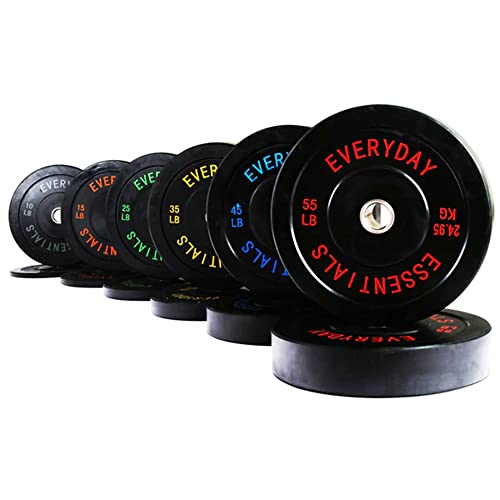
BalanceFrom Olympic Bumper Plate
Light pairs from 10 pounds close the gaps between heavier plates without stacking iron on the sleeve. Diameter still measures 450mm, so pull height matches the rest of a set. Softer rubber is the trade, and bare-bar drops dent these sooner than a virgin rubber plate.
Pros
- Closes small jumps without adding iron
- Matches the pull height of heavier bumpers
- Light enough to carry one handed
Cons
- Softer rubber dents under bare-bar drops
- Not built to carry a full working load alone
How they stack up
| # | Model | Rubber | Best for | Score | Price |
|---|---|---|---|---|---|
| 1 | CAP Barbell Olympic Rubber Bumper Plate | Virgin rubber compound | Best overall | 9.4 | Check price |
| 2 | Titan Fitness Olympic Rubber Bumper Plates | High density rubber | Best value | 9.1 | Check price |
| 3 | Synergee Color Bumper Plates | Competition style coding by weight | Best for colour coded training | 8.9 | Check price |
| 4 | Body-Solid Olympic Rubber Bumper Plates | Thick commercial grade rubber | Best for high volume gym use | 8.7 | Check price |
| 5 | Yes4All Olympic Bumper Plates | High density rubber | Best budget | 8.5 | Check price |
| 6 | papababe Bumper Plates | Matched sets by total poundage | Best for a first full set | 8.3 | Check price |
| 7 | BalanceFrom Olympic Bumper Plate | Light pairs from 10 pounds | Best for light change plates | 8.0 | Check price |
Common questions
What are bumper plates used for?
They let a loaded barbell drop from overhead or hip height without damaging the bar, the plate or the floor. Olympic lifts need that, and so does a failed rep. Racked work like bench and squat does not, which is why iron still has a place.
Are virgin rubber or crumb rubber bumper plates better?
Virgin rubber holds its shape and resists splitting under repeated drops, which puts the CAP plates on top here. Crumb plates use recycled material and cost less per pound. They also run thicker for the same weight and break down at the rim sooner.
What diameter should bumper plates be?
Every standard bumper measures 450mm across, 10 pound versions included. That figure fixes bar height for a deadlift pull and lets light and heavy plates share one sleeve. Anything smaller changes your starting position and should not load beside full-size plates.
Do you need rubber flooring under bumper plates?
Yes, for anything past occasional light drops. Three quarter inch stall mats or dense rubber tiles take the impact that rubber passes through to concrete. Bare slabs chip, and plate rims scuff fastest on budget lines.
Which bumper plates have the least bounce?
Lower shore durometer makes a deader plate. Synergee Color and Titan Fitness both publish low bounce ratings, useful when a ceiling is close or a rack sits nearby. Thin competition discs actually bounce more, because their rubber is harder.
How much weight should a first bumper plate set include?
A pair each of 45s, 25s and 10s takes a 45 pound bar to 205 pounds, which covers most beginners. Matched sets from papababe follow that pattern. Add 15 pound pairs once your working loads start landing between increments.
Can you mix bumper plates from different brands?
Yes, as long as each plate is 450mm across with a 2 inch bore. Thickness varies between brands, so a mixed bar loads slightly wider. Tolerances differ too, worth knowing if you track exact numbers in a training log.
Why do bumper plate inserts come loose?
Repeated impact shears the bond between rubber and metal collar. Stainless inserts bonded during moulding, as used across the plates here, resist that better than pressed-in aluminium. Loading both sleeves evenly and avoiding one-sided drops extends insert life.
Can you drop bumper plates in an apartment?
Not safely, whatever the flooring. Sound travels through the structure, and joists flex in a way a concrete slab does not. Lower the bar under control, or move to lighter loads with slower tempo work.
How long do bumper plates last in a home gym?
Years, provided the insert stays bonded and the rim does not chunk. Those two failures end far more plates than surface wear. Storing plates upright on a rack rather than stacked flat keeps the rubber from taking a permanent set.
Final word
CAP Barbell Olympic Rubber Bumper Plate is the buy for most home gyms, since virgin rubber and a stainless insert cover the two failures that actually end a plate. Filling a rack on a tight budget points to Titan Fitness, which delivers the same 450mm diameter for less per pound. Gyms running classes should pay up for Synergee Color plates, because fast and correct loading on a shared bar is worth the difference.
Derek Holt
Derek has a background coaching recreational and amateur athletes and has worked the sales floor at specialty fitness retailers. He focuses on equipment durability, ergonomics and realistic use cases rather than marketing claims.


