How to Pick a Budget Reptile Substrate That Works
Zoo Med Eco Earth Compressed Coconut Fiber Substrate ranks best overall for humid species at low cost. Zoo Med Aspen Snake Bedding wins on value for dry setups. Reptile Prime Coconut Fiber Reptile Bedding suits keepers stocking multiple enclosures on a tight budget.
Coconut fiber from Zoo Med Eco Earth handles humid enclosures at low cost. Aspen shavings from Zoo Med cover dry species just as cheaply. Reptile Prime’s bulk coconut fiber stretches furthest across multiple tanks.
Species needs vary enormously, and a substrate that suits a crested gecko can trigger impaction in a leopard gecko. Dust, particle size and moisture behavior interact with your enclosure’s ventilation and your reptile’s feeding style. We compared expansion volume, humidity retention, dust levels and impaction risk based on specifications and what long term keepers report. Substrates with known safety issues were left off this list.
The best picks, ranked

Zoo Med Eco Earth Compressed Coconut Fiber Substrate
Compressed bricks of coconut husk expand to several times their dry volume once soaked. Moisture retention stays strong without turning sour quickly, and the fiber supports burrowing species. Owners report dust levels rise sharply once the substrate dries out, so misting keeps it both safer and more humid.
Pros
- Expands to multiple times its dry volume
- Low cost per liter once soaked
- Supports burrowing and live plant roots
Cons
- Turns dusty if left to dry out completely
- Requires soaking before use

Zoo Med Aspen Snake Bedding
Kiln dried aspen shavings hold tunnel shapes without collapsing, which suits corn snakes and king snakes. Low aromatic oil content makes it gentler than pine or cedar. Moisture turns it moldy within days, so dry enclosures are the only fit.
Pros
- Holds burrow shapes without collapsing
- Free of aromatic oils found in pine and cedar
- Inexpensive by volume and quick to spot clean
Cons
- Molds within days if it gets wet
- Wrong choice for humidity dependent species
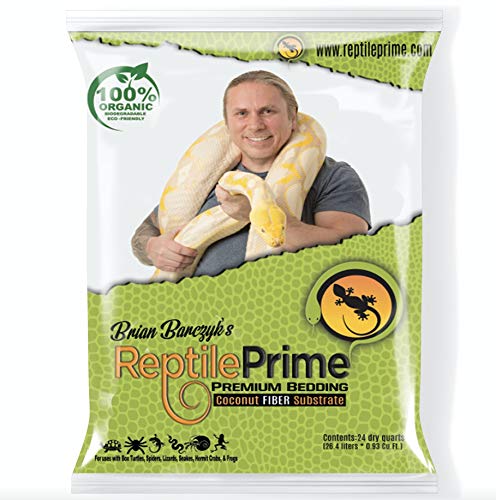
Reptile Prime Coconut Fiber Reptile Bedding
Loose coconut fiber ships in large bags built for keepers running several enclosures. Humidity retention and burrowing performance match compressed coco fiber bricks, minus the soaking step. Fiber consistency shifts slightly between batches, so sifting out clumps takes under a minute.
Pros
- Skips the soaking and expansion step
- Lower cost per enclosure across multiple tanks
- Retains humidity as well as compressed coco fiber
Cons
- Batch consistency shifts occasionally
- Clings to feeder insects and reptile skin when damp

Zoo Med Repti Bark Natural Fir Bedding
Chunky fir bark pieces absorb water and release it gradually, steadying humidity for ball pythons and larger geckos. Large particle size keeps bark from sticking to skin the way fine fiber does. Ground feeding raises impaction risk with this substrate, so bowl or tong feeding is worth the habit.
Pros
- Keeps humidity steady over several days
- Washable and reusable, cutting long term cost
- Does not stick to animals or feeder insects
Cons
- Chunks risk being swallowed during ground feeding
- Poor fit for small burrowing species

Exo Terra Coco Husk Tropical Terrarium Substrate
Coarser coconut husk chips resist compaction better than fine coco fiber, improving drainage in planted builds. Springtails and isopods establish well in this texture as a cleanup crew layer. Coarser pieces hold less water than fine fiber, so misting frequency climbs slightly.
Pros
- Resists compaction in deep layers
- Establishes well as a bioactive base
- Drains better than fine coco fiber
Cons
- Holds less moisture than fine coco fiber
- Needs soaking and breaking apart before use

Zilla Reptile Bedding Fir Bark Chips
Coarse fir bark chips cover large floor areas fast, giving tropical and semi humid setups a naturalistic look. Surface layers drain well while lower layers stay damp underneath. Bag volume often looks smaller than expected once spread to a useful depth, so budget for more than one bag.
Pros
- Covers large floor areas quickly
- Drains well and resists surface sogginess
- Naturalistic appearance for tropical setups
Cons
- Multiple bags needed for deep layers
- Not suited to arid species

Zoo Med ReptiSand Natural Terrarium Sand
Washed quartz sand targets desert diggers such as sand boas and adult uromastyx. No dye or calcium carbonate means less risk than colored or calcium sands, which reptiles sometimes eat deliberately. Impaction risk remains for juveniles or animals fed directly off the surface, so a feeding bowl or tile matters.
Pros
- Suits genuinely arid digging species
- Free of dyes and calcium carbonate
- Sifts easily for spot cleaning
Cons
- Impaction risk if animals feed directly off it
- Not appropriate for juveniles or humid species
The lineup, side by side
| # | Model | Material | Best for | Score | Price |
|---|---|---|---|---|---|
| 1 | Zoo Med Eco Earth Compressed Coconut Fiber Substrate | Compressed coconut husk fiber | Best overall | 9.4 | Check price |
| 2 | Zoo Med Aspen Snake Bedding | Kiln dried aspen shavings | Best value | 9.2 | Check price |
| 3 | Reptile Prime Coconut Fiber Reptile Bedding | Loose coconut fiber | Best budget bulk buy | 9.0 | Check price |
| 4 | Zoo Med Repti Bark Natural Fir Bedding | Fir bark chips | Best for long term humidity | 8.8 | Check price |
| 5 | Exo Terra Coco Husk Tropical Terrarium Substrate | Coconut husk chips | Best for bioactive starters | 8.6 | Check price |
| 6 | Zilla Reptile Bedding Fir Bark Chips | Fir bark chips | Best for larger enclosures | 8.3 | Check price |
| 7 | Zoo Med ReptiSand Natural Terrarium Sand | Washed quartz sand | Best for arid species | 8.0 | Check price |
How to pick the right one
What substrate fits humid, dry and arid species? Crested geckos, day geckos and many tree frogs need coco fiber or bark that holds moisture. Corn snakes and other dry climate colubrids do best on aspen shavings that stay light and clean. Desert diggers such as uromastyx and sand boas need washed sand layered deep enough to tunnel. Match the species first, then compare price within that category, not across it.
Does substrate actually cause impaction? Impaction happens when a reptile swallows substrate it cannot digest or pass. Loose particles, hungry animals striking at food on bare substrate and low enclosure temperatures all raise the risk. Juveniles with narrow digestive tracts face the highest danger from any loose bedding. Bowl or tile feeding combined with correct husbandry temperatures cuts that risk far more than substrate choice alone.
Which substrate costs less per refill? Compressed bricks like Eco Earth and Exo Terra Coco Husk expand many times their dry size, stretching a small block across a full enclosure. Bark substrates cost more upfront but rinse clean and reuse several times before wearing out. Aspen shavings need full replacement once soiled and cannot be washed back to usable condition. Count how many full changes one bag actually delivers before calling any option the cheap one.
How do you stop reptile substrate from molding? Poor airflow around humid coco fiber or bark is the top cause of mold in new setups. Cross ventilation, a slightly domed surface and a drainage layer under deep substrate all reduce moisture buildup. Waste removed daily and a weekly stir keep the surface from staying wet in one spot. Bioactive enclosures with an established cleanup crew of springtails need full substrate changes far less often.
Questions worth asking
Is coconut fiber substrate safe for leopard geckos?
Fine loose substrate remains debated for leopard geckos. Many keepers use a soil and sand blend in a properly heated enclosure with bowl feeding. Cautious keepers choose tile or paper towel for juveniles instead. Correct temperature and feeding habits matter more than the bedding label.
Why is calcium sand risky for reptiles?
Calcium carbonate sand tastes appealing to some reptiles, which encourages deliberate eating. Wet calcium sand also clumps inside the digestive tract. Washed quartz sand such as Zoo Med ReptiSand avoids both problems, though loose sand of any kind still needs careful feeding practice.
Can pine or cedar shavings replace aspen bedding?
No. Pine and cedar release aromatic oils linked to respiratory irritation in reptiles. Aspen shavings cost about the same and carry none of that risk, which is why Zoo Med Aspen Snake Bedding appears on this list instead.
How deep should reptile substrate be layered?
Burrowing species need a layer at least twice their body height, often three to four inches or more. Non burrowing species only need one to two inches to absorb waste and hold humidity.
How often should reptile substrate be replaced?
Spot clean waste daily and plan a full change every four to eight weeks in a standard enclosure. Sour smell or standing moisture signals an earlier change. Bioactive setups with active springtails and isopods can run months longer between full changes.
Can bark or coco fiber substrate be reused?
Bark chips rinse clean, dry out and go back in the enclosure several times. Coco fiber tolerates one or two rinses before breaking down into fine dust. Aspen shavings should be thrown out once soiled, since washing does not restore them.
Which substrate holds humidity the longest?
Fine coconut fiber such as Eco Earth soaks up the most water for its volume. Fir bark releases that moisture more slowly and steadily over several days. A drainage layer under either one, plus a partially covered screen top, extends humidity further than substrate choice alone.
What causes mold to grow in reptile substrate?
Restricted airflow around a consistently damp substrate is the usual trigger. Overwatering during misting adds to the problem faster than most keepers expect. More ventilation, less misting volume and a springtail cleanup crew usually solve it within days.
Is aspen bedding safe for pet snakes?
Aspen shavings are considered one of the safer dry substrates for corn snakes, king snakes and similar colubrids. Low aromatic oil content avoids the respiratory concerns tied to pine and cedar. Keeping the bedding dry prevents the mold growth that aspen is prone to when damp.
The bottom line
Zoo Med Eco Earth Compressed Coconut Fiber Substrate delivers the most enclosure coverage per dollar for humid species that need moisture and burrowing depth. Dry setups do better with Zoo Med Aspen Snake Bedding, while keepers running several enclosures spend less overall with Reptile Prime Coconut Fiber Reptile Bedding. Whichever bag you choose, feed off a bowl or tile and keep temperatures within range for that species.
Olivia Hartley
Olivia spent several years working at an animal shelter and a pet-supply retailer before joining the editorial team. She researches pet gear with an emphasis on safety, comfort and the fine print that owners often miss.