Silicone Mats Bakers Actually Use for Shaping and Proofing
Silpat’s silicone baking mat holds up to repeated flouring and shaping sessions better than thinner competitors, making it the common pick for proofing and shaping dough. Wilton’s mat covers the same job at a lower price for occasional bakers. Walfos sells a multi-size set for anyone proofing different batch sizes.
Silpat’s silicone baking mat tops this list because its surface holds a light flour dusting without the dough skating around during shaping, and its thicker construction resists the tearing thinner mats develop after repeated use. Wilton’s mat does the same basic job at a lower cost for someone proofing dough occasionally rather than every week. Walfos sells its mats in a multi-size set, useful for anyone switching between a single loaf and a larger batch.
A dedicated silicone bread proofing mat as its own distinct product is rare. Most bakers reach for a general nonstick silicone baking mat instead, using it as a surface to shape dough before the final rise or to proof directly on, which is the honest category behind this search. We compared surface grip, thickness, and heat rating across seven silicone mats commonly used for that purpose.
The top picks, ranked

Silpat Premium Non-Stick Silicone Baking Mat
Silpat reinforces its silicone with a fiberglass mesh layer, giving the mat more structure than thinner silicone sheets when dough is pressed, folded, or shaped on top of it. Its surface holds a light flour dusting evenly instead of letting it pool in one spot. The mat resists tearing at the edges even after years of regular use.
Pros
- Fiberglass reinforcement resists tearing over time
- Even flour distribution across the surface
- Holds up to years of repeated shaping sessions
Cons
- Costs more than basic silicone mats
- Full-sheet size needs adequate counter space

Wilton Perfect Results Silicone Baking Mat
Wilton prices this mat for occasional bakers rather than daily professional use, with a standard silicone construction that still provides a nonstick surface for shaping dough. It handles light flouring and basic proofing without issue, just with less long-term durability than reinforced mats. The size fits a standard half-sheet pan for easy storage alongside other bakeware.
Pros
- Lower cost than reinforced premium mats
- Nonstick surface works fine for occasional use
- Standard size fits common half-sheet pans
Cons
- Less durable than fiberglass-reinforced mats
- Can develop a slight stickiness sooner with heavy daily use

OXO Good Grips Silicone Baking Mat
OXO builds this mat slightly thicker than standard silicone sheets, giving it more rigidity when lifted or moved with dough already shaped on top. Reinforced edges resist curling, which can otherwise interfere with an even flour dusting near the mat’s border. It handles both dough shaping and general baking tasks like cookie sheets.
Pros
- Thicker build adds rigidity when lifting the mat
- Reinforced edges resist curling
- Doubles well for general baking beyond dough work
Cons
- Thicker material takes up more storage space
- Priced above basic single-purpose mats
Walfos Silicone Baking Mat Set
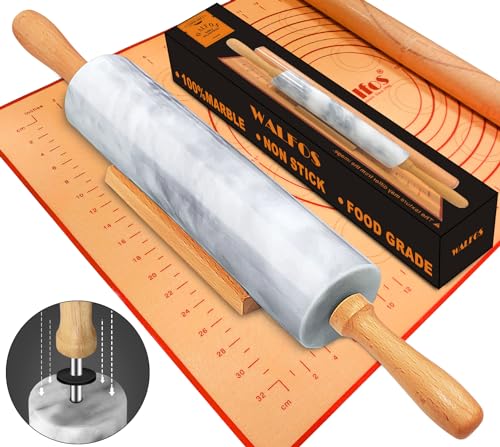
Walfos bundles several mat sizes together, covering a small single-loaf shaping area up to a full half-sheet mat for larger batches. That range suits a baker who sometimes shapes one loaf and other times preps a full tray of rolls. Surface grip and nonstick performance are consistent across the different sizes in the set.
Pros
- Multiple sizes cover different batch needs
- Consistent nonstick performance across the set
- Good value compared to buying sizes separately
Cons
- Individual mats are thinner than premium single mats
- Larger set takes up more storage space overall

Webake Non-Stick Silicone Baking Mat
Webake prints grid lines and measurement markings directly onto this mat, helping with consistent dough shaping and even loaf sizing across a batch. The markings fade over time with repeated washing but remain useful through most of the mat’s working life. Standard silicone construction matches other mid-range mats in nonstick performance.
Pros
- Printed markings help with consistent shaping
- Useful for portioning dough into even pieces
- Standard nonstick performance for the price
Cons
- Printed markings fade with repeated washing
- No reinforcement, so less durable than premium mats
AmazonBasics Silicone Baking Mat Set of 2
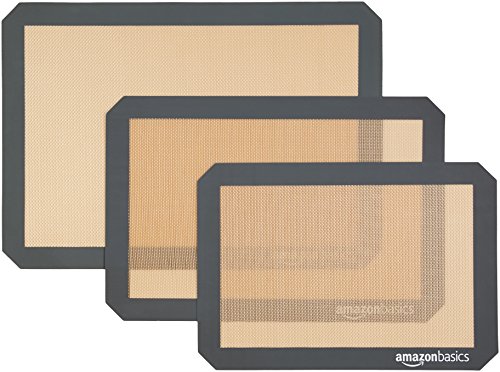
AmazonBasics includes two standard silicone mats in one purchase, letting a baker rotate between mats while one is being washed. Each mat performs similarly to other mid-range options for dough shaping and general baking. The set suits a household that bakes regularly enough to want a backup mat on hand.
Pros
- Two mats allow rotation between washes
- Lower cost per mat than buying single premium mats
- Standard size fits common half-sheet pans
Cons
- Basic construction without reinforcement
- Less durable long term than premium single mats

Joseph Joseph Bake Non-Stick Silicone Mat
Joseph Joseph designs this mat to fold flat for storage, taking up less drawer space than a rigid flat mat that only rolls. It works for dough shaping and proofing the same way standard silicone mats do, with the added convenience of compact storage. The foldable design suits smaller kitchens with limited drawer space.
Pros
- Folds flat for compact storage
- Standard nonstick performance for shaping dough
- Good fit for smaller kitchens with limited space
Cons
- Fold lines can develop a slight crease over time
- Not reinforced like premium full-sheet mats
How to choose
Why most proofing mats are really general silicone baking mats A silicone mat marketed specifically as a bread proofing mat is uncommon, and most bakers instead reach for a general nonstick silicone baking mat to shape dough before its final rise or to proof directly on. Every mat on this list falls into that general category rather than a bread-specific niche product. Knowing this upfront helps set expectations, since these mats are versatile tools rather than a single-purpose proofing accessory.
Surface grip and flour distribution during shaping A mat’s texture decides how evenly a flour dusting spreads and how much the dough slides around during shaping, with Silpat’s and OXO’s surfaces holding flour more evenly than thinner budget mats. Dough that slides too easily on a mat is harder to shape with consistent tension, which matters for how the final loaf holds its form. Reapplying a light dusting partway through a longer shaping session helps maintain grip on any of these mats.
Printed markings versus plain mats for consistent sizing Webake’s grid and measurement lines help portion dough into even pieces, useful for rolls or buns that need matching sizes across a batch. Plain mats like Silpat’s or Wilton’s rely on the baker’s own judgment or a separate scale for portioning instead. Markings fade with repeated washing, so a mat relied on for sizing guidance eventually loses that advantage over a long enough lifespan.
Thickness, heat rating, and using the mat beyond proofing Thicker mats like OXO’s hold their shape better when lifted with shaped dough still on top, reducing the risk of dough sliding off during a transfer to a baking sheet. Every mat here tolerates standard oven baking temperatures, letting it double as a cookie or pastry mat beyond dough shaping and proofing. A mat that only gets used for proofing is leaving some of its versatility unused compared to one that also handles everyday baking tasks.
The lineup, side by side
| # | Model | Material | Best for | Score | Price |
|---|---|---|---|---|---|
| 1 | Silpat Premium Non-Stick Silicone Baking Mat | Fiberglass-reinforced silicone | Best overall for shaping and proofing dough | 9.1 | Check price |
| 2 | Wilton Perfect Results Silicone Baking Mat | Standard silicone | Best budget option for occasional use | 8.6 | Check price |
| 3 | OXO Good Grips Silicone Baking Mat | Thicker silicone | Best thicker mat for sturdier handling | 8.7 | Check price |
| 4 | Walfos Silicone Baking Mat Set | Standard silicone | Best multi-size set for different batch sizes | 8.5 | Check price |
| 5 | Webake Non-Stick Silicone Baking Mat | Standard silicone | Best for mats with shaping guide markings | 8.3 | Check price |
| 6 | AmazonBasics Silicone Baking Mat Set of 2 | Standard silicone | Best value two-pack for everyday use | 8.1 | Check price |
| 7 | Joseph Joseph Bake Non-Stick Silicone Mat | Standard foldable silicone | Best compact folding design for storage | 8.0 | Check price |
Common questions
Is there a silicone mat made specifically for bread proofing?
Not as a distinct dedicated product in most cases. Bakers typically use a general nonstick silicone baking mat for shaping and proofing dough instead.
Can a silicone mat replace a linen couche for baguettes?
Not entirely, since a linen couche creates folds that support a baguette’s shape during proofing, which a flat silicone mat does not replicate.
Does a silicone mat prevent high-hydration dough from sticking?
A light flour or oil dusting on the mat helps, though very wet dough can still stick somewhat even on a quality nonstick silicone surface.
What size silicone mat is best for shaping a single loaf?
A smaller mat from a multi-size set like Walfos’ is often enough for a single loaf, while a full half-sheet mat suits larger batches.
Are silicone baking mats dishwasher safe?
Most, including Wilton’s and AmazonBasics’, tolerate dishwasher cleaning, though hand washing tends to preserve printed markings and surface texture longer.
Can silicone mats be used for laminated pastry dough as well?
Yes, the same nonstick surface that helps with bread dough also works for rolling out laminated pastry, croissant dough, or pie crust.
How hot can a silicone baking mat safely go in the oven?
Most mats tolerate typical home baking temperatures used for bread and pastries, though checking the specific product’s stated heat rating is worth doing before high-heat baking.
Do printed grid lines on a mat wear off over time?
Yes, repeated washing gradually fades printed markings like Webake’s, though the mat’s nonstick surface remains functional after the lines fade.
Can a silicone mat be folded for storage without damage?
Some mats, like Joseph Joseph’s, are designed to fold without cracking, while standard flat mats are better rolled than sharply folded.
Does a thicker silicone mat perform better than a thin one?
A thicker mat like OXO’s holds its shape better when lifted with dough on top, though thin mats still work fine for shaping dough that stays on the counter.
Our take
Silpat’s reinforced silicone mat is the most durable choice for anyone shaping and proofing dough regularly, holding up to years of repeated flouring and handling. Occasional bakers on a tighter budget are better served by Wilton’s mat or AmazonBasics’ two-pack, since the heavier-duty reinforcement in premium mats matters less for infrequent use. Anyone shaping rolls or buns that need matching sizes should choose Webake’s mat with printed grid lines over a plain unmarked surface.
Dana Whitfield
Dana spent eight years buying and merchandising for a regional kitchenware retailer before moving into editorial work. She has handled thousands of SKUs across cookware, small appliances and kitchen organization, and focuses on the practical differences that matter once a product is actually in daily use.