Round Bottom or Flat: Which Wok Actually Suits Your Stove
Most home cooks get the best all-around stir-fry results from the Joyce Chen Classic Series 14-Inch Carbon Steel Wok. Induction and electric cooktops pair better with the flat-bottomed YOSUKATA 13.5-Inch Carbon Steel Wok. Budget shoppers can start with the IMUSA Global Kitchen Carbon Steel Wok.
Round-bottom carbon steel from Joyce Chen tops this list for classic stir-fry heat control. Electric and induction kitchens fare better with the flat-bottomed YOSUKATA 13.5-Inch Wok. Anyone starting out on a budget can pick the IMUSA Global Kitchen Wok and season it at home.
Bottom shape separates a wok that actually gets hot enough from one that just sits on the burner. We compared base material, diameter, handle design and stovetop compatibility. Owner reports on seasoning ease and heat retention shaped the final ranking.
The best picks, ranked

Joyce Chen Classic Series 14-Inch Carbon Steel Wok
1.8mm carbon steel forms this wok’s spun body, thin enough to heat fast. Birch wood handles stay cool even on a high flame. Owners report a slick patina building within a few seasoning cycles.
Pros
- Heats faster than heavier cast iron
- Round shape wraps open-flame heat evenly
- Patina improves with each use
Cons
- Needs a wok ring on flat coil or glass tops
- Requires drying and a light oil coat after washing
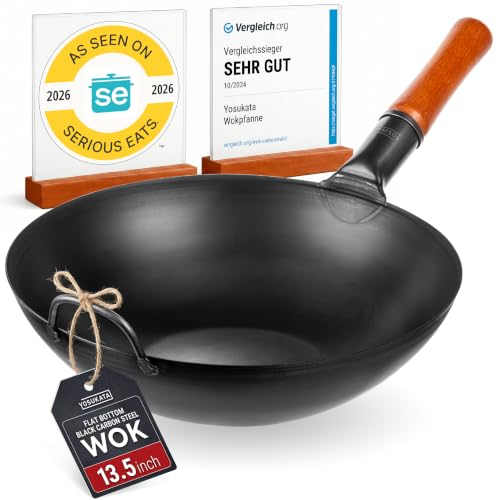
YOSUKATA 13.5-Inch Pre-Seasoned Flat Bottom Carbon Steel Wok
A flat base near 5 inches wide sits flush on glass, coil and induction cooktops without a ring. Yosukata pre-seasons the pan at high heat before shipping. Riveted wooden handles keep grip secure during a fast toss.
Pros
- Works on induction without an adapter ring
- Ships pre-seasoned and ready to cook
- Lightweight enough for one-handed tossing
Cons
- Flat base limits flame wraparound on gas burners
- Thin gauge can dent if dropped on tile

IMUSA Global Kitchen Carbon Steel Wok
Two riveted metal handles replace wood here, so this wok moves from stovetop to oven. Carbon steel still needs seasoning before first use to build a nonstick layer. A domed lid ships included, unusual at this price point.
Pros
- Included lid adds steaming versatility
- Metal handles tolerate oven finishing
- Costs less than hand-hammered options
Cons
- Bare steel arrives unseasoned and can rust if unattended
- Handles heat up during stovetop cooking

Cuisinart Chef’s Classic Stainless Steel Wok with Helper Handle
Stainless steel skips seasoning entirely and goes straight into the dishwasher after use. An aluminum disk in the base spreads heat across the flat bottom. A helper handle balances the pan when loaded with vegetables and protein.
Pros
- No seasoning or rust risk to manage
- Cleans up fast in the dishwasher
- Helper handle steadies a full load
Cons
- Food sticks more than carbon steel without extra oil
- Heats slower than thin carbon steel

T-fal Specialty Nonstick Jumbo Wok
A nonstick coating over aluminum lets eggs and rice release with little added fat. Thermo-Spot heat indicator on the base signals when the pan reaches cooking temperature. A helper grip joins the main handle for moving a full pan to the table.
Pros
- Releases food with little or no added oil
- Thermo-Spot shows preheat readiness
- Lighter than carbon steel or cast iron
Cons
- Coating wears faster under metal utensils
- Cannot sear as hot as bare carbon steel

Lodge Cast Iron Wok
Pre-seasoned cast iron holds heat long after the burner cools, useful for simmering after a quick sear. Flat bottom and helper handle come standard. Weight runs noticeably higher than carbon steel at a similar diameter.
Pros
- Retains heat well after the flame drops
- Pre-seasoned finish is ready out of the box
- Durable enough for daily heavy use
Cons
- Noticeably heavy for one-handed tossing
- Slower to heat up than thin carbon steel

Anolon X Hybrid Nonstick Wok
Stainless steel ridges combine with nonstick coating here, aimed at higher heat than typical nonstick allows. A flat bottom and dual handles suit stir-fry batches needing a firm two-hand grip. Metal utensils stay safe on this surface, unlike standard nonstick pans.
Pros
- Tolerates higher heat than standard nonstick
- Metal utensils will not damage the surface
- Dual handles help lift a full load
Cons
- Costs more than basic nonstick woks
- Still short of bare carbon steel’s sear
How to pick the right one
What actually makes one wok better than another? Shape, material and thickness decide performance before brand name enters the picture. Round bottoms wrap flame around the pan on gas burners. Flat bottoms sit stable on coil, glass and induction surfaces. Gauge, meaning metal thickness, controls how fast a wok heats and how easily it dents. Compare those three specs first, then weigh handle style and included accessories.
Carbon steel vs nonstick vs stainless: which wins for stir-fry? Carbon steel builds a natural nonstick patina through seasoning and handles the highest heat of the group. Nonstick coatings release food with less oil but top out at moderate heat and wear under metal tools. Stainless resists rust and skips seasoning, though it needs more oil to prevent sticking. Pick based on how much maintenance fits your routine.
Which wok works best for an induction or electric stovetop? Electric coil and glass-top ranges need a flat base to keep full contact with the heating element. Induction adds a magnetic-material requirement, which rules out aluminum-only nonstick pans without a steel plate. Gas burners are the most forgiving and accept either flat or round bottoms. Outdoor propane burners with high output favor round-bottom carbon steel for full flame contact.
What is the best wok for a beginner who has never seasoned a pan? A pre-seasoned option like the Yosukata removes the intimidating first seasoning step. Nonstick choices such as the T-fal skip seasoning entirely and forgive early mistakes with too little oil. Stainless from Cuisinart avoids rust worries while a new cook learns heat control. Save hand-hammered carbon steel for once the seasoning routine feels familiar.
How they stack up
| # | Model | Material | Best for | Score | Price |
|---|---|---|---|---|---|
| 1 | Joyce Chen Classic Series 14-Inch Carbon Steel Wok | 1.8mm carbon steel | Best overall | 9.4 | Check price |
| 2 | YOSUKATA 13.5-Inch Pre-Seasoned Flat Bottom Carbon Steel Wok | Carbon steel, pre-seasoned | Best for induction and electric stovetops | 9.1 | Check price |
| 3 | IMUSA Global Kitchen Carbon Steel Wok | Carbon steel | Best budget | 8.9 | Check price |
| 4 | Cuisinart Chef’s Classic Stainless Steel Wok with Helper Handle | Stainless steel with aluminum disk base | Best for dishwasher-safe cleanup | 8.7 | Check price |
| 5 | T-fal Specialty Nonstick Jumbo Wok | Nonstick coated aluminum | Best for low-oil everyday cooking | 8.4 | Check price |
| 6 | Lodge Cast Iron Wok | Pre-seasoned cast iron | Best for heat retention | 8.2 | Check price |
| 7 | Anolon X Hybrid Nonstick Wok | Hybrid stainless and nonstick | Best for metal utensils and high-heat searing | 8.0 | Check price |
Common questions
Is a flat bottom or round bottom wok better?
Round bottoms suit open gas flame and dedicated wok burners, since the curve wraps heat around the food. Flat bottoms work on electric, glass and induction cooktops where full contact matters more than flame shape. Home cooks with a standard gas range often do fine with either style.
Do you need to season a new wok before cooking?
Bare carbon steel and cast iron need seasoning to build a slick surface and block rust. Pre-seasoned models like the Yosukata still benefit from a quick oil wipe before first use. Nonstick and stainless woks skip this step entirely.
Can a wok replace a regular frying pan?
Sloped sides let a wok handle high-heat stir-fry, steaming and deep-frying better than most flat skillets. Everyday tasks like frying an egg or making a sauce still work fine in a wok. Tossing food is simply easier in a curved pan than a flat one.
What size wok is best for a family of four?
A 13.5 to 14-inch diameter, like the Joyce Chen or Yosukata, holds four servings without crowding. Crowded pans lose surface temperature and steam food instead of searing it. Larger 16-inch woks suit batch cooking or bigger households.
Is carbon steel or cast iron heavier?
Cast iron, such as the Lodge wok, weighs noticeably more than carbon steel at the same diameter. Extra mass holds heat longer but makes one-handed tossing harder. Carbon steel heats and cools faster, which suits quick stir-fry technique.
Can nonstick woks go in the oven?
Some nonstick woks, including the T-fal Specialty, tolerate oven heat up to a listed limit near 350 degrees Fahrenheit. Coatings vary by product, so check the specific listing before broiling or baking. Carbon steel and cast iron generally handle higher oven heat without issue.
What is the best wok for an induction stovetop?
Induction needs a magnetic, flat-bottomed pan, which points to the Yosukata flat bottom or the Cuisinart stainless model. Aluminum-only pans without a steel plate will not heat on induction at all. Confirm base material before buying if induction is your primary stovetop.
Is a wok ring necessary on a gas stove?
A wok ring stabilizes a round-bottom wok on a standard home gas burner and stops it from tipping. Flat-bottom woks like the Yosukata or T-fal skip the ring entirely. Dedicated wok burners at higher output often skip the ring too, since the burner cradles the pan’s shape.
Wok vs stir-fry pan: what is the difference?
A wok has taller, sloped sides that let food get tossed without spilling over the edge. Stir-fry pans, sometimes sold as flat-bottom woks, borrow the shape but trade some depth for stability. True wok technique relies on that height for tossing ingredients through hot air.
How do you clean a carbon steel wok without ruining the seasoning?
Rinse with hot water and a soft sponge, skipping soap that strips built-up oil layers. Dry the pan fully on a warm burner to prevent rust spots. A thin wipe of oil after drying keeps the seasoning intact between uses.
The verdict
Cooks chasing classic seared flavor should reach for the Joyce Chen Classic Series 14-Inch Carbon Steel Wok. Induction and electric households pair better with the YOSUKATA 13.5-Inch Flat Bottom Wok. Anyone easing into carbon steel for the first time can start with the budget-friendly IMUSA model.
Dana Whitfield
Dana spent eight years buying and merchandising for a regional kitchenware retailer before moving into editorial work. She has handled thousands of SKUs across cookware, small appliances and kitchen organization, and focuses on the practical differences that matter once a product is actually in daily use.


